Introduction
Have you noticed it’s harder to keep off weight than it used to be? You are not alone. Many people develop a slow metabolism as they get older. This is a normal part of aging. However, it does not mean you are powerless.
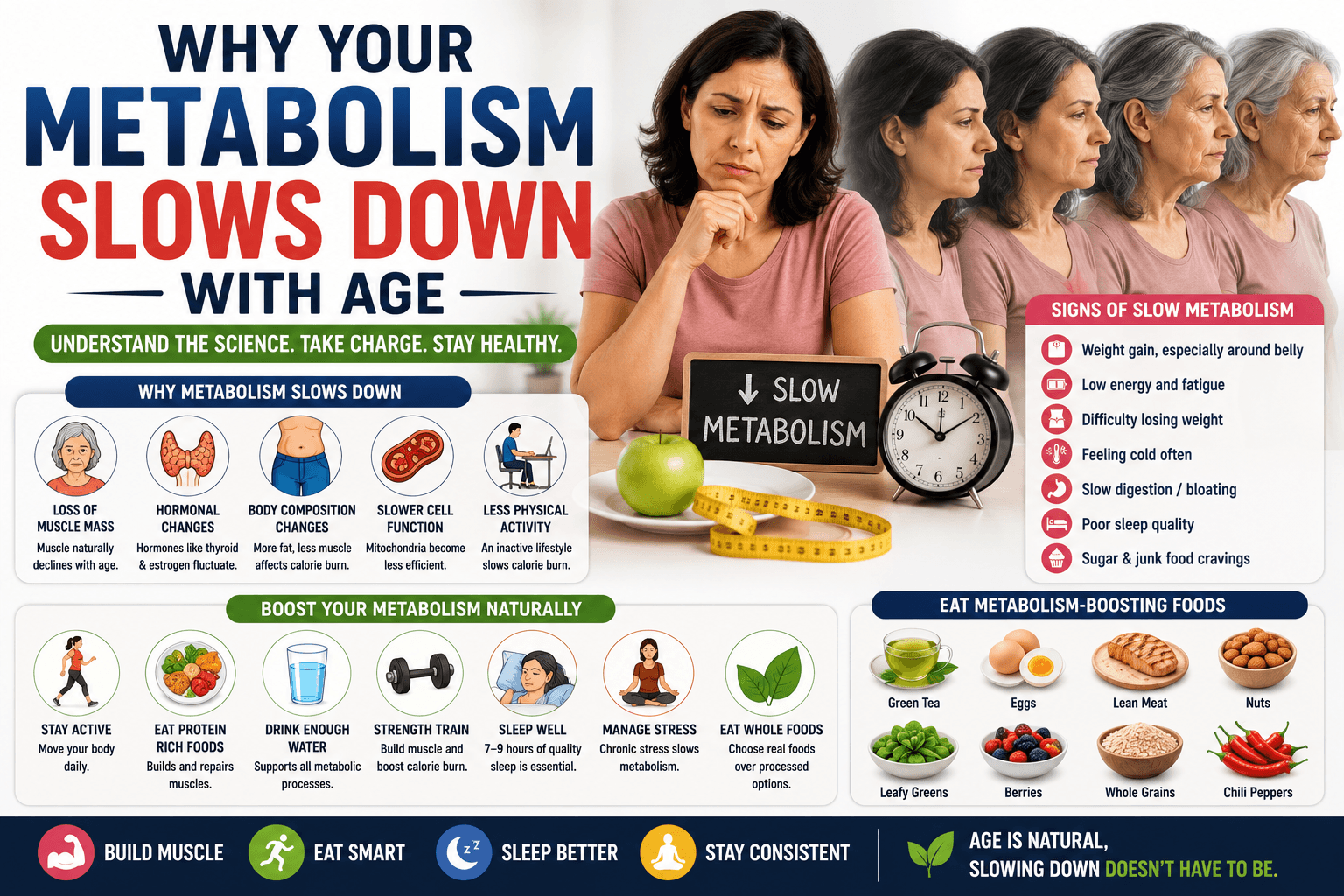
In short: your metabolism slows down with age because you lose muscle mass, your hormones shift, and your activity levels often drop. As a result, your body burns fewer calories at rest.
This article explains why this happens. Also, it shares simple, natural ways to support a healthy metabolism at any age.
What is Slow Metabolism?
Metabolism is the process your body uses to turn food into energy. Every cell in your body needs this energy to work properly.
A slow metabolism means your body burns calories at a lower rate than before. Therefore, you may gain weight more easily, even if you eat the same amount of food as before.
In simple words, think of metabolism like a car engine. A younger engine burns fuel quickly. However, an older engine uses fuel more slowly. So, the same amount of fuel takes you less distance.
This slowdown usually becomes more noticeable after age 40. Similarly, it continues gradually with each decade.
Causes of Slow Metabolism
Several factors work together to cause a slow metabolism as you age. Understanding them can help you take the right action.
- Loss of muscle mass (sarcopenia) – Muscle burns more calories than fat, even at rest. As a result, losing muscle lowers your calorie-burning ability.
- Hormonal changes – Hormones like thyroid hormones, estrogen, and testosterone naturally decline with age. Consequently, this affects how fast your body uses energy.
- Reduced physical activity – Many people become less active as they age due to busy schedules or joint pain. Therefore, fewer calories get burned daily.
- Cellular changes – Mitochondria, the tiny “power plants” inside your cells, become less efficient over time.
- Genetics – Some people are simply born with a naturally slower metabolic rate.
Although these causes are common, they are not impossible to manage.
Signs and Symptoms
How do you know if you have a slow metabolism? Look out for these common signs:
- Gaining weight even without eating more
- Feeling tired often, even after resting
- Cold hands and feet
- Dry skin and hair
- Difficulty losing weight despite exercise
- Constant hunger or slow digestion
However, these symptoms can also point to other health issues. So, it’s important not to self-diagnose.
Risk Factors
Certain factors increase your chances of developing a slow metabolism:
- Age – Metabolism naturally declines after 30, especially after 40.
- Sedentary lifestyle – Sitting for long hours lowers calorie burn.
- Poor sleep – Lack of sleep disrupts hormones that control metabolism.
- Crash dieting – Extreme calorie cutting can slow your metabolic rate.
- Chronic stress – High cortisol levels can affect fat storage and energy use.
- Underlying health conditions – Thyroid disorders, for example, can significantly slow metabolism.
How It Affects Daily Life
A slow metabolism does not just affect your weight. It can also affect how you feel each day.
For example, you might feel low on energy by mid-afternoon. Similarly, you may notice mood swings or brain fog. Also, digestion can become slower, causing bloating or discomfort.
Overall, a sluggish metabolism can make everyday tasks feel more tiring than before.
Benefits of Early Management
The good news is that managing a slow metabolism early brings real benefits. As a result, you may experience:
- Better energy levels throughout the day
- Easier weight management
- Improved muscle strength
- Better sleep quality
- Reduced risk of chronic diseases like diabetes
Therefore, taking small steps now can make a big difference later.
Natural Ways to Support Better Health
You don’t need extreme measures to support your metabolism. Instead, small, consistent habits work best.
- Strength training – Building muscle helps your body burn more calories at rest.
- Stay hydrated – Water supports every metabolic process in your body.
- Get enough sleep – Aim for 7-9 hours each night.
- Eat enough protein – Protein takes more energy to digest compared to fat or carbs.
- Move throughout the day – Simple walks can boost calorie burn significantly.
Diet Tips
What you eat plays a big role in supporting a healthy metabolism.
- Include protein-rich foods like eggs, fish, beans, and lentils in every meal.
- Choose whole grains instead of refined carbs.
- Add more fiber through vegetables and fruits.
- Avoid crash diets, since they can slow metabolism further.
- Don’t skip meals, as this can confuse your body’s energy balance.
However, always personalize your diet based on your specific health needs.
Lifestyle Tips
Beyond diet, daily habits matter just as much.
- Exercise at least 3-4 times a week, combining cardio and strength training.
- Manage stress through activities like yoga, deep breathing, or journaling.
- Limit alcohol, as it can affect fat metabolism.
- Avoid sitting for long hours; take short movement breaks.
- Maintain a consistent sleep schedule.
Common Mistakes to Avoid
Many people unknowingly make their slow metabolism worse. Avoid these common mistakes:
- Following extreme low-calorie diets
- Skipping strength training and only doing cardio
- Ignoring sleep problems
- Relying on “metabolism-boosting” supplements without proof
- Not drinking enough water
Instead, focus on sustainable, long-term habits.
When Should You Seek Professional Advice?
Sometimes, a slow metabolism may be linked to an underlying medical condition. Therefore, you should consult a doctor if you notice:
- Sudden or unexplained weight gain
- Extreme fatigue that doesn’t improve with rest
- Hair thinning or brittle nails
- Irregular periods (for women)
- Persistent cold intolerance
A doctor may recommend blood tests, such as thyroid function tests, to rule out medical causes. Consequently, early diagnosis can lead to better treatment outcomes.
This article is for general informational purposes only and is not a substitute for professional medical advice. Please consult a qualified healthcare provider for personalized guidance.
Frequently Asked Questions (FAQs)
1. Why does metabolism slow down with age? Metabolism slows down mainly due to muscle loss, hormonal changes, and reduced physical activity as you age.
2. Can you fix a slow metabolism naturally? Yes. Strength training, a protein-rich diet, good sleep, and regular movement can help support a healthier metabolic rate.
3. At what age does metabolism start slowing down? Metabolism typically starts slowing gradually after age 30, becoming more noticeable after 40.
4. Does drinking water help boost metabolism? Yes. Staying hydrated supports your body’s ability to process energy efficiently throughout the day.
5. Is a slow metabolism the same as thyroid problems? Not always. However, thyroid disorders can cause a slow metabolism, so it’s worth getting tested if symptoms persist.
6. Can exercise reverse a slow metabolism? Exercise, especially strength training, can help rebuild muscle mass and support a more active metabolism over time.
Final Thoughts
A slow metabolism is a natural part of aging. However, it doesn’t have to control your health or energy levels. By building muscle, eating enough protein, staying active, and sleeping well, you can support your metabolism at any age.
Finally, if symptoms feel severe or unusual, don’t hesitate to speak with a healthcare professional. Small, consistent changes today can lead to better energy and health tomorrow.
Quick Answer
Metabolism slows down with age mainly due to muscle loss, hormonal shifts, and lower activity levels. This causes your body to burn fewer calories at rest. However, strength training, a protein-rich diet, good sleep, and regular movement can help support a healthier metabolism naturally.