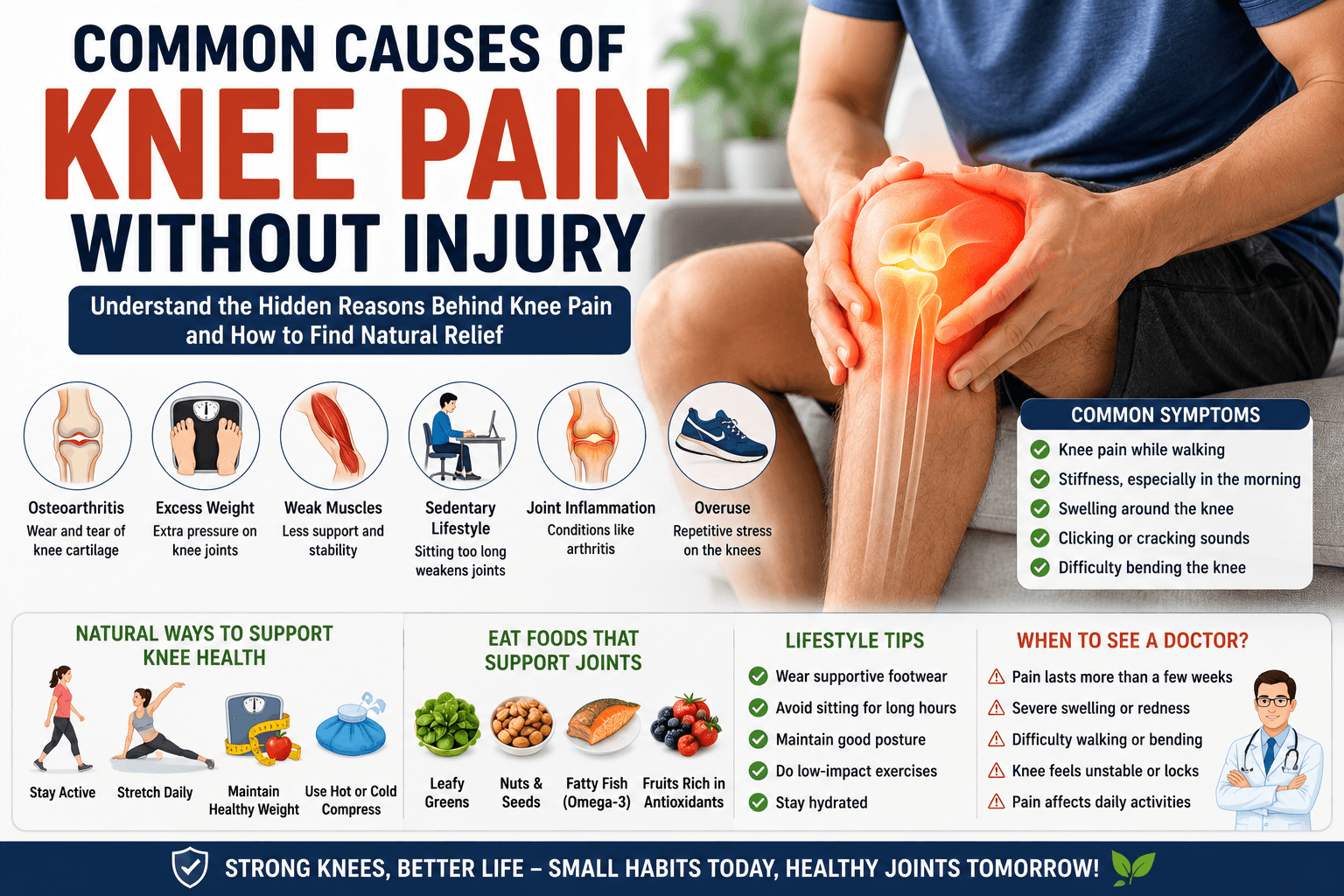
Common Causes of Knee Pain Without Injury
Quick Answer
Knee pain can happen even without an injury. Common causes include aging, excess body weight, poor posture, muscle weakness, arthritis, prolonged sitting, and overuse. Therefore, regular exercise, maintaining a healthy weight, and good joint care may help support healthy knees and improve mobility.
Introduction
Many people believe knee pain only happens after a fall or accident.
However, that is not always true.
Sometimes, your knees begin to hurt without any clear injury.
The pain may appear while walking, climbing stairs, or getting up from a chair.
As a result, daily activities become more difficult.
Fortunately, many causes can be managed with healthy lifestyle habits and early care.
Therefore, understanding Knee Pain can help you protect your joints.
What is Knee Pain?
Knee Pain is discomfort around or inside the knee joint.
It may be mild or severe.
Some people feel pain only while moving.
Others may notice stiffness even while resting.
Knee pain without injury often develops slowly over time.
Therefore, early attention is important.
Causes of Knee Pain
Several health conditions and daily habits may cause Knee Pain without an injury.
1. Aging
As we grow older, the joints naturally wear down.
Consequently, knee discomfort may become more common.
2. Osteoarthritis
Osteoarthritis happens when the protective cartilage gradually wears away.
As a result, movement may become painful and stiff.
3. Excess Body Weight
Extra body weight places more pressure on the knees.
Therefore, the joints work harder during walking and climbing stairs.
4. Weak Leg Muscles
Weak muscles provide less support to the knees.
Consequently, the joint experiences more stress.
5. Sitting for Long Hours
Long periods of sitting may reduce joint flexibility.
As a result, knees may feel stiff after standing.
6. Poor Posture
Standing or walking with poor posture may change how pressure is placed on the knee joint.
7. Overuse
Repeating the same movements every day may strain the knee.
For example, frequent squatting or climbing stairs can increase discomfort.
8. Vitamin D Deficiency
Low vitamin D levels may affect bone and muscle health.
However, a healthcare professional can determine whether this contributes to your symptoms.
9. Inflammatory Joint Conditions
Some medical conditions may cause swelling and stiffness in the knee.
Professional evaluation is important if symptoms continue.
Signs and Symptoms
Common symptoms include:
- Knee pain while walking
- Morning stiffness
- Swelling around the knee
- Difficulty bending the knee
- Clicking or popping sounds
- Pain while climbing stairs
- Reduced flexibility
- Weakness around the knee
Risk Factors
You may have a higher risk if you:
- Are over 40 years old
- Are overweight
- Exercise very little
- Have weak leg muscles
- Sit for long hours
- Have poor posture
- Have a family history of arthritis
How It Affects Daily Life
Knee pain may affect many daily activities.
It can make it difficult to:
- Walk comfortably
- Climb stairs
- Exercise
- Stand for long periods
- Carry heavy objects
- Play with children
Consequently, overall quality of life may decrease.
Benefits of Early Management
Taking care of Knee Pain early may help:
- Improve joint mobility
- Reduce stiffness
- Support healthy movement
- Improve daily comfort
- Maintain an active lifestyle
- Protect long-term joint health
Natural Ways to Support Better Health
Stay Active
Low-impact exercises such as walking, cycling, and swimming help keep joints flexible.
Strengthen Leg Muscles
Exercises that strengthen the thighs and calves help support the knees.
Therefore, the joint experiences less stress.
Maintain a Healthy Weight
Healthy body weight reduces pressure on the knees.
Consequently, movement often becomes easier.
Stretch Daily
Gentle stretching helps improve flexibility.
As a result, stiffness may decrease.
Apply Warm or Cold Compress
A warm compress may help reduce stiffness.
A cold compress may help after increased activity if swelling occurs.
Diet Tips
Eat More
✅ Green leafy vegetables ✅ Whole grains ✅ Lentils ✅ Beans ✅ Low-fat dairy ✅ Nuts ✅ Seeds ✅ Fresh fruits
Drink
✅ Water ✅ Coconut water
Limit
❌ Sugary drinks ❌ Highly processed foods ❌ Fried foods ❌ Excess salt
Lifestyle Tips
Healthy habits support strong joints.
- Walk every day.
- Stretch before exercise.
- Avoid sitting too long.
- Wear supportive footwear.
- Maintain good posture.
- Sleep well.
Consequently, your knees may stay healthier.
Common Mistakes to Avoid
Avoid these habits:
❌ Ignoring knee pain
❌ Sitting for long periods
❌ Poor posture
❌ Sudden intense exercise
❌ Wearing unsupportive shoes
❌ Skipping warm-up exercises
When Should You Seek Professional Advice?
Consult a healthcare professional if:
- Knee pain lasts longer than two weeks.
- Swelling becomes severe.
- The knee becomes red or warm.
- Walking becomes difficult.
- The knee locks or gives way.
- Pain becomes worse over time.
Early diagnosis may help identify the underlying cause and guide appropriate treatment.
Can Poor Sleep Increase Blood Sugar Naturally?
Frequently Asked Questions
Why does my knee hurt without an injury?
Knee pain without injury may happen because of aging, arthritis, muscle weakness, poor posture, excess body weight, or repeated strain.
Can sitting too long cause knee pain?
Yes. Sitting for long periods may increase stiffness and reduce joint flexibility.
Does body weight affect knee pain?
Yes. Extra body weight places additional pressure on the knee joints during daily activities.
Which exercises are good for knee pain?
Walking, swimming, cycling, and gentle strengthening exercises may support healthy knee function. A healthcare professional or physiotherapist can recommend exercises suitable for your condition.
When should I see a doctor for knee pain?
Seek medical advice if pain continues, swelling increases, walking becomes difficult, or the knee feels unstable.
Final Thoughts
Knee Pain without injury is common and often develops gradually.
Fortunately, healthy habits such as regular exercise, weight management, stretching, and good posture may support healthy knees and improve mobility.
However, ongoing pain should never be ignored.
If symptoms continue or become worse, consult a qualified healthcare professional for proper evaluation and treatment.