Quick Answer
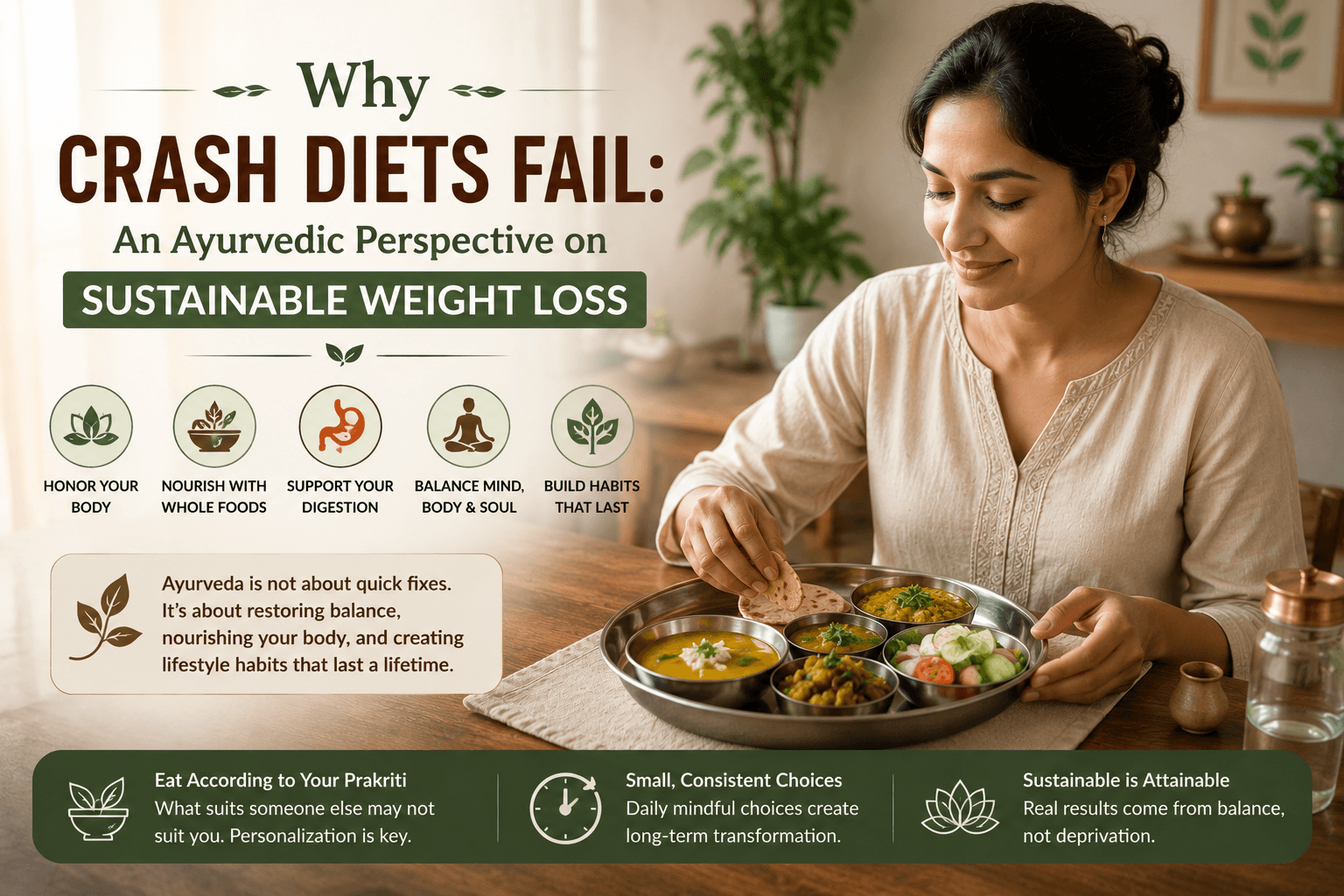
Understanding why crash diets fail comes down to a simple truth: extreme, short-term restriction disrupts metabolism, digestion, and hormonal balance, making weight regain almost inevitable once normal eating resumes. Ayurveda has long emphasised gradual, sustainable habits over drastic restriction, viewing sudden diet changes as disruptive to Agni (digestive fire) and overall bodily balance. A more sustainable approach — combining mindful eating, consistent routine, and gentle lifestyle changes — tends to support longer-lasting results. As always, consult your doctor or a nutritionist before making major changes to your diet.
If you’ve ever lost weight quickly on a crash diet only to gain it all back (and sometimes more), you’re far from alone. In this article, we’ll explore why crash diets fail, what’s actually happening inside your body during extreme restriction, and what Ayurveda has traditionally taught about sustainable, long-term weight management.
What Exactly Is a Crash Diet?
A crash diet typically involves severely restricting calorie intake, often to unsustainably low levels, over a short period of time in hopes of rapid weight loss. This can include extreme fasting, cutting out entire food groups, or following very low-calorie meal plans that aren’t nutritionally balanced. While crash diets can lead to fast initial weight loss, this is one of the biggest reasons why crash diets fail in the long run — the results are rarely sustainable.
Why Crash Diets Fail: The Common Causes
There are several well-documented reasons why crash diets fail to deliver lasting results. Understanding these can help you make more informed choices about your weight management approach.
1. Metabolic Slowdown
When you drastically cut calories, your body perceives this as a threat to survival and responds by slowing down your metabolism to conserve energy. This adaptive response is one of the primary biological reasons why crash diets fail — your body becomes more efficient at storing fat and less efficient at burning it, making it even harder to lose weight over time.
2. Loss of Muscle Mass, Not Just Fat
Severe calorie restriction often leads to the body breaking down muscle tissue for energy, alongside fat. Since muscle tissue burns more calories at rest than fat tissue, losing muscle further slows down your metabolism, compounding the problem and contributing to why crash diets fail long-term.
3. Intense Hunger and Cravings
Extreme restriction triggers strong hunger hormones and cravings, particularly for high-calorie, sugary, or fatty foods. This is the body’s natural survival response, but it often leads to overeating once the diet ends, contributing significantly to weight regain.
4. Nutritional Deficiencies
Crash diets often lack essential nutrients because they’re focused on rapid calorie reduction rather than balanced nutrition. This can lead to fatigue, weakened immunity, hair thinning, and other health concerns, making the diet difficult to sustain even in the short term.
5. Psychological and Emotional Strain
Restrictive diets can create an unhealthy relationship with food, leading to feelings of guilt, obsession over calories, and eventual burnout. This psychological toll is a major, often overlooked reason why crash diets fail — they’re simply too difficult to maintain mentally over time.
6. The “Yo-Yo” Effect
Once a crash diet ends, most people return to their previous eating habits, but with a slower metabolism and depleted muscle mass. This combination often leads to rapid weight regain, sometimes exceeding the original starting weight — a pattern commonly known as yo-yo dieting.
Signs Your Diet Approach May Be Too Extreme
It’s worth recognising the signs that a diet plan may be unsustainable or unhealthy:
- Constant hunger or preoccupation with food
- Extreme fatigue or low energy throughout the day
- Irritability or mood swings
- Hair thinning or skin changes
- Difficulty concentrating
- Feeling that the diet is impossible to maintain long-term
- Rapid weight loss followed by equally rapid weight regain in the past
If you notice several of these signs, it may be worth reconsidering your approach and speaking with a doctor or nutritionist about a more sustainable path forward.
What Sustainable Weight Management Actually Looks Like
Understanding why crash diets fail naturally leads to the question: what actually works? Sustainable weight management tends to share a few common principles:
- Gradual, moderate calorie adjustments — Rather than extreme restriction, small, manageable changes are easier to maintain long-term.
- Balanced nutrition — Including all food groups in appropriate proportions, rather than eliminating entire categories.
- Regular physical activity — Combining diet with consistent movement supports both weight management and overall health.
- Realistic timelines — Gradual weight loss, typically around 0.5 to 1 kg per week, is more likely to be sustained.
- Focus on habits, not quick fixes — Building long-term habits rather than following temporary diet plans supports lasting results.
This shift in mindset — from quick fixes to sustainable habits — is central to understanding why crash diets fail while gradual approaches tend to succeed.
The Ayurvedic Perspective on Why Crash Diets Fail
Ayurveda offers a particularly insightful lens on why crash diets fail, rooted in centuries of observation about digestion and the body’s natural rhythms. According to Ayurvedic principles, sudden and extreme dietary changes are believed to disturb Agni, or digestive fire, which is considered central to overall health and proper metabolism.
When Agni is weakened by extreme restriction, Ayurveda believes the body becomes less capable of properly digesting and metabolising food, which may contribute to the very issues modern science also observes — slower metabolism, nutrient deficiencies, and difficulty maintaining weight loss.
Ayurveda’s traditional approach to weight management instead emphasises:
- Eating according to your body’s constitution (Prakriti) — Rather than following generic, one-size-fits-all diet rules.
- Gradual, mindful changes — Ayurveda favours slow, steady adjustments over sudden, extreme restriction.
- Supporting digestive fire (Agni) — Through warm, freshly cooked meals and mindful eating practices, rather than skipping meals or severe calorie cutting.
- Eating with awareness — Ayurveda encourages eating without distraction, chewing thoroughly, and stopping when comfortably full, rather than eating based on strict calorie counts alone.
- Herbs like Triphala and Guggul — Traditionally used to help support healthy digestion and metabolism as part of a gradual, balanced approach.
This Ayurvedic wisdom aligns remarkably well with what modern research has found about why crash diets fail — both perspectives point toward gradual, sustainable habits as the more effective long-term path.
Practical Tips for a Sustainable Weight Management Journey
If you’re ready to move away from crash dieting, here are some practical, Ayurveda-informed tips to consider:
- Eat your largest meal in the middle of the day — Ayurveda considers digestive fire strongest around midday, making this an ideal time for your biggest meal.
- Avoid skipping meals — Consistent meal timings support stable digestion and energy levels.
- Include all six tastes in your meals — Ayurveda believes sweet, sour, salty, bitter, pungent, and astringent tastes together help create satisfaction and reduce cravings.
- Practice portion awareness, not extreme restriction — Eating until comfortably satisfied, rather than either overeating or severely restricting.
- Combine diet with movement — Regular physical activity supports metabolism far more sustainably than diet alone.
- Be patient with the process — Understand that sustainable weight management takes time, and that’s a good thing.
Reframing Your Relationship With Weight Loss
Perhaps the most important lesson in understanding why crash diets fail is recognising that lasting weight management isn’t about finding the fastest, most extreme method — it’s about building a relationship with food and your body that you can genuinely maintain. Ayurveda’s emphasis on balance, awareness, and gradual change offers a refreshing, sustainable alternative to the crash diet cycle so many people find themselves stuck in.
Frequently Asked Questions
1. Why do I gain weight back after a crash diet?
Crash diets often slow down metabolism and cause muscle loss, both of which make it easier to regain weight once normal eating resumes. This pattern, known as yo-yo dieting, is one of the main reasons crash diets fail long-term.
2. Is it better to lose weight slowly?
Yes, gradual weight loss, typically around 0.5 to 1 kg per week, is generally considered more sustainable and is less likely to result in muscle loss, nutritional deficiencies, or rapid weight regain compared to crash dieting.
3. What does Ayurveda recommend instead of crash dieting?
Ayurveda recommends gradual, mindful eating habits that support healthy digestion (Agni), along with eating according to your body’s constitution and maintaining a consistent daily routine, rather than sudden, extreme restriction.
A Gentle Note Before You Go
Understanding why crash diets fail can be genuinely freeing — it shifts the focus from chasing quick fixes to building habits that actually last. If you’re looking for gentle, everyday support on a more sustainable wellness journey, Healthywe’s range of weight management herbal supplements is made using 100% natural, vegetarian ingredients rooted in traditional Ayurvedic wisdom.
As always, dietary changes and herbal supplements are meant to support your overall wellness, not replace medical care. Please consult your doctor or an Ayurvedic practitioner for proper diagnosis, and before making any changes to a prescribed treatment.
Explore our natural wellness range at www.healthywewellness.com/shop.