Quick Answer
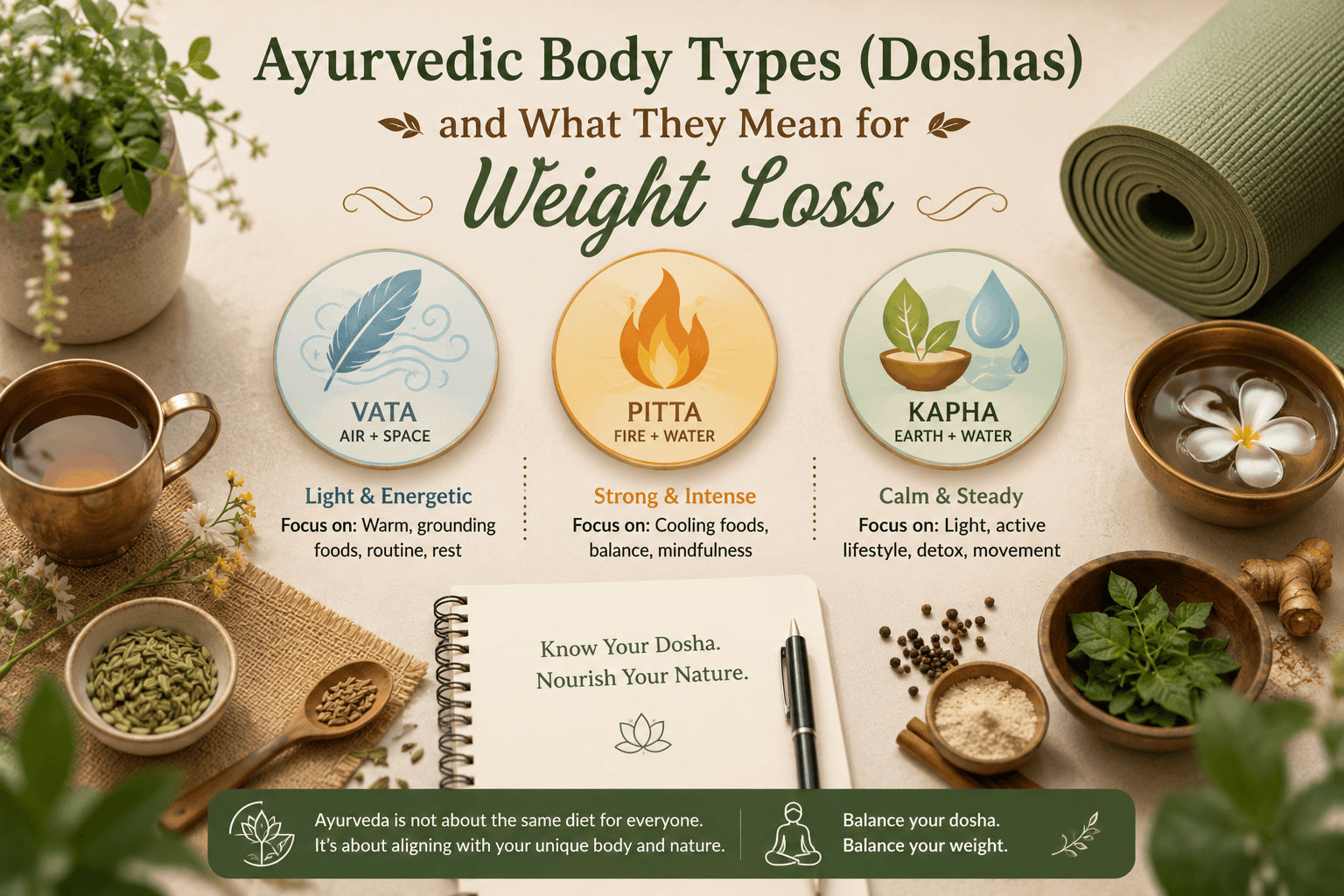
According to Ayurveda, Ayurvedic body types and weight loss are closely connected, since each of the three doshas — Vata, Pitta, and Kapha — influences metabolism, appetite, and how the body tends to gain or maintain weight. Kapha body types are traditionally believed to be more prone to weight gain and slower metabolism, Vata types tend to have variable weight and appetite, while Pitta types usually maintain weight more easily due to a naturally stronger digestive fire. Understanding your dominant dosha may help you choose a weight management approach that feels more sustainable, though it should always be used alongside, not instead of, guidance from a doctor or nutritionist.
If you’ve ever felt like generic diet advice just doesn’t work for your body the way it seems to for others, Ayurveda might offer an interesting explanation. In this article, we’ll explore Ayurvedic body types and weight loss, what each dosha means for your metabolism, and practical, dosha-specific tips you can actually use.
What Are Ayurvedic Body Types (Doshas)?
Ayurveda describes three fundamental energies, or doshas, that are believed to govern all physical and mental processes in the body: Vata, Pitta, and Kapha. Every person is thought to have a unique combination of these three doshas, known as their Prakriti, or natural constitution, though usually one or two doshas tend to dominate.
Understanding Ayurvedic body types and weight loss starts with recognising that these doshas aren’t just abstract concepts — they’re traditionally believed to directly influence digestion, metabolism, appetite, and even emotional eating patterns, all of which play a role in weight management.
The Three Doshas and Their Connection to Weight
1. Vata Dosha: Air and Space
Vata is associated with qualities like movement, lightness, and dryness. People with a Vata-dominant constitution often have a naturally slim build, variable appetite, and a tendency toward irregular eating habits. While Vata types don’t typically struggle with weight gain in the same way as Kapha types, they may experience fluctuating weight due to inconsistent digestion and eating patterns.
2. Pitta Dosha: Fire and Water
Pitta is associated with qualities like heat, intensity, and transformation. People with a Pitta-dominant constitution usually have a strong digestive fire (Agni) and a moderate, well-proportioned build. Pitta types often find it relatively easier to maintain a stable weight, though imbalances can sometimes show up as irregular eating patterns driven by intense hunger or stress.
3. Kapha Dosha: Earth and Water
Kapha is associated with qualities like stability, heaviness, and steadiness. People with a Kapha-dominant constitution often have a naturally sturdier build, slower metabolism, and a tendency to gain weight more easily compared to the other doshas. This is why Kapha imbalance is the dosha most commonly discussed in relation to Ayurvedic body types and weight loss.
It’s worth remembering that most people are a combination of two doshas, with one usually more dominant, so understanding your unique blend can offer more nuanced insight than fitting neatly into just one category.
Common Causes of Weight Gain According to Each Dosha
Ayurveda offers a slightly different lens on why weight gain happens, depending on which dosha is out of balance:
- Kapha imbalance — Often linked to overeating, excessive heavy or oily foods, lack of physical activity, and a generally slower metabolism.
- Vata imbalance — Irregular eating patterns, skipping meals, and stress-driven overeating can disrupt digestion and lead to inconsistent weight changes.
- Pitta imbalance — Intense hunger, stress-related eating, and consuming excessive spicy, oily, or acidic foods can occasionally contribute to weight fluctuations, even in naturally balanced Pitta types.
Recognising which pattern feels most familiar to you can offer useful insight into the root causes behind your own weight management journey, though a proper assessment from an Ayurvedic practitioner offers a far more accurate picture than self-assessment alone.
Signs That May Indicate Your Dominant Dosha
While a proper dosha assessment is best done with an Ayurvedic practitioner, here are some general signs associated with each type:
- Vata signs: Naturally thin build, dry skin, variable appetite, tendency toward anxiety or overthinking, cold hands and feet.
- Pitta signs: Medium, muscular build, strong appetite, warm body temperature, tendency toward irritability when hungry.
- Kapha signs: Sturdier build, tendency to gain weight easily, slower digestion, calm and steady temperament, oilier skin.
Many people notice a blend of these traits rather than fitting perfectly into one category, which is completely normal within Ayurvedic understanding.
Ayurvedic Body Types and Weight Loss: Dosha-Specific Tips
Since Ayurvedic body types and weight loss are so closely linked, Ayurveda recommends different approaches depending on your dominant dosha, rather than a one-size-fits-all plan.
Tips for Kapha-Dominant Body Types
- Favour light, warm, and easily digestible foods over heavy, oily, or cold foods.
- Incorporate regular, vigorous physical activity, as Kapha types benefit significantly from consistent movement.
- Limit sweet, salty, and heavy foods, which are believed to aggravate Kapha further.
- Wake up earlier in the day, as Ayurveda associates late mornings with increased Kapha sluggishness.
- Include warming spices like ginger and black pepper in meals to help support digestion.
Tips for Vata-Dominant Body Types
- Maintain regular, consistent meal timings to help support stable digestion.
- Favour warm, nourishing, slightly oily foods rather than cold, dry, or raw foods.
- Practice calming activities like yoga and meditation to help balance Vata’s tendency toward restlessness.
- Avoid excessive caffeine or stimulants, which can further aggravate Vata imbalance.
- Prioritise good, consistent sleep, as irregular sleep can worsen Vata-related digestive imbalance.
Tips for Pitta-Dominant Body Types
- Avoid excessive spicy, fried, or acidic foods, which can aggravate Pitta.
- Eat meals at regular intervals, since Pitta types often experience intense hunger that can lead to overeating if meals are delayed.
- Incorporate cooling foods like cucumber, coconut, and leafy greens into your diet.
- Practice stress management, as Pitta imbalance is closely linked to irritability and stress-driven eating.
- Engage in moderate-intensity exercise rather than very intense or overheating workouts.
Universal Lifestyle Tips That Support All Dosha Types
While Ayurvedic body types and weight loss benefit from personalised approaches, some habits are broadly supportive for everyone, regardless of dominant dosha:
- Eat mindfully — Slow down while eating and pay attention to hunger and fullness cues.
- Stay physically active — Regular movement supports metabolism and overall wellbeing across all dosha types.
- Prioritise good sleep — Quality rest supports hormonal balance, which plays a role in weight management.
- Stay hydrated — Adequate water intake supports digestion and overall metabolic function.
- Manage stress — Chronic stress can disrupt eating patterns and hormone balance across all body types.
The Broader Ayurvedic Perspective on Weight Management
Beyond just understanding Ayurvedic body types and weight loss, Ayurveda’s broader approach to weight management centres around supporting Agni, or digestive fire, since weak or imbalanced digestion is traditionally believed to be at the root of most weight-related concerns, regardless of dosha type. Ayurveda also emphasises eating according to the season, one’s individual constitution, and the time of day, rather than following rigid, generic diet rules.
Traditional Ayurvedic herbs like Triphala, Guggul, and Punarnava are commonly used to help support healthy metabolism and digestion as part of an overall weight management routine, always alongside mindful eating and regular movement rather than as a standalone solution.
This individualised, whole-body approach is one of the reasons Ayurveda continues to offer valuable insight for people who feel frustrated by generic, one-size-fits-all weight loss advice.
Should You Get a Formal Dosha Assessment?
While general dosha traits can offer useful self-awareness, a formal assessment by a qualified Ayurvedic practitioner offers a much more accurate understanding of your unique constitution and any current imbalances. This can help you build a weight management approach that’s genuinely tailored to your body, rather than relying on generalised online quizzes or self-assessment alone.
Frequently Asked Questions
1. Which Ayurvedic dosha is most linked to weight gain?
Kapha dosha is traditionally most associated with weight gain, due to its qualities of heaviness, stability, and slower metabolism. However, imbalances in Vata and Pitta can also contribute to weight-related concerns in different ways.
2. Can I have more than one dominant dosha?
Yes, most people have a combination of two dominant doshas, known as a dual constitution, rather than fitting into just one category. A formal assessment with an Ayurvedic practitioner can help clarify your unique combination.
3. Does Ayurveda recommend the same diet for weight loss for everyone?
No, Ayurveda emphasises personalised dietary approaches based on your dominant dosha, current imbalances, season, and individual digestion, rather than a single universal diet plan.
A Gentle Note Before You Go
Understanding Ayurvedic body types and weight loss can offer a more personalised, compassionate way to approach your wellness journey, especially if generic diet advice hasn’t felt like the right fit. If you’re looking for gentle, everyday support alongside your dosha-specific routine, Healthywe’s range of weight management herbal supplements is made using 100% natural, vegetarian ingredients rooted in traditional Ayurvedic wisdom.
As always, dosha-based lifestyle changes and herbal supplements are meant to support your overall wellness, not replace medical care. Please consult your doctor or an Ayurvedic practitioner for proper diagnosis, and before making any changes to a prescribed treatment.
Explore our natural wellness range at www.healthywewellness.com/shop.