Quick Answer
Safed Musli for energy and recovery reflects a traditional Ayurvedic use that dates back centuries, where this root, also known as “white gold,” has been valued as a Rasayana, or rejuvenating herb, traditionally used to help support strength, stamina, and the body’s recovery after periods of exertion or illness. While Safed Musli has a rich traditional reputation, it’s worth knowing upfront that most available research so far comes from laboratory and animal studies, with relatively few large-scale human clinical trials, so its modern evidence base is still developing. As with any herb, please consult your doctor before starting Safed Musli, especially if you’re on any existing medication.
Tucked away in Ayurvedic formulations for centuries, Safed Musli has quietly built a reputation as one of India’s most valued traditional roots for strength and vitality. In this article, we’ll explore Safed Musli for energy and recovery in an honest, balanced way — what this herb actually is, what Ayurveda has traditionally used it for, what research says so far, and what to genuinely know before trying it.
What Is Safed Musli?
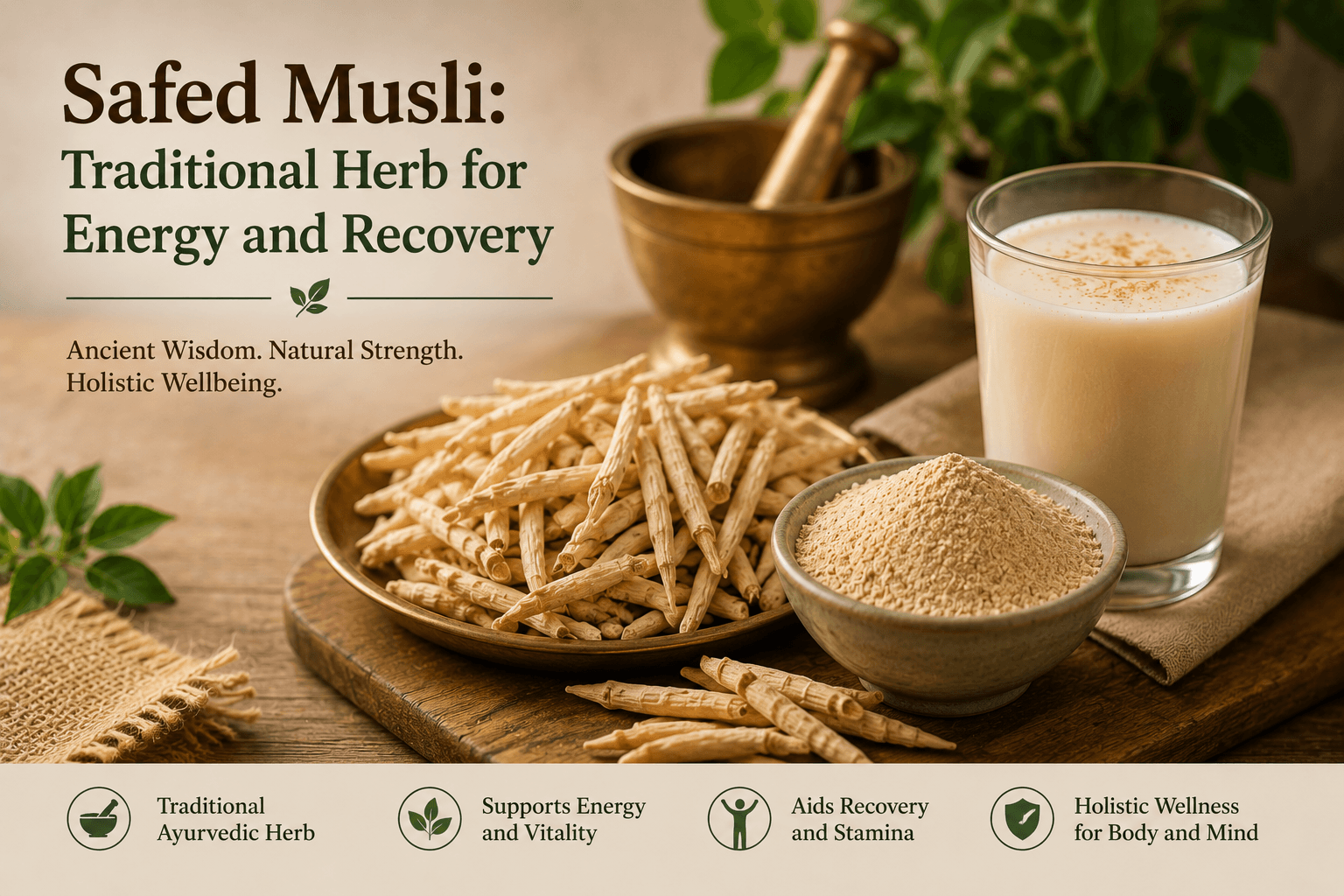
Safed Musli, botanically known as Chlorophytum borivilianum, is a root native to India, commonly called “white gold” or “Divya Aushad” due to its high value in traditional Indian medicine systems. Its tuberous roots have been used since ancient times, with references appearing in classical Ayurvedic texts, and are rich in saponins, alkaloids, vitamins, minerals, and polysaccharides, compounds believed to contribute to its traditional reputation as a general health-promoting tonic.
Understanding Safed Musli for energy and recovery starts with recognising its classification in Ayurveda as part of the “Rasayana” group of herbs, traditionally used to support rejuvenation, strength, and overall vitality.
Common Reasons People Explore Safed Musli
People typically turn to Safed Musli for energy and recovery for several traditional and general wellness reasons, including:
- General fatigue and low stamina — One of the most traditional uses of this root in Ayurvedic practice.
- Supporting recovery after illness or exertion — Traditionally believed to help support the body’s natural recovery process.
- Overall strength and vitality support — In line with its classification as a broadly supportive Rasayana herb.
- General wellness during demanding or physically taxing periods — A traditional use passed down through generations in Ayurvedic households.
These traditional uses reflect why Safed Musli for energy and recovery continues to be a widely recognised topic within Ayurvedic wellness circles.
Common Signs People Associate With Needing Extra Strength Support
While everyone’s body and needs are different, these are common experiences that often lead people to explore herbs like Safed Musli:
- Persistent tiredness or low stamina
- Slower recovery after physical exertion or minor illness
- A general feeling of reduced strength or vitality
- Difficulty sustaining energy through demanding days
If these signs are persistent or significantly affecting your daily life, it’s important to consult a doctor for proper evaluation, as ongoing fatigue can have several underlying causes that deserve medical attention rather than assumption or self-treatment alone.
What Does the Research Say About Safed Musli?
It’s worth being genuinely honest about where the science currently stands on Safed Musli, since this varies quite a bit from herb to herb.
Much of the available research on Safed Musli comes from laboratory and animal studies, which have explored its traditional reputation as an adaptogenic, antioxidant, and general health-promoting root. These studies have looked at various properties of the plant’s compounds, including its saponin content, but findings from animal or lab models don’t always translate directly to humans.
Human clinical research on Safed Musli remains comparatively limited, with only a small number of clinical studies conducted so far, most focused on specific traditional applications rather than general energy or recovery outcomes broadly. This means that while Safed Musli’s traditional reputation for supporting strength and vitality is long-standing and well-documented in classical Ayurvedic texts, the modern scientific evidence base, particularly robust, large-scale human trials specifically on energy and recovery, is still in earlier stages of development compared to more extensively studied herbs like Ashwagandha.
This is an important, honest distinction to understand: Safed Musli’s traditional use is genuinely well-established, but if you’re looking for the same depth of modern clinical evidence found with some other Ayurvedic herbs, it’s worth setting realistic expectations and choosing this herb primarily based on its traditional standing, discussed openly with your doctor or Ayurvedic practitioner.
How Safed Musli Is Traditionally Used
Safed Musli is available in several traditional and modern forms:
- Dried root powder — Traditionally mixed with warm milk, a classic Ayurvedic preparation.
- Capsules or tablets — A convenient, standardized option for consistent dosing.
- Combined herbal formulations — Often included alongside other traditional Rasayana herbs in Ayurvedic tonics aimed at supporting overall strength and vitality.
Choosing standardized, good-quality products from reputable brands can help ensure more consistent quality and dosing.
Lifestyle Tips to Complement Safed Musli
Safed Musli for energy and recovery works best as part of a broader, supportive lifestyle:
- Maintain a nutrient-rich, balanced diet — Overall nutrition plays a foundational role in genuine energy and recovery support.
- Prioritise good sleep — Quality rest is essential for the body’s natural recovery processes.
- Stay physically active — Regular, appropriate movement supports overall strength and stamina over time.
- Manage stress — Chronic stress can significantly affect overall energy and vitality.
- Allow adequate recovery time — Especially after illness or intense physical exertion, giving your body proper time to recover supports long-term resilience.
The Ayurvedic Perspective on Safed Musli
In Ayurveda, Safed Musli holds a respected place among “Vajikaran Rasayana” herbs, a classical category traditionally associated with rejuvenation, strength, and overall vitality. Ayurvedic texts have long described Safed Musli as a general health-promoting tonic, traditionally used to support “Bala” (strength) and “Ojas,” the subtle essence believed to be responsible for vitality and resilience.
Ayurveda’s traditional approach to using Safed Musli typically includes:
- Combined with warm milk — A classic traditional preparation believed to enhance its supportive properties.
- As part of broader Rasayana formulations — Often combined with other traditional herbs for comprehensive vitality support.
- Alongside a balanced, nourishing diet — Ayurveda emphasises that herbs work best alongside supportive dietary and lifestyle habits, not in isolation.
- Used during recovery periods — Traditionally recommended to help support the body’s natural recovery after illness or periods of physical strain.
This traditional Ayurvedic context is genuinely central to understanding Safed Musli for energy and recovery — while modern clinical research is still developing, this herb’s traditional standing in Indian wellness practices spans many centuries.
Things to Keep in Mind Before Using Safed Musli
A few points are worth considering before adding Safed Musli to your routine:
- Choose good-quality, standardized products from reputable brands, given the relatively early stage of human research on dosing consistency.
- Inform your doctor if you’re on any prescribed medication before starting Safed Musli, particularly if you have any existing health conditions.
- Pregnant or breastfeeding women should consult a doctor before using Safed Musli or any new herbal supplement.
- Approach marketing claims with healthy skepticism, and rely on your doctor or Ayurvedic practitioner’s guidance rather than promotional claims alone.
Frequently Asked Questions
1. What is Safed Musli traditionally used for?
Safed Musli is traditionally used in Ayurveda as a Rasayana herb to help support strength, stamina, and the body’s natural recovery process, particularly during periods of fatigue or after physical exertion.
2. Is there scientific research supporting Safed Musli’s benefits?
Most current research on Safed Musli comes from laboratory and animal studies, with relatively few large-scale human clinical trials so far. Its traditional use is well-established in classical Ayurvedic texts, but modern scientific evidence is still developing compared to some other Ayurvedic herbs.
3. How is Safed Musli traditionally consumed?
Safed Musli is traditionally consumed as a dried root powder mixed with warm milk, though modern standardized capsules and combined herbal formulations are also widely available today.
A Gentle Note Before You Go
Safed Musli for energy and recovery reflects a genuinely rich Ayurvedic tradition, even as modern research continues to develop around this valued root. If you’re looking for gentle, everyday support alongside a balanced lifestyle, Healthywe’s range of strength and vitality herbal supplements is made using 100% natural, vegetarian ingredients rooted in traditional Ayurvedic wisdom.
As always, herbal supplements are meant to support your overall wellness, not replace medical care. Please consult your doctor or an Ayurvedic practitioner for proper diagnosis, and before making any changes to a prescribed treatment.
Explore our natural wellness range at www.healthywewellness.com/shop.