Quick Answer
Ayurvedic skincare rituals for naturally glowing skin centre around supporting skin health from both the inside and outside — through mindful diet, herbal skincare practices, and consistent daily routines rather than quick fixes. Practices like oil massage (Abhyanga), using natural ingredients like turmeric and sandalwood, staying hydrated, and eating according to your skin’s needs are traditionally believed to help support healthy, radiant-looking skin over time. These rituals work best as part of a consistent lifestyle, not an overnight solution, and persistent skin concerns should always be evaluated by a dermatologist or Ayurvedic practitioner.
Long before serums and multi-step skincare routines became popular, Ayurveda was already offering time-tested wisdom on how to care for skin, both from the outside and within. In this article, we’ll explore Ayurvedic skincare rituals for naturally glowing skin, understand what affects skin health, and share practical, traditional practices you can incorporate into your daily routine.
Understanding What Affects Your Skin’s Natural Glow
Before diving into specific rituals, it helps to understand what genuinely influences how healthy and radiant your skin looks. Skin health isn’t just about what you apply externally — it’s deeply connected to internal factors like digestion, hydration, sleep, and stress levels. This is exactly why Ayurvedic skincare rituals for naturally glowing skin have always taken a holistic, inside-and-out approach, rather than focusing solely on topical products.
Common Causes of Dull or Uneven Skin
Several everyday factors can affect your skin’s natural glow. Understanding these helps explain why certain Ayurvedic skincare rituals for naturally glowing skin focus on more than just what you put on your face:
- Poor digestion — Ayurveda closely links digestive health to skin health, believing that improperly digested food can affect skin clarity over time.
- Dehydration — Insufficient water intake can make skin appear dull and less supple.
- Poor sleep quality — Inadequate rest affects the skin’s natural repair and renewal processes.
- Excess sun exposure — Can contribute to dullness, uneven tone, and premature signs of ageing over time.
- Stress — Chronic stress is linked to various skin concerns, including breakouts and a tired-looking complexion.
- Poor diet — Diets high in processed foods and low in fresh fruits and vegetables can affect overall skin health.
- Environmental pollution — Regular exposure to pollutants can affect skin clarity and contribute to a dull appearance over time.
Recognising these causes is an important first step toward understanding why Ayurvedic skincare rituals for naturally glowing skin emphasise both external care and internal balance together.
Signs Your Skin May Need More Attention
Common signs that indicate your skin could benefit from additional care and support include:
- A dull, tired-looking complexion
- Uneven skin tone or texture
- Increased dryness or flakiness
- Occasional breakouts, particularly linked to stress or dietary changes
- Reduced skin elasticity or a tired appearance
If you experience persistent skin concerns like severe acne, unusual rashes, or significant changes in your skin, it’s important to consult a dermatologist for proper diagnosis rather than relying solely on home remedies.
Ayurvedic Skincare Rituals for Naturally Glowing Skin
Here’s a practical look at Ayurvedic skincare rituals for naturally glowing skin that you can incorporate into your daily and weekly routine.
1. Abhyanga (Daily Oil Massage)
Self-massage with natural oils like coconut, sesame, or almond oil is a cornerstone Ayurvedic practice, traditionally believed to help nourish the skin, support circulation, and promote a naturally healthy glow. Even a few minutes before your bath can make this a genuinely relaxing daily ritual.
2. Ubtan (Traditional Herbal Face Pack)
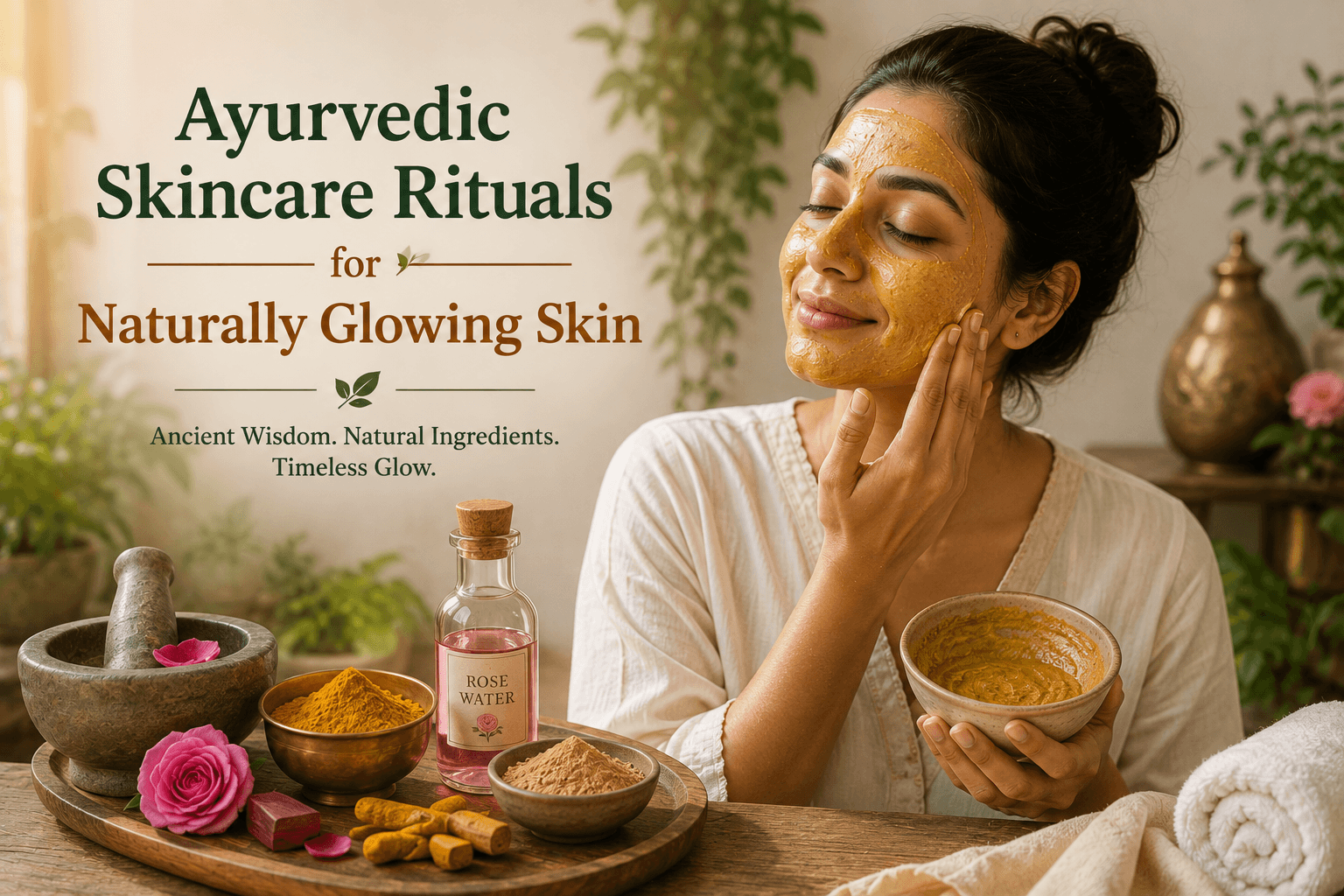
Ubtan is a traditional Ayurvedic paste, often made from besan (gram flour), turmeric, and rosewater or milk, traditionally used to help gently exfoliate and support a natural glow. This age-old ritual remains popular in Indian households, particularly before special occasions.
3. Turmeric for Skin
Turmeric has been used in Ayurveda for centuries, traditionally believed to help support clear, radiant-looking skin when used in face packs or included as part of your diet.
4. Sandalwood (Chandan) Paste
Sandalwood paste is traditionally used in Ayurvedic skincare for its cooling properties, believed to help soothe the skin and support a naturally even-toned complexion.
5. Rose Water as a Natural Toner
Rose water is traditionally used in Ayurveda to help refresh and hydrate the skin, often used as a gentle, natural toner after cleansing.
6. Aloe Vera for Hydration
Fresh aloe vera gel is traditionally valued in Ayurveda for its soothing, hydrating properties, believed to help support skin’s natural moisture balance.
7. Gentle Cleansing With Natural Ingredients
Rather than harsh, chemical-heavy cleansers, Ayurveda traditionally favours gentle, natural cleansing methods using ingredients like besan or herbal powders, believed to be kinder to the skin’s natural balance.
8. Warm Water Face Steaming
Occasional gentle steaming with warm water, sometimes infused with herbs like neem or tulsi, is traditionally used to help open pores and support a natural, healthy-looking glow.
Together, these Ayurvedic skincare rituals for naturally glowing skin reflect a holistic, gentle approach that many people find genuinely enjoyable as part of a relaxing self-care routine, not just a beauty regimen.
Diet and Lifestyle Tips for Skin Health From Within
Since Ayurveda views skin health as deeply connected to internal wellness, these lifestyle habits complement your external skincare rituals:
- Stay well-hydrated — Adequate water intake supports skin’s natural moisture and overall appearance.
- Eat antioxidant-rich foods — Include colourful fruits and vegetables, which are traditionally and nutritionally linked to supporting healthy-looking skin.
- Support healthy digestion — Since Ayurveda closely links digestion to skin health, maintaining balanced Agni is considered foundational to skin wellness.
- Prioritise good sleep — Quality rest supports the skin’s natural repair processes overnight.
- Manage stress — Chronic stress can affect skin health, so practices like meditation may offer indirect support.
- Limit excess sugar and processed foods — These are traditionally and nutritionally linked to skin concerns when consumed in excess.
- Protect skin from excess sun exposure — Simple measures like using natural sun protection can help maintain skin’s natural tone and health over time.
The Ayurvedic Perspective on Skin Health and Doshas
Ayurveda believes that skin health, or “Twak,” reflects the balance of your doshas, and understanding your skin type through this lens can help tailor your Ayurvedic skincare rituals for naturally glowing skin more effectively.
- Vata skin — Tends to be naturally dry and may benefit from richer, more nourishing oils like sesame or almond, along with consistent hydration.
- Pitta skin — Tends to be more sensitive and prone to redness, benefiting from cooling ingredients like sandalwood, rose water, and aloe vera.
- Kapha skin — Tends to be naturally oilier, benefiting from lighter, gently exfoliating ingredients like besan and herbal powders.
Ayurveda’s traditional approach believes that supporting skin health from within, through balanced digestion, appropriate diet, and mindful lifestyle habits, is just as important as topical care — perhaps even more so. This holistic understanding is what makes Ayurvedic skincare rituals for naturally glowing skin genuinely different from purely cosmetic approaches, focusing on long-term balance rather than temporary, surface-level results.
Building a Sustainable Ayurvedic Skincare Routine
You don’t need to adopt every ritual at once. Start with one or two practices that genuinely resonate with you — perhaps a weekly Ubtan face pack or a consistent oil massage routine — and build from there. Combined with mindful eating and lifestyle habits, these small, consistent practices, rooted in centuries of Ayurvedic tradition, can genuinely support your skin’s natural health and radiance over time.
Frequently Asked Questions
1. What is the best Ayurvedic ritual for glowing skin?
There isn’t a single “best” ritual, as different practices like Abhyanga (oil massage), Ubtan (herbal face packs), and dietary habits each play a complementary role. Combining a few consistent rituals tends to offer more meaningful, holistic support than relying on just one.
2. Can diet really affect skin health?
Yes, Ayurveda closely links digestion and diet to skin health, and modern nutrition also recognises the role of hydration, antioxidants, and balanced eating in supporting healthy-looking skin.
3. How long does it take to see results from Ayurvedic skincare rituals?
Ayurvedic skincare generally works gradually, supporting skin health over weeks to months of consistent practice, rather than offering immediate, overnight results.
A Gentle Note Before You Go
Ayurvedic skincare rituals for naturally glowing skin remind us that genuine skin health comes from consistent, holistic care — both inside and out — rather than quick fixes. If you’re looking for gentle, everyday support alongside these traditional rituals, Healthywe’s range of skincare herbal supplements is made using 100% natural, vegetarian ingredients rooted in traditional Ayurvedic wisdom.
As always, skincare rituals and herbal supplements are meant to support your overall wellness, not replace professional dermatological care. Please consult your doctor or an Ayurvedic practitioner for proper diagnosis, and before making any changes to a prescribed treatment.
Explore our natural wellness range at www.healthywewellness.com/shop.