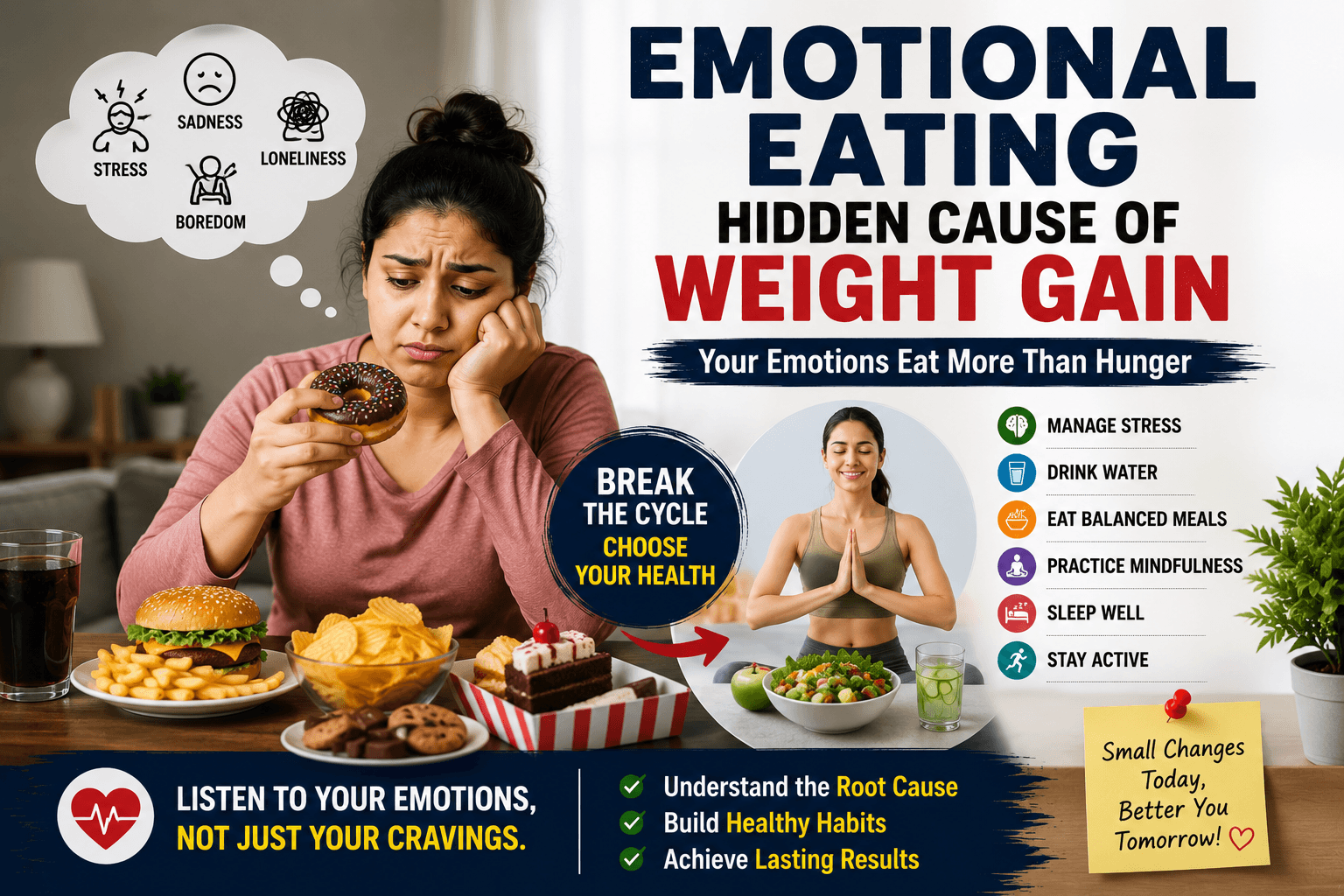
Emotional Eating Weight Gain Explained
Many people eat when they feel stressed, sad, or bored. However, they may not feel true hunger.
This is called emotional eating. Therefore, understanding emotional eating weight gain is very important.
Because emotions can affect eating habits and body weight.
What Is Emotional Eating?
Emotional eating means eating because of feelings instead of hunger.
For example, stress, sadness, loneliness, or anger can increase cravings.
As a result, people may eat unhealthy food without realizing it.
Common Signs of Emotional Eating
Let’s understand the warning signs.
1. Eating When Not Hungry
You may eat even after a full meal.
Therefore, extra calories increase weight gain.
2. Craving Sugary or Junk Food
Stress often increases cravings.
Moreover, emotional eating usually involves unhealthy snacks.
3. Eating Very Fast
People often eat quickly during emotional stress.
As a result, the body does not feel satisfied properly.
4. Feeling Guilty After Eating
Many people feel regret after overeating.
However, guilt can increase stress again.
5. Eating During Stress or Sadness
Emotional eating happens more during difficult emotions.
Because food gives temporary comfort.
Why Emotional Eating Causes Weight Gain
Stress affects hormones in the body.
Additionally, emotional eating increases calorie intake.
As a result, fat storage increases slowly over time.
Healthy Ways to Control Emotional Eating
Simple habits can help control cravings.
1. Drink Water First
Sometimes thirst feels like hunger.
Therefore, drink water before eating snacks.
2. Eat Balanced Meals
Healthy meals reduce cravings.
Moreover, protein and fiber help keep you full.
3. Manage Stress
Meditation and breathing exercises calm the mind.
As a result, emotional cravings reduce.
4. Avoid Keeping Junk Food Nearby
Easy access increases overeating.
Therefore, keep healthy snacks instead.
5. Sleep Properly
Poor sleep increases stress and hunger hormones.
Because of this, cravings become stronger.
Sleep and Emotional Eating
Sleep plays a big role in hunger control.
However, poor sleep increases emotional stress.
Therefore, proper sleep helps control overeating.
Lifestyle Changes That Help
Healthy routines improve mental and physical health.
- Exercise daily
- Spend time outdoors
- Talk with family or friends
- Practice mindfulness
As a result, emotional balance improves.
Ayurvedic Drinks for Weight Loss
When to Consult a Doctor
If emotional eating becomes frequent, seek professional help.
Also, consult a doctor if stress or anxiety feels difficult to manage.
Final Thoughts
Emotional eating weight gain is more common than many people think.
However, small lifestyle changes can help control it.
Healthy food, stress management, sleep, and mindfulness can improve eating habits naturally.
Stay patient and focus on long-term health.