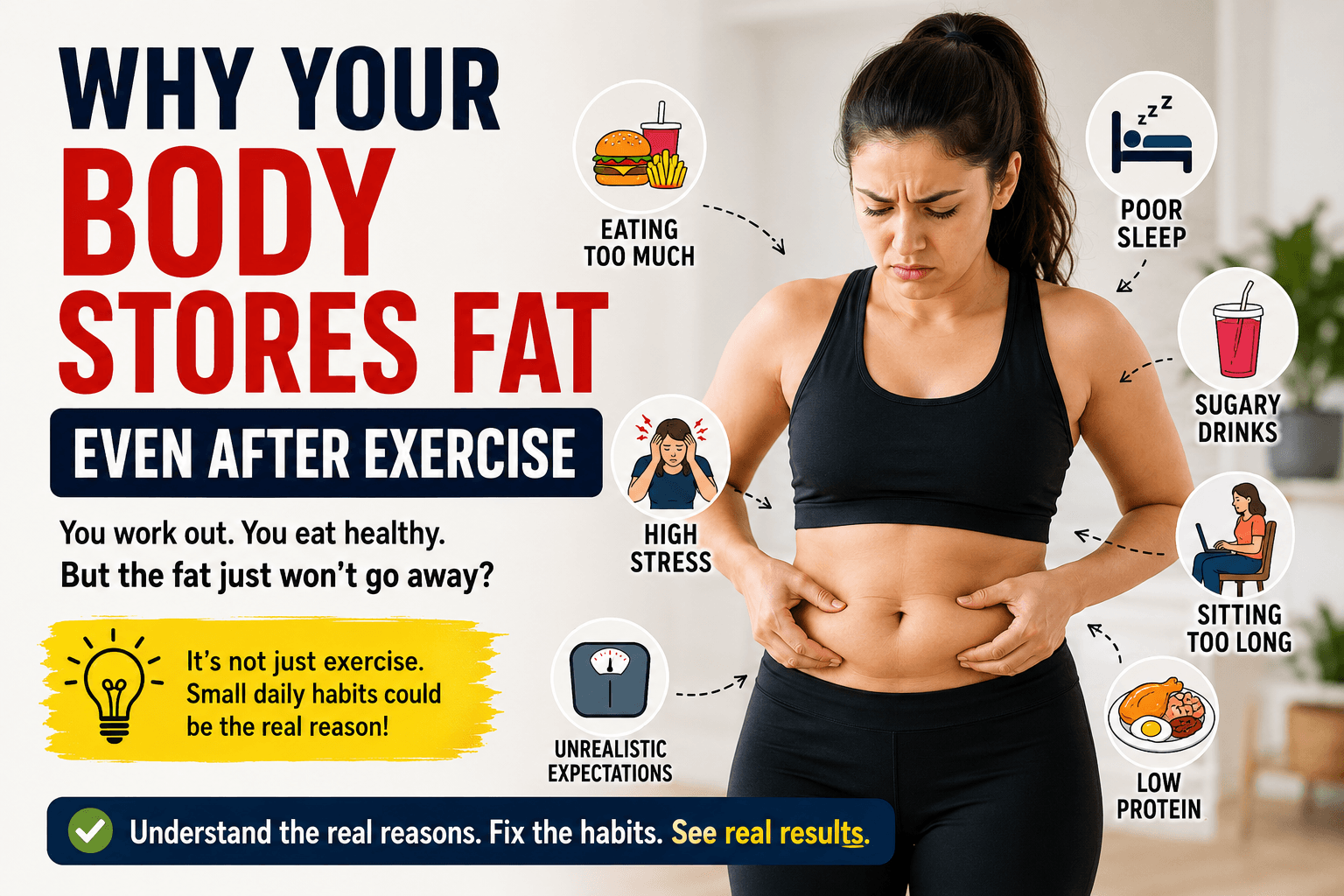
Why Your Body Stores Fat Even After Exercise
Many people exercise regularly but still struggle with fat loss. However, this does not always mean the workout is failing.
The body is complex. Therefore, many factors can affect how fat is stored and burned.
Sometimes the problem is not exercise itself. Instead, daily habits, sleep, food choices, and stress levels may play a bigger role.
Understanding why the body stores fat can help you make smarter lifestyle choices.
How the Body Stores Fat
Your body needs energy to function.
When you eat more calories than you use, the extra energy gets stored as fat.
Later, the body can use that stored fat when energy is needed.
However, certain habits may make fat storage easier and fat burning harder.
Reasons Your Body Stores Fat Even After Exercise
Let’s look at some common causes.
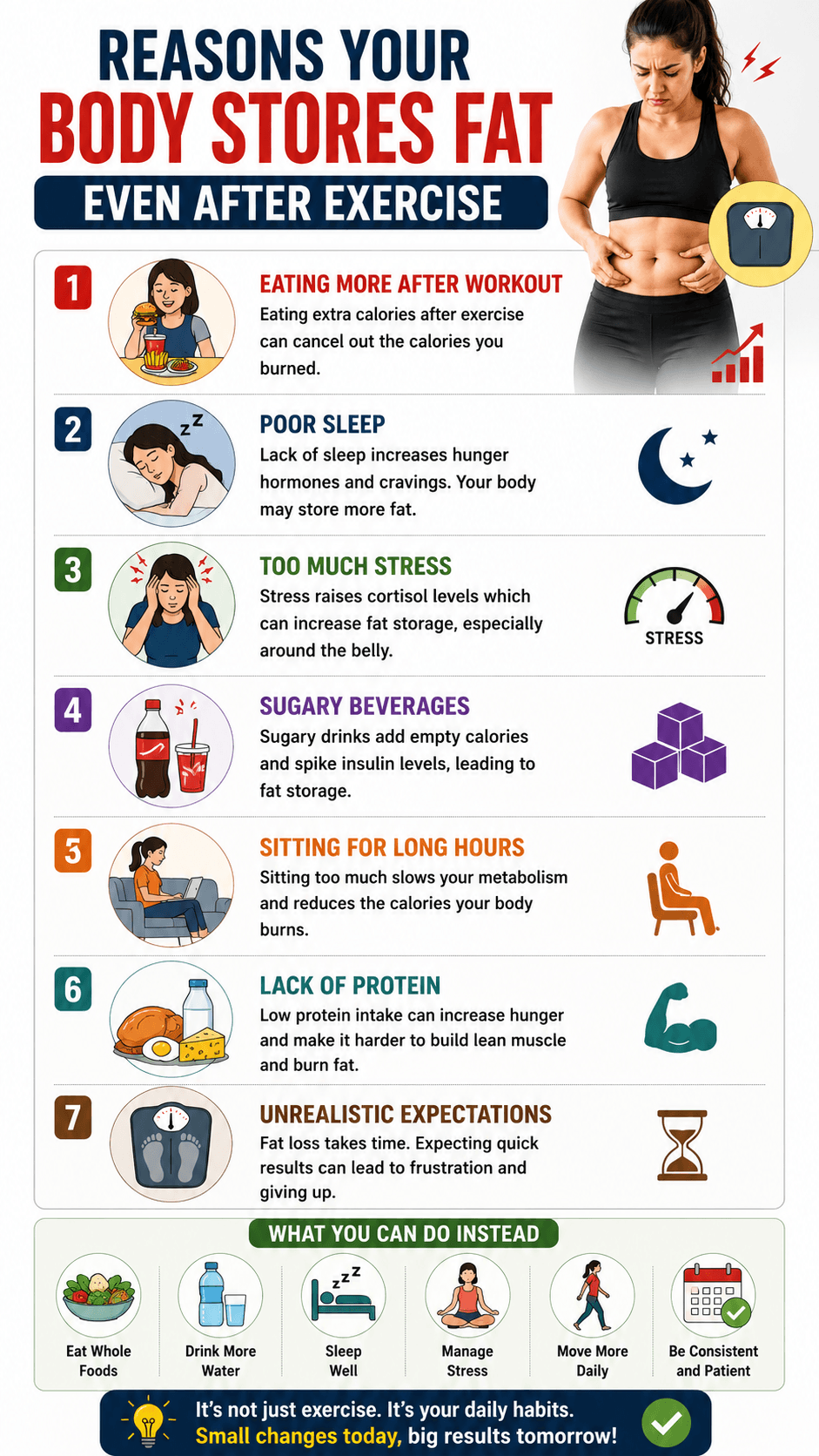
1. Eating More After Workouts
Many people reward themselves with extra food after exercise.
Unfortunately, those extra calories can cancel out the calories burned during the workout.
As a result, fat loss becomes slower.
2. Poor Sleep Habits
Sleep affects hormones that control hunger.
When sleep is poor, cravings often increase.
Moreover, the body may store more fat because hormone balance becomes disturbed.
3. Too Much Stress
Stress causes the body to release cortisol.
High cortisol levels may encourage fat storage, especially around the belly.
Therefore, managing stress is important for healthy weight control.
4. Drinking Sugary Beverages
Many sports drinks, soft drinks, and packaged juices contain large amounts of sugar.
Because of this, calorie intake increases quickly without making you feel full.
5. Sitting for Long Hours
Exercise is helpful.
However, sitting all day can reduce overall calorie burning.
Therefore, daily movement is just as important as workouts.
6. Lack of Protein
Protein helps build and maintain muscle.
Additionally, it keeps you feeling full longer.
Without enough protein, appetite may increase and fat loss may slow down.
7. Unrealistic Expectations
Fat loss takes time.
Many people expect major changes within a few days.
However, healthy and sustainable fat loss happens gradually.
Signs That Fat Loss Has Slowed Down
Some signs are easy to recognize.
- Weight stays the same for weeks
- Belly fat remains unchanged
- Constant hunger
- Low energy levels
- Strong cravings for sweets
- Difficulty maintaining motivation
Therefore, reviewing your lifestyle habits may be helpful.
Foods That Support Healthy Fat Loss
Healthy food choices can improve results.
Include:
- Fresh fruits
- Green vegetables
- Whole grains
- Lean protein sources
- Nuts and seeds
- Plenty of water
As a result, the body receives better nutrition and appetite control improves.
Simple Ways to Reduce Fat Storage
Small changes often create big results.
1. Walk More During the Day
Take short walking breaks every hour.
Therefore, daily calorie burning increases.
2. Prioritize Sleep
Aim for consistent sleep every night.
Because quality sleep supports hormone balance.
3. Manage Stress
Meditation, breathing exercises, and hobbies can help.
As a result, stress-related eating may decrease.
4. Focus on Whole Foods
Choose foods that are less processed.
Moreover, whole foods often contain more fiber and nutrients.
5. Stay Consistent
Healthy habits work best when followed regularly.
Therefore, focus on long-term progress instead of quick results.
How Sleep Affects Fat Storage
Sleep is one of the most overlooked factors in weight management.
However, poor sleep can increase hunger hormones and cravings.
Additionally, tired people are more likely to make unhealthy food choices.
Therefore, improving sleep quality may support fat loss efforts.
Small Daily Habits That Make Joint Pain Worse
When Should You Consult a Doctor?
If fat loss remains difficult despite healthy habits, speak with a healthcare professional.
Sometimes conditions such as thyroid disorders, hormonal imbalance, or other medical issues may affect weight management.
Final Thoughts
The body stores fat for many different reasons.
However, exercise is only one part of the picture.
Sleep, nutrition, stress management, hydration, and daily activity also play important roles.
By improving these areas, you can support healthier fat loss and long-term wellness.
Stay patient, stay consistent, and focus on progress rather than perfection.