Quick Answer
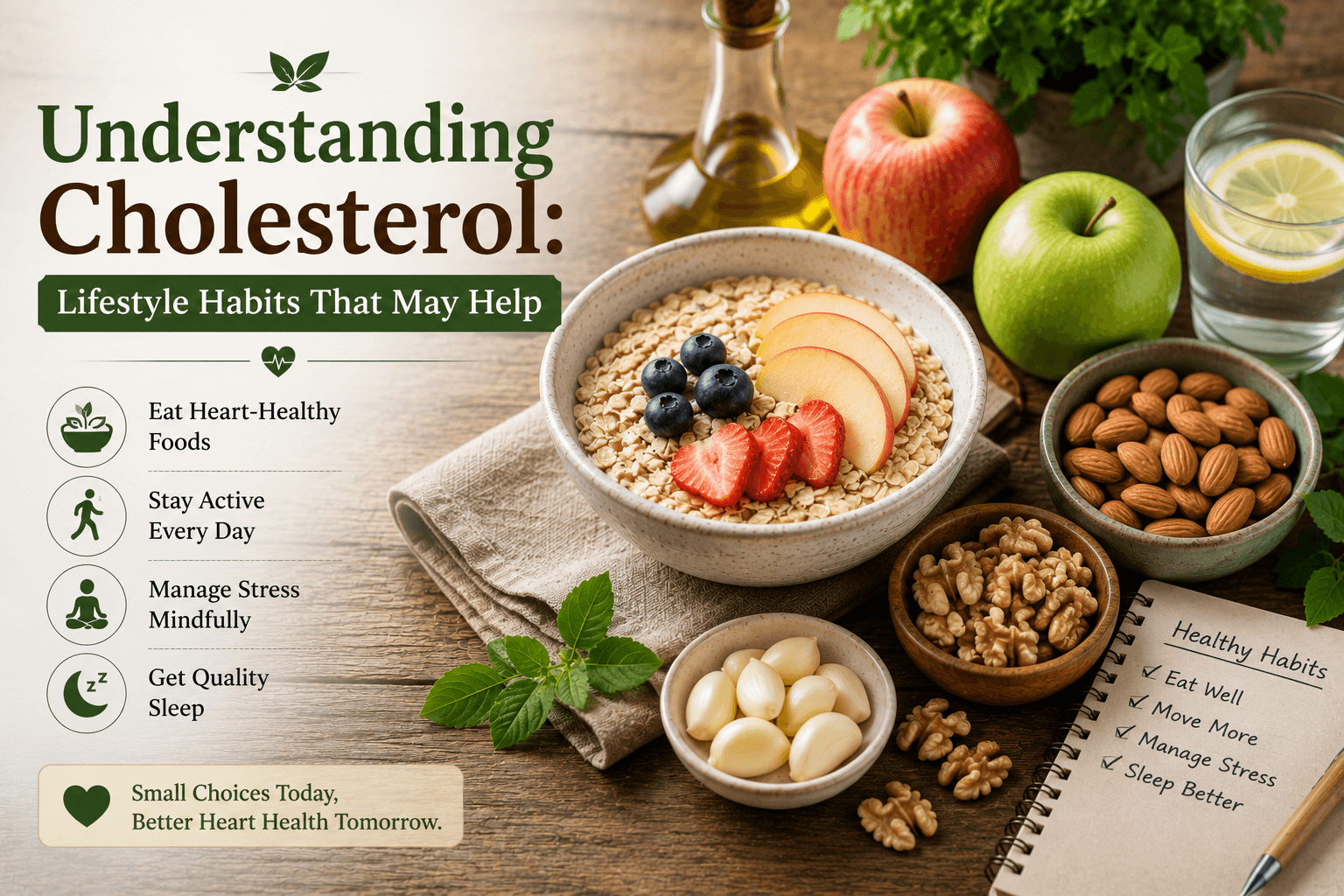
Lifestyle habits that may help manage cholesterol levels include eating more fibre-rich foods, reducing saturated and trans fats, staying physically active, maintaining a healthy body weight, and managing stress. Cholesterol itself isn’t inherently bad — your body needs it for various functions — but an imbalance, particularly high LDL (“bad”) cholesterol, is associated with increased cardiovascular risk over time. Simple, consistent lifestyle changes may help support healthier cholesterol levels, but this is general wellness information, not medical advice. If you’ve been diagnosed with high cholesterol or are on medication for it, please consult your doctor before making any changes to your treatment.
Cholesterol is one of those health terms we hear often, usually in the context of blood tests and doctor’s visits, but it’s not always clearly explained. In this article, we’ll break down what cholesterol actually is, why it matters, and practical, everyday lifestyle habits that may help support healthier cholesterol levels, along with what Ayurveda has traditionally taught about this topic.
What Is Cholesterol, Really?
Cholesterol is a waxy, fat-like substance found in your blood that your body actually needs for building healthy cells, producing hormones, and supporting digestion. Your liver produces most of the cholesterol your body requires, while the rest comes from the food you eat.
Cholesterol travels through your bloodstream attached to proteins, forming what are known as lipoproteins. The two main types you’ll typically see mentioned in blood test reports are LDL (low-density lipoprotein), often referred to as “bad” cholesterol because high levels are associated with plaque buildup in arteries, and HDL (high-density lipoprotein), often called “good” cholesterol because it helps carry excess cholesterol away from the arteries.
Common Causes of Imbalanced Cholesterol Levels
Several everyday factors can contribute to imbalanced cholesterol levels. Understanding these is the first step toward exploring lifestyle habits that may help manage cholesterol more effectively:
- Diet high in saturated and trans fats — Foods like fried snacks, bakery items, and certain processed foods can raise LDL cholesterol levels.
- Sedentary lifestyle — Lack of regular physical activity is associated with lower HDL (“good”) cholesterol.
- Excess body weight — Carrying extra weight, particularly around the abdomen, is linked to higher LDL and lower HDL cholesterol.
- Smoking — Well established as a factor that lowers HDL cholesterol and damages blood vessel walls.
- Family history — Genetics can play a significant role in cholesterol levels, regardless of lifestyle.
- Certain health conditions — Conditions like diabetes and hypothyroidism can affect cholesterol levels.
- Age and gender — Cholesterol levels naturally tend to rise with age for many people.
Recognising these causes helps put lifestyle habits that may help manage cholesterol into proper context — some factors are within your control, while others, like genetics, require ongoing medical monitoring and guidance.
Why Cholesterol Often Goes Unnoticed
Unlike many health concerns, high cholesterol typically doesn’t cause noticeable symptoms on its own, which is why it’s often called a “silent” risk factor. Most people only discover elevated cholesterol levels through routine blood tests, which is exactly why regular health check-ups are so important, particularly for adults over 30 or those with a family history of heart-related concerns.
In rare cases of very high cholesterol, some people may notice small, yellowish deposits around the eyes or joints, but these are uncommon and shouldn’t be relied upon as an indicator. The best way to know your cholesterol levels is through a simple blood test, which your doctor can recommend based on your age, family history, and overall health profile.
Lifestyle Habits That May Help Manage Cholesterol Levels
Here’s a practical breakdown of lifestyle habits that may help manage cholesterol levels as part of your everyday routine.
1. Increase Soluble Fibre Intake
Foods rich in soluble fibre, like oats, beans, lentils, and fruits such as apples and guava, are believed to help reduce the absorption of cholesterol into the bloodstream. Including these regularly in your diet is one of the most well-supported lifestyle habits that may help manage cholesterol.
2. Reduce Saturated and Trans Fats
Limiting fried foods, bakery items, and processed snacks that contain trans fats can help support healthier LDL cholesterol levels over time. Choosing healthier cooking oils in moderation is also a helpful step.
3. Include Healthy Fats
Replacing some saturated fats with healthier options like nuts, seeds, and mustard or olive oil may help support a more balanced cholesterol profile, as these fats are associated with supporting HDL (“good”) cholesterol.
4. Stay Physically Active
Regular physical activity, such as brisk walking, cycling, or swimming, is associated with higher HDL cholesterol and can help support overall cardiovascular wellness. Aiming for at least 30 minutes of moderate activity most days is generally recommended.
5. Maintain a Healthy Body Weight
Since excess weight is linked to imbalanced cholesterol levels, gradual, sustainable weight management through diet and activity may help support healthier levels over time.
6. Quit Smoking
Since smoking is known to lower HDL cholesterol and damage blood vessels, quitting is one of the most impactful lifestyle changes for overall cardiovascular health, including cholesterol balance.
7. Limit Alcohol Intake
Excessive alcohol consumption can negatively affect cholesterol and triglyceride levels, so moderating intake is generally recommended as part of a heart-healthy lifestyle.
8. Manage Stress
While the connection is still being studied, chronic stress is believed to indirectly affect cholesterol levels through its impact on diet, activity levels, and overall lifestyle habits.
These lifestyle habits that may help manage cholesterol work best when practiced consistently together, rather than focusing on just one change in isolation.
Foods That May Support Healthier Cholesterol Levels
Along with the broader lifestyle habits above, certain specific foods are commonly associated with supporting healthier cholesterol levels:
- Oats and whole grains — Rich in soluble fibre, which may help support healthy LDL levels.
- Nuts like almonds and walnuts — Contain healthy fats associated with supporting balanced cholesterol.
- Fatty fish (for non-vegetarians) — Rich in omega-3 fatty acids, associated with supporting heart health.
- Garlic — Traditionally used in Ayurveda and studied in modern research for its potential role in supporting healthy cholesterol levels.
- Legumes like dal and chickpeas — A good source of fibre and plant-based protein.
- Fruits like apples, guava, and citrus fruits — Contain soluble fibre that may support healthy cholesterol levels.
The Ayurvedic Perspective on Cholesterol Balance
While cholesterol as a specific medical term isn’t found in classical Ayurvedic texts, Ayurveda has long addressed related concepts through its understanding of “Meda Dhatu,” or fat tissue, and its connection to overall metabolic balance. According to Ayurvedic principles, imbalances in Meda Dhatu are often associated with aggravated Kapha dosha, which governs stability, structure, and metabolism in the body.
Ayurveda’s traditional approach to supporting healthy Meda Dhatu, and by extension, cholesterol balance, typically includes:
- Herbs like Guggul and Arjuna — Traditionally used in Ayurveda for centuries to help support healthy fat metabolism and cardiovascular balance.
- Garlic and turmeric — Common kitchen ingredients traditionally believed to help support healthy circulation and metabolism.
- Warm, light, easily digestible foods — Recommended over heavy, oily, or processed foods, which are believed to aggravate Kapha.
- Regular physical activity — Considered essential in Ayurveda for maintaining balanced Kapha and healthy metabolism.
- Mindful eating practices — Eating in moderation and avoiding overeating, which Ayurveda believes supports overall digestive and metabolic balance.
This Ayurvedic perspective, rooted in overall metabolic balance rather than isolated cholesterol numbers, offers a complementary, holistic lens alongside modern medical understanding and monitoring.
The Importance of Regular Health Check-Ups
Because cholesterol imbalances often don’t cause noticeable symptoms, regular blood tests are the most reliable way to monitor your levels. Doctors generally recommend cholesterol screening starting around age 20, with more frequent testing recommended for those with risk factors like family history, diabetes, or existing heart conditions. Regular check-ups allow you and your doctor to track changes over time and adjust your approach as needed, rather than relying solely on lifestyle habits without professional monitoring.
Frequently Asked Questions
1. What foods should I avoid for healthy cholesterol levels?
Foods high in trans fats and excessive saturated fats, such as fried snacks, certain bakery items, and highly processed foods, are generally recommended to be limited to help support healthier cholesterol levels.
2. Can lifestyle changes alone manage high cholesterol?
Lifestyle changes can meaningfully support healthier cholesterol levels for many people, but the right approach depends on individual factors like genetics and existing health conditions. It’s best to consult your doctor to determine whether lifestyle changes alone are sufficient or whether additional medical guidance is needed.
3. How often should I get my cholesterol checked?
General guidance suggests screening starting around age 20, with more frequent monitoring for those with risk factors like family history or existing health conditions. Your doctor can recommend a screening schedule suited to your individual needs.
A Gentle Note Before You Go
Understanding cholesterol and the lifestyle habits that may help manage it can empower you to take proactive, informed steps toward better heart health. If you’re looking for gentle, everyday support alongside a heart-healthy lifestyle, Healthywe’s range of heart care herbal supplements is made using 100% natural, vegetarian ingredients rooted in traditional Ayurvedic wisdom.
As always, lifestyle changes and herbal supplements are meant to support your overall wellness, not replace medical care. Please consult your doctor or an Ayurvedic practitioner for proper diagnosis, and before making any changes to a prescribed treatment.
Explore our natural wellness range at www.healthywewellness.com/shop.