Quick Answer
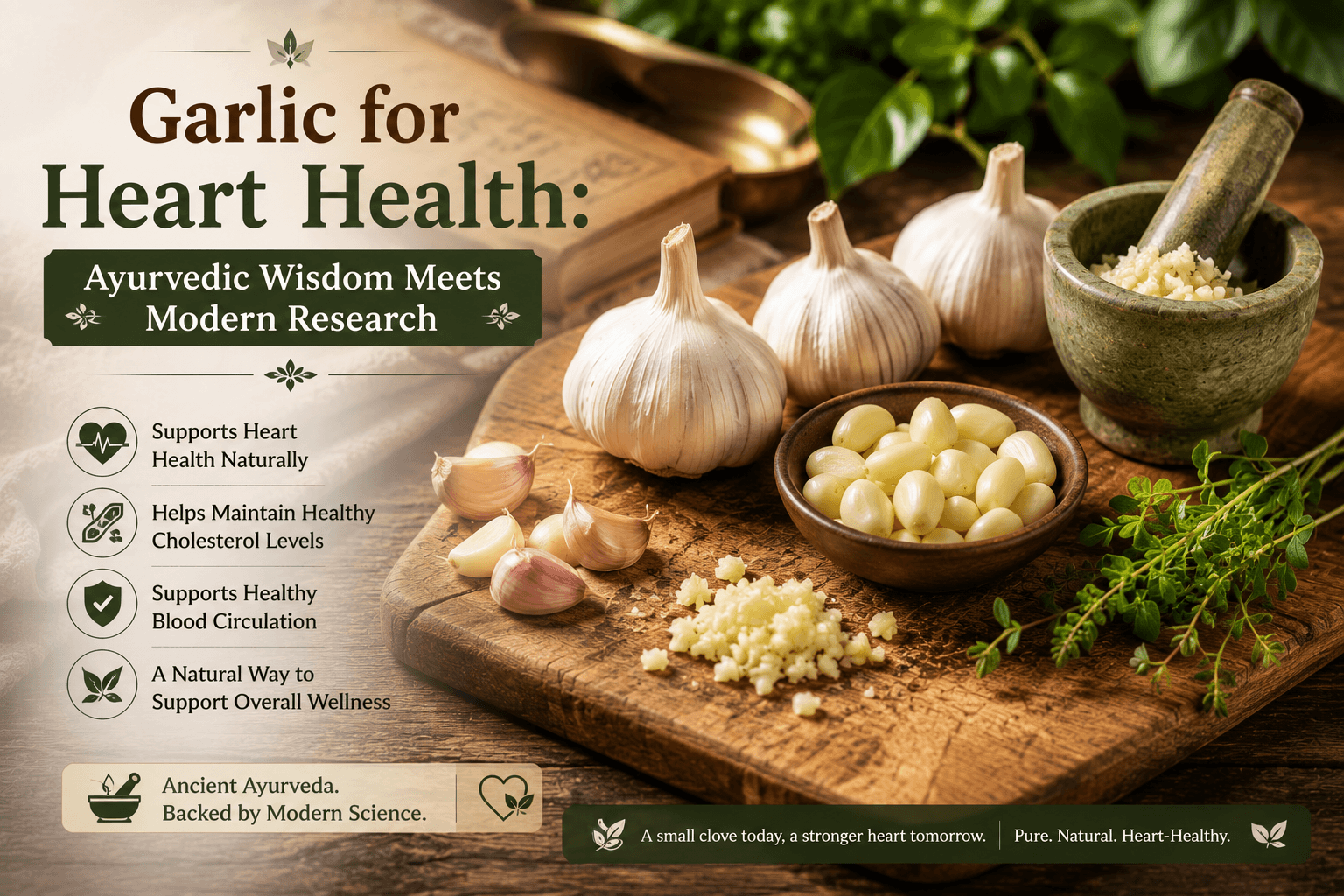
Garlic for heart health is a topic where Ayurvedic tradition and modern research genuinely align. Garlic has been used for centuries in Ayurveda to help support healthy circulation, and a good number of clinical studies have since examined its effect on blood pressure and cholesterol, generally finding modest but meaningful benefits, particularly with regular, longer-term use. That said, garlic works best as a supportive dietary habit alongside medical care, not as a replacement for prescribed heart medication. If you have a heart condition or are on blood pressure or cholesterol medication, please consult your doctor before significantly increasing garlic intake or starting a garlic supplement.
Garlic is a staple in almost every Indian kitchen, valued for its flavour long before anyone thought to research its health effects. But garlic for heart health has become a genuinely well-studied topic in modern science, adding an interesting layer to what Ayurveda has claimed about this humble ingredient for centuries. In this article, we’ll explore what the research says, what Ayurveda has traditionally taught, and practical ways to include garlic in your daily routine.
Garlic’s Long History in Traditional Medicine
Garlic has been used for medicinal purposes across many ancient cultures, including in Ayurveda, where it has traditionally been valued for supporting circulation and overall vitality. This long history of traditional use is part of why garlic for heart health eventually caught the attention of modern researchers, curious to understand whether these traditional beliefs held up to scientific scrutiny.
Common Factors That Affect Heart Health
Before diving into garlic specifically, it’s worth understanding the broader factors that influence heart health, since garlic is best viewed as one supportive piece of a much bigger picture:
- High blood pressure — A major risk factor for heart disease when it remains elevated over time.
- Elevated cholesterol levels — Particularly high LDL (“bad”) cholesterol, which is linked to plaque buildup in the arteries.
- Sedentary lifestyle — Lack of regular physical activity affects overall cardiovascular efficiency.
- Poor diet — Diets high in processed foods, excess salt, and unhealthy fats are linked to heart health concerns.
- Smoking — Well established as a significant risk factor for cardiovascular disease.
- Chronic stress — Ongoing stress can affect blood pressure and overall cardiovascular function.
- Family history — Genetics play a role in an individual’s overall heart health risk profile.
Understanding these factors helps put garlic for heart health into proper context — it’s a supportive habit, not a solution for any single risk factor in isolation.
What Does the Research Say About Garlic for Heart Health?
This is where things get genuinely interesting, as garlic is one of the more extensively studied natural ingredients when it comes to cardiovascular support.
Garlic and Blood Pressure
Several clinical trials and meta-analyses have examined garlic’s effect on blood pressure. A widely cited meta-analysis of 20 randomized controlled trials found that garlic supplementation modestly reduced both systolic and diastolic blood pressure in people with hypertension, with effects described as comparable in some cases to certain first-line blood pressure medications. Researchers believe garlic’s active compound, allicin, may support blood vessel relaxation by increasing nitric oxide and hydrogen sulphide production, both of which help blood vessels widen and improve blood flow.
Garlic and Cholesterol
Research has also explored garlic’s effect on cholesterol levels. A notable meta-analysis found that garlic supplementation was associated with reductions in total cholesterol and LDL cholesterol, with more pronounced effects observed in people who started with elevated levels. Some studies suggest garlic compounds may help by affecting liver enzymes involved in cholesterol production, and by helping prevent LDL cholesterol from oxidizing, a process linked to arterial plaque formation.
Other Cardiovascular Benefits Being Studied
Beyond blood pressure and cholesterol, researchers have also studied garlic’s potential role in reducing platelet aggregation (a factor in blood clot formation) and supporting overall antioxidant status in the body. However, reviewers have consistently noted that results can vary considerably depending on the type of garlic preparation used, the dosage, and individual factors, meaning garlic’s effects are described as modest and supportive rather than dramatic or universal.
Taken together, this body of research offers meaningful, science-backed support for garlic’s traditional reputation, while also reinforcing that it works best as a complementary habit alongside, not instead of, prescribed medical care for heart-related concerns.
Common Signs of Heart Health Concerns Worth Monitoring
While garlic for heart health may offer supportive benefits, it’s important to remain aware of signs that warrant medical attention:
- Chest discomfort, tightness, or pain
- Shortness of breath during routine activity
- Unusual fatigue
- Irregular heartbeat or palpitations
- Swelling in the legs, ankles, or feet
- Dizziness or lightheadedness
If you experience any of these signs, especially chest pain or severe shortness of breath, seek medical attention promptly rather than relying on dietary changes alone.
How to Include Garlic in Your Daily Routine
If you’re interested in incorporating garlic for heart health into your diet, here are some practical tips:
- Crush or chop garlic before cooking — This helps activate allicin, garlic’s key active compound, which forms when garlic cells are broken down.
- Let it rest for a few minutes before cooking — Allowing crushed garlic to sit for 10 minutes before heating may help preserve more of its beneficial compounds.
- Include it regularly, not just occasionally — Research suggests garlic’s cardiovascular benefits are generally observed with consistent, longer-term use rather than occasional consumption.
- Consider standardized garlic supplements — For those who find raw garlic difficult to consume regularly, standardized extracts offer a more consistent dose, though these should be discussed with a doctor first, especially if you’re on medication.
- Pair with other heart-healthy habits — Garlic works best as part of a broader heart-healthy lifestyle, not as a standalone solution.
The Ayurvedic Perspective on Garlic and Heart Health
In Ayurveda, garlic (Lehsun) is traditionally valued for its warming, stimulating qualities, believed to support healthy circulation and help balance Vata and Kapha doshas. Ayurvedic texts have long described garlic as beneficial for “Hridaya,” or heart health, and it has traditionally been included in formulations aimed at supporting cardiovascular balance and overall vitality.
Ayurveda’s traditional approach to heart health, including garlic’s role within it, generally emphasises:
- Garlic as part of daily cooking — Rather than as an isolated remedy, garlic has traditionally been included as a regular part of Ayurvedic cooking for its believed circulatory benefits.
- Balance with other warming spices — Garlic is often combined with ingredients like ginger and black pepper in traditional Ayurvedic preparations.
- Supporting overall Agni (digestive fire) — Garlic is traditionally believed to support healthy digestion, which Ayurveda considers foundational to overall wellness, including heart health.
- Mindful, moderate use — Ayurveda generally recommends garlic in reasonable, dietary amounts rather than excessive quantities, particularly for those with a Pitta-dominant constitution, as garlic’s heating quality may not suit everyone equally.
This alignment between traditional Ayurvedic wisdom and modern clinical research is part of what makes garlic for heart health such a compelling, well-rounded topic for anyone interested in bridging the two systems of knowledge.
Important Safety Considerations
While garlic is generally safe as part of a normal diet, a few precautions are worth keeping in mind:
- Garlic supplements, particularly concentrated extracts, may interact with blood-thinning medications, so always inform your doctor if you’re on such treatment.
- Excessive garlic supplement intake may cause digestive discomfort in some individuals.
- If you’re scheduled for surgery, inform your doctor about any garlic supplements you’re taking, as they may affect blood clotting.
- Pregnant or breastfeeding women should consult a doctor before taking garlic supplements beyond normal dietary amounts.
Frequently Asked Questions
1. Does garlic really help lower blood pressure?
Research, including meta-analyses of multiple clinical trials, suggests garlic supplementation may modestly reduce blood pressure in people with hypertension. However, it should be used alongside, not instead of, prescribed blood pressure medication.
2. How much garlic should I eat for heart health benefits?
Most clinical studies showing benefits have used standardized garlic extract supplements, often in the range of 600-1200 mg daily, though whole garlic as part of regular cooking is also traditionally valued. It’s best to consult your doctor for personalized guidance.
3. Can I take garlic supplements with my heart medication?
Garlic supplements may interact with certain medications, including blood thinners, so it’s important to consult your doctor before combining garlic supplements with any prescribed heart medication.
A Gentle Note Before You Go
Garlic for heart health beautifully illustrates how traditional Ayurvedic wisdom and modern research can genuinely complement each other, offering a well-rounded, natural way to support your everyday cardiovascular wellness. If you’re looking for gentle, additional support alongside a heart-healthy diet, Healthywe’s range of heart care herbal supplements is made using 100% natural, vegetarian ingredients rooted in traditional Ayurvedic wisdom.
As always, dietary habits and herbal supplements are meant to support your overall wellness, not replace medical care. Please consult your doctor or an Ayurvedic practitioner for proper diagnosis, and before making any changes to a prescribed treatment.
Explore our natural wellness range at www.healthywewellness.com/shop.