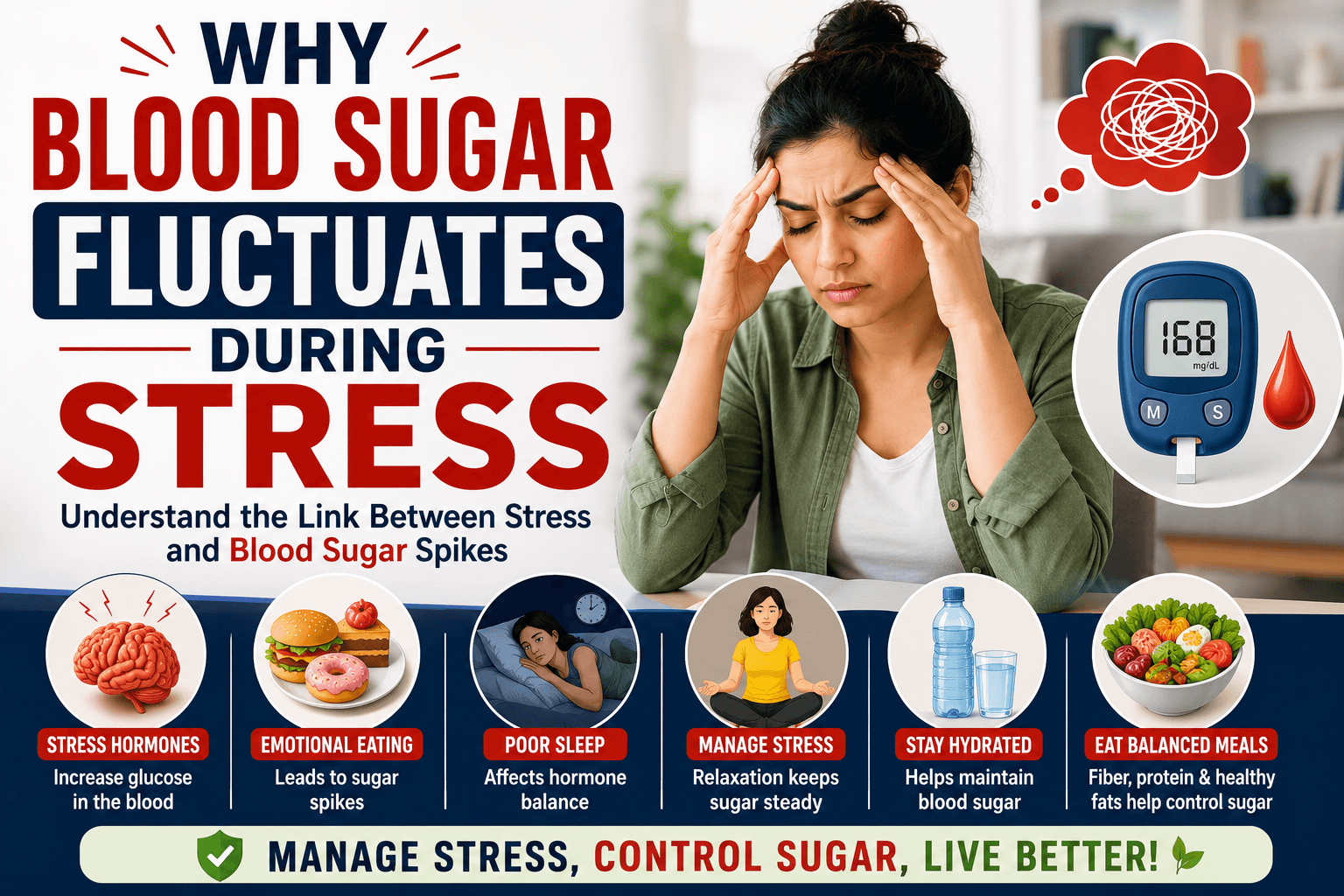
Why Blood Sugar Fluctuates During Stress
Many people think food is the only thing that affects blood sugar. However, that is not always true.
Stress can also have a powerful impact on glucose levels. In fact, some people notice higher blood sugar readings even when they follow a healthy diet.
This situation often feels confusing. After all, if food intake has not changed, why would blood sugar increase?
The answer lies in the body’s natural stress response.
Therefore, understanding the connection between stress blood sugar levels and overall health is important.
Fortunately, learning how stress affects the body can help you make better lifestyle choices.
What Happens Inside the Body During Stress?
Whenever you face stress, your body prepares for action.
This reaction is known as the “fight or flight” response.
During this process, the body releases hormones such as cortisol and adrenaline.
These hormones tell the liver to release stored glucose into the bloodstream.
As a result, blood sugar levels may rise.
Originally, this response helped humans survive dangerous situations.
However, modern stress often lasts much longer.
Because of this, blood sugar may stay elevated for extended periods.
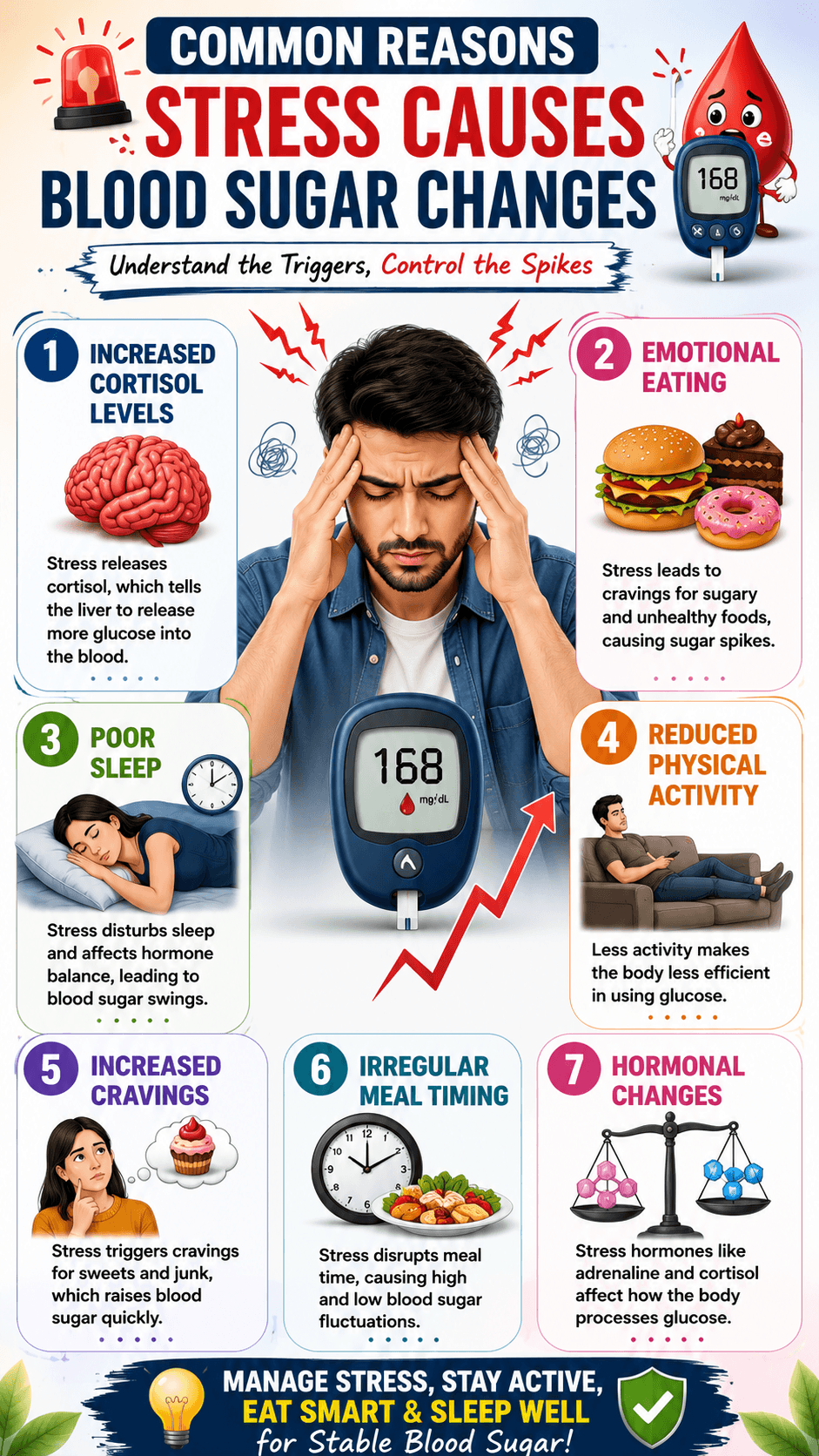
Common Reasons Stress Causes Blood Sugar Changes
1️⃣ Cortisol Levels Increase
Cortisol is commonly called the stress hormone.
When stress becomes frequent, cortisol levels may remain high.
Consequently, the liver releases more glucose into the blood.
Therefore, blood sugar readings may rise.
2️⃣ Emotional Eating Becomes More Common
Many people turn to food when feeling stressed.
Usually, comfort foods contain sugar and refined carbohydrates.
As a result, glucose levels may spike quickly.
Moreover, these foods often increase cravings later.
3️⃣ Poor Sleep Disrupts Blood Sugar
Stress and sleep problems often go together.
When sleep quality decreases, hormone balance may change.
Consequently, the body may become less effective at managing glucose.
Therefore, blood sugar fluctuations become more likely.
4️⃣ Physical Activity Decreases
Stress often affects motivation.
Because of this, some people exercise less when they feel overwhelmed.
However, movement helps the body use glucose efficiently.
As a result, less activity may contribute to higher blood sugar levels.
5️⃣ Stress Can Increase Cravings
The brain often seeks quick energy during stressful situations.
Therefore, sugary foods may become more attractive.
Unfortunately, these foods may cause sudden glucose spikes followed by energy crashes.
6️⃣ Daily Routine Gets Disrupted
Stress can affect meal timing.
Sometimes people skip meals.
At other times, they eat late at night.
Because of these changes, blood sugar balance may become less stable.
Signs Stress May Be Affecting Your Blood Sugar
Watch for these symptoms:
- Increased thirst
- Frequent urination
- Sudden fatigue
- Difficulty concentrating
- Strong sugar cravings
- Mood changes
- Unusual glucose readings
- Headaches
- Low energy levels
Therefore, monitoring both stress and blood sugar is important.
Can Stress Affect Non-Diabetic People?
Yes, it can.
Many people without diabetes experience temporary blood sugar increases during stressful situations.
However, healthy bodies usually return glucose levels to normal after stress decreases.
On the other hand, people with diabetes may notice larger fluctuations.
Therefore, stress management becomes even more important.
Best Foods for Stable Blood Sugar During Stress
Healthy eating can support better glucose control.
Consider adding:
High-Fiber Foods
- Oats
- Whole grains
- Lentils
- Beans
Protein-Rich Foods
- Eggs
- Paneer
- Yogurt
- Fish
- Chicken
Healthy Fats
- Almonds
- Walnuts
- Flaxseeds
Hydrating Foods
- Cucumber
- Watermelon
- Coconut water
As a result, blood sugar may remain more stable throughout the day.
Simple Ways to Manage Stress Blood Sugar
🚶 Walk Daily
Even a 20-minute walk can help.
Moreover, physical activity supports glucose utilization.
😴 Prioritize Sleep
Aim for 7–8 hours of quality sleep.
As a result, hormone balance improves.
🧘 Practice Relaxation Techniques
Meditation and deep breathing exercises may reduce stress levels.
Therefore, blood sugar control may become easier.
💧 Stay Hydrated
Water supports many body functions.
Additionally, proper hydration helps overall wellness.
📅 Follow a Routine
Regular meal times and sleep schedules create stability.
Consequently, glucose fluctuations may decrease.
Habits That Can Make Blood Sugar Worse During Stress
Avoid these common mistakes:
- Skipping meals
- Excess sugar intake
- Poor sleep habits
- Long sitting hours
- Excessive caffeine
- Smoking
- Lack of exercise
Therefore, focus on healthy routines whenever possible.
Signs Your Digestion May Be Triggering Piles
When Should You Consult a Doctor?
Seek medical advice if:
- Blood sugar remains consistently high
- Symptoms become severe
- You experience frequent glucose spikes
- Diabetes becomes difficult to manage
Early intervention can help prevent complications.
Final Thoughts
Stress blood sugar fluctuations are more common than many people realize.
Although food plays a major role in glucose control, stress also affects hormone balance and blood sugar levels.
Therefore, managing stress is just as important as following a healthy diet.
Simple habits such as regular exercise, quality sleep, hydration, and mindfulness can support healthier glucose levels over time.
Small daily improvements often create the biggest long-term benefits.
Frequently Asked Questions
Q. Can stress raise blood sugar levels?
Yes. Stress hormones such as cortisol and adrenaline can cause the liver to release more glucose into the bloodstream.
Q. Why does anxiety increase blood sugar?
Anxiety triggers the body’s stress response, which may temporarily increase blood sugar levels.
Q. Can stress cause diabetes?
Stress alone does not directly cause diabetes, but long-term stress may contribute to unhealthy lifestyle habits that increase risk.
Q. How can I lower blood sugar during stressful situations?
Deep breathing, walking, hydration, healthy meals, and adequate sleep may help support stable glucose levels.