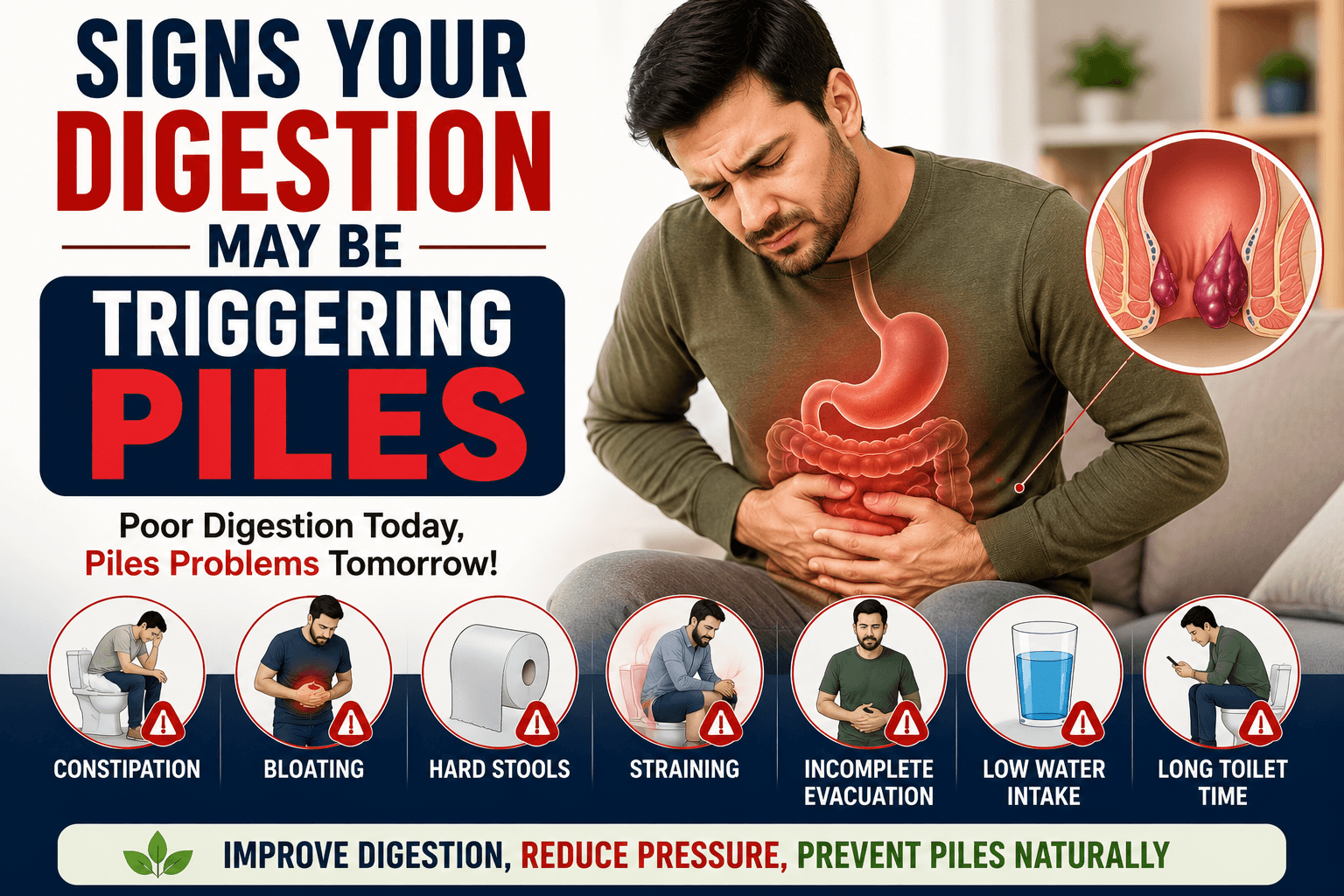
Signs Your Digestion May Be Triggering Piles
Many people think piles only happen because of sitting too long or eating spicy food. However, poor digestion can also play an important role.
When the digestive system does not work properly, bowel movements may become difficult. As a result, extra pressure can develop in the rectal area.
Over time, this pressure may contribute to piles problems.
Therefore, understanding the connection between piles digestion and gut health is very important.
The good news is that improving digestion may help reduce discomfort and support better bowel habits.
How Digestion Affects Piles
The digestive system helps break down food and remove waste from the body.
When digestion works smoothly, stools remain soft and easy to pass.
However, digestive issues may lead to constipation, bloating, and irregular bowel movements.
Because of this, straining during toilet visits becomes more common.
Consequently, the risk of piles-related discomfort may increase.
Signs Your Digestion May Be Triggering Piles
1. Frequent Constipation
Constipation is one of the most common warning signs.
When stools become hard and dry, passing them becomes difficult.
As a result, many people strain during bowel movements.
Therefore, constipation may increase pressure around rectal veins.
2. Feeling Bloated Often
Bloating can indicate that digestion is not functioning efficiently.
Moreover, frequent bloating may make you feel uncomfortable after meals.
Although bloating itself does not cause piles directly, it may signal digestive problems that contribute to bowel issues.
3. Irregular Bowel Movements
Healthy digestion usually supports regular bowel habits.
However, if bowel movements become unpredictable, digestive balance may be affected.
As a result, stool consistency may change frequently.
4. Hard or Dry Stools
Soft stools are easier to pass.
However, hard stools require more effort during toilet visits.
Because of this, excessive straining may occur.
Therefore, digestive health becomes important for preventing discomfort.
5. Feeling Incomplete After Using the Toilet
Some people feel that bowel movements are not fully complete.
This feeling may encourage repeated straining.
Consequently, additional pressure may develop in the rectal area.
6. Frequent Gas Problems
Excessive gas may indicate poor digestion.
Additionally, gas can cause abdominal discomfort and bloating.
Therefore, paying attention to digestive symptoms is helpful.
7. Low Fiber Intake
Fiber helps support healthy digestion.
Without enough fiber, stools may become harder and more difficult to pass.
As a result, constipation becomes more likely.
8. Drinking Too Little Water
Water helps keep stools soft.
However, dehydration may contribute to digestive difficulties.
Therefore, adequate hydration is essential for bowel health.
9. Spending Too Much Time on the Toilet
Many people sit on the toilet while using their phones.
Unfortunately, longer toilet sessions may increase pressure in the rectal area.
Therefore, try to avoid unnecessary sitting.
10. Frequent Digestive Discomfort
Regular stomach discomfort, bloating, or digestive upset may indicate that your digestive system needs attention.
Therefore, improving gut health may help support better bowel habits.
Common Symptoms That May Need Attention
Watch for these signs:
- Hard stools
- Constipation
- Bloating
- Gas problems
- Straining during bowel movements
- Feeling of incomplete evacuation
- Rectal discomfort
Therefore, do not ignore ongoing digestive problems.
Foods That Support Better Digestion
Good food choices help support healthy bowel movements.
Include:
- Fresh fruits
- Green vegetables
- Whole grains
- Oats
- Lentils
- Beans
- Plenty of water
As a result, digestion may improve naturally.
Simple Habits to Improve Digestion
Eat More Fiber
Fiber helps keep stools soft.
Therefore, include fiber-rich foods daily.
Drink Enough Water
Hydration supports digestion and bowel regularity.
Additionally, water helps prevent hard stools.
Stay Physically Active
Movement supports digestive function.
As a result, bowel movements may become more regular.
Avoid Holding Bowel Movements
Respond to the natural urge to use the toilet.
Because delaying bowel movements may worsen constipation.
Create a Healthy Routine
Regular meal times and sleep schedules support digestive health.
Therefore, consistency is important.
Why Sleep Matters for Digestion
Many people focus only on food.
However, sleep also affects digestive health.
Poor sleep may influence digestion, stress levels, and bowel habits.
Therefore, quality rest supports overall wellness.
Common Lifestyle Mistakes Reducing Male Power
When Should You Consult a Doctor?
If digestive problems continue for several weeks, seek medical advice.
Also, consult a healthcare professional if you notice bleeding, severe pain, or major changes in bowel habits.
Early guidance can help identify the underlying cause.
Final Thoughts
Piles digestion problems are often closely connected.
Poor digestion may lead to constipation, straining, and uncomfortable bowel movements.
However, simple habits such as eating more fiber, drinking enough water, exercising regularly, and maintaining a healthy routine can support digestive health.
Therefore, taking care of your digestion may also help reduce piles-related discomfort and improve overall well-being.