Quick Answer
Shilajit benefits are rooted in centuries of Ayurvedic tradition, where this mineral-rich resin has been valued as a “Rasayana,” or rejuvenating substance, traditionally used to help support stamina, vitality, and overall strength. Modern research has taken a genuine interest in Shilajit, particularly its fulvic acid and mineral content, with some clinical studies exploring its potential role in supporting energy levels and physical performance. That said, current research remains limited in scale, and purity is a genuine concern with this ingredient, so choosing a properly purified, standardized product matters more here than with many other herbs. As always, consult your doctor before starting Shilajit, especially if you’re on any existing medication.
Shilajit has gone from a lesser-known Ayurvedic ingredient to a genuinely popular topic of conversation, both in traditional wellness circles and increasingly in modern research. In this article, we’ll explore Shilajit benefits in detail — what this ancient resin actually is, what Ayurveda has traditionally used it for, what research has found so far, and practical things to know before trying it.
What Is Shilajit?
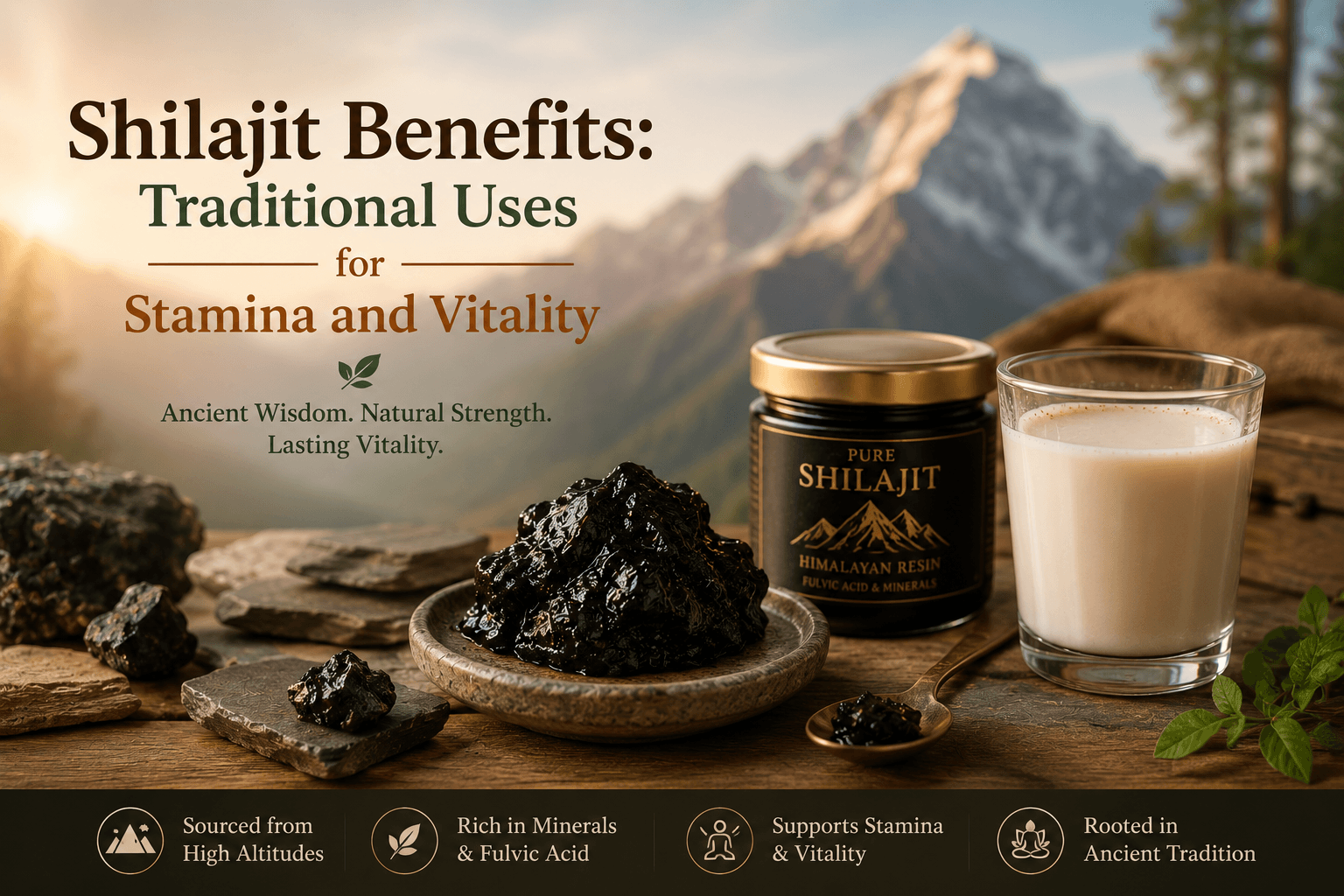
Shilajit is a sticky, tar-like resin that slowly seeps out of rock crevices in high mountain ranges, most notably the Himalayas. It forms over centuries as plant and organic material gradually decomposes under geological pressure, resulting in a mineral-dense substance rich in fulvic acid, humic acid, and over 40 trace minerals.
In Ayurveda, Shilajit is regarded as a “Maharasa,” meaning a supreme, highly valued rejuvenating substance, and has been used for centuries as part of traditional formulations aimed at supporting overall vitality and strength. Understanding Shilajit benefits starts with recognising this deep-rooted traditional reputation, which has increasingly drawn scientific curiosity in recent years.
Common Reasons People Explore Shilajit
People typically turn to Shilajit benefits for a range of everyday wellness concerns, including:
- Low energy and persistent fatigue — One of the most common traditional and researched uses of Shilajit.
- Declining stamina with age — Many people explore Shilajit as part of a broader approach to supporting vitality as they get older.
- Reduced physical performance or recovery — Some research has explored Shilajit’s potential role in supporting muscular strength and recovery.
- General wellness and vitality support — In line with its traditional Ayurvedic reputation as a broadly supportive Rasayana herb.
These reasons reflect why Shilajit benefits have become such a widely discussed topic, bridging traditional Ayurvedic use with genuine, ongoing scientific interest.
Common Signs People Associate With Needing Extra Vitality Support
While everyone’s body is different, these are common experiences that often lead people to explore herbs like Shilajit:
- Persistent tiredness despite adequate rest
- Reduced stamina during physical activity
- Slower recovery after exercise or exertion
- A general feeling of reduced vitality or drive
- Difficulty maintaining energy throughout a demanding day
If these signs are persistent or significantly affecting your daily life, it’s important to consult a doctor for proper evaluation, as ongoing fatigue can have several underlying causes that deserve medical attention rather than self-treatment alone.
What Does the Research Say About Shilajit Benefits?
Shilajit has become an increasingly studied natural ingredient, particularly in relation to energy, stamina, and physical performance.
Shilajit and Fatigue
Research has explored Shilajit’s potential role in supporting cellular energy production, largely attributed to its fulvic acid content, which is believed to support mitochondrial function, the process by which cells generate energy. Some studies have reported reduced markers of fatigue and improved physical performance measures among participants using standardized Shilajit extracts over several weeks, though researchers consistently note that many of these studies involve relatively small sample sizes.
Shilajit and Physical Performance
A notable study examining purified Shilajit extract in recreationally active men over eight weeks reported reduced fatigue-related decline in muscular strength during testing, along with changes in certain biological markers associated with exercise recovery. These findings are considered promising but preliminary, and larger, more comprehensive studies would help confirm their broader relevance.
Shilajit and Hormonal Health
Some clinical research has also examined Shilajit’s effect on testosterone levels in men, with a few smaller trials reporting increases in certain hormone markers following months of supplementation. While these findings have generated significant interest, researchers note that this research remains limited in scale, and further large-scale studies are needed before drawing firm conclusions.
Overall, the body of research on Shilajit benefits reflects a genuinely promising but still-developing picture — encouraging early findings, particularly around fatigue and energy support, but not yet the kind of large-scale, robust evidence that would support strong, definitive claims. As with any supplement, Shilajit should be viewed as a potential complement to a healthy lifestyle, not a standalone solution, and always used in consultation with your doctor.
Important Note on Purity and Quality
One thing that sets Shilajit apart from many other Ayurvedic herbs is the genuine importance of purity. Raw, unprocessed Shilajit sourced from mountainous regions can sometimes contain heavy metals or other contaminants if not properly purified. This makes it especially important to choose Shilajit products that are:
- Purified and processed according to established quality standards
- Tested for heavy metals and contaminants by reputable manufacturers
- Sourced from established, transparent brands rather than unverified sources
This is one area where cutting corners on quality genuinely matters, so it’s worth taking the time to choose a trustworthy, well-tested product.
The Ayurvedic Perspective on Shilajit
In Ayurveda, Shilajit holds a particularly esteemed position among Rasayana herbs, traditionally believed to support “Ojas,” the subtle essence considered responsible for vitality, strength, and the body’s natural resilience. Ayurvedic texts describe Shilajit as beneficial across all three doshas, though it’s traditionally considered particularly supportive for Vata and Kapha imbalances related to low energy and stamina.
Ayurveda traditionally recommends Shilajit as part of a broader approach to supporting vitality, often combined with:
- A nourishing, balanced diet — Supporting overall strength and Ojas through wholesome food choices.
- Regular physical activity — Considered essential for maintaining stamina and vitality alongside herbal support.
- Adequate rest and sleep — Ayurveda emphasises proper rest as foundational to sustained energy and vitality.
- Complementary herbs — Shilajit is sometimes combined with other traditional Rasayana herbs like Ashwagandha in Ayurvedic formulations aimed at supporting overall strength.
This holistic Ayurvedic view reinforces that Shilajit benefits are traditionally understood as part of a broader lifestyle approach to vitality, not a standalone quick fix.
How Shilajit Is Typically Used
Shilajit is commonly available in a few different forms:
- Purified resin — Traditionally dissolved in warm water or milk.
- Standardized capsules or tablets — A convenient, measured-dose option increasingly popular for its consistency.
- Powder form — Often mixed into warm water or other beverages.
Standardized extracts generally offer more predictable dosing and are often preferred for their consistency and purity compared to raw resin.
Things to Keep in Mind Before Using Shilajit
While generally well-tolerated when sourced from a reputable brand, a few points are worth considering:
- Always choose a purified, tested, standardized Shilajit product from a trustworthy manufacturer.
- Inform your doctor if you’re on any prescribed medication, particularly for blood pressure, blood thinning, or diabetes, before starting Shilajit.
- Pregnant or breastfeeding women should consult a doctor before using Shilajit or any new herbal supplement.
- Shilajit is meant to support overall wellness and should not replace prescribed medical treatment.
Frequently Asked Questions
1. What is Shilajit traditionally used for?
Shilajit is traditionally used in Ayurveda as a Rasayana herb to help support stamina, vitality, and overall strength, particularly as part of a broader approach to maintaining energy and resilience.
2. Is Shilajit backed by scientific research?
Yes, a growing body of research has explored Shilajit’s potential role in supporting energy, fatigue reduction, and physical performance, though most studies remain relatively small in scale, and further research is needed to confirm these findings more broadly.
3. Is it safe to take Shilajit daily?
Shilajit is traditionally used regularly in Ayurveda, but it’s important to choose a purified, tested product and consult a doctor or Ayurvedic practitioner for guidance on appropriate use suited to your individual needs.
A Gentle Note Before You Go
Shilajit benefits reflect a compelling meeting point between ancient Ayurvedic wisdom and modern scientific curiosity, offering genuine promise for those looking to support their everyday stamina and vitality. If you’re looking for convenient, everyday support, Healthywe’s range of strength and vitality herbal supplements is made using 100% natural, vegetarian ingredients rooted in traditional Ayurvedic wisdom.
As always, herbal supplements are meant to support your overall wellness, not replace medical care. Please consult your doctor or an Ayurvedic practitioner for proper diagnosis, and before making any changes to a prescribed treatment.
Explore our natural wellness range at www.healthywewellness.com/shop.