Quick Answer
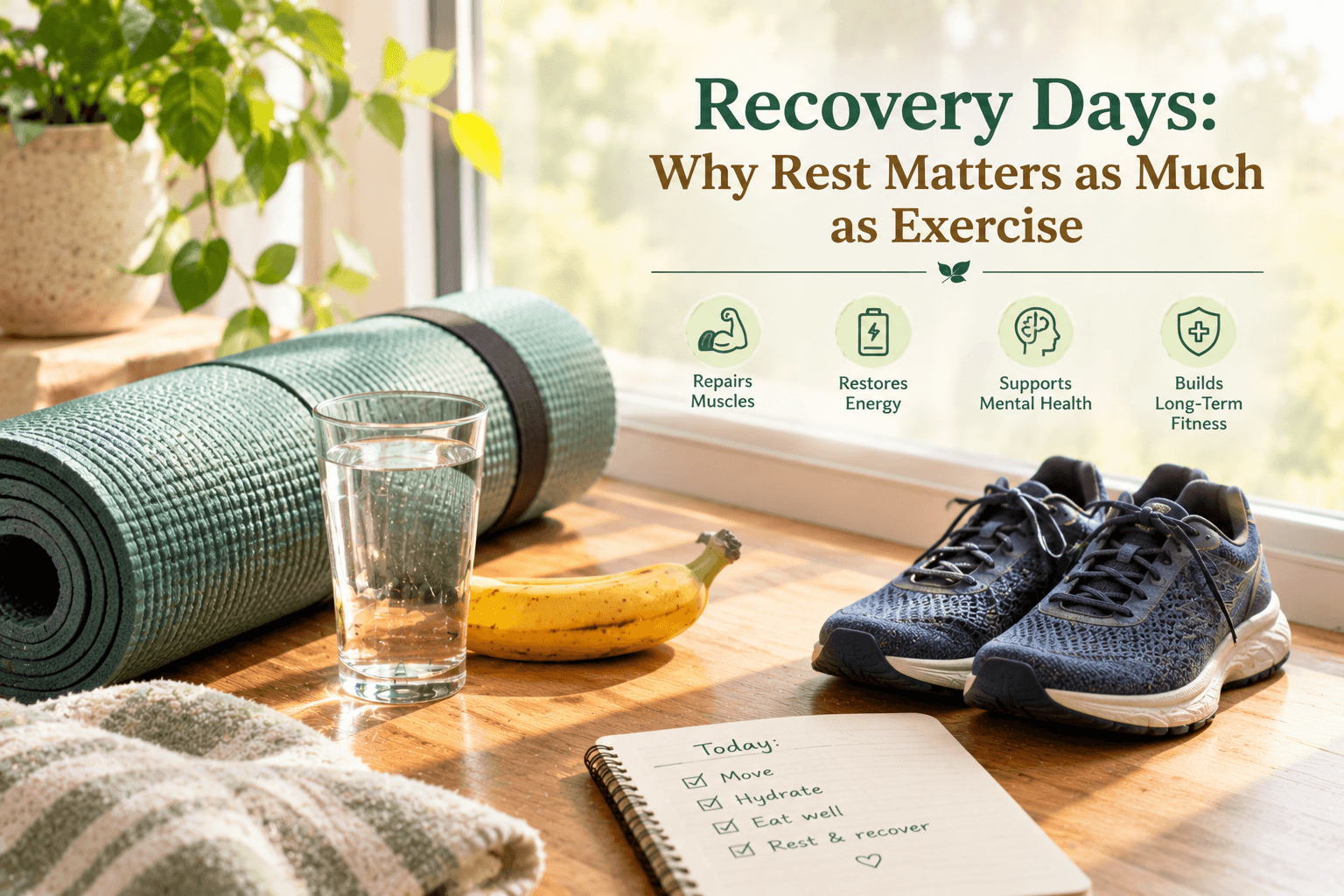
Recovery days matter as much as exercise because training is only the signal for your body to get stronger. The actual rebuilding happens afterwards, when muscles repair, energy stores refill, the nervous system settles, and sleep does its quiet work. Muscle protein synthesis, the process that repairs and builds muscle, stays raised for roughly a day or two after a hard session, which is why a common guideline is to allow about 48 hours before training the same muscle group hard again. For most healthy adults, a sensible pattern is regular activity (health guidelines suggest 150 to 300 minutes of moderate activity a week plus muscle-strengthening on at least two days) with one or two lighter or complete rest days, a good night’s sleep of around seven to nine hours, enough protein and food overall, and a planned easier week every so often. If you notice a sustained drop in performance, lingering soreness, poor sleep, low mood, or constant tiredness despite rest, your body may be asking for more recovery, and a doctor should check anything that feels unusual or severe. This is general wellness information, not medical advice.
Many people think that progress comes from doing more: an extra session, a harder workout, a daily streak with no gaps. Rest days can feel like laziness or lost time. But training science tells a different story. Strength, fitness, and muscle are built during recovery, not during the workout itself. In this article we will explain what happens in your body when you rest, how much rest most people need, how to tell normal soreness from overtraining, how sleep and food fit in, what different kinds of rest days look like, how to adapt all this to Indian life with its heat, festivals, and fasting days, and what Ayurveda has traditionally taught about exertion and rest.
How Training Actually Makes You Stronger
Exercise is a stressor. A hard strength session creates tiny areas of muscle damage, uses up stored energy, and tires the nervous system. In the short term, you are weaker and more tired than before you started. Then, if you give the body time and resources, it adapts. It repairs the muscle, often rebuilding it slightly stronger, refills energy stores, and adjusts so that the same effort feels easier next time. Training coaches call this cycle stress, recovery, and adaptation.
The key idea is that the benefit comes only if the recovery part happens. If you keep adding stress without enough recovery, the body cannot keep up. Performance can plateau or fall, tiredness builds, and the risk of injury and burnout rises. Recovery is therefore not the opposite of training. It is the second half of the same process.
What Happens in Your Body on a Rest Day
A rest day can look like nothing is happening, but several things are going on beneath the surface.
- Muscle repair and building. After resistance exercise, muscle protein synthesis rises and stays elevated for about a day or two, according to reviews. This is when damaged fibres are repaired and, with enough food and sleep, strengthened. Protein from your diet provides the building blocks.
- Refilling energy stores. Your muscles store carbohydrate as glycogen, which is used up in hard or long sessions. Rest and enough food allow it to be restored, which is one reason eating enough carbohydrate and calories matters for people who train regularly.
- Calming of the nervous system. Intense exercise tires the brain and nerves that control muscles. Rest helps coordination, power, and focus return to normal.
- Tendon and joint recovery. Tendons, ligaments, and joints often adapt more slowly than muscle, so they benefit from breaks, especially if you have recently increased your training.
- Hormonal and immune balance. Very hard training without breaks can raise stress hormones and affect immunity and mood, while adequate recovery helps keep the system balanced.
- Mental rest. Time away from structured training reduces mental fatigue and helps you stay motivated for the long run.
Interestingly, a day or two off will not make you lose strength or fitness. Short breaks have little effect on muscle, and many people find they come back feeling stronger and fresher.
How Much Rest Do You Need?
There is no single right answer, because it depends on your fitness, age, sleep, stress, nutrition, and how hard you train. But some general guidelines are widely used.
Activity Targets
The World Health Organization’s guidelines for adults recommend at least 150 to 300 minutes of moderate-intensity activity a week, or 75 to 150 minutes of vigorous activity, along with muscle-strengthening activities involving all major muscle groups on two or more days a week. Those are minimums for health, and they leave plenty of room for rest days.
Rest Between Strength Sessions
A commonly used rule of thumb, supported by exercise guidance from bodies such as the American College of Sports Medicine, is to allow around 48 hours of recovery before training the same muscle group hard again. This is why many programmes alternate upper and lower body days, or split workouts by muscle group, so that each area gets time to recover while you stay active.
Rest Days per Week
For most people, one to two lighter or complete rest days a week is reasonable. Beginners, people returning after a break, older adults, and anyone whose life is already stressful may need more recovery, while experienced trainers may manage with fewer full rest days by varying intensity. The right amount is the one that lets you perform well, sleep well, and feel well over weeks.
Factors That Change Your Needs
- Training experience: Newer trainees often feel sorer and need more recovery time.
- Intensity and volume: Heavy, long, or very intense sessions need more recovery than gentle ones.
- Age: Recovery often takes a little longer as we get older, so rest becomes even more valuable.
- Sleep: Poor sleep slows recovery and increases fatigue.
- Nutrition: Not eating enough, or enough protein, limits repair.
- Life stress: Work pressure, family demands, and emotional stress all draw on the same recovery reserves.
- Health conditions and medicines: Some may affect recovery or require adjusted activity.
Not All Rest Days Look the Same
Rest does not always mean lying on the sofa. Different kinds of recovery suit different situations.
Complete Rest
A day with no structured exercise at all. It is useful after hard sessions, when you feel very tired, sore, or unwell, or at times of high stress.
Active Recovery
Light, easy movement that keeps you moving without taxing the body, such as a gentle walk, easy cycling, stretching, mobility work, or relaxed yoga. It should feel easy, so that you finish feeling better than when you started. If a gentle walk leaves you drained, take a complete rest day instead.
Sleep-Focused Recovery
A day when you deliberately protect extra rest, go to bed earlier, or take a short nap. Sleep is a major part of recovery, so this can be among the most useful ways to rest.
Deload Weeks
Many training programmes include a planned easier week every several weeks, with lighter weights, fewer sets, or shorter sessions. A deload gives the body and mind a chance to catch up and often helps people return stronger.
Sleep: The Most Powerful Recovery Tool
If there is one recovery habit that matters most, it is sleep. During deep sleep, the body carries out much of its repair and releases hormones involved in tissue repair. Reviews of the research report that sleep loss can impair recovery and performance and can create a stress-like imbalance in the body that resembles some signs of overtraining. Most adults do best with about seven to nine hours a night, and getting six hours or less regularly makes it harder to recover well.
Our article on sleep and memory explains how deep sleep supports the brain as well. For strength and fitness, the practical points are:
- Keep a regular bedtime and wake time.
- Avoid heavy meals, alcohol, and caffeine late in the day.
- Keep your room dark, cool, and quiet, and put screens away before bed.
- Avoid hard workouts very close to bedtime if they leave you wired.
- Take a short nap, ideally not too late in the day, if you are behind on sleep.
Some research in young men suggests that eating protein before sleep can increase overnight muscle protein synthesis and, over time, may add to gains in muscle and strength when combined with resistance training. For most people, though, the total amount of protein across the day matters more than the exact timing, and a glass of milk or a bowl of curd in the evening is a simple, familiar option.
Eating for Recovery
Rest days are not diet days. Your body needs fuel and raw materials to repair and rebuild, and trying to cut calories sharply on a rest day or during a heavy training phase can undermine recovery.
Protein
Protein supplies the amino acids for muscle repair. It helps to include a protein source at each meal, such as dal, curd, paneer, sprouts, soy, eggs, or fish. Our article on protein needs for Indian vegetarians covers how much most people need and which foods deliver it.
Carbohydrates
Whole grains, millets, fruit, and starchy vegetables refill energy stores. If you train hard or often, very low carbohydrate intake can leave you tired and slow recovery.
Healthy Fats
Nuts, seeds, ghee in moderation, and oils provide energy and support hormone production and overall health.
Fluids and Electrolytes
Hydration is especially important in India’s heat. Water, buttermilk, coconut water, and nimbu pani with a pinch of salt help replace what you lose through sweat.
Micronutrients
Iron, vitamin D, calcium, magnesium, zinc, and B vitamins all play roles in energy and recovery. A varied diet with leafy greens, legumes, nuts, seeds, dairy, and colourful fruit and vegetables covers a lot. If you are often tired, a doctor can check for common issues such as low iron, vitamin D, or B12.
Eating Enough Overall
Not eating enough for the amount of activity you do, sometimes called low energy availability, can cause fatigue, repeated illness, poor recovery, and in women, missed or irregular periods. If you notice these signs, speak to a doctor or dietitian rather than training harder.
Normal Soreness or a Warning Sign?
It helps to know what is expected and what is not.
Normal Muscle Soreness
Delayed onset muscle soreness (DOMS) is the achiness that appears a day or so after unfamiliar or hard exercise and usually fades within a few days. It is a normal response, particularly when you try a new exercise or increase intensity. It does not mean you must stop, though gentle movement and rest can make you more comfortable.
Overreaching and Overtraining: What the Terms Mean
Sports scientists describe a spectrum:
- Acute fatigue: Tiredness after a hard session that recovers within a day or two. This is normal.
- Functional overreaching: A deliberate short period of harder training that causes a temporary drop in performance and, after proper rest, leads to improvement.
- Non-functional overreaching: Training stress exceeds recovery for longer, performance does not bounce back as expected, and recovery needs days to weeks.
- Overtraining syndrome: A serious, long-lasting state of declining performance and other symptoms that may take months or even longer to resolve. It is far less common than people fear and usually follows a long period of excessive training with inadequate recovery and other stress.
A key point from the research is that no single blood test or measurement reliably identifies these states. Instead, doctors and coaches look at the overall picture, and the most consistent sign is a sustained drop in performance despite adequate rest.
Signs You May Need More Recovery
- Performance that is flat or falling over weeks, such as lifting less, running slower, or struggling with usual workouts
- Soreness that lingers well beyond three days or keeps coming back in the same muscles
- Poor sleep, or waking unrefreshed
- A resting heart rate that is noticeably higher than normal on waking
- Constant tiredness, heavy legs, or low energy during the day
- Low mood, irritability, anxiety, or loss of enthusiasm for training
- Frequent colds or infections
- New or nagging aches, niggles, or injuries
- Loss of appetite or unexplained weight change
- In women, missed or irregular periods
What to Do
If you recognise several of these signs, cut back. Take extra rest days, reduce intensity and volume, sleep more, eat enough, and reduce other stress where you can. Most people improve within days to a few weeks. If symptoms persist, are severe, or are accompanied by chest pain, palpitations, fainting, breathlessness, or other unusual signs, see a doctor promptly, because tiredness can also come from medical conditions such as anaemia, thyroid problems, infections, or heart conditions that need proper assessment.
What About Recovery Gadgets and Treatments?
Foam rollers, massage guns, compression wear, cold baths, and supplements are heavily marketed. A fair summary is that:
- Many of these tools may make you feel better in the short term, and that comfort can be worthwhile.
- Evidence that they significantly speed true recovery or improve long-term gains is modest or mixed.
- Some studies suggest that very cold immersion right after strength training may dull some muscle-building adaptations, so it is an optional extra rather than a necessity.
- None of them can replace sleep, food, and enough rest.
If a tool helps you relax and you enjoy it, there is no harm in using it, as long as you do not rely on it instead of the basics.
Mental Recovery: Stress Counts Too
Your body does not keep separate accounts for gym stress and life stress. Long working hours, family pressures, travel, and worry draw on the same reserves. As we discussed in our articles on stress, cortisol, and heart health and on adaptogens, long-lasting stress affects sleep, mood, and the body’s ability to recover. This is why a hard training block during a demanding period at work may feel much harder than usual. On those weeks, easing off your training is not a failure. It is wise planning. Breathing exercises, time outdoors, a walk with a friend, and good sleep all count as recovery.
Recovery in Real Indian Life
Here are some practical adjustments for common situations.
Heat and Humidity
Hot, humid weather adds strain to the body and slows recovery. Train in the cooler parts of the day, scale down intensity when it is very hot, drink enough fluids, and treat a heat-related headache, dizziness, or nausea as a signal to stop and cool down.
Fasting Days and Festivals
If you fast, for religious or other reasons, on certain days, or during a month such as Ramzan or Navratri, your energy availability changes. Light movement such as walking and stretching often works better than heavy training on fasting days, and rest is perfectly fine. People with diabetes, heart conditions, or who are pregnant or breastfeeding should speak to their doctor about exercise and fasting.
Weekend Warriors
If your activity is squeezed into weekends, packing hard sessions into two days without any easier days in between can leave you sore and tired. Try to add a short walk or easy session midweek, ramp up gradually, and give yourself a proper rest day afterwards.
Desk Workers
Long hours of sitting are not the same as rest. Breaking up sitting with short walks and stretches helps circulation and joint comfort, and counts as gentle activity even on rest days.
Women
Energy, sleep, and recovery can vary across the menstrual cycle. Many women feel stronger at some times and more tired at others, and adjusting intensity to how you feel is sensible. Persistent exhaustion, missed periods, or heavy bleeding should be discussed with a doctor.
Adults Over 40 and Older Adults
Recovery often needs a little more time with age. Prioritise strength training twice a week, balance work, enough protein, good sleep, and rest days between demanding sessions. Always check with your doctor before starting or intensifying exercise if you have heart disease, high blood pressure, diabetes, joint problems, or other health conditions.
Beginners
If you are new to exercise, start gently, increase gradually, and expect more soreness at first. Allow plenty of rest while your body adapts. Alternating exercise days with rest or easy walking days is a good way to begin.
Two Sample Weekly Patterns
These are illustrations, not prescriptions. Adjust them to your fitness, schedule, and health advice.
For a Beginner
- Monday: 30 minutes of brisk walking plus simple bodyweight strength exercises
- Tuesday: Rest or gentle stretching
- Wednesday: Walk and light strength work
- Thursday: Rest
- Friday: Walk or easy cycling and strength exercises
- Saturday: Longer, easy walk or a fun activity such as a family game
- Sunday: Complete rest
For Someone Training Regularly
- Monday: Lower body strength
- Tuesday: Upper body strength
- Wednesday: Active recovery, such as a long walk, yoga, or mobility work
- Thursday: Full-body or lighter strength session
- Friday: Cardio at an easy to moderate pace
- Saturday: Optional fun activity or sport
- Sunday: Complete rest
- Every fourth to sixth week: An easier deload week with lighter loads and shorter sessions
The Ayurvedic Perspective: Exertion and Rest in Balance
Ayurveda has long valued both effort and rest. As we saw in our article on walking and step counts, it encourages regular exercise (Vyayama) and teaches that you should exercise only to about half your capacity (Balardha), stopping when you feel light sweating, a quickening of breath, and some dryness of the mouth. Classical texts also warn against overexertion (Atyayama), describing signs such as exhaustion, excessive thirst, breathlessness, and weakness. The tradition recognises that strength is built through balance: enough effort to stimulate the body, enough rest to restore it.
Traditional Recovery Practices
- Sleep (Nidra): Considered one of the main supports of life and health, with regular, adequate sleep emphasised for strength and vitality.
- Rest after exertion (Vishrama): Taking time to rest after physical work, and not exercising when tired, hungry, or unwell.
- Warm oil massage (Abhyanga): Traditionally used to soothe tired muscles, calm the nervous system, and support relaxation, with foot massage (Padabhyanga) valued at bedtime.
- Warm baths: Traditionally used to relieve fatigue and stiffness.
- Nourishing, freshly cooked food: Milk, ghee in moderation, nuts, dates, and grains are traditionally seen as strength-supporting foods, and warm, easily digested meals support recovery.
- Seasonal adjustment (Ritucharya): Traditionally, more vigorous exercise suits the cooler seasons, while in hot summer and in the monsoon, activity is moderated and timed for cooler hours.
- Constitution-based approach: Vata types, who tire easily, are encouraged to exercise gently and regularly. Pitta types are advised to avoid overheating. Kapha types usually tolerate and benefit from more vigorous activity.
Herbs such as Ashwagandha are traditionally used in Ayurveda as strengthening Rasayana herbs, often alongside good food and rest. Research on such herbs is limited and mixed, as we discussed in our articles on ashwagandha and adaptogens, and herbs should never replace rest, sleep, or a balanced diet. Please check with a doctor or qualified Ayurvedic practitioner before using any herbal supplement, particularly if you are pregnant, breastfeeding, have a medical condition, or take regular medicines.
Ayurvedic tradition and modern training science converge on the same message: do the work, but do not forget the rest. Strength, in both views, grows from a rhythm of effort and restoration.
Common Myths About Rest Days
- Myth: Rest days make you lose progress. A day or two of rest does not reduce strength or fitness, and it is when much of the adaptation happens.
- Myth: Soreness means a good workout, so more soreness is better. Soreness is not a measure of effectiveness. Lingering, severe soreness can signal that you need more recovery.
- Myth: If you are not tired, you do not need rest. Fatigue can build silently, and planned rest protects against it.
- Myth: Active recovery should feel like a workout. It should feel easy and leave you feeling better.
- Myth: Only elite athletes can overtrain. Recreational exercisers can also do too much without enough sleep, food, and rest, particularly when life is stressful, although true overtraining syndrome is uncommon.
- Myth: Supplements and recovery gadgets can replace rest. They may add comfort but cannot replace sleep, food, and time.
- Myth: Rest means eating less. Your body needs fuel to repair, so rest days are not the time for severe restriction.
When to Speak to a Doctor
- Chest pain, pressure, or tightness during or after exercise
- Palpitations, fainting, or unusual breathlessness
- Persistent exhaustion that does not improve with rest and good sleep
- Repeated injuries or pain that does not settle
- Dark urine, severe muscle pain, and weakness after intense exercise, which can indicate serious muscle breakdown and needs urgent care
- Missed or irregular periods, or unexplained weight loss
- Low mood, anxiety, or loss of interest in things you enjoy
If symptoms are severe, such as chest pain, fainting, or difficulty breathing, call your local emergency number (such as 112 or 108 in India) or get to a hospital immediately.
Frequently Asked Questions
1. How many rest days do I need per week?
For most people, one to two lighter or complete rest days a week is reasonable, with about 48 hours between hard sessions for the same muscle group. Beginners, older adults, and people under heavy stress may need more, and the best guide is how well you perform, sleep, and feel over several weeks.
2. Will I lose muscle if I take a rest day?
No. A day or two of rest does not cause meaningful loss of muscle or fitness, and rest is when muscle repair and adaptation happen. Many people feel stronger after a planned break.
3. Is it okay to exercise when I am sore?
Mild muscle soreness is normal, and gentle movement such as walking or stretching may feel good. But if soreness is severe, lingers beyond several days, or affects your form, it is wiser to rest or do something light.
4. What is the difference between overreaching and overtraining?
Overreaching is a short-term drop in performance from heavy training that usually recovers in days to weeks, and functional overreaching can even lead to improvement after rest. Overtraining syndrome is a longer-lasting, more serious state that can take months to recover from, and is much less common.
5. Does sleep really matter for strength?
Yes. Sleep is when much of the body’s repair happens, and research shows that sleep loss can impair recovery and performance. Most adults do best with about seven to nine hours a night.
A Gentle Note Before You Go
Strength is built in the rhythm between effort and rest, so a recovery day is not a day off from progress. It is part of the plan. If you are looking for gentle, everyday support alongside good sleep, nourishing food, and balanced training, Healthywe’s range of strength and vitality herbal supplements is made using 100% natural, vegetarian ingredients rooted in traditional Ayurvedic wisdom. If you are pregnant, breastfeeding, have a medical condition, or take regular medicines, please check with your doctor before starting any supplement.
As always, lifestyle changes and herbal supplements are meant to support your overall wellness, not replace medical care. Please consult your doctor or an Ayurvedic practitioner for proper diagnosis, and before making any changes to a prescribed treatment or starting a new exercise routine if you have a health condition.
Explore our natural wellness range at www.healthywewellness.com/shop.