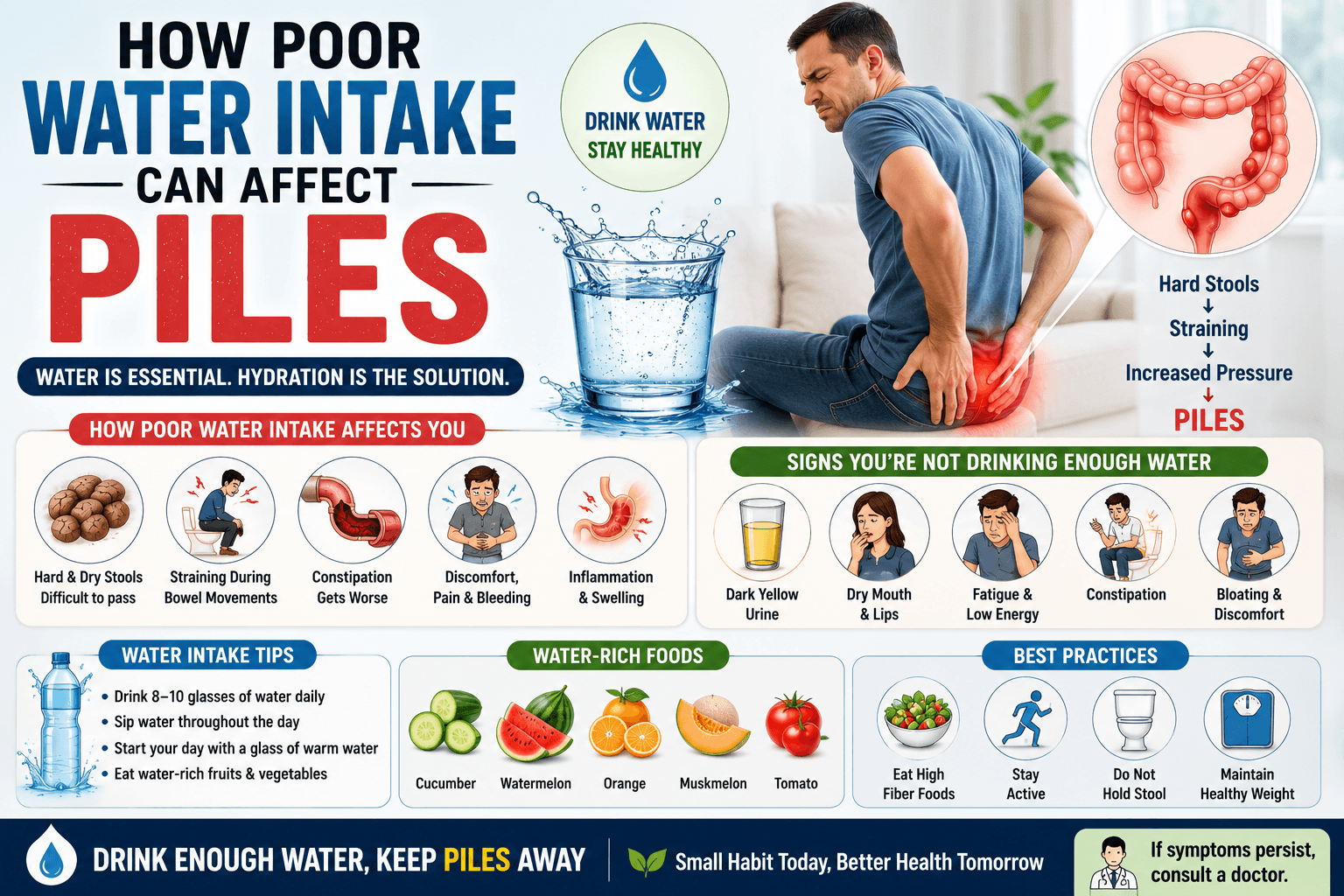
How Poor Water Intake Can Affect Piles
Quick Answer
Poor Piles Hydration can make stools hard and difficult to pass. As a result, constipation and straining during bowel movements become more common. Therefore, drinking enough water every day helps keep stools softer, supports healthy digestion, and may reduce irritation caused by piles.
Introduction
Water is one of the most important parts of a healthy lifestyle.
However, many people do not drink enough water every day.
Poor hydration can affect your entire body.
It can also affect your digestive system.
As a result, constipation becomes more likely.
Constipation is one of the common factors linked with piles.
Therefore, understanding the role of Piles Hydration may help you protect your digestive health.
What is Piles Hydration?
Piles Hydration means drinking enough water to support healthy digestion and smooth bowel movements.
Water helps soften stool.
It also supports normal bowel function.
When the body does not get enough water, stool becomes dry and hard.
Consequently, passing stool becomes more difficult.
Causes of Poor Hydration
Many daily habits may reduce water intake.
1. Drinking Too Little Water
Some people simply forget to drink water.
As a result, the body becomes dehydrated.
2. Hot Weather
The body loses more water through sweat.
Therefore, extra fluids become necessary.
3. Excess Tea or Coffee
Caffeinated drinks should not replace water.
Although moderate amounts are generally fine, relying only on these drinks may not meet your hydration needs.
4. Busy Lifestyle
Many people stay busy and ignore thirst.
Consequently, dehydration develops slowly.
5. Low Intake of Fruits and Vegetables
Many fruits and vegetables contain water.
Therefore, eating fewer of them may reduce total fluid intake.
Signs and Symptoms
Poor hydration may cause:
- Hard stools
- Constipation
- Dry mouth
- Dark yellow urine
- Feeling thirsty often
- Fatigue
- Difficulty passing stool
- Straining during bowel movements
If dehydration becomes severe, medical attention may be needed.
Risk Factors
The risk of dehydration increases if you:
- Drink very little water
- Eat a low-fiber diet
- Exercise without replacing fluids
- Spend long hours outdoors
- Consume excessive alcohol
- Experience vomiting or diarrhea
- Ignore regular thirst
How It Affects Daily Life
Poor hydration may make everyday life uncomfortable.
It may:
- Slow digestion
- Increase constipation
- Make bowel movements painful
- Reduce energy levels
- Affect work and daily activities
Consequently, simple tasks may become uncomfortable.
Benefits of Early Management
Improving hydration may help support:
- Softer stools
- Easier bowel movements
- Better digestion
- Improved energy
- Healthy bowel habits
- Overall digestive wellness
Therefore, drinking enough water every day is a simple healthy habit.
Natural Ways to Support Better Health
Drink Water Regularly
Drink small amounts throughout the day.
Do not wait until you feel very thirsty.
Eat Water-Rich Foods
Choose foods such as:
- Watermelon
- Cucumber
- Tomatoes
- Oranges
- Muskmelon
These foods also contribute to hydration.
Increase Fiber Slowly
Fiber works best with enough water.
Otherwise, constipation may become worse.
Stay Active
Daily walking helps bowel movements.
Consequently, digestion may improve.
Listen to Your Body
Do not ignore the urge to pass stool.
Delaying bowel movements may increase constipation.
Diet Tips
Eat More
✅ Whole grains ✅ Oats ✅ Fruits ✅ Leafy vegetables ✅ Lentils ✅ Beans ✅ Cucumber ✅ Watermelon
Drink
✅ Water ✅ Lemon water ✅ Coconut water ✅ Homemade vegetable soups
Limit
❌ Sugary soft drinks ❌ Highly processed foods ❌ Excess fried foods ❌ Too much alcohol
Lifestyle Tips
Healthy habits improve digestive health.
- Drink water throughout the day.
- Carry a reusable water bottle.
- Exercise regularly.
- Eat fiber-rich foods.
- Avoid sitting on the toilet too long.
- Maintain a healthy weight.
As a result, bowel movements often become easier.
Common Mistakes to Avoid
Avoid these habits:
❌ Ignoring thirst
❌ Drinking very little water
❌ Eating low-fiber meals
❌ Holding bowel movements
❌ Sitting for long hours
❌ Depending on sugary drinks instead of water
When Should You Seek Professional Advice?
Consult a healthcare professional if:
- Rectal bleeding continues.
- Pain becomes severe.
- Constipation lasts longer than two weeks.
- You notice unexplained weight loss.
- Symptoms keep returning.
- Home care does not provide relief.
Professional evaluation helps identify the exact cause and appropriate treatment.
Foods That Drain Energy and Male Strength
Frequently Asked Questions
Can poor water intake cause piles?
Poor hydration does not directly cause piles. However, it may contribute to constipation and straining, which can increase the risk of developing or worsening piles.
How much water should I drink if I have piles?
Most healthy adults benefit from drinking enough fluids throughout the day. Individual needs vary depending on age, climate, activity level, and health conditions.
Does drinking more water cure piles?
No. Water alone does not cure piles. However, good hydration supports softer stools and may help reduce straining during bowel movements.
Which drinks are good for people with piles?
Water, coconut water, lemon water without added sugar, and clear vegetable soups are good options for staying hydrated.
Can dehydration make constipation worse?
Yes. Dehydration can make stools dry and hard, making bowel movements more difficult.
Final Thoughts
Good Piles Hydration is one of the easiest ways to support digestive health.
Although water alone cannot treat piles, staying hydrated may help soften stools and reduce straining.
Combine proper hydration with a fiber-rich diet, regular exercise, and healthy toilet habits for better digestive comfort.
If symptoms continue or worsen, consult a qualified healthcare professional for proper diagnosis and treatment.