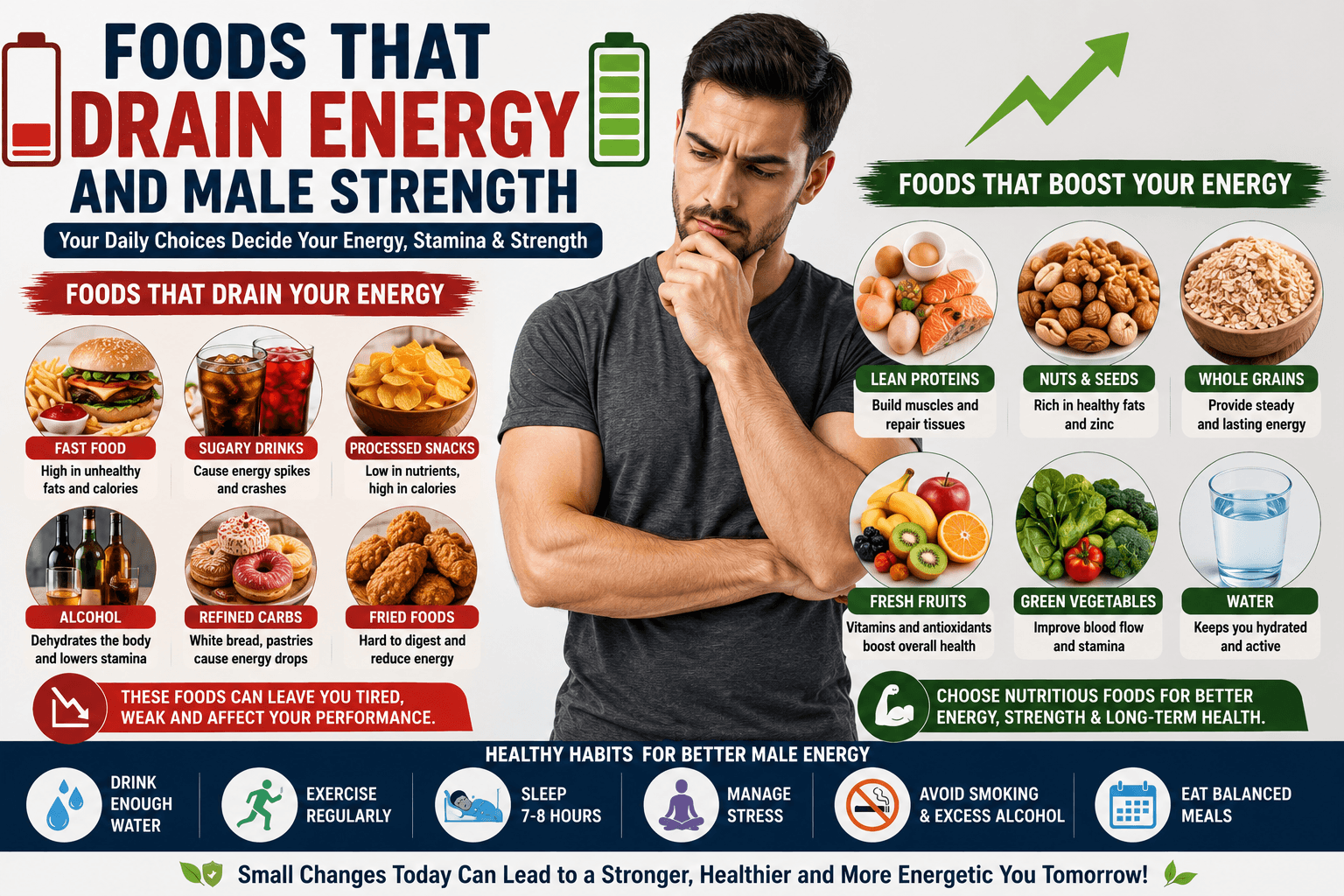
Foods That Drain Energy and Male Strength
Quick Answer
Some foods may reduce male energy by causing blood sugar spikes, poor nutrition, dehydration, or excess calorie intake. Sugary drinks, fried foods, processed snacks, alcohol, and highly refined foods may leave you feeling tired instead of energized. Therefore, choosing balanced meals rich in protein, fiber, healthy fats, and vegetables can help support energy and overall men’s health.
Introduction
Many men blame age or work pressure for feeling tired.
However, daily food choices also play an important role.
Some foods give quick energy but leave you feeling exhausted later.
Others provide very little nutrition.
As a result, your body may struggle to stay active throughout the day.
Fortunately, simple dietary changes can support better male energy, stamina, and overall wellness.
What is Male Energy?
Male energy refers to the body’s ability to stay active, focused, and physically strong throughout the day.
Good energy depends on:
- Balanced nutrition
- Quality sleep
- Regular exercise
- Stress management
- Good hydration
When these factors are balanced, the body performs better.
Causes of Low Male Energy
Several eating habits may reduce male energy over time.
1. Too Much Sugar
Sugary foods may cause a rapid rise in blood sugar.
Soon after, blood sugar drops quickly.
As a result, you may feel tired again.
2. Fried Foods
Fried foods are often high in unhealthy fats.
They may slow digestion and make you feel heavy.
3. Processed Foods
Highly processed foods often contain extra salt, sugar, and unhealthy fats.
However, they usually provide fewer important nutrients.
4. Sugary Drinks
Soft drinks and sweet beverages provide calories without lasting energy.
Consequently, energy levels may fall quickly.
5. Excess Alcohol
Alcohol may disturb sleep quality and contribute to dehydration.
Therefore, you may wake up feeling less refreshed.
6. Refined Carbohydrates
White bread, pastries, and refined flour products digest quickly.
As a result, they may lead to energy crashes.
7. Too Much Fast Food
Fast food is often high in calories but low in vitamins and minerals.
Consequently, your body may not get the nutrients it needs.
Signs and Symptoms
Poor eating habits may contribute to:
- Low energy
- Weakness
- Poor concentration
- Tiredness after meals
- Low motivation
- Reduced stamina
- Mood changes
- Slower recovery after exercise
These symptoms can also have other medical causes. Therefore, persistent symptoms should be evaluated by a healthcare professional.
Risk Factors
You may have a higher risk if you:
- Eat fast food often
- Skip meals
- Drink sugary beverages daily
- Sleep poorly
- Exercise very little
- Experience ongoing stress
- Smoke
- Drink excessive alcohol
How It Affects Daily Life
Low male energy may affect:
- Work performance
- Physical activity
- Exercise
- Concentration
- Mood
- Family life
Therefore, healthy nutrition supports both physical and mental well-being.
Benefits of Early Management
Healthy eating habits may help support:
- Better energy
- Improved focus
- Better stamina
- Healthier body weight
- Improved productivity
- Overall wellness
Small changes made early often become healthy long-term habits.
Natural Ways to Support Better Health
Choose Whole Foods
Eat more fresh vegetables, fruits, legumes, and whole grains.
These foods provide steady energy.
Eat Enough Protein
Protein helps support muscles and keeps you feeling full longer.
Good vegetarian sources include:
- Lentils
- Paneer
- Greek yogurt
- Soy products
- Chickpeas
Drink Enough Water
Even mild dehydration may reduce energy.
Therefore, drink water throughout the day.
Exercise Regularly
Daily movement helps improve circulation and supports energy levels.
Sleep Well
Aim for 7–8 hours of quality sleep every night.
Good sleep supports recovery and overall health.
Diet Tips
Eat More
✅ Spinach ✅ Oats ✅ Brown rice ✅ Lentils ✅ Beans ✅ Paneer ✅ Greek yogurt ✅ Nuts ✅ Seeds ✅ Seasonal fruits
Limit
❌ Sugary drinks ❌ Fried foods ❌ Processed snacks ❌ Refined flour products ❌ Excess sweets ❌ Alcohol
Lifestyle Tips
Healthy habits matter just as much as healthy food.
- Exercise at least 30 minutes daily.
- Sleep on a regular schedule.
- Reduce stress through meditation or yoga.
- Stay hydrated.
- Avoid smoking.
- Eat meals on time.
Consequently, these habits may support better energy and overall health.
Common Mistakes to Avoid
Avoid these common habits:
❌ Skipping breakfast
❌ Drinking too many energy drinks
❌ Eating fast food regularly
❌ Sleeping too little
❌ Sitting for long hours
❌ Ignoring hydration
When Should You Seek Professional Advice?
Consult a healthcare professional if:
- Fatigue lasts for several weeks.
- Weakness affects daily activities.
- You notice unexplained weight loss.
- You have dizziness or frequent fainting.
- Lifestyle improvements do not help.
Persistent low energy may have underlying medical causes that require evaluation.
Frequently Asked Questions
What foods can reduce male energy?
Highly processed foods, sugary drinks, fried foods, refined carbohydrates, and excessive alcohol may contribute to lower energy levels in some people.
Can sugary foods make men feel tired?
Yes. Foods high in added sugar can cause rapid increases and later drops in blood sugar, which may leave you feeling tired.
Which foods help support male energy?
Protein-rich foods, whole grains, fruits, vegetables, nuts, seeds, and adequate hydration support healthy energy levels.
Does dehydration affect male strength?
Yes. Even mild dehydration can reduce physical performance, concentration, and energy.
When should I see a doctor for low energy?
Seek medical advice if fatigue continues for several weeks, becomes severe, or affects your daily activities despite healthy lifestyle changes.
Final Thoughts
Male energy depends on more than calories alone.
Choosing nutritious foods, staying hydrated, exercising regularly, and sleeping well can help support energy, stamina, and overall wellness.
Although occasional treats are fine, making healthier food choices most of the time can have lasting benefits.
If tiredness or weakness continues despite healthy habits, consult a qualified healthcare professional for proper evaluation.