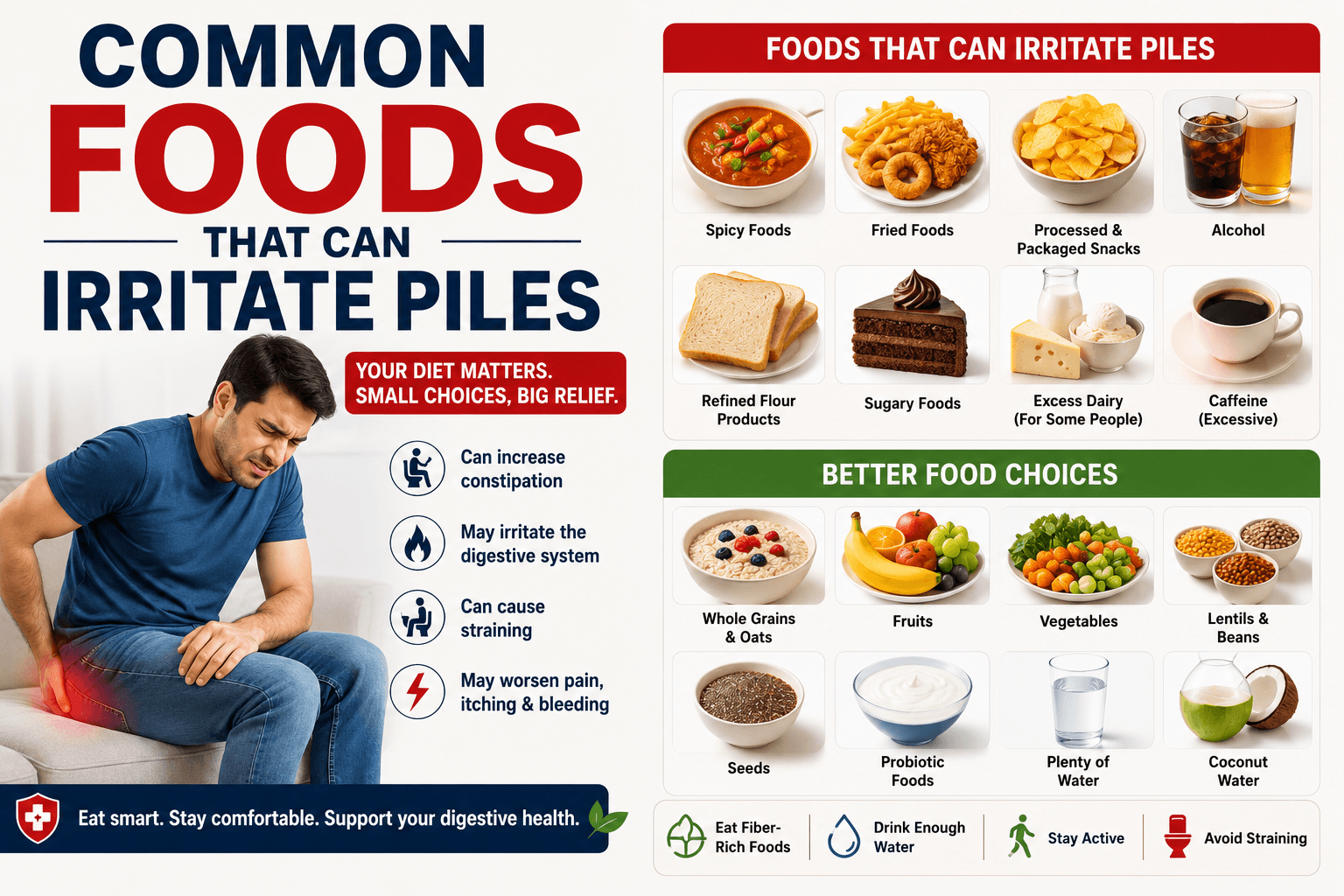
People with piles may feel worse after eating spicy foods, fried foods, processed snacks, alcohol, and low-fiber foods. These foods can increase constipation, irritate the digestive system, and make bowel movements harder. Therefore, choosing fiber-rich foods and drinking enough water may help support better digestive comfort.
Introduction
Many people focus on medicines when dealing with piles. However, food choices also matter.
Some foods may irritate piles and make symptoms worse. As a result, pain, itching, burning, and discomfort may increase.
The good news is that small dietary changes can often help.
Therefore, understanding which piles foods may cause problems is an important step toward better digestive health.
What is Piles Foods?
The term piles foods refers to foods that may affect piles symptoms either positively or negatively.
Some foods support smooth digestion and easier bowel movements.
On the other hand, certain foods may increase constipation, irritation, and straining during toilet visits.
Therefore, knowing the difference can help you make better choices every day.
Causes of Piles Foods Irritation
Certain foods may not directly cause piles. However, they can make symptoms worse.
This usually happens because these foods:
- Increase constipation
- Reduce fiber intake
- Cause digestive irritation
- Lead to hard stools
- Increase straining during bowel movements
As a result, existing piles may become more uncomfortable.
Signs and Symptoms
Food-related piles irritation may lead to:
- Increased itching
- Burning sensation
- Pain during bowel movements
- Hard stools
- Constipation
- Swelling around the anal area
- Discomfort while sitting
Therefore, it is helpful to notice whether symptoms worsen after eating certain foods.
Risk Factors
Some people are more likely to experience food-related piles irritation.
Risk factors include:
- Low-fiber diet
- Poor hydration
- Sedentary lifestyle
- Frequent constipation
- Obesity
- Long sitting hours
- Pregnancy
- Family history of piles
Consequently, these individuals should pay extra attention to daily food choices.
What Foods Can Irritate Piles?
1. Spicy Foods
Spicy foods may irritate the digestive tract in some people.
As a result, bowel movements may become uncomfortable.
Examples include:
- Hot chili peppers
- Extra spicy curries
- Spicy sauces
However, sensitivity varies from person to person.
2. Fried Foods
Fried foods are often difficult to digest.
Moreover, they usually contain low fiber.
Examples include:
- French fries
- Fried snacks
- Pakoras
- Chips
Consequently, constipation may become more likely.
3. Processed Foods
Processed foods often contain less fiber and more additives.
Examples include:
- Instant noodles
- Packaged snacks
- Processed meats
- Fast food items
Therefore, they may contribute to digestive discomfort.
4. White Bread and Refined Flour Products
Refined foods lose much of their natural fiber.
As a result, stool may become harder.
Common examples include:
- White bread
- White pasta
- Refined flour bakery products
Therefore, whole-grain alternatives are often a better choice.
5. Excessive Dairy Products
Some people may experience constipation from high dairy intake.
Examples include:
- Cheese
- Full-fat milk
- Ice cream
However, not everyone reacts the same way.
6. Alcohol
Alcohol may contribute to dehydration.
Consequently, stool may become harder and more difficult to pass.
As a result, piles discomfort may increase.
7. Sugary Foods
Large amounts of sugary foods may affect digestion.
Examples include:
- Cakes
- Candies
- Sugary beverages
Therefore, moderation is important.
How It Affects Daily Life
Food-triggered piles symptoms can affect many activities.
For example:
- Sitting may become uncomfortable.
- Work productivity may decrease.
- Travel may feel difficult.
- Sleep quality may suffer.
Therefore, managing diet can support overall comfort and daily well-being.
Benefits of Early Management
Making dietary improvements early offers several benefits.
These may include:
- Better bowel movements
- Less constipation
- Reduced straining
- Improved digestive comfort
- Better quality of life
As a result, symptoms may become easier to manage.
Natural Ways to Support Better Health
Healthy habits often work best when combined.
Consider:
- Drinking more water
- Eating more fiber
- Walking daily
- Managing stress
- Following a regular toilet routine
Therefore, consistency is important.
Diet Tips
Choose foods that support digestion.
Include More:
✅ Fruits ✅ Vegetables ✅ Whole grains ✅ Oats ✅ Brown rice ✅ Lentils ✅ Beans ✅ Seeds
Drink:
✅ Water ✅ Coconut water ✅ Fresh vegetable soups
As a result, bowel movements may become easier.
Lifestyle Tips
Simple lifestyle changes can make a difference.
Helpful Habits
- Walk for at least 30 minutes daily.
- Avoid sitting for long periods.
- Stay hydrated.
- Exercise regularly.
- Sleep well.
- Manage stress.
Therefore, healthy routines support digestive wellness.
Common Mistakes to Avoid
Many people unknowingly worsen piles symptoms.
Avoid these common mistakes:
❌ Ignoring constipation
❌ Drinking too little water
❌ Eating excessive junk food
❌ Delaying bowel movements
❌ Sitting on the toilet too long
❌ Lack of physical activity
Consequently, avoiding these habits may help reduce discomfort.
When Should You Seek Professional Advice?
Professional medical advice may be beneficial if:
- Symptoms continue for several weeks
- Bleeding occurs repeatedly
- Pain becomes severe
- Home remedies do not help
- Bowel habits change suddenly
A healthcare professional can help determine the underlying cause and recommend appropriate treatment.
Why Men Feel Weak Even After Full Sleep
Frequently Asked Questions
What foods can make piles worse?
Spicy foods, fried foods, processed snacks, alcohol, and low-fiber foods may worsen piles symptoms in some people.
Can spicy food cause piles?
Spicy food does not directly cause piles. However, it may irritate existing symptoms in some individuals.
Is dairy bad for piles?
Excess dairy may contribute to constipation in some people, which may worsen piles discomfort.
How much water should piles patients drink?
Water needs vary by person. However, staying well hydrated supports healthy digestion and bowel movements.
Can diet help reduce piles symptoms?
Yes. A balanced diet rich in fiber and fluids may help support digestive comfort and reduce constipation.
Final Thoughts
Managing piles foods is an important part of supporting digestive health.
Although food alone may not cure piles, healthy eating habits can help reduce discomfort and improve bowel movements.
Therefore, focus on fiber-rich foods, proper hydration, and balanced nutrition.
If symptoms continue or become severe, seek guidance from a qualified healthcare professional.