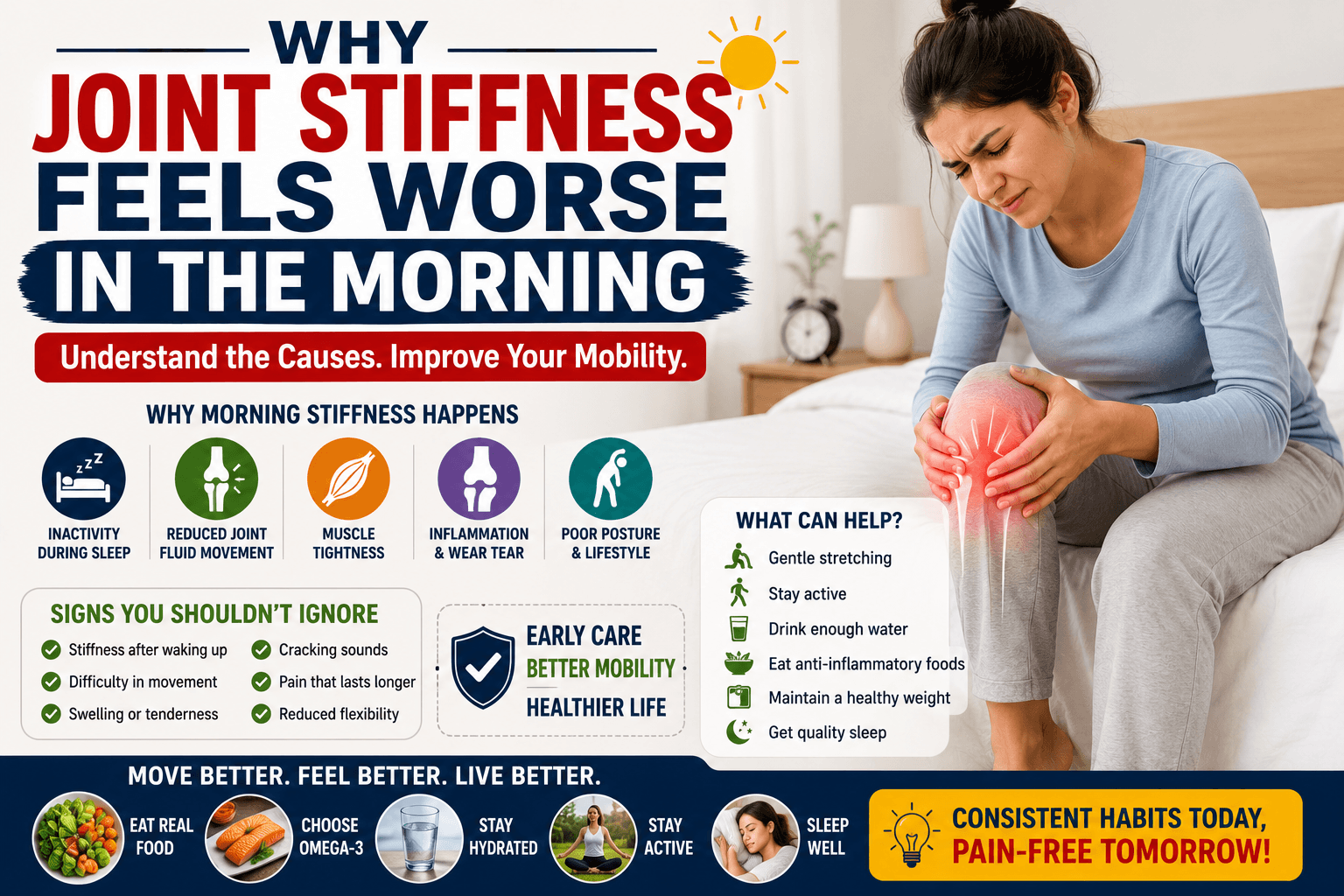
Why Joint Stiffness Feels Worse in the Morning
Quick Answer
Joint stiffness often feels worse in the morning because joints stay inactive during sleep. As a result, muscles tighten, joint fluids move less, and flexibility decreases temporarily. However, gentle movement, stretching, hydration, and healthy lifestyle habits may help improve mobility and reduce morning stiffness.
Introduction
Have you ever woken up and felt that your knees, hips, fingers, or back were harder to move?
If yes, you are not alone.
Many people experience joint stiffness when they get out of bed.
Often, the stiffness improves after moving around for a few minutes.
However, repeated morning stiffness may signal that your joints need more attention.
Therefore, understanding why it happens can help you support better joint health.
What is Joint Stiffness?
Joint stiffness is a feeling of tightness or reduced movement in a joint.
It may affect:
- Knees
- Hips
- Fingers
- Shoulders
- Ankles
- Back
As a result, normal movements may feel slower or uncomfortable.
Although stiffness is often temporary, it can sometimes last longer and affect daily activities.
Causes of Joint Stiffness
Several factors can contribute to joint stiffness.
1. Lack of Movement During Sleep
As a result, joints move less and muscles become tighter.
Therefore, stiffness may be noticeable after waking up.
2. Aging
Consequently, flexibility may decrease.
Therefore, morning stiffness becomes more common with age.
3. Poor Sleeping Position
As a result, stiffness may develop by morning.
4. Joint Wear and Tear
Therefore, some people notice stiffness more often as they age.
5. Inflammation
In some cases, inflammation may contribute to morning joint stiffness.
6. Lack of Physical Activity
Consequently, stiffness may become more noticeable.
7. Excess Body Weight
Therefore, knees, hips, and lower back may feel stiffer.
Signs and Symptoms
Common symptoms include:
- Difficulty moving after waking up
- Tightness in joints
- Reduced flexibility
- Mild discomfort
- Slower movement
- Stiff fingers
- Stiff knees
- Limited range of motion
As a result, daily activities may feel more difficult during the first part of the day.
Sign Up Today & Start Sending Money.
Get 30 days free when you sign up now.
Risk Factors
Some people are more likely to experience joint stiffness.
Risk factors include:
- Increasing age
- Sedentary lifestyle
- Excess weight
- Previous joint injuries
- Poor posture
- Lack of exercise
- Family history of joint conditions
Therefore, maintaining healthy habits becomes important.
How It Affects Daily Life
Morning stiffness may affect:
- Walking
- Climbing stairs
- Exercise
- Household work
- Office work
- Driving
Consequently, everyday tasks may take longer to complete.
Some people also feel less active because movement becomes uncomfortable.
Sign Up Today & Start Sending Money.
Get 30 days free when you sign up now.
Benefits of Early Management
Addressing stiffness early may provide several benefits.
These include:
✅ Better mobility
✅ Improved flexibility
✅ Easier movement
✅ More physical activity
✅ Better quality of life
Therefore, paying attention to early symptoms is worthwhile.
Natural Ways to Support Better Health
Simple habits may help support joint mobility.
Gentle Morning Stretching
Stretching helps warm up muscles and joints.
As a result, movement often becomes easier.
Regular Physical Activity
Walking, swimming, and yoga help keep joints active.
Therefore, stiffness may be reduced over time.
Sign Up Today & Start Sending Money.
Get 30 days free when you sign up now.
Stay Hydrated
Water supports many body functions.
Moreover, hydration helps maintain healthy tissues.
Maintain a Healthy Weight
Less weight means less pressure on joints.
Consequently, movement may feel more comfortable.
Get Quality Sleep
Good sleep supports overall recovery.
Therefore, maintaining a regular sleep schedule is beneficial.
Sign Up Today & Start Sending Money.
Get 30 days free when you sign up now.
Diet Tips
Healthy eating supports overall joint wellness.
Include More:
✅ Green vegetables ✅ Fruits ✅ Whole grains ✅ Lentils ✅ Beans ✅ Nuts ✅ Seeds
Drink:
✅ Water ✅ Coconut water ✅ Vegetable soups
Limit:
❌ Highly processed foods ❌ Excess sugary drinks ❌ Excess fried foods
Therefore, a balanced diet remains important.
Lifestyle Tips
Simple daily habits can support healthier joints.
Helpful Habits
- Walk regularly.
- Stretch daily.
- Avoid long sitting periods.
- Maintain good posture.
- Stay physically active.
- Drink enough water.
As a result, joints remain more flexible and mobile.
Common Mistakes to Avoid
Many people unknowingly worsen stiffness.
Avoid these habits:
❌ Sitting too long
❌ Skipping exercise
❌ Poor posture
❌ Ignoring pain
❌ Carrying excess weight
❌ Lack of stretching
Consequently, avoiding these mistakes may help support joint comfort.
When Should You Seek Professional Advice?
Professional advice may be helpful if:
- Stiffness lasts longer than an hour each morning
- Joint swelling develops
- Pain becomes severe
- Daily activities become difficult
- Symptoms continue for several weeks
A healthcare professional can evaluate the cause and recommend appropriate care.
Warning Signs Your Sugar Levels Are Unbalanced
Frequently Asked Questions
Why is joint stiffness worse in the morning?
Joint stiffness often feels worse because joints remain inactive during sleep, reducing movement and flexibility temporarily.
How long should morning joint stiffness last?
Mild stiffness usually improves within a short time after moving around. Persistent stiffness may need medical evaluation.
Can dehydration cause joint stiffness?
Dehydration may affect body tissues and contribute to feelings of stiffness in some people.
Does exercise help joint stiffness?
Yes. Regular exercise and stretching may help improve flexibility and support healthy joint movement.
When should I worry about joint stiffness?
Seek professional advice if stiffness is severe, lasts a long time, causes swelling, or affects daily activities.
Final Thoughts
Joint stiffness in the morning is common and often happens because the body stays inactive during sleep.
Fortunately, healthy habits such as stretching, exercise, hydration, proper nutrition, and weight management may help improve mobility.
However, persistent or severe stiffness should not be ignored.
If symptoms continue, consult a healthcare professional for proper evaluation and guidance.