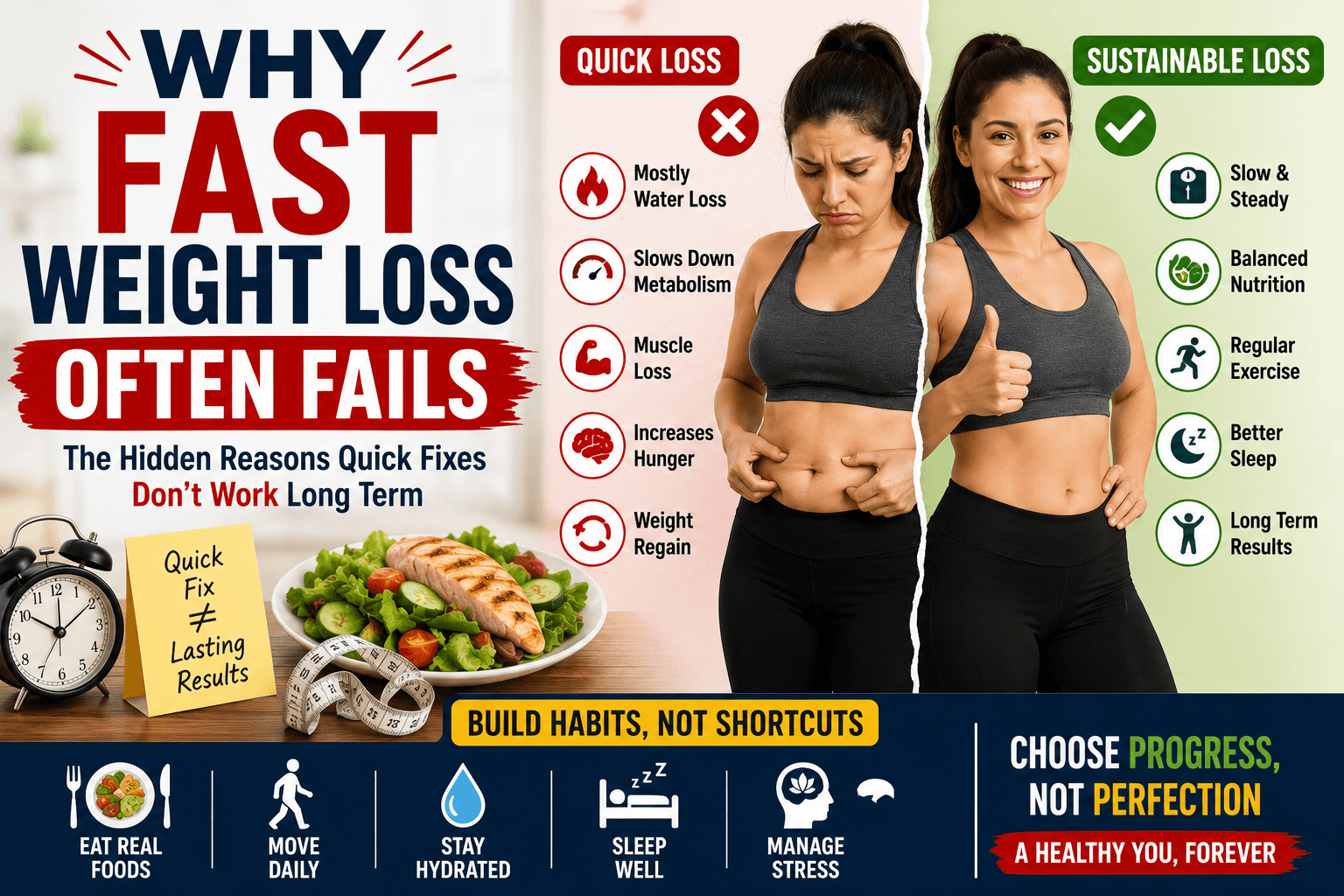
Why Fast Weight Loss Often Fails
Many people want quick results when trying to lose weight. Therefore, they often choose extreme diets, meal skipping, or intense workout plans.
At first, these methods may seem successful. In fact, the weighing scale may show lower numbers within a few days.
However, fast results do not always mean lasting results.
Many people regain the lost weight after a few weeks or months.
So, why does this happen?
The answer lies in how the body reacts to rapid changes.
Understanding fast weight loss can help you avoid common mistakes and achieve healthier long-term results.
What Is Fast Weight Loss?
Fast weight loss usually means losing a large amount of weight in a short time.
This often happens through:
- Crash diets
- Very low-calorie eating plans
- Excessive exercise
- Meal skipping
- Detox diets
- Fad weight-loss programs
Although these methods may produce quick results, they are often difficult to maintain.
As a result, many people return to old habits.
Why Fast Weight Loss Often Fails
1️⃣ Most Weight Lost Is Water Weight
During the first few days of dieting, the body loses stored water.
Therefore, the scale may show rapid progress.
However, losing water is not the same as losing body fat.
Once normal eating resumes, the water weight often returns.
2️⃣ Extreme Diets Are Hard to Follow
Many quick-fix diets require severe food restrictions.
At first, motivation feels strong.
However, maintaining strict rules becomes difficult over time.
Consequently, people often quit and return to previous eating habits.
I am text block. Click edit button to change this text. Lorem ipsum dolor sit amet, consectetur adipiscing elit. Ut elit tellus, luctus nec ullamcorper mattis, pulvinar dapibus leo.
3️⃣ The Body Slows Down Metabolism
Your body is designed to protect itself.
When calorie intake becomes extremely low, the body may slow down metabolism.
As a result, fewer calories are burned.
Therefore, weight loss becomes harder.
4️⃣ Muscle Loss May Occur
Healthy weight loss should focus on reducing body fat.
However, extreme dieting can also cause muscle loss.
Because muscle helps burn calories, losing muscle may slow future weight loss efforts.
5️⃣ Hunger Increases
The body responds to calorie restriction by increasing hunger hormones.
As a result, cravings become stronger.
Therefore, many people eventually overeat.
6️⃣ Energy Levels Drop
Very low-calorie diets often leave people feeling tired.
Consequently, daily movement decreases.
Exercise performance may also suffer.
Because of this, overall calorie burning becomes lower.
7️⃣ Old Habits Return
Temporary diets rarely teach long-term healthy habits.
After the diet ends, many people go back to previous routines.
As a result, lost weight often returns.
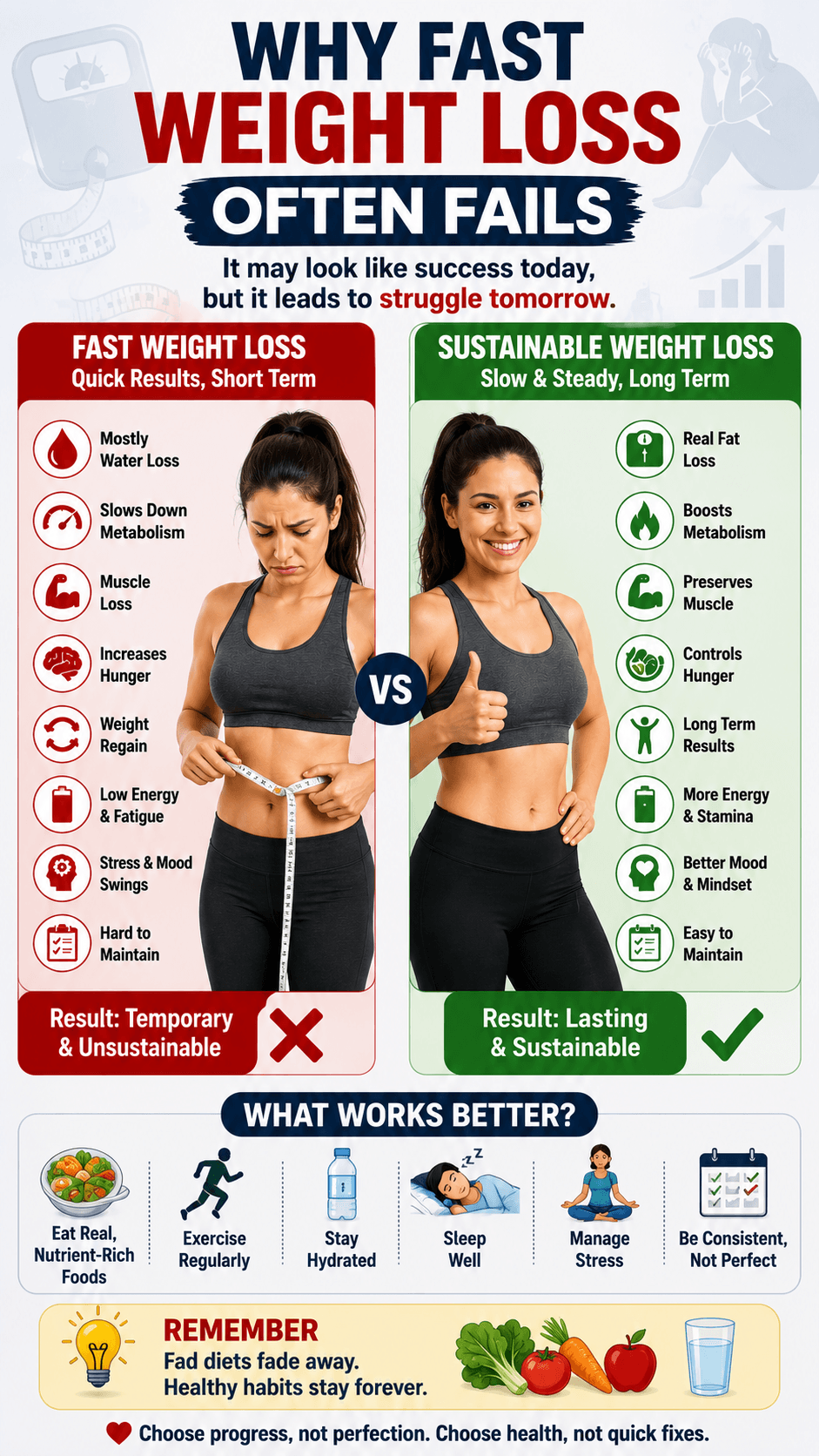
Signs Your Weight Loss Method May Not Be Sustainable
Watch for these warning signs:
- Constant hunger
- Low energy
- Irritability
- Difficulty concentrating
- Frequent cravings
- Muscle weakness
- Weight regain after dieting
Therefore, focusing on long-term health is more important than quick results.
What Works Better Than Fast Weight Loss?
Small Lifestyle Changes
Small improvements are easier to maintain.
Therefore, gradual progress often produces better results.
Balanced Nutrition
Healthy meals provide essential nutrients.
Additionally, balanced eating helps control hunger.
Regular Exercise
Exercise supports fat loss and muscle maintenance.
As a result, weight management becomes easier.
Good Sleep
Sleep affects appetite hormones and metabolism.
Therefore, quality sleep supports healthy weight control.
Stress Management
Stress may increase cravings and emotional eating.
Consequently, managing stress can support weight-loss goals.
How Much Weight Loss Is Considered Healthy?
Experts generally recommend gradual weight loss.
Slow progress often leads to better long-term success.
Moreover, healthy weight loss usually protects muscle mass and overall wellness.
Remember, lasting results matter more than rapid results.
Healthy Habits That Support Long-Term Fat Loss
Try these simple habits:
- Eat more vegetables
- Include protein in meals
- Drink enough water
- Walk daily
- Sleep 7–8 hours
- Avoid sugary drinks
- Practice portion control
As a result, weight management becomes more sustainable.
The Mindset Difference
People who lose weight successfully often focus on habits rather than numbers.
Instead of asking:
“How fast can I lose weight?”
Ask:
“How can I build healthy habits for life?”
This simple shift can create lasting change.
When Should You Seek Professional Advice?
Consult a healthcare professional if:
- Weight changes happen suddenly
- You struggle with severe obesity
- Existing health conditions affect weight
- Dieting causes weakness or fatigue
Professional guidance can help create a safe and effective plan.
How Sitting Too Long Damages Your Joints
Final Thoughts
Fast weight loss may sound attractive, but it often fails because it focuses on short-term results rather than lasting habits.
Although rapid diets can produce quick changes, they are usually difficult to maintain.
Therefore, focus on gradual improvements, balanced nutrition, regular exercise, quality sleep, and stress management.
Small steps taken consistently often lead to the biggest success.
Frequently Asked Questions
Q. Why does fast weight loss usually fail?
Fast weight loss often relies on extreme methods that are difficult to maintain long term.
Q. Is rapid weight loss unhealthy?
In many cases, rapid weight loss may lead to muscle loss, low energy, and weight regain.
Q. What is the healthiest way to lose weight?
Healthy weight loss involves balanced nutrition, exercise, sleep, and sustainable lifestyle habits.
Q. Can crash diets slow metabolism?
Yes. Extremely low-calorie diets may cause the body to burn fewer calories to conserve energy.