Quick Answer
The early signs of piles (haemorrhoids) you shouldn’t ignore include occasional itching or discomfort around the anus, mild bleeding during bowel movements, a feeling of fullness or incomplete evacuation, and a small lump or swelling near the anal opening. These early signs are often mild and easy to dismiss, but catching them early generally makes management much simpler. Piles are extremely common and nothing to feel embarrassed about, but persistent or worsening symptoms should always be evaluated by a doctor for proper diagnosis, since some symptoms can occasionally overlap with other digestive conditions that need different care.
Piles are one of those health topics people often feel too embarrassed to talk about, even though they’re remarkably common — affecting a large number of adults at some point in their lives. In this article, we’ll walk through the early signs of piles you shouldn’t ignore, what commonly causes them, and what Ayurveda has traditionally taught about supporting digestive and rectal health.
What Exactly Are Piles?
Piles, medically known as haemorrhoids, are swollen blood vessels located in the lower rectum or around the anus. They can develop internally (inside the rectum) or externally (under the skin around the anus), and while they’re extremely common, many people don’t recognise the early signs of piles until symptoms have progressed and become more noticeable or uncomfortable.
Understanding these early warning signs can help you take proactive steps sooner, often making a real difference in how manageable the condition feels.
Common Causes of Piles
Several everyday factors can contribute to the development of piles. Understanding these causes is helpful for both prevention and recognising why early signs of piles occur in the first place:
- Chronic constipation — Straining during bowel movements is one of the most significant contributors to piles.
- Low fibre diet — Diets low in fruits, vegetables, and whole grains often lead to harder stools and increased straining.
- Prolonged sitting — Sitting for extended periods, especially on the toilet, can increase pressure on rectal blood vessels.
- Sedentary lifestyle — Lack of physical activity is associated with increased risk of constipation and piles.
- Pregnancy — Increased pressure on pelvic blood vessels during pregnancy commonly contributes to piles.
- Obesity — Excess weight can increase pressure on the rectal area.
- Chronic diarrhoea — Frequent, loose bowel movements can also irritate and strain the rectal area.
- Heavy lifting — Regular heavy lifting can increase abdominal pressure, contributing to piles over time.
- Family history — A genetic tendency toward weaker vein structures may increase susceptibility.
- Ageing — Tissues supporting rectal veins can naturally weaken with age, increasing risk.
Recognising these causes is an important first step in understanding why early signs of piles occur and how they might be prevented or managed early on.
Early Signs of Piles You Shouldn’t Ignore
Here’s a closer look at the specific early signs of piles that are worth paying attention to, even when they seem mild or occasional.
1. Mild Itching Around the Anus
Occasional itching, sometimes called pruritus ani, is often one of the earliest and most overlooked signs of piles. It’s easy to dismiss as a minor irritation, but persistent itching in this area is worth noting.
2. Bright Red Blood During Bowel Movements
Noticing small amounts of bright red blood, either on toilet paper or in the toilet bowl after a bowel movement, is one of the more commonly recognised early signs of piles. While often not serious, any rectal bleeding should be evaluated by a doctor, since bleeding can occasionally indicate other digestive conditions that need different attention.
3. A Feeling of Fullness or Incomplete Evacuation
Some people notice a sensation that their bowels haven’t fully emptied, even after using the toilet. This subtle, easy-to-dismiss sign is often one of the earliest indicators of internal piles.
4. Mild Discomfort or Swelling Near the Anus
A small, soft lump or area of swelling near the anal opening, sometimes only noticeable when wiping or during bathing, can be an early sign of external piles.
5. Discomfort During or After Bowel Movements
Mild discomfort, rather than sharp pain, during or shortly after passing stool is a commonly overlooked early sign, often mistaken for general digestive discomfort.
6. Mucus Discharge
Some people notice a small amount of mucus discharge, which can be an early sign of internal piles, particularly when combined with other symptoms on this list.
7. Difficulty Keeping the Area Clean
Occasional difficulty fully cleaning the anal area, or a persistent feeling of residual stool despite proper hygiene, can sometimes be an early, subtle sign of piles.
Noticing even one or two of these early signs of piles is worth paying attention to, particularly if they persist or occur repeatedly, rather than as a one-off occurrence.
When These Signs Warrant a Doctor’s Visit
While early, mild signs of piles are common and often manageable with lifestyle changes, certain signs warrant prompt medical attention:
- Heavy or persistent rectal bleeding
- Severe pain, particularly with a hard, painful lump (which could indicate a thrombosed haemorrhoid)
- Signs of infection, such as fever alongside rectal symptoms
- Significant changes in bowel habits alongside bleeding
- Unexplained weight loss alongside rectal symptoms
- Symptoms that don’t improve with basic lifestyle changes
These signs could indicate a more significant condition requiring proper medical evaluation, so it’s important not to rely solely on home remedies if you experience them. It’s also worth noting that rectal bleeding, in particular, should always be checked by a doctor to rule out other underlying digestive conditions, even if piles seem like the most likely cause.
Lifestyle Tips That May Help Manage Early Signs of Piles
If you’ve noticed early signs of piles, these practical lifestyle changes may help ease symptoms and support prevention:
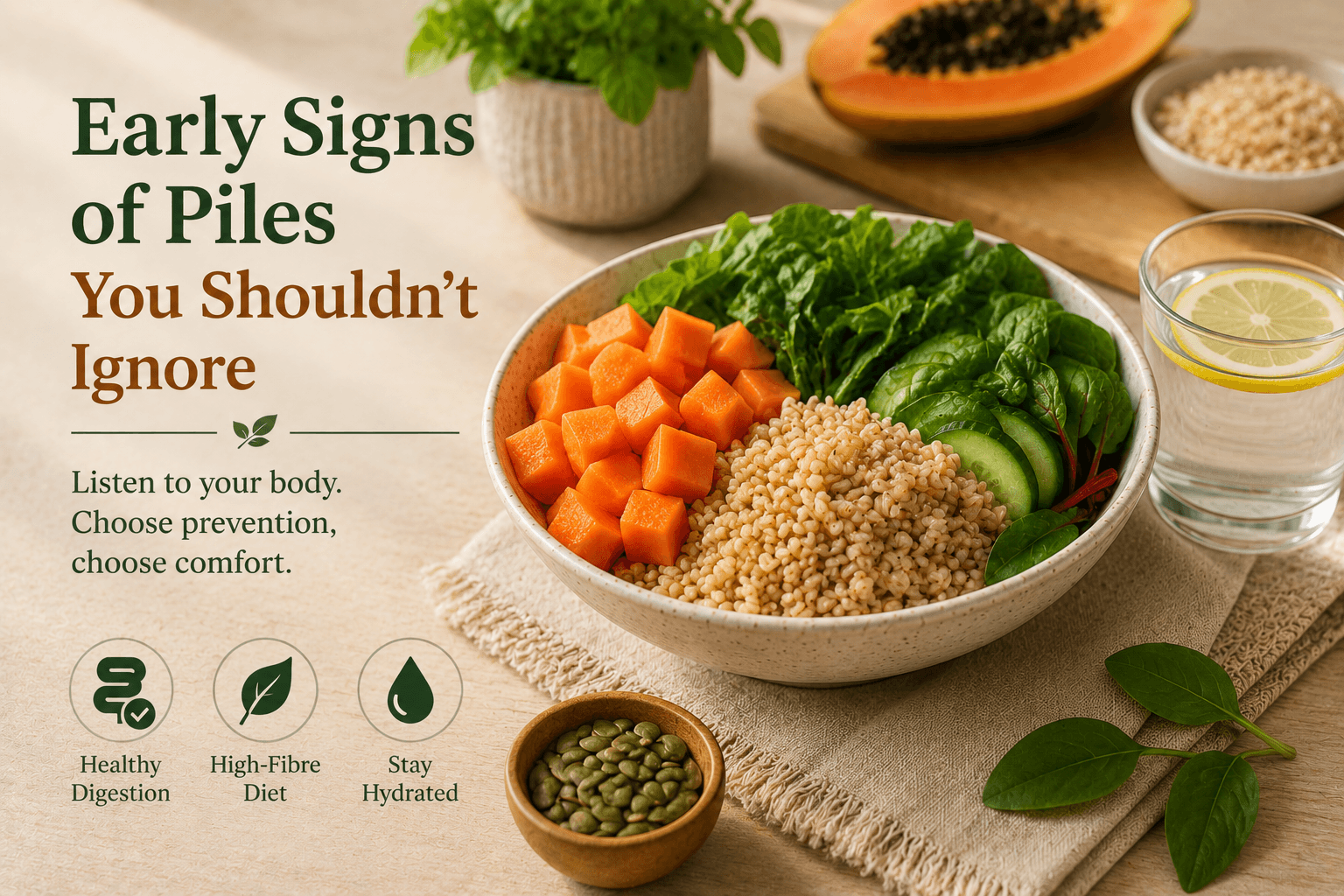
- Increase dietary fibre — Include more fruits, vegetables, whole grains, and legumes to help support softer, easier-to-pass stools.
- Stay well-hydrated — Adequate water intake supports softer stools and reduces straining.
- Avoid straining during bowel movements — Take your time and avoid excessive pushing.
- Don’t delay the urge to go — Postponing bowel movements can contribute to harder stools and increased straining.
- Stay physically active — Regular movement supports healthy digestion and reduces constipation risk.
- Avoid prolonged sitting — Especially on the toilet; try to keep bathroom visits brief.
- Practice good hygiene — Gentle cleaning, rather than harsh wiping, can help reduce irritation.
- Maintain a healthy body weight — Reduces overall pressure on the rectal area.
The Ayurvedic Perspective on Piles (Arsha)
In Ayurveda, piles are referred to as “Arsha” and are traditionally understood to result from an imbalance in digestion, particularly weakened Agni (digestive fire), often combined with aggravated Vata dosha, which governs movement and elimination in the body. Ayurveda traditionally links poor dietary habits, irregular routines, and chronic constipation to the development of Arsha.
Ayurveda’s traditional approach to supporting digestive and rectal health includes:
- Supporting healthy digestion (Agni) — Through warm, easily digestible meals and mindful eating practices.
- Including fibre-rich, traditional foods — Such as whole grains, leafy greens, and fruits like papaya, traditionally believed to support regularity.
- Herbs like Triphala — Traditionally used in Ayurveda to help support healthy digestion and regularity, which may indirectly support rectal health.
- Warm sitz baths — A traditional practice believed to help soothe discomfort in the anal area.
- Avoiding excessive spicy, fried, and heavy foods — Traditionally believed to aggravate digestive imbalance and worsen constipation.
- Maintaining a consistent daily routine — Regular mealtimes and bowel habits are believed to support overall digestive balance.
This Ayurvedic understanding of Arsha offers a thoughtful, holistic complement to modern medical approaches, emphasising prevention through digestion and lifestyle alongside appropriate medical care when needed.
Why Early Recognition Matters
Piles are remarkably common, and there’s genuinely no need to feel embarrassed discussing them, including with your doctor. Recognising early signs of piles and addressing them proactively through simple lifestyle changes often makes a meaningful difference, potentially preventing symptoms from progressing to a more uncomfortable or persistent stage. Waiting until symptoms become severe generally makes management more challenging, so early attention is genuinely worthwhile.
Frequently Asked Questions
1. What is usually the first sign of piles?
Mild itching, occasional bleeding during bowel movements, or a feeling of incomplete evacuation are often among the earliest and most commonly reported signs of piles.
2. Is bleeding from piles always serious?
While bleeding from piles is often not serious, any rectal bleeding should be evaluated by a doctor, since similar symptoms can occasionally be linked to other digestive conditions that require different attention and care.
3. Can lifestyle changes alone help manage early signs of piles?
For many people, lifestyle changes like increasing fibre intake, staying hydrated, and avoiding straining can meaningfully help manage early, mild signs of piles. However, persistent or worsening symptoms should always be evaluated by a doctor for proper diagnosis and guidance.
A Gentle Note Before You Go
Recognising the early signs of piles and addressing them proactively can make a genuine difference in your digestive comfort and overall wellbeing. If you’re looking for gentle, everyday support alongside these lifestyle habits, Healthywe’s range of digestive care herbal supplements is made using 100% natural, vegetarian ingredients rooted in traditional Ayurvedic wisdom.
As always, lifestyle changes and herbal supplements are meant to support your overall wellness, not replace medical care. Please consult your doctor or an Ayurvedic practitioner for proper diagnosis, and before making any changes to a prescribed treatment.
Explore our natural wellness range at www.healthywewellness.com/shop.