Quick Answer
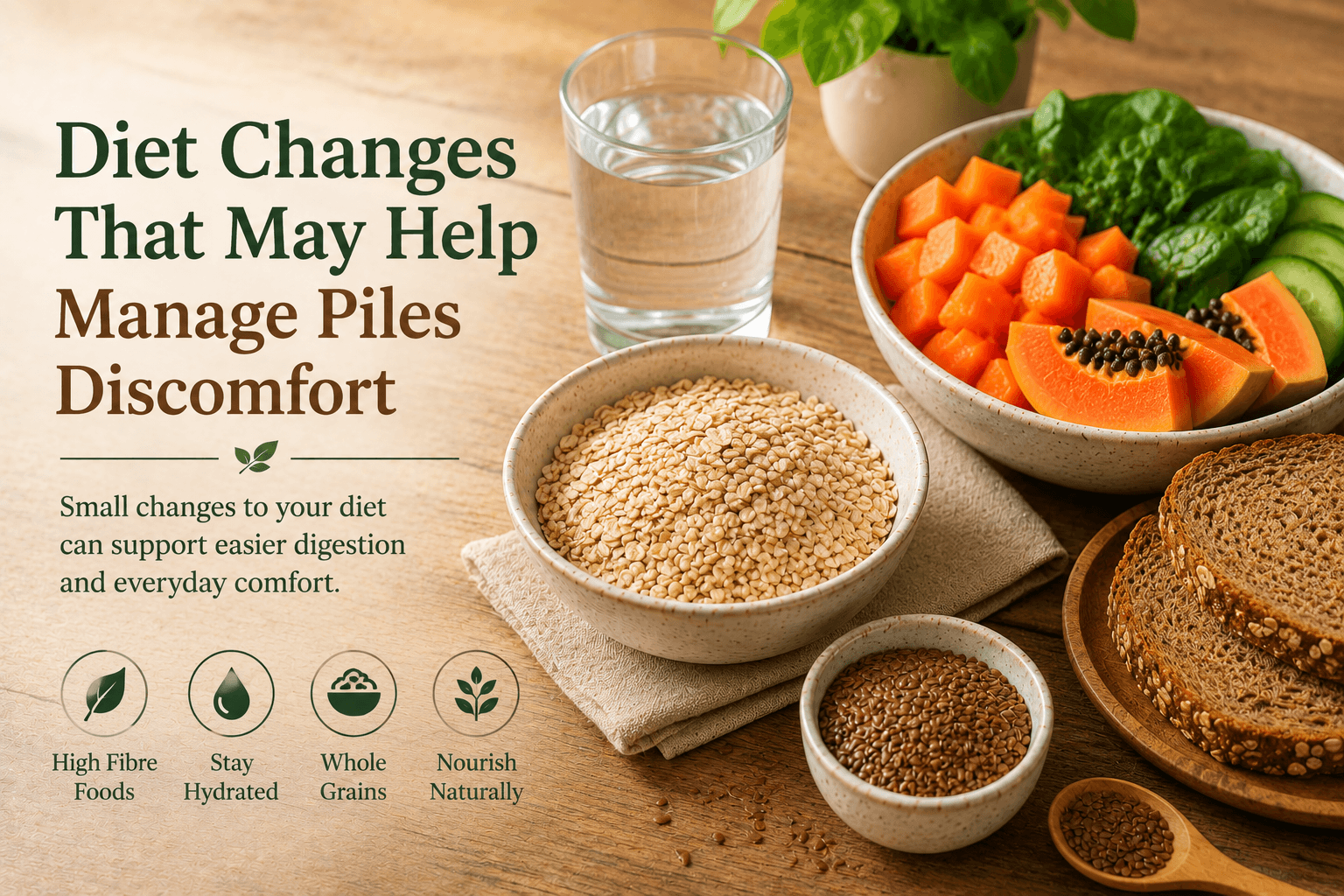
Diet changes that may help manage piles discomfort centre around increasing fibre intake, staying well-hydrated, and reducing foods that contribute to constipation or straining. Simple swaps like adding more fruits, vegetables, whole grains, and legumes to your meals, along with plenty of water, can help support softer, easier-to-pass stools, which is often the single most helpful dietary change for easing piles discomfort. These changes work best as part of a broader lifestyle approach, and persistent or severe symptoms should always be evaluated by a doctor for proper diagnosis and guidance.
If you’re dealing with the discomfort of piles, you’ve probably already heard that diet plays a role — but knowing exactly what to eat, and what to cut back on, can feel confusing. In this article, we’ll walk through practical diet changes that may help manage piles discomfort, why they work, and what Ayurveda has traditionally recommended for supporting digestive and rectal health through food.
Why Diet Plays Such a Big Role in Piles Discomfort
Piles, or haemorrhoids, often become more uncomfortable when bowel movements involve straining, hard stools, or constipation, all of which put additional pressure on the already swollen blood vessels in the rectal area. This is exactly why diet changes that may help manage piles discomfort focus so heavily on supporting softer, easier-to-pass stools — reducing strain is often the single most impactful thing you can do through diet alone.
Common Dietary Causes That Worsen Piles Discomfort
Before looking at helpful changes, it’s worth understanding which everyday dietary habits tend to worsen piles discomfort:
- Low fibre intake — Diets low in fruits, vegetables, and whole grains are strongly linked to constipation and straining.
- Inadequate water intake — Insufficient hydration contributes to harder, more difficult-to-pass stools.
- Excess refined and processed foods — Low in fibre and often contributing to constipation.
- Excess spicy food — Can sometimes irritate the digestive tract and worsen discomfort for some people.
- Low intake of healthy fats — Healthy fats support smoother bowel movements; very low-fat diets can sometimes worsen constipation.
- Excess caffeine or alcohol — Both can contribute to dehydration, indirectly worsening constipation.
- Irregular eating patterns — Skipping meals or eating at inconsistent times can disrupt regular bowel habits.
Understanding these common dietary triggers helps put diet changes that may help manage piles discomfort into proper context — it’s about identifying and adjusting the habits most likely to be contributing to your specific discomfort.
Common Symptoms That May Improve With Dietary Changes
Diet changes that may help manage piles discomfort are often most effective for symptoms like:
- Straining or difficulty during bowel movements
- Discomfort or pain during or after passing stool
- Mild bleeding associated with hard stools
- A feeling of incomplete evacuation
- General digestive discomfort alongside piles symptoms
If symptoms are severe, persistent, or don’t improve despite consistent dietary changes, it’s important to consult a doctor for proper evaluation, as some cases of piles may require additional medical attention beyond lifestyle adjustments alone.
Diet Changes That May Help Manage Piles Discomfort
Here’s a practical breakdown of specific diet changes that may help manage piles discomfort as part of your daily routine.
1. Increase Soluble and Insoluble Fibre
Both types of fibre play a role in supporting healthy bowel movements. Soluble fibre, found in oats, apples, and legumes, helps soften stool, while insoluble fibre, found in whole grains and vegetable skins, adds bulk that supports regularity. Gradually increasing your intake, rather than adding too much too quickly, helps avoid bloating.
2. Include Whole Grains
Swapping refined grains like white rice and maida for whole grain options like brown rice, whole wheat, and millets (bajra, jowar, ragi) can meaningfully increase your daily fibre intake.
3. Eat More Fresh Fruits and Vegetables
Fruits like papaya, pears, and figs, along with leafy green vegetables, are traditionally and nutritionally recognised for supporting regularity and easing constipation, both of which are directly linked to piles discomfort.
4. Stay Well-Hydrated
Adequate water intake is essential for fibre to work effectively in softening stool. Aim for consistent water intake throughout the day, rather than large amounts all at once.
5. Include Healthy Fats in Moderation
Healthy fats from sources like nuts, seeds, and ghee in moderation can help support smoother, easier bowel movements.
6. Add Flaxseeds or Chia Seeds
These seeds are rich in fibre and, when consumed with adequate water, can help support softer stools. They’re easy to add to smoothies, curd, or oatmeal.
7. Limit Processed and Refined Foods
Reducing packaged snacks, refined flour products, and highly processed foods can help support better overall digestive regularity.
8. Moderate Spicy Food Intake
While not necessary to eliminate entirely, some people find that reducing very spicy foods helps ease digestive discomfort associated with piles.
9. Include Fermented Foods
Curd and buttermilk (chaas) support healthy gut bacteria, which may indirectly support regular, comfortable digestion.
Together, these diet changes that may help manage piles discomfort work best when introduced gradually and practiced consistently, rather than as a one-time adjustment.
Practical Tips for Making These Changes Sustainable
Here are some tips to help make these dietary changes easier to stick with:
- Increase fibre gradually — Adding too much fibre too quickly can cause bloating; increase intake over one to two weeks.
- Pair fibre with adequate water — Fibre without enough water can actually worsen constipation, so hydration is essential alongside increased fibre intake.
- Plan meals around fibre-rich staples — Build meals around whole grains, dal, and vegetables as your foundation.
- Keep healthy snacks accessible — Fruits, nuts, and roasted chana make convenient, fibre-friendly snack options.
- Be consistent — Dietary changes generally take a few weeks of consistent practice to show meaningful improvement in bowel regularity.
The Ayurvedic Perspective on Diet and Piles (Arsha)
In Ayurveda, piles, known as “Arsha,” are closely linked to imbalanced digestion, particularly weakened Agni (digestive fire) and aggravated Vata dosha, which governs movement and elimination in the body. Ayurveda’s traditional dietary approach to supporting piles discomfort typically includes:
- Favouring warm, easily digestible foods — Believed to support healthy digestion and reduce Vata aggravation.
- Including fibre-rich traditional foods — Such as papaya, whole grains, and leafy greens, traditionally valued for supporting regularity.
- Herbs like Triphala — Traditionally used in Ayurveda to help support healthy digestion and regularity.
- Avoiding excessive dry, cold, or heavy foods — Believed to aggravate Vata and worsen constipation.
- Ghee in moderate amounts — Traditionally believed to help support smoother digestion and bowel movements.
- Eating at regular times — Ayurveda emphasises consistent mealtimes to support balanced digestion and regular elimination.
This Ayurvedic dietary wisdom aligns closely with modern nutritional understanding of diet changes that may help manage piles discomfort, offering a thoughtful, traditional complement to contemporary dietary guidance.
Foods to Approach With Moderation
While no foods need to be completely eliminated for most people, being mindful of the following may help reduce piles discomfort:
- Excessively spicy or oily foods, if you notice they worsen your symptoms
- Highly processed, low-fibre packaged foods
- Excess caffeine, which can contribute to dehydration
- Alcohol, particularly in excess, which can worsen dehydration and digestive irritation
Everyone’s triggers can vary, so paying attention to how specific foods affect your own symptoms is a genuinely useful practice.
Frequently Asked Questions
1. What foods should I avoid if I have piles?
Low-fibre, highly processed foods, excess spicy food, and excess caffeine or alcohol are generally recommended to be limited, as they can contribute to constipation or digestive irritation that may worsen piles discomfort.
2. How much fibre should I eat to help with piles?
General dietary guidelines recommend around 25-30 grams of fibre daily for most adults, though individual needs can vary. It’s best to increase fibre gradually and consult a doctor or nutritionist for guidance suited to your specific situation.
3. Can diet alone manage piles discomfort?
Diet changes can meaningfully help manage mild piles discomfort for many people, particularly by supporting softer stools and reducing straining. However, persistent or severe symptoms should be evaluated by a doctor, as some cases may require additional medical care beyond dietary changes.
A Gentle Note Before You Go
Making thoughtful diet changes that may help manage piles discomfort can genuinely support your digestive comfort over time, especially when combined with adequate hydration and consistent habits. If you’re looking for gentle, everyday support alongside these dietary changes, Healthywe’s range of digestive care herbal supplements is made using 100% natural, vegetarian ingredients rooted in traditional Ayurvedic wisdom.
As always, dietary changes and herbal supplements are meant to support your overall wellness, not replace medical care. Please consult your doctor or an Ayurvedic practitioner for proper diagnosis, and before making any changes to a prescribed treatment.
Explore our natural wellness range at www.healthywewellness.com/shop.