Quick Answer
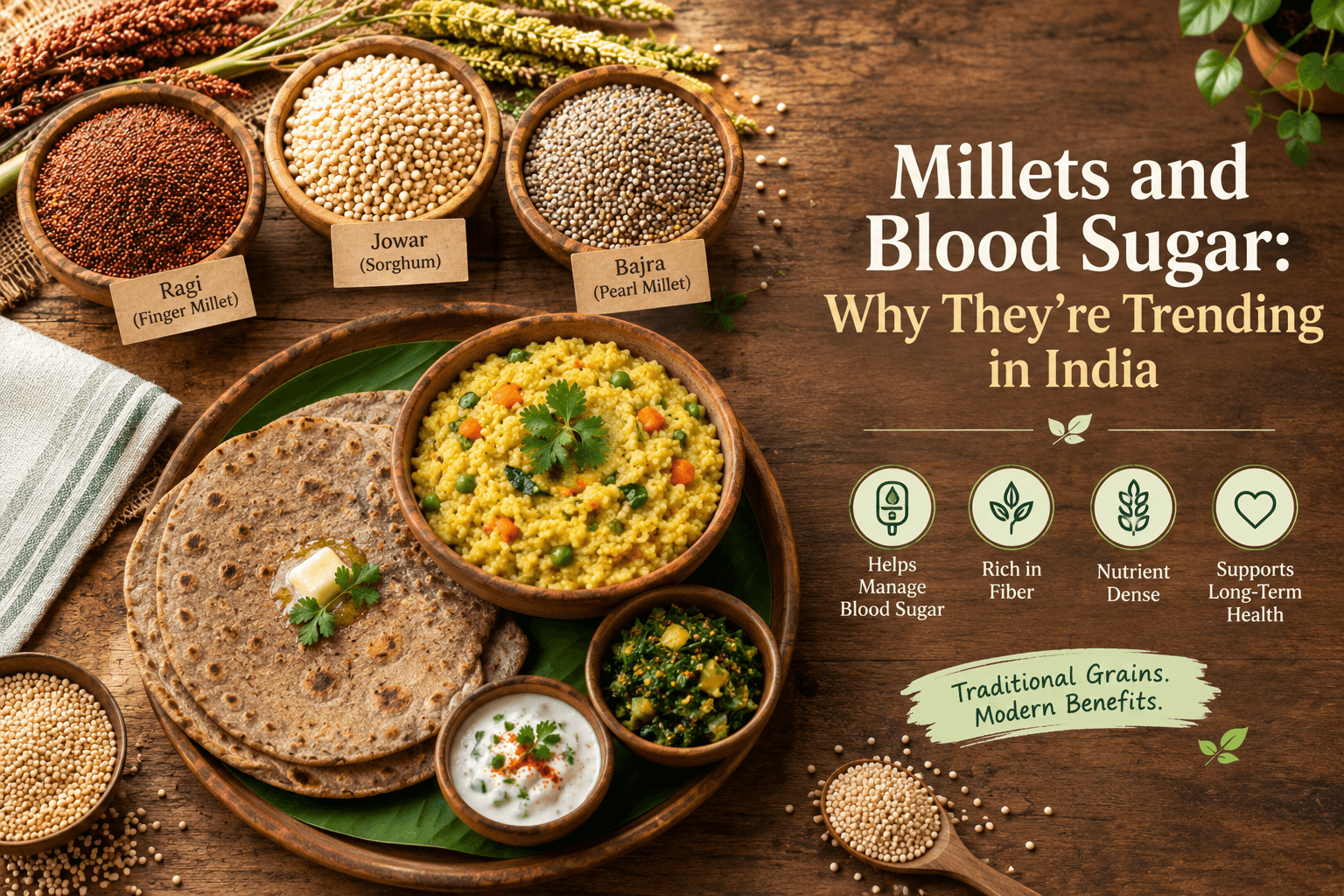
Millets and blood sugar have become a genuinely well-researched, timely topic, especially as millets (recently rebranded “Shree Anna” in India) have moved from traditional staple to trending superfood. Millets generally have a lower glycemic index than refined rice and wheat, and a landmark systematic review found that regular millet consumption meaningfully reduced fasting and post-meal blood glucose levels compared to major staple grains. More recent 2025 research specifically comparing sorghum, finger millet, and pearl millet found consistent improvements in both short-term and long-term blood sugar markers. This is genuinely encouraging dietary research, though millets should complement, not replace, medical management of diabetes. Please consult your doctor before making significant dietary changes, especially if you’re managing diabetes.
Millets have quietly gone from “what grandma used to cook” to appearing on restaurant menus, government campaigns, and health influencer feeds across India. In this article, we’ll explore millets and blood sugar in genuine depth — what the research actually shows, why millets are trending right now, and what Ayurveda has traditionally said about these ancient grains.
Why Are Millets Trending in India Right Now?
Millets’ current popularity isn’t accidental. India led a global push that resulted in the United Nations declaring 2023 the International Year of Millets, and the Indian government has actively promoted millets under the name “Shree Anna” (meaning “noble grain”) as part of a broader nutritional security and sustainable agriculture initiative. This national push, combined with rising rates of diabetes and lifestyle-related health concerns across India, has brought renewed, genuinely research-backed attention to millets and blood sugar as a specific area of focus.
Understanding Glycemic Index and Why It Matters
The glycemic index (GI) measures how quickly a food raises blood sugar levels after eating, on a scale where higher numbers indicate faster, sharper blood sugar spikes. Research comparing millets to major staples found millets have an average glycemic index of around 52.7, roughly 30-36% lower than milled rice and refined wheat, and notably lower than maize as well. All millet varieties studied fell into low (under 55) or medium (55-69) GI categories, meaning they’re generally digested and absorbed more slowly, leading to a gentler rise in blood sugar compared to more refined staples.
What Does the Research Say About Millets and Blood Sugar?
This is genuinely one of the more well-studied areas of Indian nutritional research in recent years, so it’s worth going through the findings properly.
The Landmark Systematic Review
A comprehensive systematic review and meta-analysis, drawing on research from 11 countries and led in part by ICRISAT researchers, examined millet consumption’s effect on blood glucose levels compared to major staple diets. The findings were genuinely striking: people with diabetes who consumed millets as part of their daily diet saw fasting and post-meal blood glucose levels drop by 12-15% on average, with some participants’ readings shifting from the diabetic range into the prediabetic range. For people with prediabetes specifically, average HbA1c (long-term blood sugar) levels dropped by 17%, enough in some cases to move readings from prediabetic into the normal range.
Even After Cooking, the Benefit Holds Up
An important, practical finding from this same review: even after common cooking methods like boiling, baking, and steaming, millets retained a lower glycemic index than rice, wheat, and maize, meaning the blood sugar benefits aren’t lost through typical Indian cooking preparation.
2025 Research: Comparing Specific Millet Varieties
A more recent systematic review and meta-analysis, searching literature through April 2025, specifically examined sorghum, finger millet, and pearl millet for diabetes management. This research found that millet intake improved both short-term markers (post-meal glucose) and longer-term markers (fasting glucose and HbA1c), though it noted sorghum showed a somewhat smaller effect than finger and pearl millet, possibly due to differences in polyphenol, flavonoid, and fibre content between varieties. The review also noted that more studies are needed to confirm long-term effects, an honest, appropriately cautious conclusion typical of rigorous meta-analyses.
Individual Clinical Trials
Beyond the larger reviews, individual studies have added further detail. A randomized, double-blind, crossover study found sorghum porridge produced significantly lower post-meal blood glucose responses compared to a placebo. A separate Indian study exploring a millet-based dietary combination over 60 days found a significant decrease in both fasting and post-meal blood sugar in people with type 2 diabetes, suggesting millets may serve as a genuinely useful complementary component of diabetes management, alongside conventional care.
Taken together, millets and blood sugar research presents a genuinely encouraging, reasonably consistent picture — multiple independent studies and meta-analyses point in the same direction, which is a meaningfully strong signal in nutritional science, even as researchers appropriately note that more long-term research would further strengthen these conclusions.
Which Millets Are Best for Blood Sugar Support?
Based on current research, some varieties show particularly favourable profiles:
- Pearl Millet (Bajra) — Among the lower glycemic index millets studied, showing consistent blood sugar benefits.
- Finger Millet (Ragi) — Also showed strong effects in comparative research, along with being notably rich in calcium and fibre.
- Sorghum (Jowar) — Showed benefits too, though somewhat smaller in some comparative analyses, possibly linked to its fibre and polyphenol profile.
- Foxtail and Little Millet — Also included among the varieties studied, generally falling into low-to-medium GI categories.
Since research suggests some variation between millet types, including a mix of varieties in your diet, rather than relying on just one, may offer the most well-rounded benefit.
Practical Ways to Include Millets in Your Diet
- Replace white rice with millet-based rice alternatives — A straightforward swap for many Indian meals.
- Try ragi (finger millet) for rotis or porridge — A traditional South Indian staple experiencing renewed popularity.
- Use jowar (sorghum) flour for rotis — A common North Indian preparation, particularly popular in winter.
- Include bajra (pearl millet) khichdi — A traditional, wholesome preparation combining millet with lentils.
- Start gradually — Introducing millets slowly allows your digestive system to adjust, since they’re higher in fibre than refined grains.
Signs You Might Benefit From Exploring Millets in Your Diet
Millets may be worth discussing with your doctor or nutritionist if you experience:
- Frequent post-meal blood sugar spikes or crashes
- A family history of diabetes
- Prediabetes or existing type 2 diabetes
- A diet currently heavy in refined rice and wheat
If you have diabetes or prediabetes, it’s important to discuss significant dietary changes, including increasing millet intake, with your doctor, particularly to ensure it’s integrated appropriately alongside any existing treatment plan and monitoring.
The Ayurvedic Perspective on Millets
Millets are genuinely nothing new in Ayurvedic tradition — grains like Ragi, Jowar, and Bajra have been staples in Indian diets for thousands of years, long before their recent “superfood” rebranding. Ayurveda traditionally values millets for their:
- Lightness and ease of digestion — Generally considered easier on Agni (digestive fire) compared to heavier, more processed grains.
- Suitability for Kapha-dominant constitutions — Millets’ lighter, warming qualities are traditionally believed to help balance Kapha, which is also the dosha most associated with blood sugar imbalance in Ayurvedic thought.
- Seasonal appropriateness — Different millets are traditionally favoured in different seasons, aligning with Ayurveda’s broader seasonal eating philosophy (Ritucharya).
- Regional dietary wisdom — Different millet varieties have long been staples in specific Indian regions, reflecting genuinely sustainable, climate-appropriate traditional agriculture.
It’s a genuinely interesting full-circle moment: modern clinical research on millets and blood sugar is now validating, with rigorous scientific methods, what Ayurvedic and regional Indian dietary traditions have quietly practiced for millennia.
Frequently Asked Questions
1. Can millets really help lower blood sugar?
Yes, a large systematic review found millet consumption reduced fasting and post-meal blood glucose by 12-15% in people with diabetes, with more recent 2025 research on specific varieties like sorghum, finger millet, and pearl millet confirming similar benefits, though millets should complement, not replace, medical diabetes management.
2. Which millet is best for diabetes?
Pearl millet (Bajra) and finger millet (Ragi) have generally shown among the strongest effects in comparative research, though most millet varieties studied fall into low-to-medium glycemic index categories and offer meaningful benefit.
3. Does cooking millets reduce their blood sugar benefits?
No, research found millets retained a lower glycemic index than rice, wheat, and maize even after common cooking methods like boiling, baking, and steaming, meaning typical Indian cooking preparations don’t undo these benefits.
A Gentle Note Before You Go
Millets and blood sugar research offers a genuinely encouraging, well-supported reason to bring these traditional grains back into your daily diet, especially as India’s Shree Anna movement continues to grow. If you’re looking for gentle, everyday support alongside a millet-friendly diet, Healthywe’s range of blood sugar support herbal supplements is made using 100% natural, vegetarian ingredients rooted in traditional Ayurvedic wisdom.
As always, dietary changes and herbal supplements are meant to support your overall wellness, not replace medical care. Please consult your doctor or an Ayurvedic practitioner for proper diagnosis, and before making any changes to a prescribed treatment.
Explore our natural wellness range at www.healthywewellness.com/shop.