Quick Answer
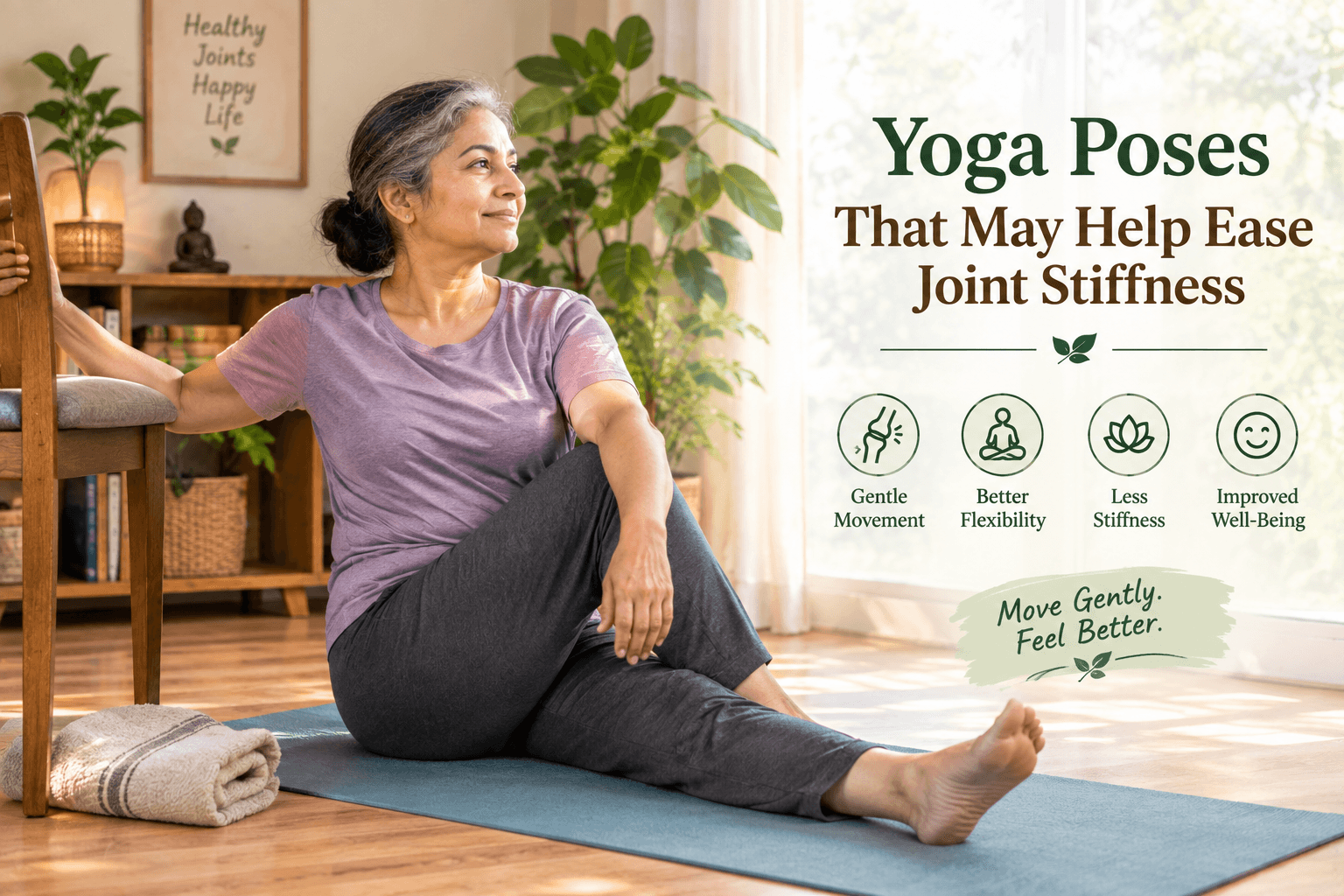
Yoga poses that may help ease joint stiffness include gentle, joint-friendly asanas like Cat-Cow, seated forward bends, and gentle knee stretches, which research has found genuinely effective for people with knee osteoarthritis. A 2024 systematic review and meta-analysis of randomized controlled trials found yoga significantly reduced joint stiffness and improved daily function in people with knee osteoarthritis compared to control groups. That said, yoga is currently considered a “conditional,” adjunctive recommendation in clinical guidelines, meaning it works best alongside, not instead of, standard medical care and any exercise your doctor or physiotherapist has recommended. Please consult your doctor before starting a new yoga routine, especially if you have significant joint pain or an existing diagnosis.
If your joints feel stiff first thing in the morning or after sitting too long, you’ve probably heard yoga suggested as a gentle way to help. In this article, we’ll look honestly at what research says about yoga poses that may help ease joint stiffness, specific asanas worth trying, and what Ayurveda has traditionally taught about movement and joint health.
Understanding Joint Stiffness
Joint stiffness, particularly in weight-bearing joints like the knees and hips, is one of the most common symptoms of osteoarthritis, the gradual wear-and-tear condition affecting joint cartilage. Stiffness often stems from reduced range of motion, muscle tightness around the joint, and changes to the joint’s supporting tissues over time. This is exactly where yoga poses that may help ease joint stiffness come in — gentle, controlled movement is genuinely believed to help maintain and gradually improve flexibility, unlike complete inactivity, which tends to worsen stiffness over time.
Common Causes of Joint Stiffness
Understanding what contributes to joint stiffness helps explain why yoga’s gentle, consistent movement approach genuinely makes sense as a supportive strategy:
- Osteoarthritis — Gradual cartilage wear, the most common cause of chronic joint stiffness, particularly in weight-bearing joints.
- Sedentary lifestyle — Prolonged inactivity allows surrounding muscles and connective tissue to tighten.
- Muscle weakness around the joint — Weak supporting muscles place more direct stress on the joint itself.
- Age-related changes — Natural reduction in joint lubrication and tissue elasticity over time.
- Prolonged sitting or repetitive positions — Common with desk jobs, contributing to stiffness in the hips, knees, and lower back.
What Does the Research Say About Yoga for Joint Stiffness?
This is genuinely one of the more well-studied areas connecting traditional movement practices to modern joint health, so it’s worth going through the evidence carefully.
A 2024 Meta-Analysis Specifically on Stiffness
A systematic review and meta-analysis of randomized controlled trials, published in PLOS ONE in 2024, specifically examined yoga’s effect on people with knee osteoarthritis. The results showed yoga effectively reduced the severity of knee joint stiffness compared to control groups, a statistically significant finding that held up even after researchers excluded a study with the lowest weekly treatment frequency to check for consistency. The same review also found yoga significantly improved participants’ ability to perform daily activities.
Improvements in Flexibility and Function
A separate study on yoga’s influence on knee osteoarthritis found that yoga practice improved knee flexion range of motion, muscle strength, and flexibility, with researchers noting yoga was comparably effective to conventional exercise for improving flexibility, muscle strength, and joint motion. Other research has found that even short-term yoga practice, as little as one week, improved flexibility and range of motion in participants with knee osteoarthritis.
Reduced Pain Medication Use
One genuinely practical, real-world finding: research on people with knee osteoarthritis who did yoga alongside their standard medical treatment found they reported less stiffness and used less pain medication compared to those receiving only standard medical treatment, suggesting yoga may offer meaningful, complementary benefit even for people already under a doctor’s care.
An Honest Look at Where Evidence Is Still Developing
It’s worth being genuinely balanced here. Despite yoga’s long history, one review specifically noted that empirical evidence validating its efficacy for osteoarthritis remains inconclusive in certain areas, and current clinical guidelines classify yoga as only a “conditional recommendation” for knee osteoarthritis, intended as an adjunctive, short-term form of exercise rather than a primary treatment. Some reviews have also found effects weren’t robust against potential study bias, and no significant benefit for quality of life, depression, or hand osteoarthritis specifically. This honest nuance matters: yoga shows real, replicated benefit for knee stiffness, pain, and function specifically, but it’s not a universally proven solution for every joint or every outcome researchers have studied.
Yoga Poses That May Help Ease Joint Stiffness
Based on the poses most commonly used in the research studies described above, here are gentle options worth trying, ideally with guidance from a qualified yoga instructor, particularly if you have existing joint concerns.
1. Cat-Cow Pose (Marjaryasana-Bitilasana)
A gentle spinal movement performed on hands and knees, alternating between arching and rounding the back. This helps mobilise the spine and can be adapted to gently engage the wrists, shoulders, and hips.
2. Seated Forward Bend (Paschimottanasana)
A gentle stretch for the hamstrings and lower back, performed seated with legs extended. This can be modified with a slight bend in the knees for those with tighter hamstrings or knee sensitivity.
3. Gentle Knee Flexion and Extension
Simple, controlled bending and straightening of the knee, often done seated or lying down, directly addresses the knee flexion range of motion improvements found in research on yoga for knee osteoarthritis.
4. Chair Yoga Variations
Research specifically found that people with lower body osteoarthritis who practiced chair yoga twice weekly experienced less pain, walked faster, and had more energy compared to a health education comparison group, making chair-based variations a genuinely well-supported, accessible option for those with more significant joint limitations.
5. Gentle Standing Forward Fold (Modified)
A supported, gentle forward fold, using a chair or wall for balance if needed, to stretch the hamstrings and lower back without placing excess strain on the knees.
6. Supported Bridge Pose (Setu Bandhasana)
A gentle backbend performed lying down, which can help strengthen the muscles supporting the hips and lower back without high-impact strain on the joints.
7. Reclined Spinal Twist
A gentle, supported twist performed lying down, helping to mobilise the spine and hips gently.
The consistent theme across these yoga poses that may help ease joint stiffness is gentleness and control — research specifically points to consistent, low-impact movement, rather than intense or high-strain practice, as the genuinely beneficial approach for joint health.
Practical Tips for Practicing Yoga With Joint Stiffness
- Start slow and modify as needed — Using props like chairs, blocks, or cushions to reduce strain on affected joints.
- Be consistent — Research generally involved regular practice over several weeks, not occasional sessions.
- Warm up gently first — Cold, stiff joints benefit from gentle movement before deeper stretches.
- Consider a qualified instructor — Particularly one experienced in therapeutic or gentle yoga, to ensure poses are appropriately modified for your joints.
- Combine with other recommended exercise — Since clinical guidelines position yoga as adjunctive, continue any strengthening or exercise your doctor or physiotherapist has recommended.
- Stop if you feel sharp pain — Mild stretching sensation is expected; sharp or worsening pain is a sign to stop and consult your doctor.
The Ayurvedic Perspective on Movement and Joint Health
Yoga, of course, originates from the same broader Indian tradition as Ayurveda, and the two share a deeply connected philosophy around joint health. Ayurveda traditionally associates joint stiffness with aggravated Vata dosha, which governs movement in the body, and has long recommended gentle, consistent movement, alongside warm oil massage (Abhyanga) and appropriate diet, as central to supporting joint comfort.
Ayurveda’s traditional approach to joint-supportive movement includes:
- Gentle, regular practice over intensity — Reflecting Ayurveda’s broader philosophy of consistency and moderation over strain.
- Warm-up and appropriate preparation — Traditional practice emphasises easing into movement, particularly important for Vata-aggravated, stiff joints.
- Combining movement with herbal and dietary support — Yoga is traditionally paired with joint-supportive herbs like Shallaki and Guggul, and warm, nourishing foods, for a more comprehensive approach.
- Seasonal awareness — Ayurveda traditionally recommends gentler practice and extra warmth during colder months, when Vata-related stiffness tends to increase.
This holistic pairing of movement, diet, and herbal support reflects Ayurveda’s broader philosophy that joint health is best supported through multiple complementary approaches working together, a philosophy modern research on yoga for osteoarthritis increasingly seems to validate.
Frequently Asked Questions
1. Does yoga actually help with joint stiffness?
Yes, a 2024 meta-analysis of randomized controlled trials found yoga significantly reduced knee joint stiffness and improved daily function in people with knee osteoarthritis, though it’s currently considered an adjunctive, complementary approach rather than a standalone treatment.
2. What is the best type of yoga for people with joint pain?
Gentle, modified practices like chair yoga or hatha yoga with props tend to be well-supported in research and are generally more suitable than intense or high-impact styles for people with joint stiffness or osteoarthritis.
3. How often should I practice yoga to see benefits for joint stiffness?
Most research studies involved regular practice, often multiple sessions per week over several weeks to months, suggesting consistency matters more than occasional, intense sessions.
A Gentle Note Before You Go
Yoga poses that may help ease joint stiffness offer a genuinely research-supported, gentle complement to your overall joint health routine, best practiced consistently and alongside your doctor’s guidance. If you’re looking for gentle, everyday support alongside your movement practice, Healthywe’s range of joint support herbal supplements is made using 100% natural, vegetarian ingredients rooted in traditional Ayurvedic wisdom.
As always, exercise routines and herbal supplements are meant to support your overall wellness, not replace medical care. Please consult your doctor or an Ayurvedic practitioner for proper diagnosis, and before making any changes to a prescribed treatment.
Explore our natural wellness range at www.healthywewellness.com/shop.