Quick Answer
Screen time and mental fatigue are genuinely, measurably connected, with recent research finding that digital eye strain isn’t just a vision problem but a real cognitive stressor, with EEG studies showing brain fatigue patterns emerging even before people notice physical symptoms. A 2025 study of university students found a statistically significant relationship between digital screen time, mental fatigue, and “brain fog.” Interestingly, newer research also suggests that mental workload, not just screen exposure itself, plays a major role in this fatigue. Ayurveda offers a genuinely relevant, centuries-old lens for understanding this modern problem, framing excessive screen exposure as a disturbance to Vata dosha, the aspect of the body governing the nervous system and mental activity. This is general wellness information, not medical advice — persistent or severe fatigue should be evaluated by a doctor.
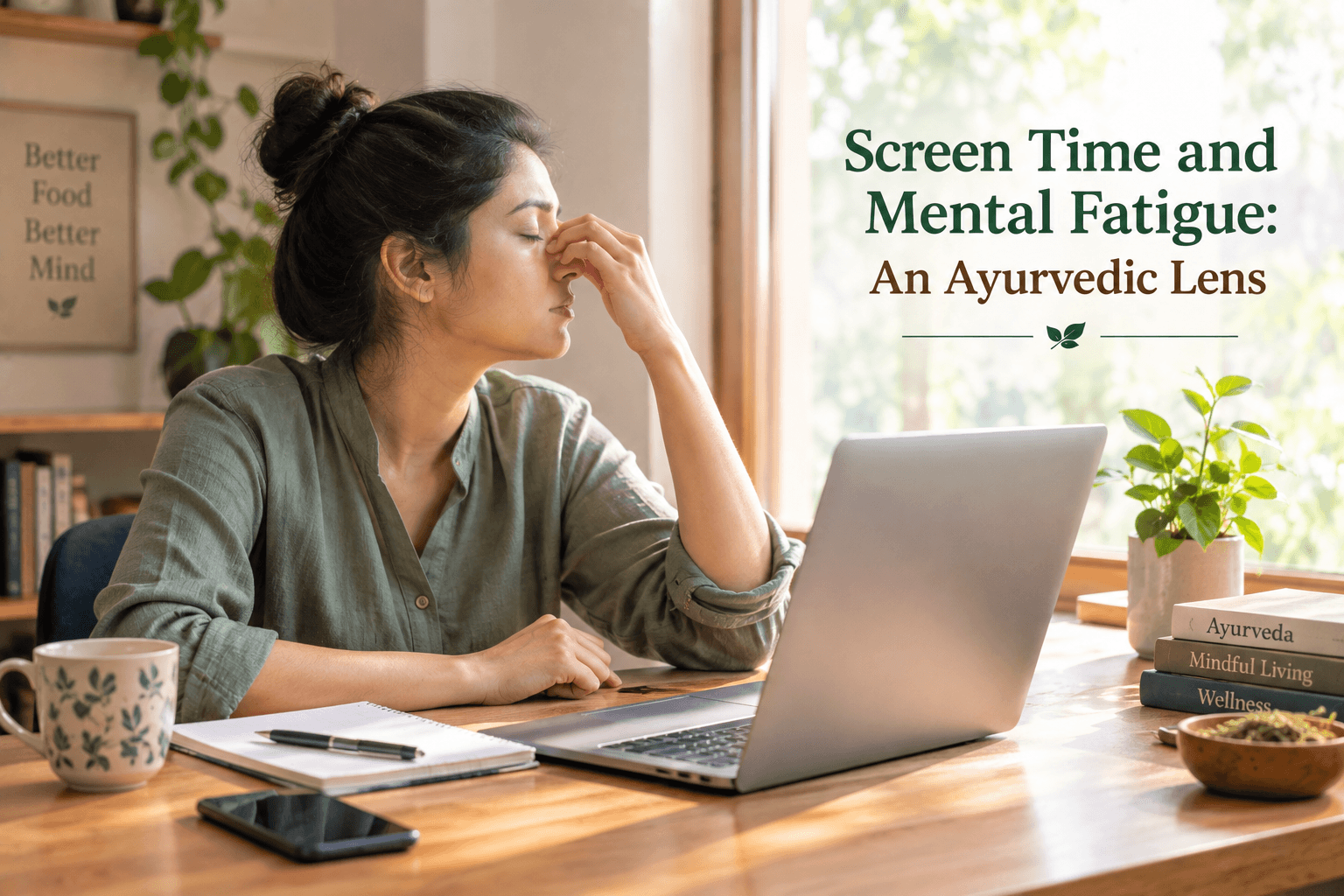
If your eyes feel tired and your brain feels foggy by mid-afternoon, and you’ve spent most of the day looking at a screen, you’re experiencing something researchers are only now beginning to properly study. In this article, we’ll explore screen time and mental fatigue through both a modern research lens and an Ayurvedic one, understanding why this happens and what genuinely helps.
Understanding the Real Connection Between Screen Time and Mental Fatigue
For a long time, “digital eye strain” was treated as primarily a vision issue — tired, dry eyes from staring at screens. But recent research has reframed this understanding significantly. A comprehensive review describes digital eye strain as a collection of eye, neck, and mental fatigue symptoms, involving dryness, burning, blurred vision, and headaches, but increasingly understood through what researchers call a “cerebral basis” — meaning the brain itself shows measurable signs of fatigue, not just the eyes.
This is really the heart of understanding screen time and mental fatigue properly: it’s not simply about how tired your eyes get, but about how sustained digital engagement affects broader brain activity and cognitive resources.
What Recent Research Actually Shows
This is a genuinely active area of research, with some notably recent findings worth understanding.
Brain Activity Changes During Digital Tasks
Neurophysiological research using EEG (electroencephalography) has found increased frontal theta activity, reduced occipital alpha power, and altered brain connectivity during digital tasks, offering objective, measurable markers of central brain fatigue, rather than relying only on how tired someone reports feeling. Notably, these EEG-detected changes have been shown to precede the onset of felt symptoms, meaning your brain may be showing signs of fatigue before you consciously notice it.
Mental Fatigue and Brain Fog in Students
A 2025 study examining 1,000 university students found a statistically significant positive relationship between digital screen time, mental fatigue, and “brain fog,” with screen time significantly predicting both outcomes. While the researchers noted this relationship was measurable rather than overwhelming in strength, it was consistent and significant, reinforcing that screen time genuinely does relate to how foggy and fatigued people feel cognitively.
It May Not Just Be About Screen Time Itself
Here’s a genuinely important nuance: a 2025 study published in Optometry and Vision Science found that higher cognitive demand led to significantly increased visual fatigue symptoms, regardless of whether material was viewed on paper or a screen. This suggests that mental workload itself, not simply screen exposure, plays a major role in fatigue — meaning a demanding video call or intense focused work might cause similar fatigue whether it happens on a screen or not. This is a helpful, honest distinction: it’s not purely “screens are bad,” but rather that sustained, demanding cognitive engagement, which screens often facilitate for hours at a stretch, is the deeper driver.
Break Patterns Matter
Research on adolescents found that those who took screen breaks shorter than 20 minutes were significantly more likely to experience digital eye strain compared to those taking longer or more frequent breaks, supporting practices like the well-known “20-20-20 rule” (every 20 minutes, look at something 20 feet away for 20 seconds) as a genuinely evidence-supported habit.
Taken together, this research on screen time and mental fatigue paints a picture that’s more nuanced than simple “screens are the enemy” messaging — cognitive load, break patterns, and sustained attention all interact with actual screen exposure to determine how fatigued you ultimately feel.
Common Signs of Screen-Related Mental Fatigue
Signs worth paying attention to include:
- Difficulty concentrating by mid-to-late afternoon
- A foggy, unclear feeling despite adequate sleep
- Eye strain, dryness, or headaches after screen use
- Reduced patience or increased irritability during long screen sessions
- Feeling mentally “wired but tired” in the evening
If these signs are severe, persistent, or significantly affecting your daily functioning, it’s worth consulting a doctor, as ongoing fatigue can occasionally be linked to underlying factors beyond screen use alone.
Practical, Research-Supported Strategies
Based on current research, here are strategies genuinely worth adopting:
- Follow the 20-20-20 rule — Every 20 minutes, look at something 20 feet away for 20 seconds, which research links to reduced digital eye strain.
- Take longer breaks, not just frequent glances — Research specifically found breaks shorter than 20 minutes were associated with higher strain risk, suggesting genuine pauses matter more than brief glances away.
- Reduce simultaneous multitasking on screens — Since research links task complexity and multitasking to increased mental stress and lower blink rates, single-tasking where possible may genuinely help.
- Batch high-cognitive-load tasks — Given that mental workload itself drives fatigue, grouping demanding tasks together with adequate breaks may help more than scattered screen use throughout the day.
- Step away from screens entirely during breaks — Rather than switching from one screen to another (like phone during a laptop break).
- Prioritise sleep — Since sleep and digital eye strain are closely linked in research, particularly around blue light exposure before bed.
The Ayurvedic Perspective on Screen Time and Mental Fatigue
While Ayurveda obviously predates modern screens, its understanding of mental overstimulation and nervous system balance offers a genuinely relevant framework for screen time and mental fatigue. Ayurveda associates excessive, rapid, fragmented mental stimulation, exactly the pattern common with scrolling, multitasking, and constant notifications, with aggravated Vata dosha, which governs the nervous system, movement, and mental activity.
Ayurveda’s traditional approach to supporting mental clarity in the face of overstimulation includes:
- Regular, unhurried breaks — Aligning naturally with modern research on the importance of genuine breaks from screens, not just brief glances.
- Trataka (candle gazing) and eye exercises — Traditional Ayurvedic and yogic practices believed to help support eye health and mental focus, offering an interesting parallel to modern eye-strain management.
- Limiting stimulation before sleep — Ayurveda has long recommended calming, screen-free wind-down routines before bed, now echoed by modern research on blue light and sleep quality.
- Consistent daily routine (Dinacharya) — Believed to help ground and stabilise Vata, offering structure that counters the fragmented, reactive nature of constant digital engagement.
- Herbs like Brahmi — Traditionally classified as Medhya Rasayana, believed to support mental clarity and resilience, an area of genuine, ongoing clinical research in its own right.
This Ayurvedic framing offers something modern screen-time advice sometimes misses: it’s not just about reducing screen hours numerically, but about the quality, pace, and fragmentation of mental engagement throughout the day, a distinction that aligns closely with the newer research finding that cognitive load, not screen exposure alone, drives much of this fatigue.
Building a More Sustainable Relationship With Screens
Rather than aiming for unrealistic, dramatic reductions in screen time, both current research and Ayurvedic wisdom point toward a more nuanced approach: genuine breaks, reduced multitasking, mindful batching of demanding tasks, and protecting the hours before sleep. These small, consistent adjustments tend to offer more sustainable relief from screen-related mental fatigue than an all-or-nothing approach to screen use.
Frequently Asked Questions
1. Does screen time really cause mental fatigue and brain fog?
Yes, a 2025 study of university students found digital screen time significantly predicted mental fatigue and brain fog. EEG research has also found measurable brain fatigue patterns during digital tasks, offering objective evidence for this connection.
2. Is it the screen itself or something else causing the fatigue?
Recent research suggests cognitive demand and mental workload play a major role, sometimes more than screen exposure itself. High-effort tasks caused similar fatigue whether viewed on paper or screens, suggesting sustained mental effort, which screens often facilitate for long periods, is a key driver.
3. What is the 20-20-20 rule, and does it actually work?
The 20-20-20 rule involves looking at something 20 feet away for 20 seconds every 20 minutes. Research has found that people taking breaks shorter than this were significantly more likely to experience digital eye strain, supporting this practice as a genuinely useful habit.
A Gentle Note Before You Go
Understanding screen time and mental fatigue through both modern research and an Ayurvedic lens offers a genuinely well-rounded way to protect your mental clarity in an increasingly digital world. If you’re looking for gentle, everyday support alongside these habits, Healthywe’s range of brain care herbal supplements is made using 100% natural, vegetarian ingredients rooted in traditional Ayurvedic wisdom.
As always, lifestyle changes and herbal supplements are meant to support your overall wellness, not replace medical care. Please consult your doctor or an Ayurvedic practitioner for proper diagnosis, and before making any changes to a prescribed treatment.
Explore our natural wellness range at www.healthywewellness.com/shop.