Quick Answer
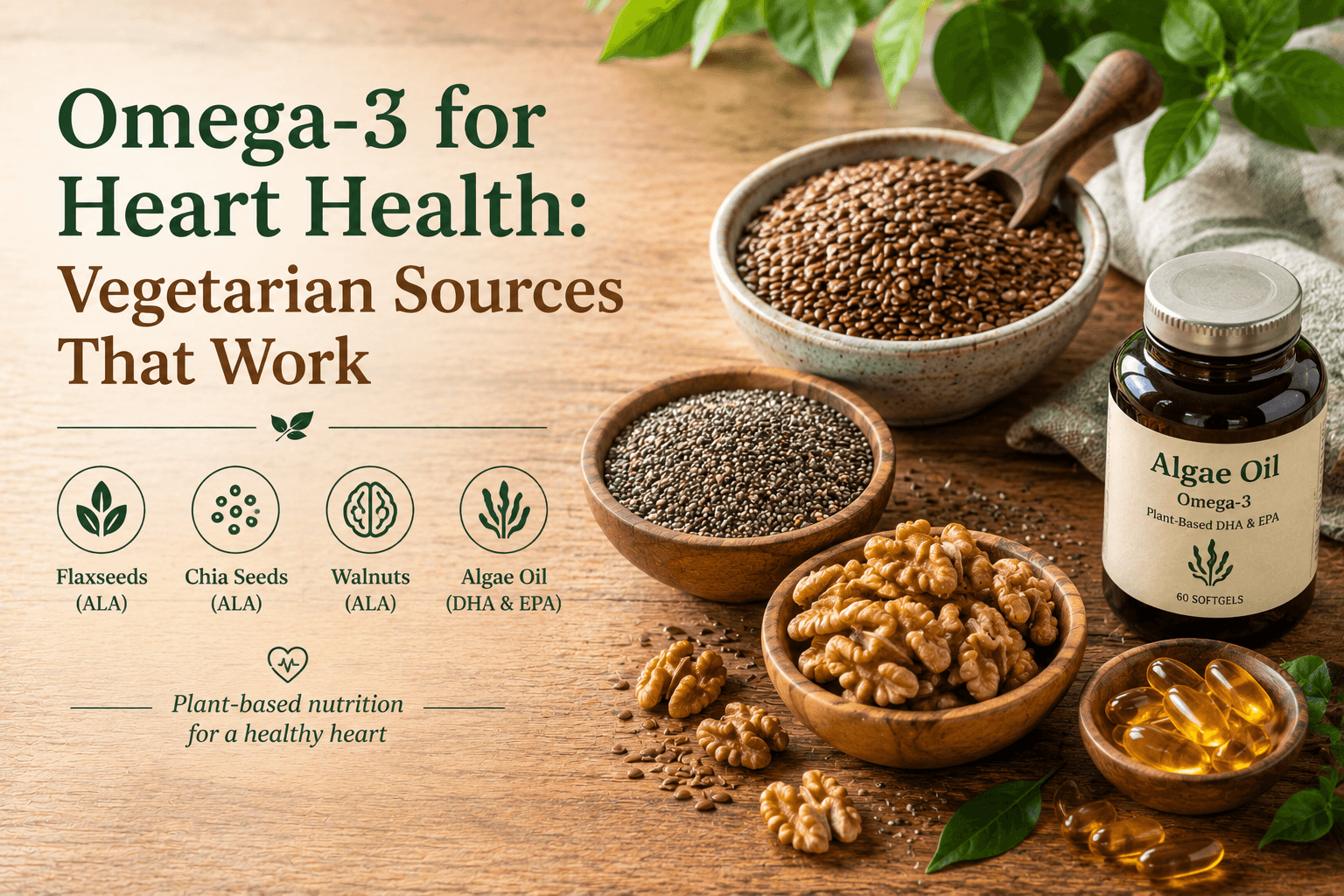
The best vegetarian sources of omega-3 for heart health include flaxseeds, chia seeds, walnuts, hemp seeds, and soybean-based foods, all rich in ALA (alpha-linolenic acid), a plant-based omega-3. However, the human body converts ALA to the more biologically active forms, EPA and DHA, quite inefficiently — generally less than 10%. This is why algae-based DHA and EPA supplements, which provide these forms directly without requiring conversion, are increasingly recommended alongside ALA-rich foods for vegetarians genuinely aiming to support heart health. This is general nutrition information, not medical advice — please consult your doctor for guidance specific to your health needs.
If you’ve ever been told to “eat more omega-3 for your heart” and immediately thought of fish, but you’re vegetarian, you’re not alone in wondering what your actual options are. In this article, we’ll explore vegetarian sources of omega-3 for heart health honestly — what actually works, where the science gets complicated, and what Ayurveda has traditionally offered as heart-supportive dietary fats.
Why Omega-3 Matters for Heart Health
Omega-3 fatty acids, particularly EPA and DHA, have been extensively studied for their role in supporting cardiovascular health, including healthy triglyceride levels, blood vessel function, and overall heart wellness. The challenge for vegetarians is that EPA and DHA are predominantly found in marine sources, while plant foods primarily offer a different omega-3 called ALA (alpha-linolenic acid), which the body must convert into EPA and DHA to use in the same way.
Understanding ALA, EPA, and DHA
Before exploring vegetarian sources of omega-3 for heart health, it helps to understand these three related but distinct compounds:
- ALA (Alpha-linolenic acid) — Found in plant foods like flaxseeds, walnuts, and chia seeds. The body can use ALA directly for energy, or attempt to convert it into EPA and DHA.
- EPA (Eicosapentaenoic acid) — Primarily found in marine sources, associated with cardiovascular and anti-inflammatory support.
- DHA (Docosahexaenoic acid) — Also primarily marine-sourced, important for both heart and brain health.
This distinction matters enormously for vegetarians, because simply eating ALA-rich foods doesn’t guarantee your body ends up with meaningful levels of EPA and DHA.
The Genuine Challenge: ALA Conversion Is Limited
Here’s the honest, sometimes underreported part of this topic: research consistently shows that the human body converts only a small fraction of dietary ALA into EPA and DHA, generally estimated at around 6-8% conversion to EPA and less than 5% conversion to DHA, though this varies based on factors like age, sex, genetics, and overall diet composition, including the ratio of omega-6 to omega-3 fats consumed. This is precisely why vegetarians and vegans, on average, tend to show lower blood levels of EPA and DHA compared to people who eat fish regularly.
That said, there’s genuinely encouraging news here too. A year-long controlled dietary study published in Frontiers in Nutrition found that flaxseed oil, a concentrated source of ALA, meaningfully raised long-chain omega-3 levels under carefully optimised dietary conditions, challenging some previous assumptions about how poor ALA conversion really is. The catch is that this study also confirmed that even under optimal conditions, flaxseed oil supplementation didn’t fully close the gap between vegetarian and omnivore EPA/DHA levels, reinforcing why many researchers still recommend combining ALA-rich foods with a direct source of EPA and DHA.
Best Vegetarian Sources of ALA (Plant-Based Omega-3)
Here are the most effective vegetarian sources of omega-3 for heart health when it comes to ALA specifically:
1. Flaxseeds (and Flaxseed Oil)
One of the richest plant sources of ALA. Ground flaxseeds are generally better absorbed than whole seeds, so grinding them fresh or buying them pre-ground is worth considering.
2. Chia Seeds
Another concentrated ALA source, easy to add to smoothies, curd, or overnight oats.
3. Walnuts
A convenient, snackable source of ALA, along with other heart-supportive nutrients like fibre and plant protein.
4. Hemp Seeds
Contain ALA along with a favourable balance of omega-6 to omega-3 fats, which some research suggests may support more efficient conversion.
5. Soybeans and Soy-Based Foods
Tofu, soy milk, and edamame provide ALA along with plant protein, making them a versatile addition to a vegetarian diet.
6. Canola and Mustard Oil
Everyday cooking oils that contain a reasonable amount of ALA compared to many other common vegetable oils.
The Vegetarian Source That Actually Provides EPA and DHA Directly: Algae
This is genuinely the most important, and often underdiscussed, part of the vegetarian omega-3 conversation. Algae, specifically certain microalgae species, are the original source of EPA and DHA in the food chain — fish accumulate these compounds by eating algae, not by producing them. Algae-based EPA and DHA supplements essentially bypass the conversion problem entirely, providing these forms directly, in a way that’s fully suitable for vegetarians and vegans.
Research shows that algae oil supplementation significantly increases DHA levels in blood, offering a genuinely direct and effective vegetarian solution for people specifically concerned about EPA and DHA status, rather than relying solely on ALA conversion.
Signs That May Suggest Low Omega-3 Status
While not definitive on their own, some people with low omega-3 intake report:
- Dry skin or hair
- Fatigue
- Difficulty concentrating
- Joint stiffness
These signs can have many causes, so if you’re concerned about your omega-3 status, a blood test and conversation with your doctor is the most reliable way to understand your specific levels, rather than relying on symptoms alone.
Practical Tips for Vegetarians Seeking Better Omega-3 Status
- Combine ALA-rich foods with an algae-based supplement — Rather than relying on ALA conversion alone, especially if EPA and DHA status is a specific concern.
- Reduce excess omega-6 intake — High omega-6 intake (common in many vegetable oils) may compete with and reduce ALA conversion efficiency; balancing this ratio may help.
- Include ALA sources daily — Consistency matters more than occasional large amounts.
- Consider zinc and magnesium-rich foods — These minerals act as cofactors for enzymes involved in ALA conversion, so foods like pumpkin seeds, lentils, and leafy greens may offer indirect support.
- Get tested if genuinely concerned — A doctor can help assess your omega-3 status through blood testing if needed.
The Ayurvedic Perspective on Heart-Supportive Fats
While Ayurveda doesn’t use the modern classification of omega-3 fatty acids, it has long recognised the importance of healthy fats for supporting “Hridaya” (heart health) and overall vitality. Traditional Ayurvedic dietary wisdom includes:
- Ghee in moderation — Traditionally valued for supporting overall nourishment and digestion, considered heart-supportive in Ayurvedic dietary philosophy when used appropriately.
- Walnuts and seeds — Traditionally included in Ayurvedic diets as nourishing, strength-supporting foods, aligning naturally with their modern recognition as ALA sources.
- Flaxseeds (Alsi) — Long used in Indian traditional diets, particularly in regions where flaxseed chutneys and preparations are a dietary staple.
- Balance and moderation — Ayurveda’s broader philosophy of consuming healthy fats in appropriate amounts, tailored to individual constitution, aligns with modern nutrition’s emphasis on balanced, rather than excessive, fat intake.
This traditional inclusion of nuts, seeds, and healthy fats in Indian dietary practice offers a comfortable, familiar starting point for vegetarians looking to genuinely improve their omega-3 intake through everyday food choices.
Frequently Asked Questions
1. Can vegetarians get enough omega-3 without fish oil?
Vegetarians can get ALA from foods like flaxseeds, walnuts, and chia seeds, but since ALA conversion to EPA and DHA is limited, algae-based supplements are often recommended to directly provide these more biologically active forms.
2. What is the best vegetarian source of omega-3?
For ALA, flaxseeds and chia seeds are among the richest plant sources. For direct EPA and DHA, algae oil is currently the most effective vegetarian and vegan-friendly source available.
3. Is ALA alone enough for heart health?
ALA has shown independent cardiovascular benefits in some research, but because conversion to EPA and DHA is limited, combining ALA-rich foods with a direct EPA/DHA source like algae oil is generally considered a more comprehensive approach for heart health.
A Gentle Note Before You Go
Understanding vegetarian sources of omega-3 for heart health empowers you to make informed choices, whether through everyday foods or targeted supplementation, without needing to compromise your dietary preferences. If you’re looking for gentle, everyday support alongside a heart-healthy diet, Healthywe’s range of heart care herbal supplements is made using 100% natural, vegetarian ingredients rooted in traditional Ayurvedic wisdom.
As always, dietary habits and herbal supplements are meant to support your overall wellness, not replace medical care. Please consult your doctor or an Ayurvedic practitioner for proper diagnosis, and before making any changes to a prescribed treatment.
Explore our natural wellness range at www.healthywewellness.com/shop.