Quick Answer
Chyawanprash and the science behind this centuries-old household staple genuinely intersect in interesting ways. Made from around 40-50 traditional ingredients, with Amla (Indian gooseberry) as its star component, Chyawanprash has been studied in several clinical trials exploring its role in supporting immunity, antioxidant status, and general wellness, including research in children showing improvements in energy and quality-of-life measures. That said, some of the science is more nuanced than marketing suggests, particularly around vitamin C content, which can vary and even reduce during traditional preparation. Chyawanprash is a supportive daily tonic, not a medical treatment, and persistent health concerns should always be evaluated by a doctor.
Chances are, a jar of Chyawanprash has sat in your kitchen cabinet at some point — that dark, sweet, slightly tangy paste your grandmother insisted you eat a spoonful of every winter morning. In this article, we’ll explore Chyawanprash and the science behind this household staple, looking honestly at what research has found, what Ayurveda has traditionally taught, and what’s genuinely worth knowing before your next spoonful.
What Exactly Is Chyawanprash?
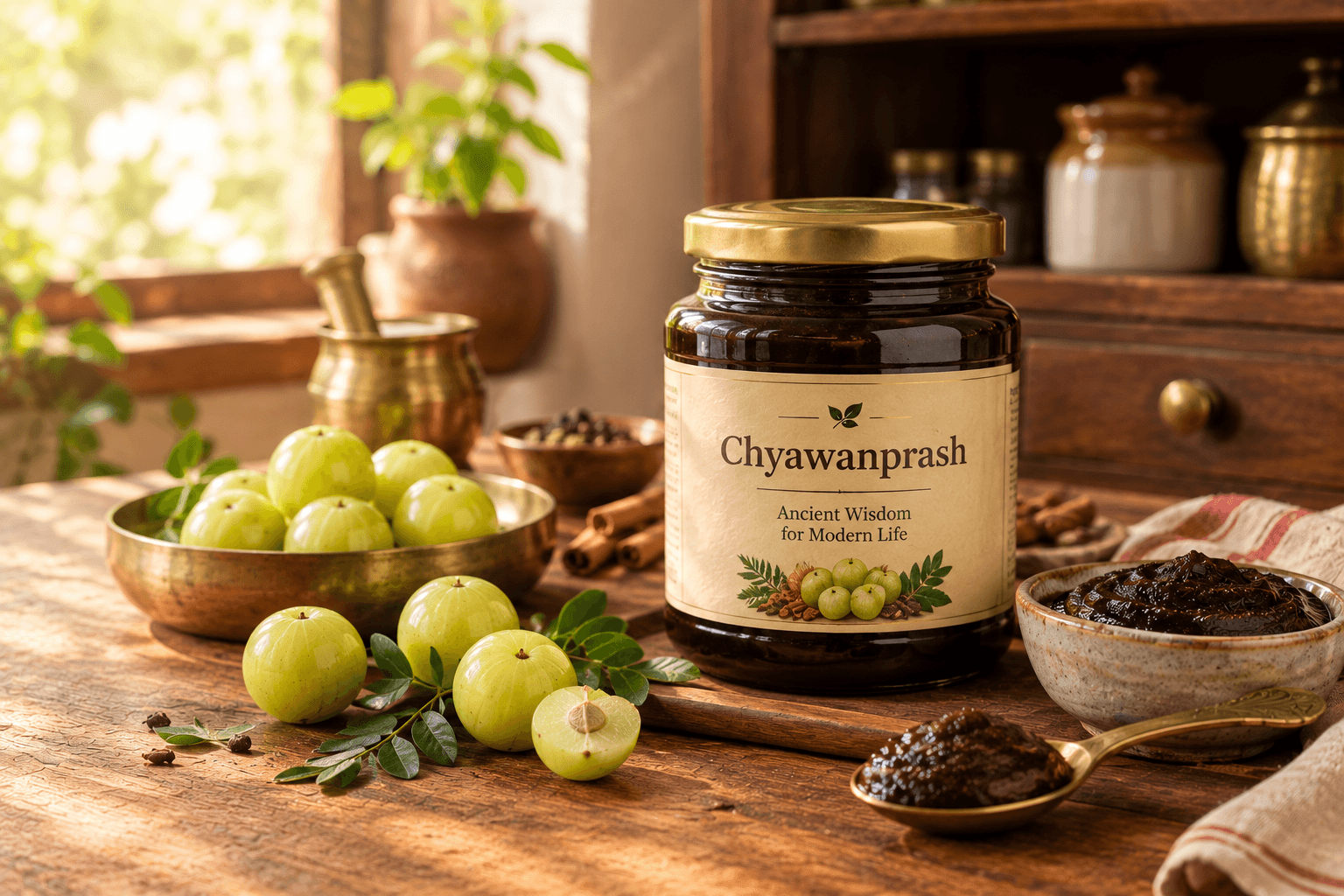
Chyawanprash is a traditional Ayurvedic herbal jam, typically made by combining around 40-50 medicinal herbs and their extracts into a base of Amla pulp, honey, and ghee, along with aromatic spices like clove, cardamom, and cinnamon. Named after the sage Chyawan from Ayurvedic legend, this formulation has been documented in classical Ayurvedic texts for centuries, traditionally used as a “Rasayana,” or rejuvenating tonic, intended to support overall vitality, immunity, and wellness.
Understanding Chyawanprash and the science behind it starts with recognising just how complex this formulation genuinely is — it’s not a single-ingredient supplement, but a multi-herb blend where Amla typically makes up roughly a third of the total composition.
The Star Ingredient: Amla and Its Role
Amla (Indian gooseberry) is considered the heart of Chyawanprash, prized in Ayurveda and increasingly in modern nutrition research for its exceptionally high vitamin C and polyphenol content. Raw Amla fruit is genuinely one of the richest natural sources of vitamin C available, along with various antioxidant compounds believed to contribute to Chyawanprash’s traditional reputation for supporting immunity and overall vitality.
Common Reasons People Take Chyawanprash
People typically reach for Chyawanprash for several traditional and everyday wellness reasons:
- Seasonal immune support — Particularly common during monsoon and winter, when households traditionally increase Chyawanprash intake.
- General energy and vitality — Reflecting its traditional classification as a Rasayana, or rejuvenating tonic.
- Supporting recovery after illness — Traditionally used to help support the body during and after common seasonal ailments.
- Overall wellness maintenance — As part of a daily routine, particularly popular in households with children and elderly family members.
These traditional uses reflect why Chyawanprash and the science behind it continues to draw genuine research interest, decades after it became a household name across India.
What Does the Research Say About Chyawanprash?
This is where things get genuinely interesting, as Chyawanprash has been the subject of a reasonable body of clinical and experimental research over the past few decades.
Clinical Studies on Immunity and Seasonal Illness
A double-blind, placebo-controlled clinical study evaluated Chyawanprash’s effect on immune status and quality of life in people experiencing recurrent cough and cold, finding that regular supplementation was associated with reduced symptoms of seasonal illness and favourable changes in certain immune markers, including IgE levels and complement proteins C3 and C4. This kind of controlled clinical evidence is genuinely valuable in traditional herbal medicine research, where placebo-controlled designs are less common.
Research in Children
A randomized, open-label, prospective, multicenter clinical study examined Chyawanprash’s effect on health and immunity-related parameters in healthy school-going children, evaluating outcomes like energy levels, physical fitness, strength, stamina, and overall quality of life. This kind of larger, multicenter design adds meaningful weight to Chyawanprash’s traditional reputation as a supportive tonic for children, a use case deeply embedded in Indian household practice.
Antioxidant Status Research
A study examining Chyawanprash and vitamin C’s effects on antioxidant enzymes and serum immunoglobulin G levels in humans explored the formulation’s impact on oxidative stress markers, given that oxidative stress is understood to be both a cause and consequence of various health conditions. This research helps explain the biological plausibility behind Chyawanprash’s traditional antioxidant and immune-supportive reputation.
The Vitamin C Question: A Genuinely Important Nuance
Here’s where honest reporting matters: while Amla is exceptionally rich in raw vitamin C, research has found genuine variability in how much vitamin C actually survives the traditional cooking process used to prepare Chyawanprash, since Amla pulp is cooked with ghee as part of standard preparation. Some studies have found vitamin C essentially absent in tested samples, while others report modest levels (around 34 mg per 100g) remaining after processing. Interestingly, some researchers now believe Amla’s traditional antioxidant reputation may be linked less to vitamin C specifically and more to other compounds, including certain low-molecular-weight tannins, that offer vitamin C-like antioxidant activity independent of actual ascorbic acid content.
This nuance matters because it shows that Chyawanprash and the science behind it isn’t simply a story of “high vitamin C equals immunity boost” — the reality is more complex, involving a genuinely wide range of bioactive compounds working together, some of which modern research is still working to fully understand.
Common Signs People Associate With Wanting Extra Seasonal Support
People often turn to Chyawanprash when they notice:
- Frequent seasonal colds or throat discomfort
- Low energy, particularly during seasonal transitions
- Slower recovery after minor illness
- A general desire for daily, preventive wellness support
If these signs are persistent or severe, it’s important to consult a doctor for proper evaluation rather than relying solely on Chyawanprash or any single dietary supplement.
How Chyawanprash Is Traditionally Consumed
Chyawanprash is typically taken as 1-2 teaspoons daily, often first thing in the morning on an empty stomach or before bed, sometimes mixed into warm milk. It can also be spread on toast or added to other foods, similar to a jam, for those who prefer variety in how they consume it.
The Ayurvedic Perspective on Chyawanprash
In classical Ayurvedic texts, Chyawanprash is described as one of the most comprehensive Rasayana formulations, traditionally believed to support Ojas, the vital essence linked to overall strength, immunity, and resilience. Its complex, multi-herb composition reflects Ayurveda’s broader philosophy that genuine, holistic wellness support comes from combining many complementary ingredients, rather than relying on any single “active” compound in isolation.
Ayurveda’s traditional understanding includes:
- A tridoshic formulation — Traditionally believed to help balance all three doshas, making it broadly suitable across constitutions.
- Seasonal emphasis — Particularly recommended during Hemant and Shishir Ritu (early winter), when Ayurveda traditionally believes the body’s digestive capacity is naturally stronger and better able to absorb rich, nourishing formulations.
- Synergy over isolation — Reflecting Ayurveda’s traditional belief that combining many herbs creates supportive effects greater than any single ingredient alone.
This traditional philosophy of synergy offers a thoughtful lens for understanding Chyawanprash and the science behind it — modern research increasingly recognises that complex herbal formulations can work through multiple, overlapping biological mechanisms, rather than a single, isolated pathway.
Things to Keep in Mind Before Taking Chyawanprash
A few practical points are worth knowing:
- Chyawanprash contains natural sugars (often from honey and jaggery), so people managing blood sugar levels should consult their doctor before regular use.
- Quality can vary meaningfully between brands, given the complexity of the formulation, so choosing a reputable, quality-tested manufacturer matters.
- It may interact with certain medications, so inform your doctor if you’re on any prescribed treatment before starting regular use.
- Chyawanprash is a supportive daily tonic, not a treatment for any specific illness, and shouldn’t replace prescribed medical care.
Frequently Asked Questions
1. Does Chyawanprash actually boost immunity?
Several clinical studies, including double-blind, placebo-controlled research, suggest Chyawanprash supplementation may support immune-related parameters and reduce seasonal illness symptoms, though it works best as part of an overall healthy lifestyle rather than a standalone solution.
2. Does Chyawanprash really contain a lot of vitamin C?
This is genuinely more complicated than commonly assumed. While raw Amla is exceptionally rich in vitamin C, traditional cooking during preparation can reduce this content, and research findings on final vitamin C levels in Chyawanprash vary. Some researchers believe other antioxidant compounds in Amla may account for much of its traditional benefit.
3. Is Chyawanprash safe for daily use?
Chyawanprash is traditionally used daily in many Indian households and is generally well-tolerated, though its natural sugar content means people with diabetes or blood sugar concerns should consult their doctor before regular use.
A Gentle Note Before You Go
Chyawanprash and the science behind it reveal a household staple that’s genuinely more thoughtfully studied than many people realise, even as some traditional claims deserve a more nuanced, honest look. If you’re looking for gentle, everyday support, Healthywe’s range of immunity support herbal supplements is made using 100% natural, vegetarian ingredients rooted in traditional Ayurvedic wisdom.
As always, herbal supplements are meant to support your overall wellness, not replace medical care. Please consult your doctor or an Ayurvedic practitioner for proper diagnosis, and before making any changes to a prescribed treatment.
Explore our natural wellness range at www.healthywewellness.com/shop.