Quick Answer
Fatty liver early signs are often subtle or entirely absent, which is part of why this condition, now more precisely termed MASLD (metabolic dysfunction-associated steatotic liver disease) in current medical literature, frequently goes unnoticed until it’s picked up on a routine scan or blood test. When signs do appear, they can include mild fatigue, dull discomfort in the upper right abdomen, and unexplained weakness. The encouraging news is that diet and lifestyle changes are considered the primary, evidence-based approach to managing early fatty liver, with research showing that patterns like the Mediterranean diet, along with reduced sugar intake, can meaningfully reduce liver fat. This is general health information, not a diagnosis — fatty liver requires proper testing and monitoring by a doctor.
Fatty liver has quietly become one of the most common liver conditions worldwide, often discovered by accident during a routine ultrasound rather than through any obvious symptoms. In this article, we’ll explore the early signs of fatty liver worth knowing, what genuinely causes it, and the diet-first approaches that current research supports, alongside what Ayurveda has traditionally taught about liver and digestive health.
Understanding Fatty Liver (MASLD)
Fatty liver disease occurs when excess fat accumulates in liver cells, beyond what’s considered normal. What was long called NAFLD (non-alcoholic fatty liver disease) is increasingly referred to in current medical literature as MASLD (metabolic dysfunction-associated steatotic liver disease), reflecting a better scientific understanding of its close connection to metabolic factors like insulin resistance, obesity, and blood sugar regulation, rather than alcohol use.
This condition has become genuinely common, affecting a substantial share of adults globally, with notably higher rates among people with type 2 diabetes. Left unaddressed over time, fatty liver can potentially progress through several stages, from simple fat accumulation to inflammation and, in some cases, more significant liver scarring, which is exactly why early recognition and diet-first management matter so much.
Why Fatty Liver Is So Often Missed in Its Early Stages
One of the most important things to understand about fatty liver early signs is how genuinely quiet this condition tends to be in its initial stages. Research examining fatty liver progression has specifically noted that it typically presents with no obvious symptoms early on, at most causing mild weakness or a dull ache in the liver area — sensations that are easy to dismiss or attribute to something else entirely. This is precisely why fatty liver is so frequently discovered incidentally, during imaging or blood work done for unrelated reasons.
Fatty Liver Early Signs Worth Paying Attention To
While often silent, some people do notice subtle signs that are worth taking seriously, especially if you have risk factors:
- Mild fatigue — A general sense of tiredness that doesn’t have an obvious explanation.
- Dull discomfort in the upper right abdomen — Where the liver is located, sometimes described as a mild ache or heaviness.
- General weakness — Reported in some individuals even in earlier stages of the condition.
- Mild, unexplained weight changes — Sometimes noticed alongside other metabolic changes.
- Difficulty concentrating — Reported by some individuals, though this is a nonspecific sign shared with many other conditions.
Because these signs are genuinely mild and nonspecific, they’re easy to overlook. This is exactly why regular health check-ups, particularly if you have risk factors like excess weight, diabetes, or high cholesterol, remain the most reliable way to catch fatty liver early, rather than waiting for symptoms to become obvious.
Common Risk Factors for Fatty Liver
Understanding what increases fatty liver risk can help you recognise whether closer monitoring makes sense for you:
- Excess body weight, particularly abdominal fat — One of the most significant risk factors.
- Insulin resistance and type 2 diabetes — Closely linked to fatty liver, with notably higher prevalence rates in people with diabetes.
- High intake of dietary sugar and refined carbohydrates — Research has found that higher carbohydrate consumption, particularly fructose and glucose, is positively associated with fatty liver and its progression.
- High cholesterol or triglycerides — Often occurs alongside fatty liver as part of broader metabolic imbalance.
- Sedentary lifestyle — Lack of physical activity is associated with increased risk.
- Genetic factors — Certain genetic variations are known to influence individual susceptibility.
Recognising these risk factors is genuinely important, since many overlap directly with the diet-first strategies research supports for managing this condition.
Diet-First Approaches: What Current Research Actually Supports
This is where the genuinely good news lies — lifestyle modification, particularly diet, is considered the foundation of fatty liver management in current medical literature, even as newer medications continue to be researched. Here’s what the evidence points to.
The Mediterranean Diet
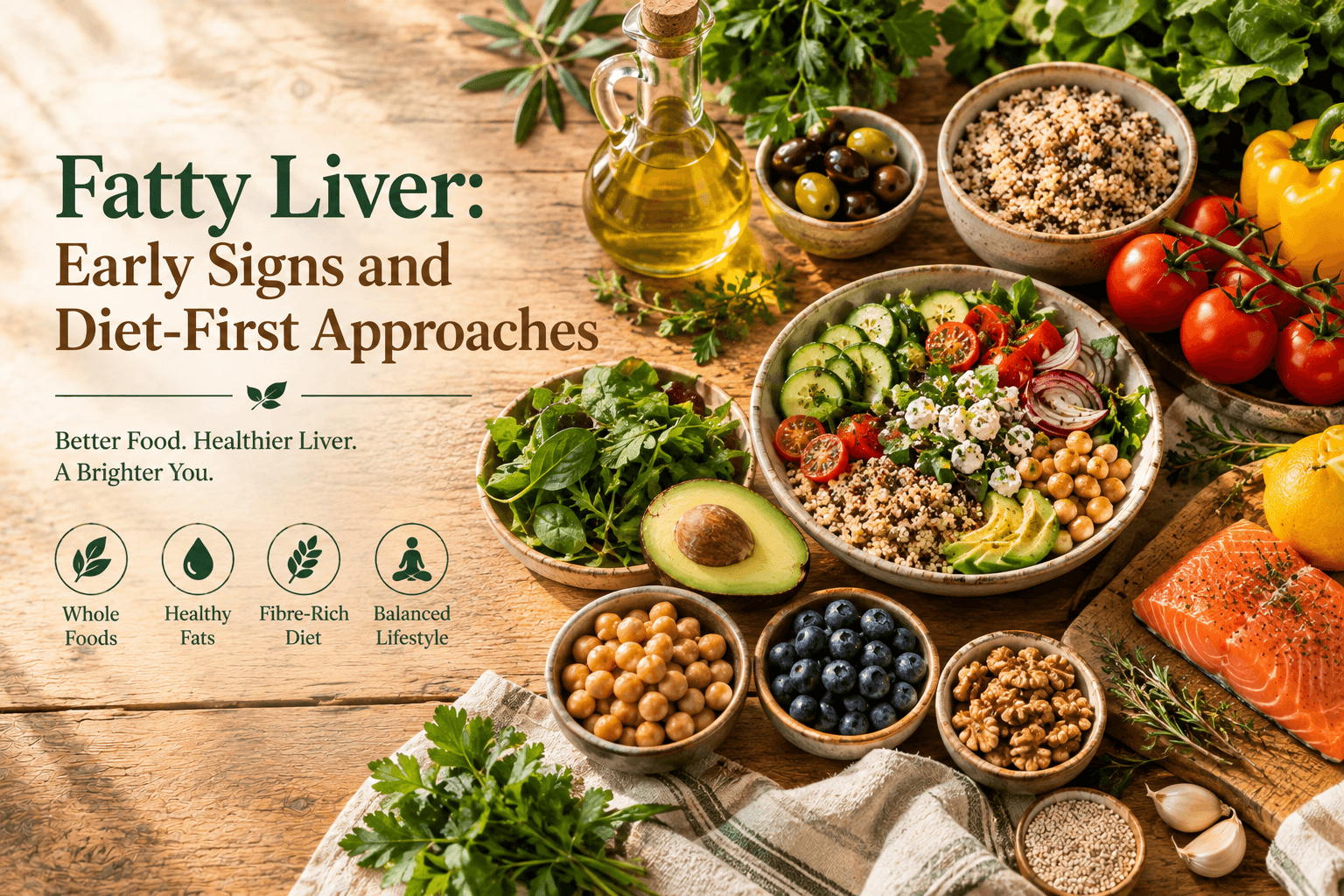
Medical guidance increasingly points to the Mediterranean diet, characterised by a heavy emphasis on fruits, vegetables, whole grains, and healthy fats, as a genuinely well-supported approach for fatty liver. Research has specifically shown this dietary pattern helps support weight loss, reduce liver fat, and improve inflammation in people with the condition.
Reducing Sugar and Refined Carbohydrates
Multiple studies point to reduced sugar intake as meaningfully beneficial. One controlled study found that a diet low in free sugars markedly improved liver enzyme levels, triglycerides, cholesterol, blood sugar, and insulin markers in people with fatty liver. Research has also found that total carbohydrate intake, regardless of type, is positively associated with fatty liver severity, with affected individuals generally consuming more fructose and glucose compared to those without the condition.
Increasing Fibre Intake
Soluble fibre, through its fermentation into beneficial short-chain fatty acids in the gut, has been linked to reduced liver fat production through its effects on gut bacteria and metabolism, making fibre-rich foods a genuinely useful dietary focus.
Time-Restricted Eating Combined With Lower Carbohydrates
Some emerging research has explored combining a low-carbohydrate diet with time-restricted eating windows, finding this combined approach effective in reducing markers of liver fat, along with improvements in weight, inflammation, and lipid profiles over a study period of several weeks.
Reducing Saturated and Trans Fats
Research consistently points toward reducing saturated and trans fats while increasing healthy fats, complex carbohydrates, and lean protein sources as a genuinely supportive combination for managing fatty liver through diet.
Taken together, this research paints a genuinely encouraging picture: unlike many health conditions where pharmaceutical treatment is the primary approach, fatty liver management currently centres diet and lifestyle change as the foundational, first-line strategy, with medication research still developing as a complementary, not replacement, approach.
Practical Diet-First Steps to Consider
- Shift toward a Mediterranean-style eating pattern — Emphasising vegetables, fruits, whole grains, legumes, and healthy fats like olive oil.
- Significantly reduce added sugar — Particularly sugary beverages, which contribute concentrated fructose intake linked to liver fat accumulation.
- Choose whole grains over refined carbohydrates — Supporting both fibre intake and more stable blood sugar.
- Include fibre-rich foods regularly — Vegetables, legumes, and whole grains support gut health, which is increasingly linked to liver fat metabolism.
- Limit saturated and trans fats — Found in fried and heavily processed foods.
- Stay physically active — Regular movement complements dietary changes and supports overall metabolic health.
- Work toward gradual, sustainable weight management — If applicable, since weight loss is consistently linked to improved liver fat measures in research.
The Ayurvedic Perspective on Liver and Digestive Health
While Ayurveda doesn’t specifically classify fatty liver as understood in modern medicine, it has long emphasised the connection between digestion (Agni) and overall health, including liver function. Ayurveda’s traditional approach to supporting healthy liver and digestive function includes:
- Favouring light, easily digestible foods — Over heavy, oily, or excessively processed foods, aligning with modern dietary recommendations for fatty liver.
- Bitter and astringent tastes — Foods like bitter gourd, neem, and turmeric, traditionally believed to support healthy liver function.
- Herbs like Bhumi Amla and Kutki — Traditionally used in Ayurveda to help support healthy liver function, always used alongside, not instead of, medical guidance.
- Moderation and mindful eating — Ayurveda’s emphasis on avoiding overeating and excess aligns naturally with modern dietary approaches to fatty liver.
This traditional emphasis on light, whole foods and moderation offers a complementary lens alongside the genuinely well-supported modern dietary research on fatty liver, though it should always work alongside, not replace, proper medical monitoring.
Why Medical Monitoring Remains Essential
Fatty liver is a genuine medical condition that requires proper diagnosis, typically through blood tests and imaging like ultrasound, and ongoing monitoring by a doctor, particularly since it can potentially progress if left unaddressed. While diet-first approaches are genuinely well-supported by current research, they should be pursued under medical guidance, especially to monitor progress and address any related conditions like diabetes or high cholesterol that often accompany fatty liver. No dietary change or herbal supplement should be used as a substitute for proper diagnosis and follow-up care.
Frequently Asked Questions
1. What are the earliest signs of fatty liver?
Fatty liver is often symptom-free in its early stages, but when signs do appear, they can include mild fatigue, general weakness, and dull discomfort in the upper right abdomen. Because these signs are subtle, routine testing is the most reliable way to detect it early.
2. Can diet alone reverse fatty liver?
Diet is considered the primary, evidence-based approach to managing fatty liver, with research showing dietary patterns like the Mediterranean diet and reduced sugar intake can meaningfully reduce liver fat. However, results vary by individual, and diet changes should be pursued alongside medical monitoring, not as a self-directed replacement for it.
3. Is fatty liver only caused by alcohol?
No, the condition increasingly referred to as MASLD (metabolic dysfunction-associated steatotic liver disease) is primarily linked to metabolic factors like insulin resistance, obesity, and diet, rather than alcohol consumption, which is a separate, distinct cause of liver fat accumulation.
A Gentle Note Before You Go
Understanding fatty liver early signs and the genuinely strong evidence behind diet-first management can help you take proactive, informed steps, always alongside your doctor’s guidance and monitoring. If you’re looking for gentle, everyday support alongside a liver-friendly diet, Healthywe’s range of liver care herbal supplements is made using 100% natural, vegetarian ingredients rooted in traditional Ayurvedic wisdom.
As always, dietary changes and herbal supplements are meant to support your overall wellness, not replace medical care. Please consult your doctor or an Ayurvedic practitioner for proper diagnosis, and before making any changes to a prescribed treatment.
Explore our natural wellness range at www.healthywewellness.com/shop.