Quick Answer
When it comes to intermittent fasting and Ayurveda, the two approaches share some genuine common ground but also some meaningful philosophical differences. Ayurveda has always valued fasting as a traditional practice, known as “Upavasa,” but it approaches fasting very differently from the rigid time-window structure of modern intermittent fasting — Ayurveda emphasises individual constitution, digestive strength, and flexibility over a fixed schedule. For some people, especially those with a strong, balanced constitution, intermittent fasting may align reasonably well with Ayurvedic principles. For others, particularly those with a Vata-dominant or more sensitive constitution, it may not be the best fit. This is general wellness information, not medical advice — please consult your doctor before starting any fasting approach, especially if you have any existing health conditions.
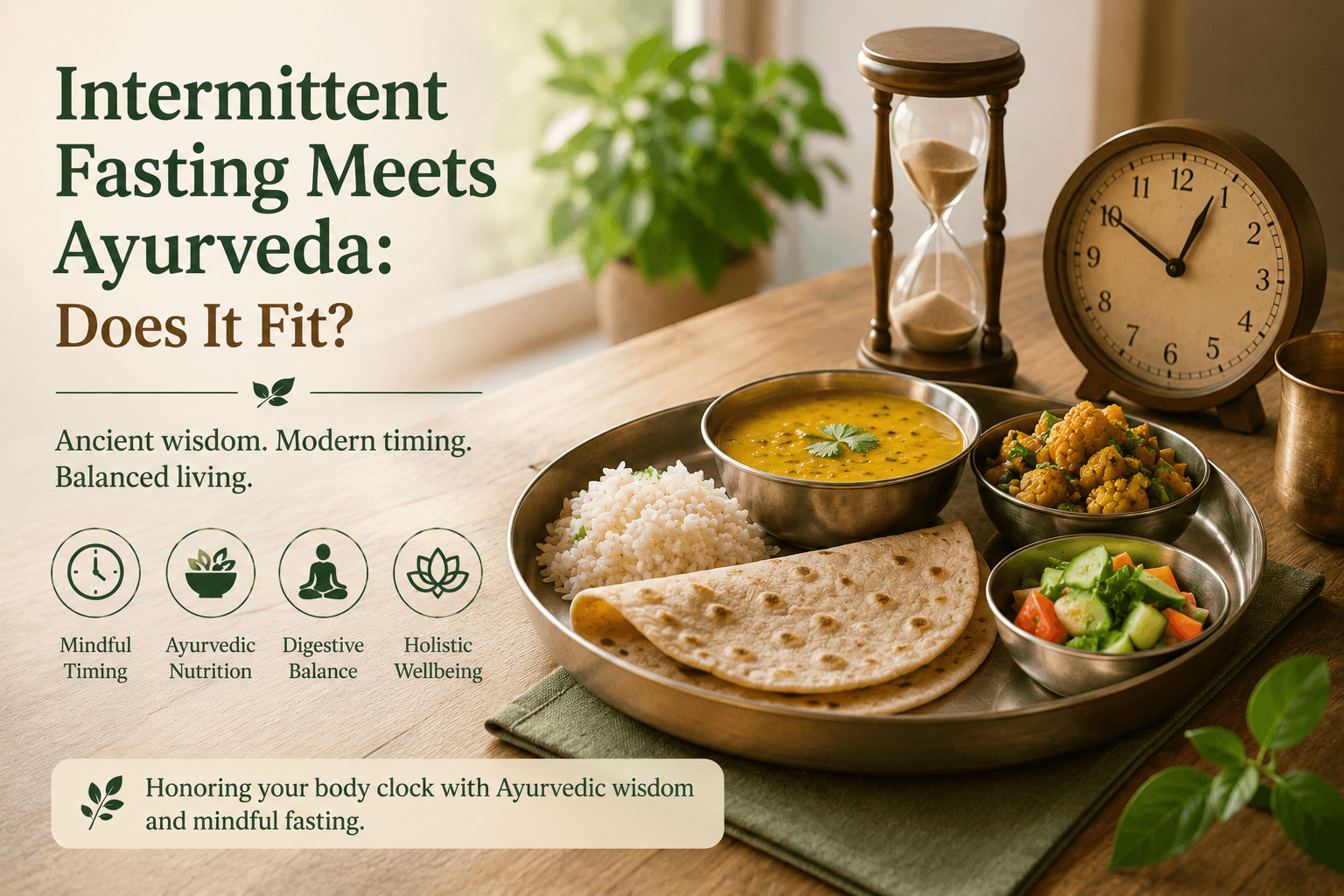
Intermittent fasting has become one of the most popular approaches to weight management in recent years, but long before “16:8” and “5:2” became fitness buzzwords, Ayurveda already had its own, very different relationship with fasting. In this article, we’ll explore intermittent fasting and Ayurveda together, where they align, where they genuinely differ, and how to think about whether this popular modern approach fits your individual constitution.
What Is Intermittent Fasting?
Intermittent fasting refers to eating patterns that cycle between periods of eating and periods of fasting, rather than focusing on what you eat. Common approaches include the 16:8 method (eating within an 8-hour window and fasting for 16 hours), the 5:2 method (eating normally five days a week and significantly restricting calories on two non-consecutive days), and alternate-day fasting. The appeal largely comes from its simplicity — rather than tracking specific foods, you’re primarily managing when you eat.
What Does Ayurveda Say About Fasting?
Ayurveda has practiced its own form of fasting, called “Upavasa,” for thousands of years, traditionally used to help support digestion and overall balance. However, understanding intermittent fasting and Ayurveda together requires recognising a key philosophical difference: Ayurvedic fasting is traditionally individualised and flexible, based on a person’s unique constitution (Prakriti), current state of balance, season, and digestive strength (Agni), rather than following a universal, fixed time-based schedule applied to everyone equally.
Common Reasons People Explore Intermittent Fasting
People typically turn to intermittent fasting for several reasons, which is worth understanding before comparing it to Ayurvedic principles:
- Weight management goals — The most common reason people adopt intermittent fasting.
- Simplicity compared to calorie counting — Many find managing “when” easier than tracking “what” and “how much.”
- Improved digestion — Some people report feeling less bloated or sluggish with defined eating windows.
- Metabolic health interest — Growing research interest in how eating patterns affect insulin sensitivity and metabolic markers.
These motivations often overlap meaningfully with goals Ayurveda has traditionally addressed too, just through a different lens.
Where Intermittent Fasting and Ayurveda Genuinely Align
Despite their different origins, intermittent fasting and Ayurveda share some real common ground:
- Giving digestion a rest — Both approaches recognise value in allowing the digestive system periods of rest, rather than constant, continuous eating.
- Mindful eating windows — Ayurveda’s emphasis on eating your largest meal around midday, when Agni is traditionally considered strongest, naturally creates a longer overnight fasting period, similar in spirit to time-restricted eating.
- Avoiding late-night eating — Both approaches generally discourage eating close to bedtime, recognising its impact on digestion and sleep.
- Supporting metabolic balance — Both traditions, in their own ways, aim to support healthy metabolism through structured eating patterns rather than constant grazing.
Where Intermittent Fasting and Ayurveda Genuinely Differ
That said, there are meaningful philosophical gaps worth understanding:
- Rigid schedule vs individualised approach — Modern intermittent fasting applies the same time window to everyone, while Ayurveda emphasises that fasting needs vary significantly based on individual constitution.
- Constitution-specific concerns — Ayurveda traditionally cautions that prolonged fasting may aggravate Vata dosha in Vata-dominant individuals, potentially leading to increased anxiety, poor sleep, or digestive irregularity, rather than the intended benefits.
- Seasonal considerations — Ayurveda traditionally adjusts fasting recommendations based on season, favouring lighter eating patterns in certain seasons and more nourishment in others, rather than a year-round fixed schedule.
- Quality over timing alone — Ayurveda places significant emphasis on what and how you eat during your eating window, not just when, which is sometimes underemphasised in popular intermittent fasting approaches.
Recognising these differences is genuinely important for anyone trying to blend intermittent fasting and Ayurveda thoughtfully, rather than assuming the two are simply interchangeable practices.
Who Might Intermittent Fasting Suit, From an Ayurvedic View?
Ayurveda’s individualised lens suggests that intermittent fasting may suit some constitutions better than others:
- Kapha-dominant individuals — Since Kapha types often benefit from lighter eating patterns and are traditionally considered to have stronger, more consistent digestion, intermittent fasting may align reasonably well for this constitution.
- Pitta-dominant individuals — Often have strong Agni and can generally tolerate structured eating windows, though intense hunger and irritability if meals are delayed too long is worth watching for.
- Vata-dominant individuals — Ayurveda traditionally advises more caution here, as Vata types often have more variable digestion and may be more prone to feeling depleted, anxious, or having disrupted sleep with prolonged fasting windows.
This is a genuinely useful way to think about intermittent fasting and Ayurveda together — rather than asking “does it work,” Ayurveda would ask “does it work for your specific constitution and current state of balance.”
Signs Intermittent Fasting May Not Be Suiting You
Whether viewed through an Ayurvedic or modern lens, these signs suggest intermittent fasting may not be the right fit, at least in its current form:
- Persistent fatigue or low energy
- Increased anxiety or irritability
- Disrupted sleep patterns
- Digestive irregularity or discomfort
- Intense preoccupation with food or difficulty sustaining the approach
- Menstrual irregularities in women
If you experience these signs, it’s worth reconsidering your approach and consulting a doctor or nutritionist rather than pushing through discomfort.
Practical Tips for Blending Intermittent Fasting and Ayurveda
If you’re interested in trying an approach that respects both intermittent fasting and Ayurveda principles, consider:
- Start with a shorter, gentler window — Rather than jumping straight into 16:8, consider starting with a 12-hour overnight fast, which aligns more naturally with Ayurvedic eating patterns.
- Eat your largest meal around midday — Aligning with Ayurveda’s belief that digestive fire is strongest then, naturally supporting a longer overnight fasting window.
- Prioritise quality within your eating window — Focus on whole, freshly cooked, balanced meals rather than just managing timing alone.
- Listen to your individual constitution — If you notice signs of Vata aggravation like anxiety or poor sleep, consider a gentler approach or shorter fasting window.
- Adjust seasonally — Consider a more flexible approach during colder months or periods of high stress, rather than rigid, year-round adherence.
The Ayurvedic Perspective on Modern Fasting Trends
Ayurveda’s broader philosophy has always been cautious about rigid, one-size-fits-all approaches to health, including fasting. While Ayurveda genuinely values the concept of giving digestion periodic rest, it consistently emphasises that this should be approached based on individual constitution, current health status, age, and season, rather than following a universal formula. This is really the central lesson when comparing intermittent fasting and Ayurveda — the practice of structured eating windows isn’t foreign to Ayurvedic thinking, but the rigid, universal application often seen in modern intermittent fasting trends is where the philosophies genuinely part ways.
Frequently Asked Questions
1. Does Ayurveda support intermittent fasting?
Ayurveda has its own traditional fasting practice called Upavasa, but it emphasises individualised, flexible approaches based on constitution and digestive strength, rather than a fixed, universal schedule like modern intermittent fasting.
2. Is intermittent fasting suitable for every Ayurvedic body type?
Not necessarily. Ayurveda suggests Kapha and Pitta-dominant individuals may tolerate structured fasting windows more easily, while Vata-dominant individuals may be more prone to feeling depleted or experiencing disrupted sleep with prolonged fasting.
3. What’s a good way to start blending intermittent fasting with Ayurvedic principles?
Starting with a gentler 12-hour overnight fasting window, eating your largest meal around midday, and prioritising whole, freshly cooked meals within your eating window are practical ways to align the two approaches thoughtfully.
A Gentle Note Before You Go
Exploring intermittent fasting and Ayurveda together reminds us that even popular modern wellness trends benefit from a personalised, constitution-aware lens rather than a one-size-fits-all approach. If you’re looking for gentle, everyday support alongside your eating routine, Healthywe’s range of weight management herbal supplements is made using 100% natural, vegetarian ingredients rooted in traditional Ayurvedic wisdom.
As always, dietary changes and herbal supplements are meant to support your overall wellness, not replace medical care. Please consult your doctor or an Ayurvedic practitioner for proper diagnosis, and before making any changes to a prescribed treatment.
Explore our natural wellness range at www.healthywewellness.com/shop.