Quick Answer
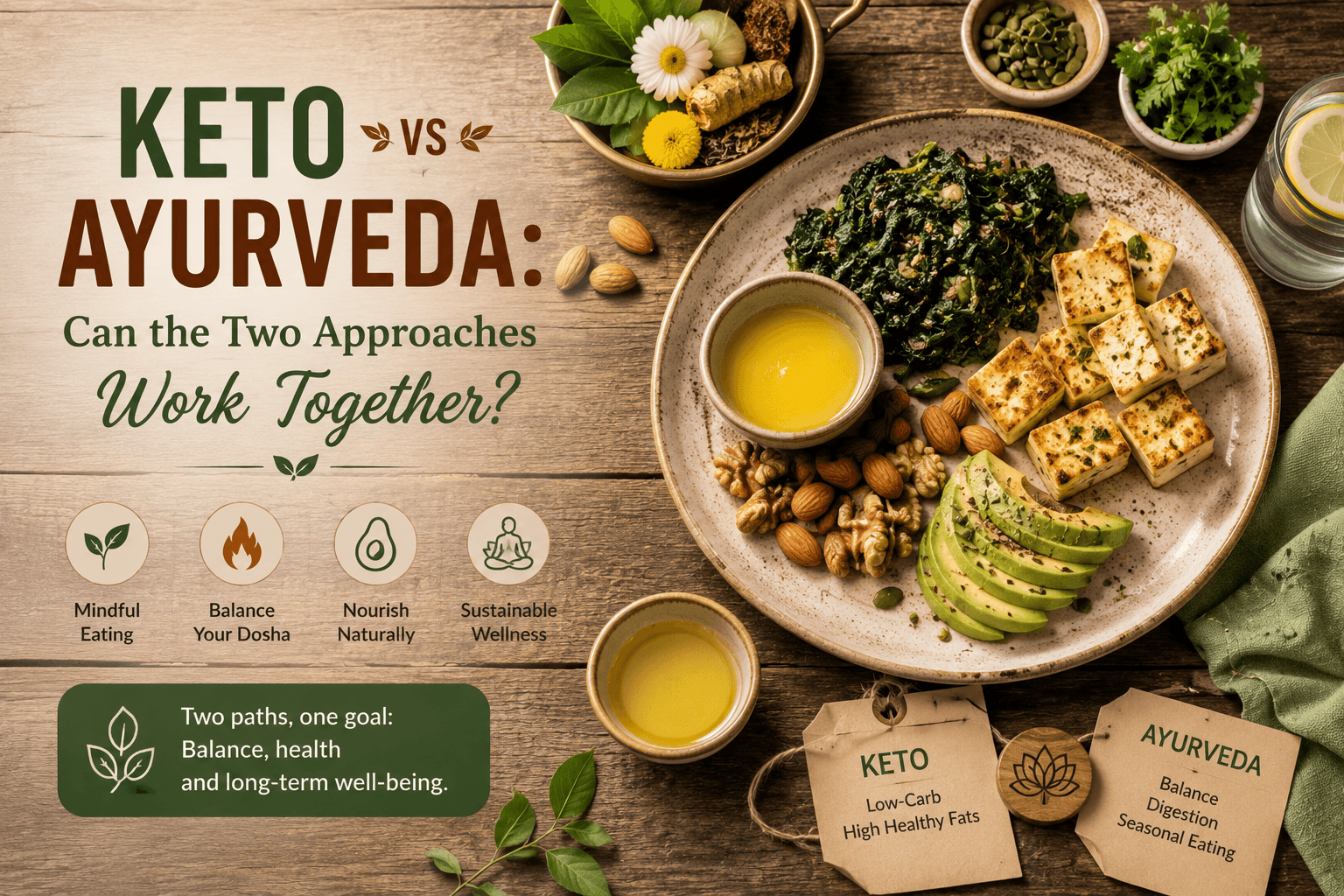
When comparing Keto vs Ayurveda, the two approaches actually differ quite a bit in philosophy — keto focuses on very low carbohydrate, high-fat eating to shift the body into ketosis, while Ayurveda emphasises balance, individual constitution, and warm, wholesome foods across all food groups. That said, with some thoughtful adjustments, elements of both approaches can potentially work together, especially if keto is adapted to include more Ayurveda-friendly, vegetarian-friendly ingredients and mindful eating practices. This combination isn’t right for everyone, so it’s best explored with guidance from a doctor or nutritionist, especially if you have any existing health conditions.
With keto being one of the most talked-about diets globally, and Ayurveda being deeply rooted in Indian tradition, many people find themselves wondering how these two very different philosophies compare — and whether they can coexist. In this article, we’ll break down Keto vs Ayurveda in simple terms, and explore whether combining the two makes sense for your wellness goals.
Understanding the Keto Diet
The ketogenic, or keto, diet is a very low-carbohydrate, high-fat eating pattern designed to shift the body into a metabolic state called ketosis, where it burns fat for fuel instead of carbohydrates. A typical keto diet limits carbohydrate intake significantly, often to under 50 grams a day, while increasing healthy fats and moderate protein.
Keto has gained popularity for its potential role in weight management and, in some cases, blood sugar management, though it requires significant dietary discipline and isn’t suitable for everyone, particularly those with certain existing health conditions.
Understanding the Ayurvedic Approach to Diet
Ayurveda, on the other hand, doesn’t focus on restricting entire macronutrient groups. Instead, it emphasises eating according to your individual constitution (Prakriti), the season, your digestive strength (Agni), and a balance of all six tastes — sweet, sour, salty, bitter, pungent, and astringent — in your meals. Ayurveda generally favours whole grains, vegetables, legumes, and moderate amounts of healthy fats, rather than emphasising very high fat intake or eliminating carbohydrates altogether.
This is really where the core tension in Keto vs Ayurveda emerges — one approach is built around macronutrient restriction, while the other is built around individualised balance and moderation.
Keto vs Ayurveda: Key Differences
To understand whether these two approaches can work together, it helps to look at their core differences side by side:
- Carbohydrate intake — Keto drastically restricts carbs, while Ayurveda generally includes whole grains and complex carbohydrates as part of a balanced diet.
- Fat intake — Keto emphasises very high fat intake, while Ayurveda recommends moderate, healthy fats based on individual constitution.
- Personalization — Keto follows a relatively fixed macronutrient ratio for most people, while Ayurveda is highly individualised based on dosha and digestive strength.
- Food temperature and preparation — Ayurveda places strong emphasis on warm, freshly cooked foods, while keto doesn’t specifically address food temperature.
- Vegetarian compatibility — Traditional keto often relies heavily on animal fats and proteins, which can make it more challenging to follow within a vegetarian framework common in many Indian households, while Ayurveda naturally accommodates vegetarian eating patterns.
These differences don’t necessarily mean the two approaches are incompatible — but they do mean that blending them requires some thoughtful adaptation.
Common Challenges When Comparing Keto vs Ayurveda
People exploring Keto vs Ayurveda together often run into a few common challenges:
- Difficulty maintaining a vegetarian keto diet — Since keto relies heavily on fat and protein, vegetarian keto often requires significant planning around paneer, nuts, seeds, and healthy oils.
- Conflicting dietary philosophies — Keto’s carbohydrate restriction can feel at odds with Ayurveda’s inclusion of whole grains as a dietary staple.
- Digestive discomfort — Some people report digestive issues when starting keto, which Ayurveda would attribute to a sudden disruption of Agni (digestive fire).
- Sustainability concerns — Very restrictive diets, including strict keto, can be difficult to maintain long-term, which goes against Ayurveda’s emphasis on gradual, sustainable habits.
Signs That a Diet Approach May Not Be Working for You
Whether you’re following keto, Ayurveda, or a blend of both, it’s worth watching for these signs that your current approach may need adjustment:
- Persistent fatigue or low energy
- Digestive discomfort like bloating or irregularity
- Difficulty concentrating
- Intense food cravings or feeling unable to sustain the diet
- Mood changes or irritability
If you experience any of these signs, it’s a good idea to consult a doctor or nutritionist to reassess your approach rather than pushing through discomfort.
Can Keto and Ayurveda Actually Work Together?
While Keto vs Ayurveda highlights real philosophical differences, some people do find ways to blend elements of both approaches thoughtfully. Here’s how that might look in practice:
1. Choose Ayurveda-Friendly Keto Foods
Instead of relying heavily on processed keto products, focus on whole, Ayurveda-aligned fats and proteins like ghee, coconut, nuts, seeds, and paneer, which are traditionally valued in Ayurvedic cooking.
2. Prioritise Warm, Freshly Cooked Meals
Ayurveda’s emphasis on warm, freshly prepared food can be incorporated into a keto framework by avoiding cold keto salads or raw preparations in favour of warm, cooked, low-carb vegetable dishes.
3. Include Digestive-Supportive Spices
Ayurvedic spices like ginger, cumin, and black pepper, which are naturally low-carb, can be incorporated into keto meals to help support digestion, aligning with Ayurveda’s focus on Agni.
4. Listen to Your Individual Constitution
Ayurveda teaches that not every approach suits every body type. A very high-fat diet like keto may feel more balancing for a Kapha-dominant individual but could potentially aggravate Pitta or Vata in others. Being attentive to how your body responds is key.
5. Avoid Extreme, Rigid Restriction
Rather than following keto in its strictest form, a more moderate, Ayurveda-informed version — sometimes called a “low-carb, whole-food” approach — may offer a more sustainable middle ground for those specifically interested in exploring Keto vs Ayurveda together.
Lifestyle Tips for a Balanced Approach
Regardless of which dietary philosophy you lean toward, these general habits support overall wellness:
- Eat mindfully — Pay attention to hunger and fullness cues rather than rigid rules alone.
- Stay physically active — Regular movement supports metabolism and complements any dietary approach.
- Prioritise sleep and stress management — Both play a significant role in how your body responds to dietary changes.
- Introduce changes gradually — Sudden, drastic dietary shifts can be harder on digestion, regardless of the diet philosophy.
- Stay hydrated — Especially important on lower-carb diets, as they can affect the body’s water and electrolyte balance.
The Broader Ayurvedic Perspective on Diet Trends
Ayurveda has always taken a cautious, individualised view toward rigid dietary trends, including keto. Rather than endorsing or rejecting any specific diet outright, Ayurveda’s core teaching is that no single approach suits everyone — what supports one person’s constitution may not suit another’s. This is precisely why the Keto vs Ayurveda conversation doesn’t have a single, universal answer.
Instead, Ayurveda encourages self-awareness: paying attention to how your body responds to different foods and eating patterns, and adjusting accordingly, rather than rigidly following any trend, including keto, without personalisation.
Frequently Asked Questions
1. Is keto compatible with a vegetarian Ayurvedic diet?
It can be challenging but is possible with careful planning, using vegetarian fat and protein sources like paneer, nuts, seeds, and ghee, combined with Ayurveda’s emphasis on warm, freshly cooked meals.
2. Does Ayurveda recommend low-carb diets like keto?
Ayurveda doesn’t specifically endorse or reject keto, but traditionally recommends including whole grains and a balance of all six tastes, rather than eliminating entire food groups like carbohydrates.
3. Which is better for weight management, keto or Ayurveda?
Neither approach is universally “better,” as effectiveness depends on individual health status, constitution, and sustainability. It’s best to consult a doctor or nutritionist to determine which approach, or combination, suits your specific needs.
A Gentle Note Before You Go
Exploring Keto vs Ayurveda ultimately comes down to understanding your own body and finding an approach that feels sustainable, rather than following any single trend rigidly. If you’re looking for gentle, everyday support alongside whichever approach you choose, Healthywe’s range of weight management herbal supplements is made using 100% natural, vegetarian ingredients rooted in traditional Ayurvedic wisdom.
As always, dietary changes and herbal supplements are meant to support your overall wellness, not replace medical care. Please consult your doctor or an Ayurvedic practitioner for proper diagnosis, and before making any changes to a prescribed treatment.
Explore our natural wellness range at www.healthywewellness.com/shop.