Quick Answer
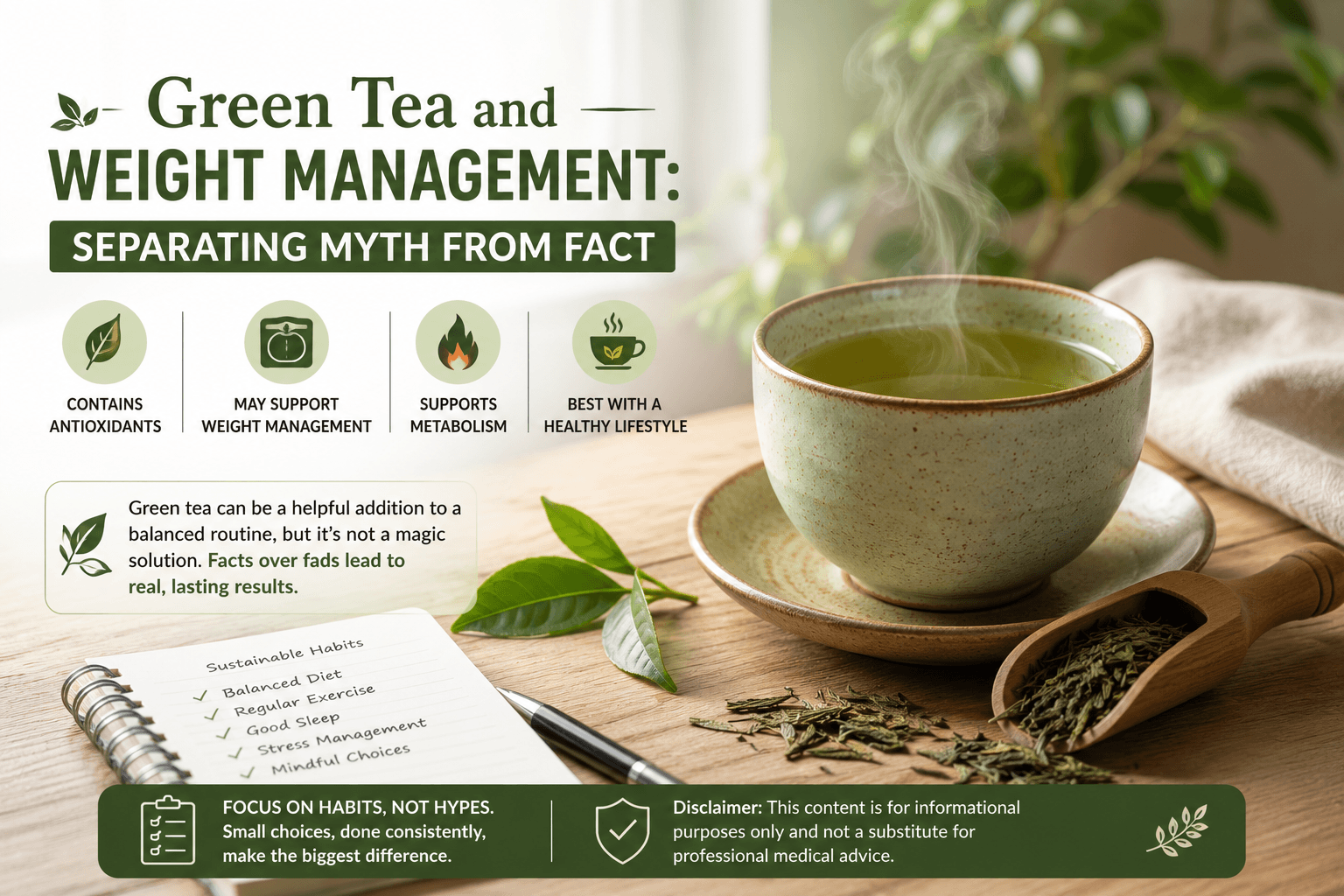
When it comes to green tea and weight management, the honest answer sits somewhere between the hype and the skepticism. Research suggests green tea’s natural compounds, particularly a catechin called EGCG, may offer a small, modest effect on metabolism and fat oxidation when combined with a healthy diet and regular exercise — but green tea alone, without lifestyle changes, is unlikely to lead to meaningful weight loss. It’s best viewed as a supportive daily habit rather than a standalone solution. As always, consult your doctor before making major changes to your diet, especially if you have any existing health conditions.
Green tea has built quite a reputation as a “fat-burning” drink, showing up in countless weight loss tips and product marketing. But how much of this is actually backed by evidence, and how much is just popular belief? In this article, we’ll separate myth from fact on green tea and weight management, and look at what Ayurveda has traditionally said about this ancient beverage.
Where Did the Green Tea and Weight Management Connection Come From?
Green tea has been consumed for centuries across Asia, originally valued for its calming properties and general wellness benefits rather than weight management specifically. Its association with weight loss became popular more recently, largely driven by scientific interest in its natural plant compounds called catechins, especially one called epigallocatechin gallate, or EGCG.
Over the past two decades, green tea and weight management has become a widely researched and widely marketed topic, which is exactly why it’s worth taking a closer, more balanced look at what the science actually shows.
Common Myths About Green Tea and Weight Loss
Let’s address some of the most common myths first, since separating fact from fiction is the whole point of this article:
- Myth: Green tea alone will make you lose significant weight. In reality, green tea’s effect on weight, when studied on its own without diet or exercise changes, tends to be small or inconsistent.
- Myth: The more green tea you drink, the faster you’ll lose weight. Excessive consumption doesn’t necessarily lead to proportionally greater results, and very high intake may cause side effects like sleep disturbances due to caffeine content.
- Myth: Green tea “burns belly fat” specifically. Green tea does not target fat in one specific area of the body; any potential fat metabolism benefits are generally systemic, not localized.
- Myth: All green tea products offer the same benefits. The concentration of active catechins varies significantly between brewed tea, extracts, and supplements, which affects how much of an effect, if any, is realistically possible.
Understanding these myths helps set more realistic expectations when exploring green tea and weight management as part of your routine.
What Does the Research Actually Say?
This is where things get genuinely interesting. A number of clinical studies have examined green tea and weight management, particularly focusing on EGCG and other catechins.
Some research has found that green tea catechins may modestly increase energy expenditure and fat oxidation, potentially through their effect on the body’s sympathetic nervous system. Several human clinical trials have reported small but measurable reductions in body weight, waist circumference, or body fat percentage among participants consuming green tea extracts over periods of 8 to 12 weeks, generally at EGCG doses ranging from around 100 mg to over 800 mg per day.
That said, the picture isn’t entirely one-sided. A widely cited systematic review and meta-analysis found no statistically significant effect of green tea extract on the body weight of overweight or obese adults, though it did note a small effect on reducing body fat percentage. Similarly, an older Cochrane review concluded that green tea preparations appeared to produce only a small, statistically non-significant amount of weight loss in overweight or obese adults. More recent reviews have suggested that higher, more consistent doses of EGCG may show somewhat greater effectiveness for supporting body fat and weight reduction, especially when combined with regular physical activity.
So, where does that leave green tea and weight management? The honest, balanced conclusion is that green tea may offer modest support for weight management, particularly around fat metabolism, but it’s far from a guaranteed or dramatic solution on its own. Results also seem to vary between individuals, likely influenced by factors like diet, activity levels, metabolism, and genetics.
How Green Tea May Support a Healthy Weight Management Routine
Even with modest, individually varying effects, there are a few reasons green tea can still be a worthwhile addition to a weight management routine:
- Low-calorie alternative to sugary drinks — Replacing sugary beverages with green tea is a simple, calorie-conscious swap.
- Contains caffeine, which may offer a mild energy boost — This could indirectly support more consistent physical activity.
- Rich in antioxidants — Green tea’s polyphenols may support overall wellness alongside weight management goals.
- Can support mindful hydration habits — Making green tea part of your routine can help you stay consistently hydrated throughout the day.
These benefits work best when green tea is treated as one small piece of a much bigger lifestyle picture, rather than a shortcut.
Practical Lifestyle Tips for Weight Management
If you’re exploring green tea and weight management together, here are some practical habits that make a genuine difference:
- Focus on a balanced, whole-food diet — Prioritise vegetables, whole grains, and protein over processed and sugary foods.
- Stay consistently active — Regular movement, even brisk walking, plays a much bigger role in weight management than any single beverage.
- Prioritise good sleep — Poor sleep is closely linked to weight gain and disrupted hunger hormones.
- Manage portion sizes — Being mindful of portions often has a bigger impact than any specific food or drink choice.
- Stay hydrated throughout the day — Sometimes thirst is mistaken for hunger, leading to unnecessary snacking.
- Be patient and consistent — Sustainable weight management happens gradually, not overnight.
The Ayurvedic Perspective on Green Tea and Weight Management
While green tea itself isn’t a traditional Ayurvedic herb, Ayurveda’s broader philosophy around weight management aligns closely with the idea of supportive, moderate habits rather than quick fixes. Ayurveda associates excess weight gain with an imbalance in Kapha dosha, which governs stability, structure, and metabolism in the body.
Ayurveda traditionally recommends several practices that align well with a green tea and weight management routine:
- Warm herbal beverages — Ayurveda has long valued warm drinks, including herbal teas, to help support digestion (Agni) rather than cold or sugary beverages.
- Herbs like Guggul and Triphala — Traditionally used in Ayurveda to help support healthy metabolism and digestion as part of an overall weight management routine.
- Mindful eating — Ayurveda emphasises eating slowly, in moderation, and being attentive to the body’s hunger and fullness signals.
- Regular movement and daily routine (Dinacharya) — Consistency in daily habits is considered essential for maintaining balanced Kapha and healthy metabolism.
This Ayurvedic lens reinforces the same conclusion modern research points to: no single ingredient, including green tea, works in isolation. Genuine, lasting support for weight management comes from a combination of mindful habits practiced consistently over time.
Things to Keep in Mind Before Increasing Green Tea Intake
While generally safe for most people, a few points are worth considering:
- Green tea contains caffeine, so excessive intake may cause sleep disturbances or jitteriness in sensitive individuals.
- Very high doses of green tea extract supplements have occasionally been associated with liver concerns in some reported cases, so it’s best to stick to recommended amounts and choose reputable products.
- Green tea may interact with certain medications, so it’s important to inform your doctor if you’re on any prescribed treatment.
- Pregnant or breastfeeding women should consult a doctor before increasing green tea or supplement intake.
Frequently Asked Questions
1. Does green tea really help with weight loss?
Research suggests green tea, particularly its EGCG content, may offer a small, modest effect on fat metabolism and weight management when combined with a healthy diet and exercise. It is not a standalone solution for significant weight loss.
2. How much green tea should I drink for weight management?
Most studies showing modest benefits have used EGCG doses ranging from about 100 mg to over 800 mg per day, often equivalent to a few cups of green tea or a standardized extract. It’s best to consult your doctor for guidance suited to your individual health needs.
3. Is green tea better than other weight management strategies?
Green tea works best as a small supportive addition rather than a replacement for proven strategies like a balanced diet, regular physical activity, and good sleep, which have a far greater overall impact on weight management.
A Gentle Note Before You Go
When it comes to green tea and weight management, the truth lies in moderation and realistic expectations — it can be a helpful, supportive habit, but it works best as part of a bigger, balanced lifestyle. If you’re looking for additional everyday support on your wellness journey, Healthywe’s range of weight management herbal supplements is made using 100% natural, vegetarian ingredients rooted in traditional Ayurvedic wisdom.
As always, dietary habits and herbal supplements are meant to support your overall wellness, not replace medical care. Please consult your doctor or an Ayurvedic practitioner for proper diagnosis, and before making any changes to a prescribed treatment.
Explore our natural wellness range at www.healthywewellness.com/shop.