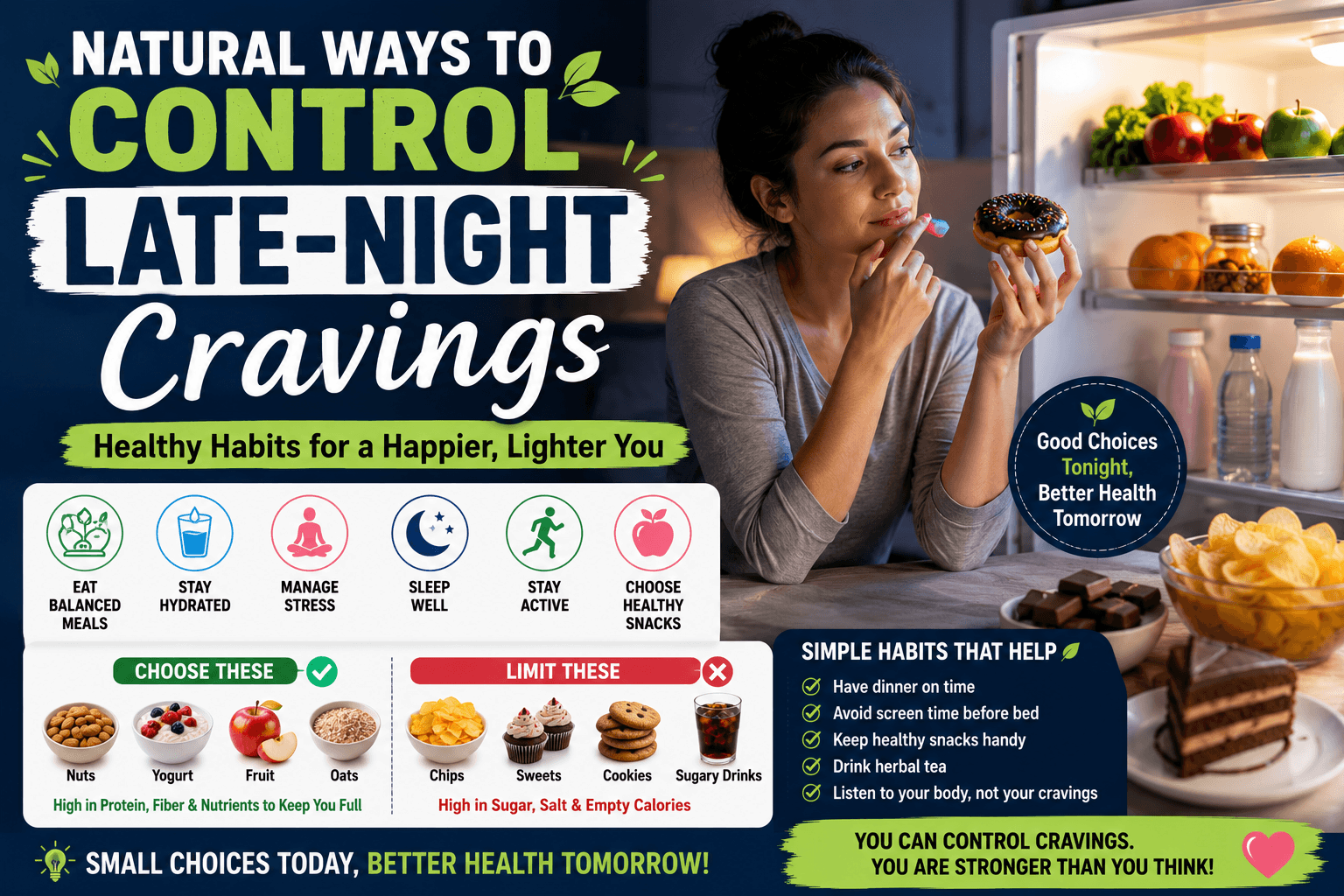
Natural Ways to Control Late-Night Cravings
Quick Answer
Night cravings often happen because of hunger, stress, poor sleep, dehydration, or unhealthy eating habits during the day. Eating balanced meals, drinking enough water, managing stress, and following a healthy bedtime routine can naturally help reduce late-night cravings and support healthy weight management.
Introduction
Late-night cravings can be difficult to control.
Many people feel hungry just before bedtime, even after eating dinner.
Sometimes the craving is for sweets.
Other times it is for salty snacks or fast food.
However, these cravings are not always caused by true hunger.
In many cases, they are linked to daily habits, stress, poor sleep, or emotional eating.
Therefore, understanding night cravings can help you make healthier choices.
What are Night Cravings?
Night cravings are strong urges to eat food late in the evening or before bedtime.
Sometimes your body truly needs food.
However, cravings often happen because of habits or emotions.
For example, boredom, stress, or watching television may trigger the desire to snack.
Therefore, it is important to understand the difference between hunger and cravings.
Causes of Night Cravings
Several factors may increase late-night eating.
1. Skipping Meals
Skipping breakfast or lunch may lead to excessive hunger later.
As a result, you may overeat at night.
2. Eating Too Little Protein
Protein helps you stay full for longer.
Therefore, low-protein meals may increase cravings.
3. Stress
Stress can increase the desire for sugary and high-calorie foods.
Consequently, emotional eating becomes more common.
4. Poor Sleep
Lack of sleep affects hunger hormones.
As a result, cravings may become stronger the next evening.
5. Dehydration
Sometimes thirst feels like hunger.
Therefore, drinking water may reduce unnecessary snacking.
6. Boredom
Many people snack simply because they have nothing else to do.
Consequently, eating becomes a habit instead of a need.
7. High-Sugar Foods
Sugary foods cause rapid blood sugar changes.
As a result, you may feel hungry again within a short time.
Signs and Symptoms
Common signs include:
- Feeling hungry after dinner
- Craving sweets at night
- Wanting chips or fried snacks
- Emotional eating
- Frequent kitchen visits before bed
- Difficulty controlling portions
- Feeling guilty after eating
Risk Factors
You may be more likely to experience night cravings if you:
- Skip meals
- Sleep less than seven hours
- Feel stressed often
- Eat highly processed foods
- Have an irregular eating schedule
- Spend long hours watching screens
Therefore, healthy daily habits are important.
How It Affects Daily Life
Night cravings can affect more than weight.
They may also:
- Reduce sleep quality
- Increase calorie intake
- Lower energy the next day
- Make healthy eating difficult
- Affect weight management goals
Consequently, regular late-night eating may become a long-term habit.
Benefits of Early Management
Managing cravings early offers many benefits.
These include:
- Better appetite control
- Improved sleep
- Healthier food choices
- Better digestion
- Easier weight management
- More energy during the day
Therefore, small changes today may bring lasting results.
Natural Ways to Support Better Health
Eat Balanced Meals
Include protein, fiber, and healthy fats at every meal.
As a result, you may stay full longer.
Drink Enough Water
Drink water throughout the day.
Sometimes thirst is mistaken for hunger.
Choose Healthy Evening Snacks
If you are truly hungry, choose healthy options.
For example:
- Apple slices
- Unsalted nuts
- Roasted chickpeas
- Plain yogurt
- Fresh fruit
Manage Stress
Try meditation, deep breathing, or light reading.
Consequently, emotional eating may decrease.
Improve Sleep
Go to bed at the same time every night.
Good sleep helps regulate hunger hormones.
Stay Busy
Reading, listening to music, or taking a short walk may reduce boredom-related cravings.
Diet Tips
Choose foods that keep you full.
Eat More:
✅ Whole grains ✅ Oats ✅ Fruits ✅ Vegetables ✅ Lentils ✅ Beans ✅ Paneer ✅ Yogurt
Limit:
❌ Sugary desserts ❌ Soft drinks ❌ Fried snacks ❌ Packaged chips ❌ Processed foods
Lifestyle Tips
Healthy habits make a difference.
- Eat dinner on time.
- Avoid skipping meals.
- Exercise regularly.
- Stay hydrated.
- Reduce screen time before bed.
- Sleep 7–8 hours daily.
As a result, cravings often become easier to manage.
Common Mistakes to Avoid
Avoid these common habits:
❌ Eating while watching TV
❌ Skipping breakfast
❌ Keeping junk food nearby
❌ Sleeping too late
❌ Drinking sugary beverages before bed
❌ Ignoring stress
When Should You Seek Professional Advice?
Speak with a healthcare professional if:
- Night cravings happen every day
- Overeating affects your health
- Weight changes rapidly
- You feel unable to control eating
- You have symptoms of diabetes or other health conditions
Professional guidance can help identify the underlying cause.
Why Joint Stiffness Feels Worse in the Morning
Frequently Asked Questions
Why do I get hungry late at night?
Night cravings may happen because of skipped meals, stress, poor sleep, dehydration, or eating too little during the day.
Can drinking water reduce night cravings?
Yes. Sometimes thirst feels like hunger. Drinking water may reduce unnecessary snacking.
What is the best snack for late-night cravings?
Healthy choices include fruit, plain yogurt, roasted chickpeas, unsalted nuts, or a small bowl of oats.
Does poor sleep increase cravings?
Yes. Poor sleep can affect hunger hormones and increase the desire for high-calorie foods.
Are late-night cravings always a sign of hunger?
No. Many cravings are linked to stress, boredom, habits, or emotions rather than true hunger.
Final Thoughts
Night cravings are common, but they can often be managed with simple lifestyle changes.
Balanced meals, regular sleep, stress management, hydration, and mindful eating may help reduce late-night hunger.
However, if cravings become frequent or affect your health, seek advice from a qualified healthcare professional.
Small daily habits can make a big difference over time.