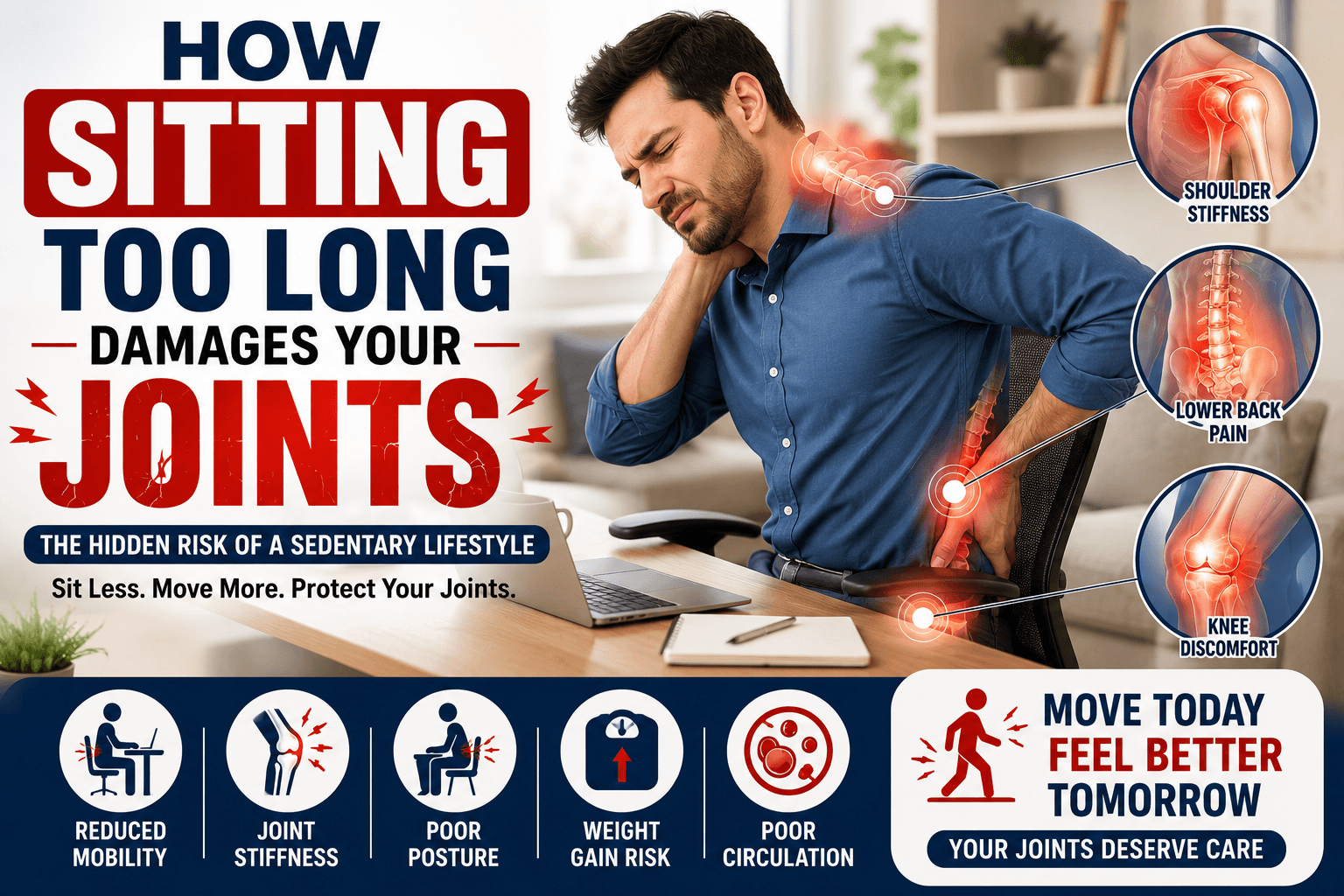
How Sitting Too Long Damages Your Joints
Modern life has made sitting a normal part of the day. People sit while working, studying, driving, eating, and even relaxing.
Although sitting may seem harmless, spending too many hours in the same position can affect your body.
In fact, prolonged sitting can put extra stress on muscles, bones, and joints.
Therefore, understanding the connection between sitting and joint damage is important.
The good news is that simple daily habits can help protect your joints and improve mobility.
What Are Joints and Why Are They Important?
Joints are the places where two bones meet.
They allow your body to move smoothly.
For example, knees, hips, shoulders, elbows, and ankles are all joints.
Healthy joints help you walk, run, bend, and perform everyday activities comfortably.
However, when joints become stiff or weak, movement can become difficult.
How Sitting Too Long Affects Your Joints
1️⃣ Joint Stiffness Increases
When you sit for long periods, your joints stay in the same position.
As a result, they receive less movement.
Consequently, stiffness may develop.
This is why many people feel uncomfortable when they stand up after sitting for hours.
2️⃣ Blood Circulation Slows Down
Movement helps blood flow throughout the body.
However, prolonged sitting reduces circulation.
Because of this, muscles and joints may receive less oxygen and nutrients.
Therefore, joint health may suffer over time.
3️⃣ Hip Joints Become Tight
The hips remain bent while sitting.
As a result, hip muscles may tighten.
Over time, this tightness can affect posture and movement.
Consequently, discomfort may develop in the lower back and hips.
4️⃣ Knee Joints Stay Under Pressure
Many people keep their knees bent for hours.
Although the pressure may seem small, it adds up throughout the day.
Therefore, some people experience knee stiffness and discomfort after prolonged sitting.
5️⃣ Weak Muscles Provide Less Support
Muscles help protect joints.
However, sitting too much reduces muscle activity.
As a result, muscles may become weaker.
Consequently, joints receive less support during movement.
6️⃣ Poor Posture Creates Joint Stress
Many people slouch while sitting.
Unfortunately, poor posture places extra pressure on the neck, shoulders, hips, and spine.
Therefore, joint discomfort may become more common.
7️⃣ Increased Risk of Weight Gain
Long sitting hours often reduce calorie burning.
As a result, weight gain may occur.
Extra body weight increases pressure on weight-bearing joints such as knees and hips.
Therefore, maintaining a healthy weight supports joint health.
Signs Your Joints May Be Affected by Sitting
Watch for these common symptoms:
- Joint stiffness
- Knee discomfort
- Hip tightness
- Lower back pain
- Neck stiffness
- Reduced flexibility
- Difficulty standing after sitting
Therefore, it is important to pay attention to these warning signs.
Why Office Workers Often Experience Joint Problems
Many office workers spend 7–10 hours sitting every day.
Additionally, screen time often increases after work.
Because of this, joints may receive very little movement throughout the day.
As a result, stiffness and discomfort may gradually develop.
Simple Ways to Protect Your Joints
🚶 Stand Up Every 30–45 Minutes
Short movement breaks can help.
Therefore, try standing or walking for a few minutes regularly.
🧘 Stretch Daily
Stretching improves flexibility.
Additionally, it helps reduce muscle tightness around joints.
💧 Stay Hydrated
Water supports many body functions.
Moreover, proper hydration helps support joint lubrication.
🏃 Exercise Regularly
Walking, cycling, swimming, and yoga are excellent choices.
As a result, joints stay active and flexible.
🪑 Improve Your Sitting Posture
Keep your back straight and shoulders relaxed.
Therefore, unnecessary stress on joints can be reduced.
Foods That Support Joint Health
Healthy nutrition plays a major role in joint wellness.
Consider adding:
- Green leafy vegetables
- Nuts and seeds
- Fruits
- Whole grains
- Lentils and beans
- Dairy products
- Plenty of water
As a result, your body receives nutrients that support healthy joints.
Why Sleep Matters for Joint Recovery
Sleep allows the body to repair itself.
During deep sleep, tissues recover from daily stress.
Therefore, poor sleep may affect recovery and overall joint comfort.
Aim for 7–8 hours of quality sleep every night.
When Should You See a Doctor?
Consult a healthcare professional if:
- Joint pain becomes severe
- Swelling develops
- Movement becomes difficult
- Symptoms continue for several weeks
Early treatment can help prevent long-term complications.
Final Thoughts
Joint damage can develop gradually when sitting becomes a major part of daily life.
Although sitting is unavoidable for many people, staying in one position for too long may affect joint health.
Therefore, regular movement, proper posture, stretching, hydration, and exercise are essential.
Small daily changes can help keep your joints healthy, flexible, and comfortable for years to come.
Frequently Asked Questions
Q. Can sitting too long damage joints?
Yes. Long periods of sitting may contribute to joint stiffness, reduced flexibility, and discomfort over time.
Q. Why do my knees hurt after sitting?
Keeping knees bent for extended periods may increase stiffness and discomfort.
Q. How often should I stand up while working?
Experts generally recommend standing and moving every 30–45 minutes.
Q. Does exercise help prevent joint damage?
Yes. Regular exercise supports flexibility, muscle strength, and overall joint health.