
Quick Answer
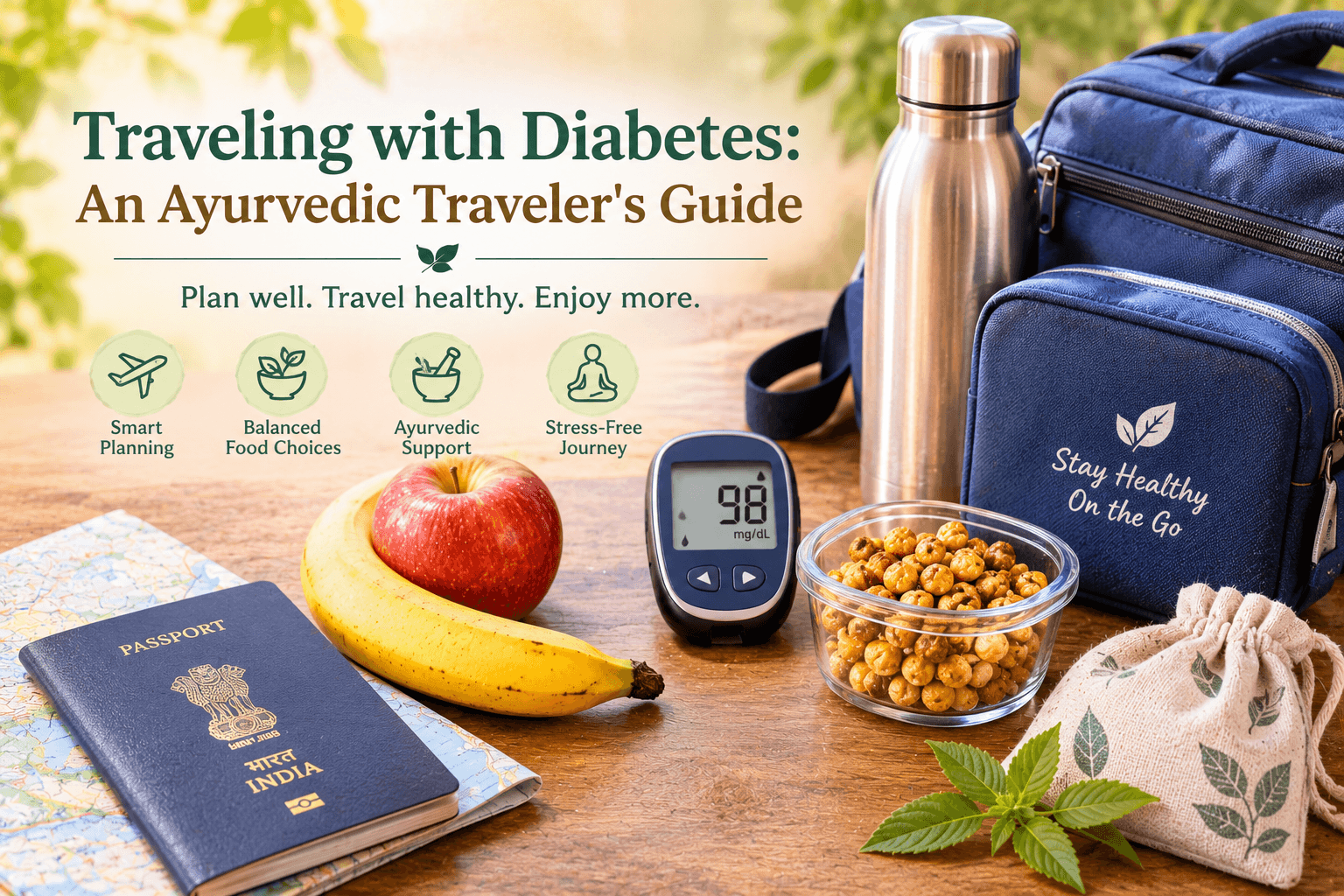
Diabetes should not stop you from travelling, and most people with diabetes travel safely with a little planning. The essentials are the same whether you are going to a hill station, a pilgrimage, a family wedding, or abroad: see your doctor or diabetes team about four to six weeks before you leave, carry a doctor’s letter, keep all medicines, insulin, testing supplies, and fast-acting sugar for low glucose in your hand luggage (never only in checked baggage, since insulin can be damaged by cold in the hold), pack at least double what you expect to need and split it between bags, protect insulin from heat and freezing, eat at fairly regular times, carry snacks and fast-acting sugar, check your glucose more often than usual, look after your feet, and keep your sick-day rules handy. If you cross several time zones, ask your doctor how to time medicines, because they differ from person to person. Ayurveda adds a gentle layer of traditional wisdom: warm, simple food, regular meals, plenty of warm water, light movement after meals, and calm routines. This is general wellness information, not medical advice. Please agree your own travel plan with your doctor.
For many people, a diagnosis of diabetes brings a quiet worry: “Can I still travel?” The answer is yes. Plenty of people with diabetes go on long road trips, climb to temples in the Himalayas, fly across the world, and enjoy every wedding feast. What changes is that you plan a little more, so that a delayed train, a hot afternoon, or an unfamiliar menu does not catch you off guard. In this article we will walk through the whole journey: preparing before you go, what to pack, how to manage airports, trains, and roads, how to store insulin in the Indian heat, what to eat and drink, how to stay safe from high and low blood sugar, how to take care of your feet and your health, and how Ayurveda’s traditional guidance on travel and routine can complement your doctor’s advice.
Before You Go: Plan Four to Six Weeks Ahead
Good travel with diabetes starts at home. Guides from diabetes organisations and hospitals suggest speaking to your diabetes team well before departure, about four to six weeks if possible, especially for international trips, so that there is time to arrange vaccinations, supplies, and any medicine adjustments.
Questions for Your Doctor or Diabetes Team
- Is my diabetes well controlled enough for this trip, and are there any precautions for where I am going?
- Will my medicine timing or doses need to change for the journey, time zones, or increased walking?
- How should I store my insulin or other medicines in hot weather, on a train, or at altitude?
- What should I do if my glucose is too low or too high while away?
- What are my sick-day rules, and do I need ketone testing strips?
- Do I need an emergency glucagon kit or other emergency supplies?
- Which vaccinations or preventive measures do I need for my destination?
- Can you write a travel letter and list my medicines?
Get a Letter From Your Doctor
A letter from your doctor or diabetes team that states you have diabetes, lists your medicines, and explains that you need to carry insulin, syringes or pen needles, glucose meters, lancets, and other devices is widely recommended. Airlines and security staff generally allow these items in cabin baggage, and a letter helps avoid delays. If you use an insulin pump, continuous glucose monitor (CGM), or flash glucose monitor, mention that too. Carry both a printed copy and a digital copy, and for international trips consider having it in English plus the local language, if possible.
Other Paperwork and Preparations
- Travel insurance: Choose cover that includes pre-existing conditions such as diabetes and covers emergency hospital care. Declare your diabetes honestly when buying a policy.
- Prescriptions: Carry copies of your prescriptions, with medicines listed by their generic names, which are more widely recognised than brand names.
- Medical ID: Wear a medical ID bracelet or carry a card that states you have diabetes and what medicines you take, and keep emergency contacts saved on your phone.
- Sick-day rules: Take a printed copy and a digital copy of your personal sick-day plan from your doctor.
- Local supplies: Find out where you could buy insulin or supplies at your destination in an emergency. Insulin strengths and device types can differ between countries, so be aware if you need to buy locally abroad.
- Latest clinic letter and recent results: Useful if you are admitted to a hospital while away.
- Vaccinations and preventive health: People with diabetes can be more vulnerable to some infections, so ask your doctor which vaccinations and precautions you need.
What to Pack: A Diabetes Travel Checklist
A simple rule is to take double what you think you will need, keep it close, and split it. Airlines can lose luggage, trips can be extended, and pharmacies at your destination may not stock your usual brand.
- Insulin or other diabetes medicines: At least double the amount needed for the trip, carried in hand luggage, with the original packaging and labels.
- Injection supplies: Pens, cartridges, syringes or pen needles, and a safe way to dispose of sharps.
- Glucose meter and supplies: Meter, test strips, lancets, spare batteries, and a control solution if you use one.
- CGM sensors, pump spares, chargers, and adhesive patches: Plus a back-up plan, such as injections or a spare meter, if a device fails.
- Fast-acting sugar for low glucose: Glucose tablets, a sugary drink, or sweets, as your doctor advises, kept somewhere easy to reach.
- Emergency glucagon: If your doctor has advised it, with a travel companion who knows how to use it.
- Ketone testing strips: If your doctor advised them, particularly for type 1 diabetes.
- Snacks: Roasted chana, nuts, fruit, plain biscuits, and other items that keep well, for delays and unexpected gaps between meals.
- A cool pouch for insulin: To keep insulin from overheating on the journey.
- Comfortable, well-fitting shoes and socks: And a small foot-care kit.
- Documents: Doctor’s letter, prescriptions, insurance papers, sick-day plan, and emergency contacts.
- Usual non-diabetes medicines: Such as for blood pressure or cholesterol, and regular medicines for any other conditions.
- Oral rehydration salts and basic first aid: Plus any anti-diarrhoea or other medicines your doctor has approved for you.
If you are travelling with family or friends, split the supplies among you so that one lost bag does not leave you without essentials.
Airports and Flights
Insulin, needles, glucose meters, and diabetes devices are permitted in hand luggage in most countries when accompanied by appropriate documentation. A few practical points help:
- Carry everything in hand luggage. Insulin should never go in the hold because it can freeze or be damaged by the low temperatures and pressure, and checked bags can be delayed or lost. Sensors and device spares can also be damaged by X-rays of hold luggage.
- Tell security staff. Mention that you have diabetes, show your letter, and ask politely about their procedures, particularly if you wear an insulin pump or CGM. Different devices have different manufacturer guidance about security scanners, so check your device’s instructions before travelling and ask for an alternative check if recommended.
- Liquids: Liquid rules at airports vary, and exceptions are usually made for medically necessary items. Your letter helps.
- Meals on flights: You can request a diabetic or low-carbohydrate meal in advance on some airlines, but delays are common, so carry your own snacks.
- Delays and gaps: If your flight or train is delayed, check your glucose, eat what you need, and adjust only as your doctor has advised.
- Move and hydrate: Walk the aisle when possible and drink water regularly. Flying can be dehydrating.
- Wear comfortable shoes: And check your feet after long flights, as swelling can occur.
Time Zones: Why Medicines Need Individual Advice
Within India there is a single time zone, so domestic journeys do not shift your clock, though early morning flights and overnight trains can still disrupt your routine. If you travel abroad across several time zones, your day gets longer or shorter, and that affects when medicines and meals fit.
- Travelling east shortens the day. For some people on insulin, this may mean a temporary reduction in dose or a change in timing.
- Travelling west lengthens the day. For some, this may mean an extra dose or a different schedule.
- Small differences, such as a few hours, often need little or no change, but guidelines say that crossing more than a few time zones usually calls for a plan.
The important message is that this must be individualised. The right adjustments depend on the type of diabetes, the kind of insulin or tablets you use, your control, and the flight. Please do not adjust doses on your own based on general advice. Take your flight times and destination to your doctor, and get a clear written plan. If you use a pump, CGM, or phone app, check how and when the time and date settings update when you arrive.
Storing Insulin in Indian Heat (and Cold)
India’s summers, long road trips, and crowded trains make insulin storage a particular concern. Insulin can lose effectiveness if it is exposed to high heat or freezing temperatures.
- Keep it cool, not frozen. Use an insulated pouch or cooling wallet designed for insulin. If you use ice packs, do not let the insulin touch the ice directly, because freezing makes it unusable.
- Never leave it in a parked car, direct sunlight, a hot bag, or the boot. Car interiors can become extremely hot.
- Use a fridge when available. Transfer unopened insulin to a hotel or home fridge on arrival, as your product instructions say.
- Protect it from cold. In very cold places, such as high mountain areas, keep insulin close to your body, not in a bag exposed to freezing air, since frozen insulin cannot be used.
- Check before use. If insulin looks cloudy when it should be clear, contains clumps, or has been exposed to extreme temperatures, do not use it, and use a spare.
- Follow your product’s label. Storage rules vary by product, for unopened versus in-use pens or vials.
Other medicines, such as tablets, also have storage requirements, so keep them in a cool, dry place and in their original packaging.
Eating on the Road: Indian Travel Foods and Diabetes
Travel food can be unpredictable, but you can make it work.
Planning and Timing
- Try to eat at roughly your usual times, and avoid long gaps. Irregular meals can make glucose swings more likely, especially if you take medicines that can cause low sugar.
- Carry snacks so that you are never stuck waiting for a meal.
- Keep your usual medicine and meal timing relationship in mind, and ask your doctor what to do if a meal is delayed.
Making Better Choices in Common Travel Situations
- Train journeys: Pre-order or carry food from home when possible, such as roti with sabzi, curd, boiled eggs if you eat them, sprouts, roasted chana, and fruit. Be cautious with fried, sugary, or heavy snacks sold on platforms.
- Highway dhabas and restaurants: Choose dal, sabzi, roti, curd, and salad, and go easy on rice, naan, fried items, sweets, and sugary drinks. Share dishes and ask for less oil and sugar when you can.
- Street food: Choose freshly cooked items and busy stalls, and watch portion sizes of carbohydrate-heavy foods such as pani puri, chaat, and vada pav. Street food hygiene matters too.
- Weddings and festivals: Enjoy small portions of what you love, fill half your plate with vegetables and protein first, and check your glucose more often. A short walk afterwards helps.
- Prasad and offerings: Eat a modest portion, or accept it and save it for later. There is no need to feel guilty.
- Hotel breakfast buffets: Look for eggs, sprouts, dalia, upma, idli with sambar, curd, and fruit, and limit juices, pastries, and sweets.
- Drinks: Choose water, buttermilk, coconut water in moderation, and unsweetened tea. Sugary soft drinks and fruit juices raise glucose quickly. If you drink alcohol, speak to your doctor first, since it can cause low glucose, especially on an empty stomach.
Fasting During Travel and Pilgrimage
Many journeys involve religious fasting or long days without regular meals. Fasting can affect blood sugar and the safe use of diabetes medicines. If you plan to fast, particularly on tablets or insulin, talk to your doctor well before the trip about how to adjust medicines and what to do if you feel unwell.
Staying Active: Sightseeing and Glucose
Travel often means more walking, climbing stairs, swimming, or trekking than usual. This is good for you, but it can lower glucose, sometimes hours later. Check your glucose more often, carry fast-acting sugar, keep snacks handy, and ask your doctor whether your medicine needs adjusting for a very active trip. On the other hand, long hours of sitting on a flight or a drive can push glucose up, so take breaks to stretch and walk. At high altitude, in extreme heat, or on strenuous treks, discuss specific precautions with your doctor, including any heart or blood pressure issues.
Low and High Blood Sugar on the Road
The best protection is preparation, and making sure your travel companions know what to do.
Low Blood Sugar (Hypoglycaemia)
Possible signs include shakiness, sweating, hunger, dizziness, headache, confusion, irritability, a pounding heart, and, in severe cases, drowsiness or fainting. Follow the plan your doctor has given you for low sugar: usually this means checking your glucose if you can, taking a fast-acting source of sugar, waiting and rechecking, and then having a snack or meal if advised. Keep fast-acting sugar within easy reach, not in a bag in the overhead locker. Tell travelling companions what the signs are, where your supplies are kept, and what to do. If someone is too drowsy to swallow safely or is unconscious, they need urgent medical help. Call 112 or 108 in India, or the local emergency number abroad, and give glucagon if one is available and the person knows how.
High Blood Sugar (Hyperglycaemia)
Signs include increased thirst, frequent urination, tiredness, blurred vision, and headaches. Illness, heat, dehydration, stress, long journeys, rich food, and missed medicine can all raise glucose. Drink water, check your glucose, take medicines as prescribed, and follow your sick-day rules. If your glucose stays high or you feel unwell, especially with vomiting, abdominal pain, fast breathing, or a fruity smell on the breath, which can signal a serious complication called diabetic ketoacidosis, seek medical help immediately.
Looking After Your Feet
Foot problems are a particular concern in diabetes, and travel often means new shoes, more walking, hot pavements, and sandy beaches.
- Check your feet every day, including between the toes, for blisters, cuts, redness, swelling, or sores.
- Wear well-fitting, comfortable, broken-in shoes with clean socks, and avoid brand-new shoes on a long trip.
- Never walk barefoot, including on beaches, hotel floors, hot pavements, and at temples where you must remove shoes. Carry clean socks to wear where allowed, and ask your doctor about suitable options.
- Do not ignore small injuries. Clean them and get advice quickly if a wound is slow to heal, becomes red, swollen, or painful, or if you have a fever.
- If you have reduced sensation, nerve damage, or circulation problems, take extra care, because you may not feel an injury.
- Keep feet clean and dry, and moisturise dry skin, but not between the toes.
Staying Well: Food, Water, and Illness
An upset stomach is more than an inconvenience when you have diabetes, because illness can disrupt glucose control.
- Safe food and water: Drink sealed bottled or properly purified water, avoid ice of uncertain origin, choose freshly cooked hot food, and wash your hands before eating.
- Sick-day rules: If you have vomiting, diarrhoea, or fever, follow the sick-day plan your doctor gave you. In general, guidance from diabetes organisations is that you should not simply stop your diabetes medicines when you are ill, but how to adjust them is a decision for your care team, so contact them or a local doctor early.
- Hydration: Sip fluids regularly, and use oral rehydration salts if you have diarrhoea or are sweating heavily.
- Check glucose more often when ill: And ketones if you were advised to.
- Heat: Heat can make you dehydrated, affect insulin, and raise the risk of heat illness. Avoid the midday sun, wear light clothing, and drink enough fluids.
- Mosquito and insect protection: Use repellents and nets in areas with mosquito-borne illness.
- Know where to get care: Note the address of a good hospital near where you are staying.
Types of Trips and Special Tips
- Long road trips: Stop every couple of hours to walk and check glucose, and never drive if your glucose is low or you feel unwell. Keep fast sugar within reach in the car.
- Hill stations and high altitude: Cold can affect insulin and devices, and altitude can affect your body, so ask your doctor, particularly if you have heart or lung issues.
- Beach holidays: Protect your feet, stay hydrated, avoid sunburn, and keep insulin out of the sun and sand.
- Pilgrimages and yatras: Long walks, queues, fasting, and basic facilities make planning even more important. Carry extra supplies, snacks, and water, and travel with someone who knows your plan.
- International travel: Plan for time zones, local food, different glucose measurement units in some countries, and insurance.
- Travelling alone: Tell someone you trust about your diabetes, and carry identification and emergency numbers.
- Travelling with children or older relatives: Take extra supplies and make sure a responsible adult knows the plan.
The Emotional Side of Travelling With Diabetes
It is natural to feel anxious about travelling with diabetes, or to feel frustrated by the extra planning. Preparing well is the best antidote, because it replaces worry with a clear plan. Try to give yourself permission to relax. A trip is meant to be enjoyed, and a few unplanned meals or a changed itinerary do not mean you have failed. If worry about your diabetes is making you avoid travel or social events, talk to your doctor or a counsellor, as support is available.
The Ayurvedic Perspective: Travelling in Balance
Ayurveda has long offered guidance on how to adapt to changes of place and season. It teaches that the body needs time to adjust to new environments (Desha), seasons (Kala), and foods, and that what suits one person (Satmya) may not suit another. In Ayurvedic thinking, diabetes, traditionally called Prameha, is associated with aggravated Kapha, weak digestion (Agni), and a lifestyle of inactivity and heavy food. Travel, with its irregular meals, disturbed sleep, and stress, can upset this balance.
Traditional Travel Wisdom That Fits Well With Modern Advice
- Avoid irregular eating (Vishamashana): Ayurveda warns against erratic mealtimes, which disturb digestion. Try to eat at steady times as far as practical.
- Prefer warm, simple, freshly cooked food: And avoid stale, heavy, or very oily meals, which are harder to digest.
- Sip warm water through the day: Traditionally recommended to support digestion and hydration.
- Use digestive spices: Cumin, fennel, ajwain, and ginger are traditionally used to support digestion. A pinch of roasted cumin in buttermilk is a common travelling companion.
- Take a gentle walk after meals (Shatapavali): A short stroll after eating is a traditional practice, and as we discussed in our article on walking, short post-meal walks are also being studied in modern research for blood sugar.
- Eat a lighter dinner: Especially when travelling, as it supports better sleep and digestion.
- Keep a calm mind: Slow breathing (pranayama) in a waiting lounge or on a train can ease the stress of travel.
- Protect your sleep: Rest is considered one of the pillars of health in Ayurveda, and tired travellers do worse with both digestion and mood.
- Take it easy: Ayurveda advises avoiding extremes of exertion, fasting, and indulgence while travelling.
A Caution About Herbs and Supplements While Travelling
Herbs such as karela (bitter gourd), methi (fenugreek), jamun, and gudmar are traditionally used to support healthy blood sugar levels, as we discussed in our earlier articles. If you already use any under your doctor’s guidance, carry them as usual. But the middle of a trip is not the time to start a new herb or supplement, because some herbs can affect glucose, and taken alongside diabetes medicines they could contribute to low blood sugar. Herbal remedies are not a substitute for your prescribed medicines, and you should never stop or reduce prescribed medicines on your own. Please talk to your doctor or an Ayurvedic practitioner before using any herbal product, especially while travelling.
Common Myths About Travelling With Diabetes
- Myth: People with diabetes cannot travel far or fly. With planning, most people travel safely, including long-haul.
- Myth: Insulin can go in checked luggage. It should be kept in hand luggage, since cold and pressure in the hold can damage it and checked bags can be lost.
- Myth: You can stop your medicines on holiday. Diabetes does not take a holiday, and medicines should only be changed on your doctor’s advice.
- Myth: You must avoid all local food and festivals. You can enjoy local food in sensible portions with planning.
- Myth: Time zone changes need no thought. Crossing several time zones usually calls for a plan from your doctor.
- Myth: Natural remedies replace insulin or tablets. They do not, and some can interact with medicines.
- Myth: You only need to carry what you will use. Delays, loss, and illness happen, so carry extra.
When to Seek Urgent Medical Help
- A low glucose that does not improve after you have taken fast-acting sugar, or any episode of confusion, seizure, or unconsciousness
- Persistent vomiting or diarrhoea, or inability to keep fluids down
- Very high glucose readings that do not come down, especially with nausea, abdominal pain, rapid breathing, or drowsiness
- A foot injury that is red, swollen, painful, or not healing, or any fever with a foot wound
- Chest pain, severe breathlessness, or fainting
- Signs of heat illness, such as confusion, a very high temperature, or collapse
In India, call 112 for emergencies or 108 for an ambulance in many states. Abroad, use the local emergency number, and show your medical ID and letter to staff.
Frequently Asked Questions
1. Can I carry insulin in my hand luggage on a flight?
Yes. In most countries, insulin, pen needles, syringes, glucose meters, and diabetes devices are allowed in hand luggage, and it is strongly advised to keep them there, since insulin can be damaged by cold in the hold. Carry a doctor’s letter and keep supplies in their original labelled packaging.
2. How should I store insulin during travel in hot weather?
Keep it in an insulated pouch or cooling wallet away from direct sun, and never leave it in a hot car. If you use ice packs, make sure the insulin does not touch the ice, since freezing damages it. Move it to a fridge when you arrive, following your product’s instructions.
3. Do I need to change my insulin when I cross time zones?
Often small time differences need little change, but crossing several time zones usually requires a plan. Because the right adjustment depends on your type of diabetes and your medicines, please get a clear written plan from your doctor or diabetes team before you travel, and do not adjust doses on your own.
4. What should I eat while travelling in India if I have diabetes?
Aim for regular meals with protein, vegetables, and fibre, such as dal, sabzi, roti, curd, salad, sprouts, and roasted chana. Limit fried foods, sweets, sugary drinks, and large portions of rice or naan, carry snacks, and check your glucose more often. Eat small portions of festival foods you love.
5. Can I start herbal remedies for blood sugar during a trip?
It is best not to start new herbs or supplements while travelling, since some can affect blood sugar and interact with medicines. If you already use herbs under your doctor’s guidance, carry them as usual. Always speak to your doctor or an Ayurvedic practitioner first, and never replace prescribed medicines with herbs.
A Gentle Note Before You Go
With the right preparation, diabetes does not have to stand between you and the places you want to see. A good plan, a well-packed bag, and a relaxed, flexible mindset go a long way, and the traditional Ayurvedic emphasis on regular, warm, simple meals and a calm routine fits comfortably with your doctor’s advice. If you are looking for gentle, everyday support alongside your prescribed care and a balanced lifestyle, Healthywe’s range of blood sugar support herbal supplements is made using 100% natural, vegetarian ingredients rooted in traditional Ayurvedic wisdom. Please check with your doctor before adding any supplement, particularly if you take diabetes medicines.
As always, lifestyle changes and herbal supplements are meant to support your overall wellness, not replace medical care. Please consult your doctor or an Ayurvedic practitioner for proper diagnosis, and before making any changes to a prescribed treatment.
Explore our natural wellness range at www.healthywewellness.com/shop.

