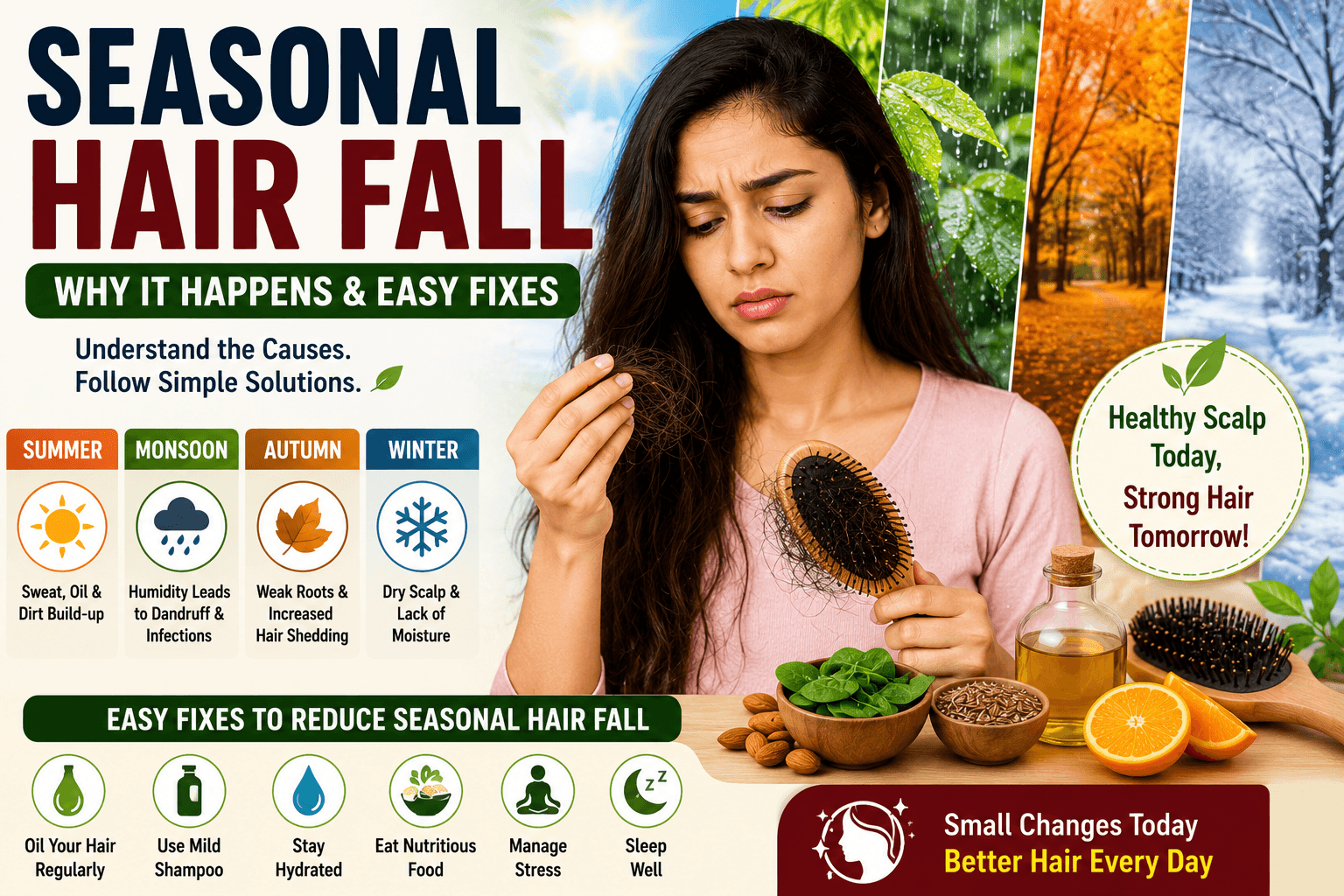
Seasonal Hair Fall: Causes and Easy Fixes
Many people notice more hair fall during weather changes. However, they often feel confused about the reason.
This problem is called seasonal hair fall. Therefore, understanding its causes can help protect your hair.
Because different seasons affect the scalp and hair in different ways.
What Is Seasonal Hair Fall?
Seasonal hair fall means temporary hair shedding during certain seasons.
For example, some people lose more hair during monsoon or winter.
As a result, hair may feel thinner for some time.
Why Seasonal Hair Fall Happens
Weather changes affect the scalp.
Additionally, humidity, dryness, sweat, and pollution can weaken hair roots.
Therefore, hair fall may increase during seasonal changes.
Common Causes of Seasonal Hair Fall
Let’s understand the main reasons clearly.
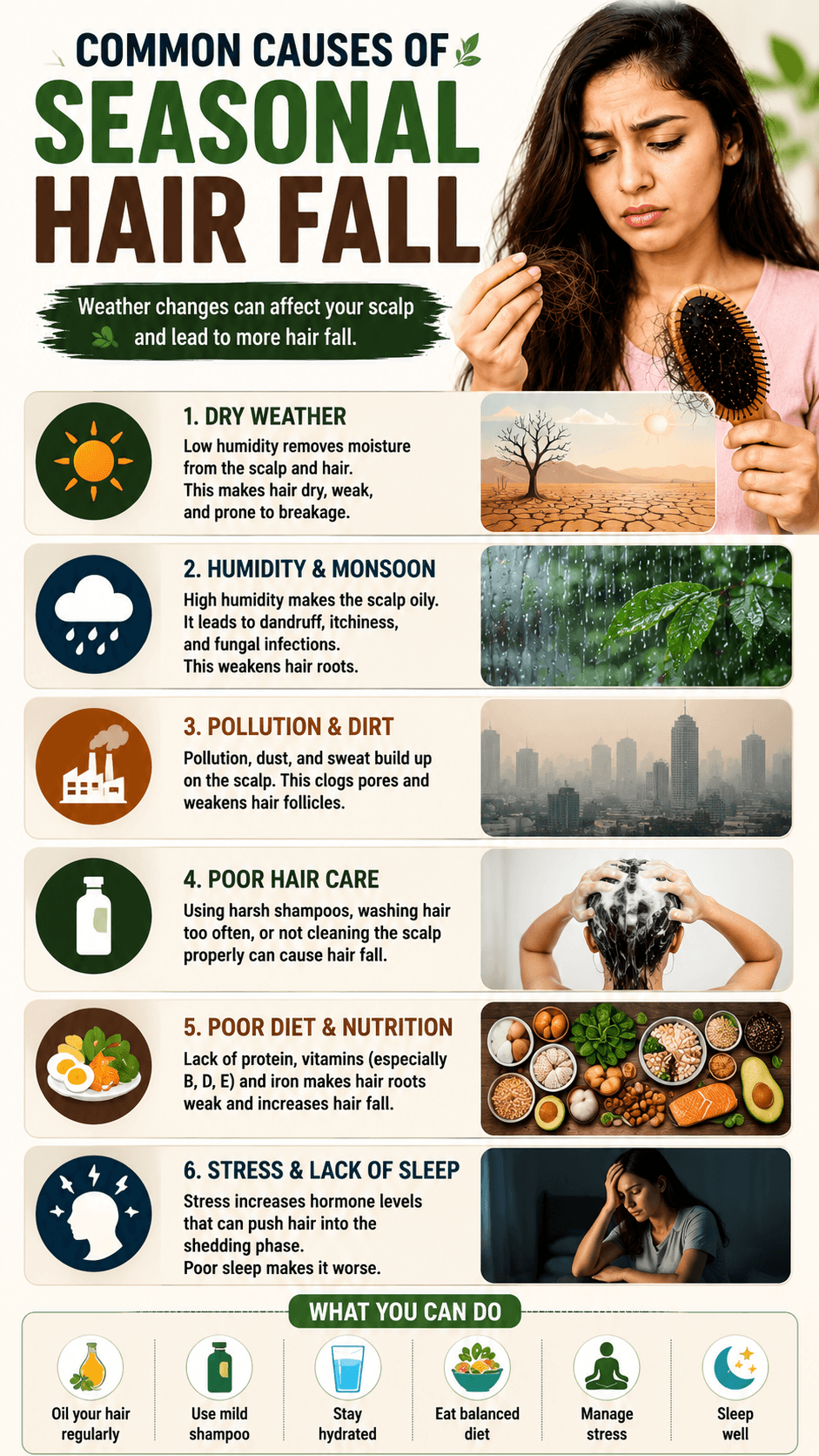
1. Dry Weather
Cold weather removes moisture from the scalp.
As a result, hair becomes dry and weak.
2. Excess Sweating
Summer heat increases sweating.
Therefore, scalp oil and dirt build up quickly.
3. Humidity During Monsoon
Humidity can make the scalp oily.
Moreover, fungal infections and dandruff may increase.
4. Poor Hair Care
Ignoring scalp cleaning can worsen hair fall.
Because dirt and oil block hair roots.
5. Nutritional Deficiency
Seasonal illnesses and poor diet affect hair health.
As a result, hair roots become weak.
Signs of Seasonal Hair Fall
Some signs are easy to notice.
- Hair fall increases suddenly
- More hair on pillow or comb
- Dry or itchy scalp
- Hair feels weak or rough
- Dandruff increases
Therefore, these signs may indicate seasonal hair fall.
Foods That Support Healthy Hair
Nutrition is very important for hair growth.
Include these foods:
- Green vegetables
- Fruits
- Nuts and seeds
- Protein-rich foods
- Plenty of water
As a result, hair becomes stronger naturally.
Easy Fixes for Seasonal Hair Fall
Simple habits can protect hair.
1. Oil Your Hair Properly
Hair oil helps keep the scalp moisturized.
However, avoid using too much oil.
2. Wash Hair Gently
Use mild shampoo according to your scalp type.
Therefore, scalp stays clean without damage.
3. Stay Hydrated
Water supports scalp health.
As a result, dryness reduces.
4. Avoid Excess Heat Styling
Heat tools can weaken hair further.
Because seasonal hair is already sensitive.
5. Reduce Stress
Stress can increase hair fall.
Therefore, relaxation and sleep are important.
Sleep and Hair Health
Sleep helps body repair and recovery.
However, poor sleep may increase stress and hair fall.
Therefore, proper rest supports healthy hair growth.
Oily Scalp vs Dry Scalp: Which Causes Hair Fall?
When to Consult a Doctor
If hair fall becomes severe or lasts for many months, consult a dermatologist.
Also, seek help if you notice bald patches or scalp infections.
Final Thoughts
Seasonal hair fall is usually temporary.
However, proper hair care is important during weather changes.
Healthy food, hydration, gentle hair care, and stress management can improve hair health naturally.
Stay patient and consistent for better results.