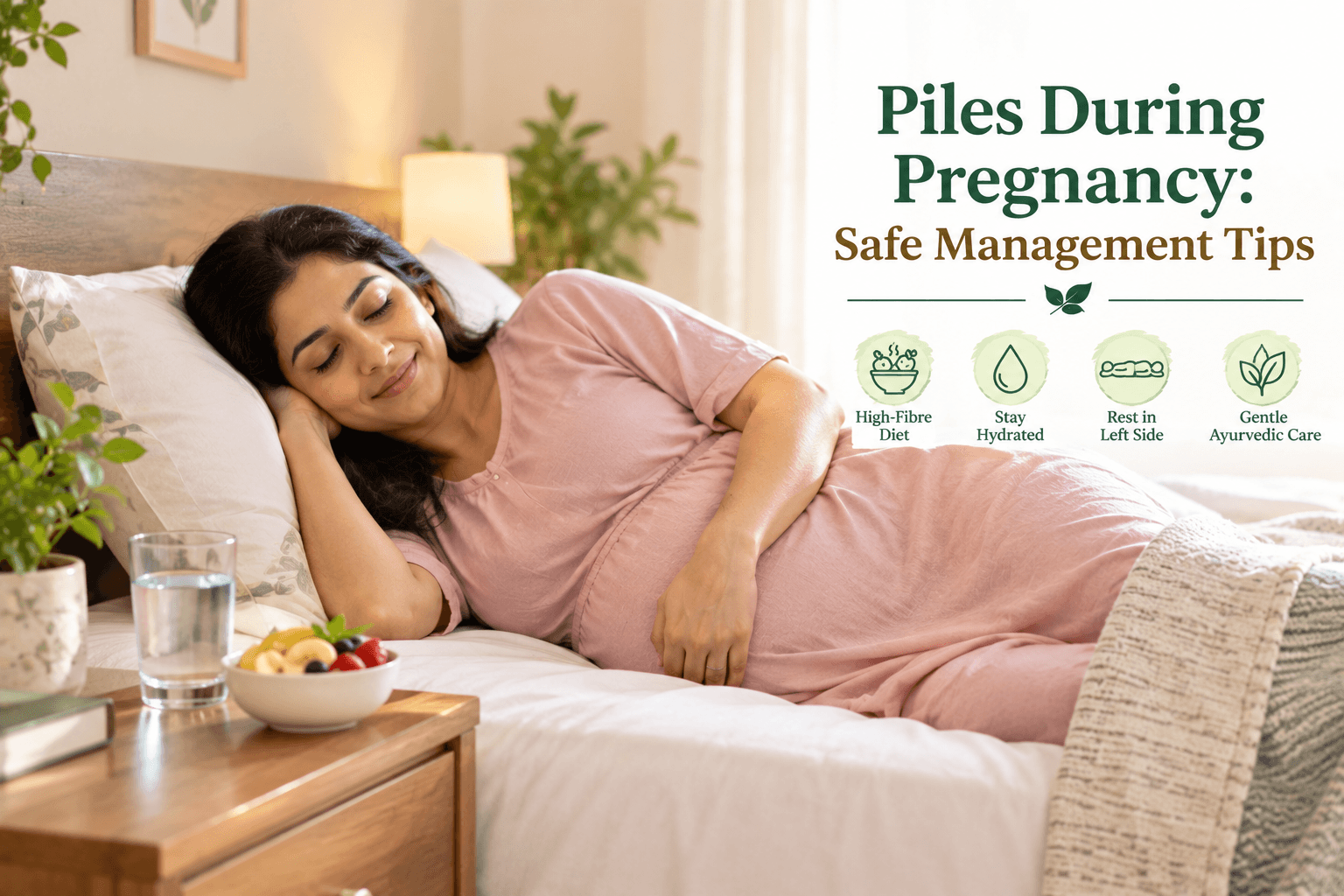
Quick Answer
Piles during pregnancy are extremely common, particularly in the third trimester, caused mainly by increased pressure on pelvic blood vessels, hormonal changes, and constipation. The safest management approach, according to research and colorectal surgery guidelines, is conservative: a high-fibre diet, plenty of fluids, regular gentle movement, and good bowel habits, alongside doctor-approved topical treatments if needed. Certain oral and topical treatments have been studied specifically in pregnant women and found to be safe and effective, though timing matters, with some options avoided in the first trimester specifically. Minimally invasive procedures like rubber band ligation are considered safe during pregnancy in more persistent cases, and even surgery is possible when genuinely needed. This article is for general education only — every treatment decision during pregnancy should be made with your obstetrician or a colorectal specialist, who can weigh your specific trimester, symptoms, and pregnancy health.
If you’re pregnant and have recently discovered piles, please know this first: you are far from alone, and this is one of the most common physical changes pregnancy brings. In this article, we’ll walk through piles during pregnancy in real depth — why they happen, what’s genuinely safe to try, what research says about treatment during this sensitive time, and what Ayurveda has traditionally offered for digestive comfort during pregnancy. Given how much this topic touches on both your comfort and your baby’s safety, we’ll be especially careful to separate general education from decisions that should always involve your doctor.
Just How Common Are Piles During Pregnancy?
Piles, or haemorrhoids, are genuinely one of the most frequently reported proctological concerns during pregnancy and the immediate postpartum period. Research consistently identifies pregnancy as a significant risk factor for developing haemorrhoids, with symptoms becoming particularly common in the third trimester, when the growing uterus places maximum pressure on pelvic structures. If you’re dealing with this, please don’t feel embarrassed or as though something has gone wrong with your pregnancy — this is a mechanical, hormonal reality that a large proportion of pregnant women experience, and it’s genuinely manageable in the vast majority of cases.
Why Piles During Pregnancy Happen: The Real Causes
Understanding why piles during pregnancy develop can help you feel less alarmed and more equipped to manage them. Several factors converge during this time:
1. Increased Pressure From the Growing Uterus
As your baby and uterus grow, particularly in the second and third trimesters, they place direct, increasing pressure on the pelvic veins, including those in the rectal area. This pressure slows blood return from this region, causing the veins to swell — the fundamental mechanism behind haemorrhoids.
2. Rising Progesterone Levels
Pregnancy hormones, particularly progesterone, relax smooth muscle throughout the body, including in the walls of blood vessels and the digestive tract. This relaxation contributes to vein swelling and also slows down digestion, which brings us to the next major factor.
3. Pregnancy-Related Constipation
Slower digestion, increased water absorption in the intestines, and sometimes iron supplements (commonly prescribed during pregnancy) can all contribute to constipation. Straining during bowel movements is one of the most significant, direct contributors to piles, making this connection genuinely important to address.
4. Increased Blood Volume
Total blood volume increases substantially during pregnancy to support the growing baby, which means more blood flow through the pelvic venous system overall, adding to the pressure already caused by the growing uterus.
5. Reduced Physical Activity
As pregnancy progresses, particularly in the third trimester, many women naturally reduce physical activity due to fatigue, discomfort, or simply the physical demands of carrying a growing baby, which can further contribute to constipation and reduced circulation.
6. The Pushing Phase of Labour
For many women, piles either develop or noticeably worsen specifically during the pushing phase of labour and delivery, due to the intense, sustained pressure involved, which is why piles are also extremely common in the immediate postpartum period, not just during pregnancy itself.
Common Signs of Piles During Pregnancy
Recognising these signs can help you address them early, rather than enduring unnecessary discomfort:
- Itching or irritation around the anus
- Discomfort or a feeling of fullness in the rectal area
- Bright red bleeding during or after bowel movements
- A visible, soft lump near the anal opening (with external piles)
- Discomfort while sitting for extended periods
- A burning sensation, particularly after bowel movements
While these signs are usually related to straightforward piles, any rectal bleeding during pregnancy should be mentioned to your doctor at your next visit, simply to confirm the cause and rule out anything else that might need separate attention.
How Piles During Pregnancy Are Typically Diagnosed
In most cases, your doctor or midwife can identify piles through a simple conversation about your symptoms and, if needed, a brief physical examination. This is a routine, common part of prenatal care, and doctors who care for pregnant women see this condition regularly — there’s genuinely no need to feel awkward bringing it up. In some cases, additional imaging or examination may be recommended if symptoms are unusual or don’t fit the typical pattern, but this is uncommon for straightforward pregnancy-related piles.
Safe Management Tips: The Conservative, First-Line Approach
Here’s genuinely good news: colorectal surgery guidelines and pregnancy-specific research consistently identify conservative management — meaning diet, lifestyle, and non-invasive comfort measures — as the appropriate first-line approach for piles during pregnancy, reserved for the vast majority of cases. Guidelines from bodies including the Association of Colon and Rectal Surgeons of India specifically recommend this conservative approach as the foundation of pregnancy piles management.
1. Increase Dietary Fibre Significantly
This is genuinely one of the most well-supported interventions available. A Cochrane review of multiple randomised controlled trials comparing fibre supplementation to no fibre found a 53% reduction in the risk of persistent piles symptoms in the fibre group, along with a significant reduction in bleeding. Good sources for pregnancy include:
- Whole grains like oats, brown rice, and whole wheat
- Fruits, particularly papaya, pears, and figs
- Vegetables, especially leafy greens
- Legumes like dal, chickpeas, and beans
- Flaxseeds and chia seeds (in moderation, with plenty of water)
Increase fibre gradually rather than all at once, since a sudden large increase can cause bloating and discomfort, which is particularly unwelcome during pregnancy when digestive comfort is already a concern.
2. Stay Genuinely Well-Hydrated
Adequate fluid intake is essential for fibre to work effectively and for maintaining soft, easy-to-pass stools. Pregnancy increases fluid needs generally, so this fits naturally into your broader prenatal care, not as an additional burden.
3. Avoid Straining and Practice Good Toilet Habits
Research consistently links straining and prolonged time on the toilet to higher rates of symptomatic piles. Practical tips include:
- Never force or rush a bowel movement
- Respond to the urge to go promptly, rather than delaying it
- Avoid spending extended time sitting on the toilet, including habits like reading or using your phone there
- Consider a footstool to slightly elevate your knees while on the toilet, which can ease the angle of passage
4. Stay Physically Active (As Your Doctor Advises)
Gentle, pregnancy-appropriate movement, such as walking, prenatal yoga, or swimming, supports healthy digestion and circulation. Always follow your doctor’s specific guidance on safe exercise for your individual pregnancy and trimester.
5. Sleep and Rest on Your Left Side
This is a specific, genuinely practical tip found in pregnancy-focused proctology guidelines: lying on your left side can help relieve pressure on the pelvic veins and may ease piles symptoms, alongside its other well-known pregnancy benefits for circulation.
6. Use Cold Compresses for Comfort
Local cooling measures are specifically mentioned in research on pregnancy proctological care as a safe, simple way to ease discomfort and reduce swelling.
7. Consider Warm Sitz Baths
A warm, shallow soak for 10-15 minutes can offer genuine comfort, though as with piles generally, formal research on healing benefits (versus symptomatic comfort) remains limited. It carries essentially no risk during pregnancy and is widely recommended by doctors as a comfort measure.
8. Wear Loose, Breathable Clothing
Reduces additional pressure and irritation to an already sensitive area.
9. Practice Gentle, Appropriate Hygiene
Use plain water or gentle, fragrance-free cleansing rather than harsh wipes, and pat the area dry gently rather than rubbing.
Medical Treatment Options: What Research Says About Safety During Pregnancy
Beyond conservative measures, research has specifically examined medical treatments in pregnant women, since safety during pregnancy can’t simply be assumed from general population data. This section is genuinely educational — the specific choice, timing, and dosing of any treatment should always be determined by your doctor, who can weigh your trimester and individual health picture.
Topical Treatments
Research has specifically examined topical treatments in pregnant women. A study on a combined topical treatment found it provided effective symptom control for pain, itching, and swelling in late pregnancy, with researchers noting it was safe in late pregnancy without adverse fetal effects. Guidelines note that certain topical treatments are considered safe and effective specifically in late pregnancy, though your doctor is the right person to advise on what’s appropriate for your specific stage.
Oral Flavonoid-Based Treatments
A notable area of pregnancy-specific research involves oral flavonoid treatments (plant-derived compounds believed to support blood vessel wall strength and lymphatic drainage). A 2024 prospective multicenter study specifically examining flavonoid-based oral and topical treatment in pregnant women with piles found it effective and well-tolerated. Guidelines specifically note that this category of treatment is considered safe and effective in pregnancy, with the specific exception of the first trimester, reflecting the general medical principle of extra caution during the earliest, most developmentally sensitive stage of pregnancy.
Fibre Supplements and Stool Softeners
Research specifically notes that laxatives, stool softeners, and fibre supplements are generally considered safe for use during pregnancy, making them a reasonable option your doctor might suggest alongside dietary changes if diet alone isn’t providing enough relief.
Pain Relief
Pain management during pregnancy requires particular care, since medication safety can vary meaningfully by trimester. This is genuinely not an area for self-directed decisions — your doctor will determine what, if any, pain relief is appropriate based on your specific stage of pregnancy and health history. Please don’t take any pain medication for piles discomfort during pregnancy without first checking with your doctor, even options you might normally consider “safe” outside of pregnancy.
Minimally Invasive Procedures
For more persistent or severe cases that don’t respond to conservative management, research indicates that rubber band ligation (a minimally invasive procedure) is considered safe and effective during pregnancy. This reflects genuine medical reassurance: even if conservative measures aren’t fully resolving your symptoms, there are established, studied options beyond simply “waiting it out,” should your doctor determine this is appropriate for you.
Surgical Treatment: A Last Resort, But a Safe One When Needed
For thrombosed external haemorrhoids (a particularly painful, acute form of piles) or other severe cases, research has directly compared surgical and conservative treatment in pregnant women, finding that both approaches were safe and effective, with meaningful improvement in pain and quality of life measures in both groups. Separately, research notes that conventional haemorrhoidectomy (surgical removal) is considered safe during pregnancy without risk to the fetus, when genuinely indicated. This is reassuring context: while surgery is reserved for more severe or unresponsive cases, it is a studied, safe option when your doctor determines it’s the right path, rather than something to fear as inherently dangerous during pregnancy.
Trimester-Specific Considerations
While your doctor will give you guidance specific to your pregnancy, general patterns worth understanding include:
- First trimester — Extra caution is generally applied to any medical treatment during this period, given the sensitivity of early fetal development. Conservative, dietary, and lifestyle measures are typically emphasised most strongly here, and certain oral treatments (like flavonoids) are specifically avoided during this window based on current guidance.
- Second trimester — Often considered a relatively more flexible window for certain treatments if genuinely needed, though your doctor will still guide any specific decision.
- Third trimester — Piles symptoms are most common during this stage, given maximum pressure from the growing uterus. Several treatments, including certain topical options, have specifically been studied and found safe and effective in late pregnancy.
This general pattern underscores why an individualised conversation with your doctor, rather than generic advice, genuinely matters here — your specific trimester meaningfully shapes what’s appropriate.
Piles After Delivery: What to Expect
It’s worth knowing that piles can develop or worsen specifically during labour, due to the intense pressure of pushing, and this is extremely common in the immediate postpartum period. The good news is that for many women, piles that developed during pregnancy or delivery improve significantly in the weeks following birth, as pressure on the pelvic veins resolves and hormone levels return toward baseline. The same conservative measures — fibre, hydration, avoiding straining, and gentle activity as your body recovers — remain the foundation of postpartum management as well. If breastfeeding, it’s worth knowing that research notes oral flavonoid treatments haven’t been as thoroughly confirmed safe during breastfeeding as during pregnancy, so this is genuinely worth a specific conversation with your doctor if symptoms persist after delivery.
The Ayurvedic Perspective on Digestive Comfort During Pregnancy
Ayurveda has traditionally paid close attention to the pregnant body’s changing needs, with an entire body of guidance known as “Garbhini Paricharya,” or care during pregnancy. While piles specifically (Arsha in Ayurvedic terminology) require careful, conservative approaches during pregnancy just as in modern medicine, Ayurveda’s broader dietary and lifestyle wisdom for this life stage offers a genuinely gentle, complementary layer of support.
Ayurvedic Dietary Wisdom for Pregnancy Digestive Comfort
- Warm, easily digestible meals — Traditionally emphasised throughout pregnancy to support gentle, consistent digestion.
- Ghee in moderate amounts — Traditionally valued during pregnancy for its believed role in supporting smooth digestion and easier bowel movements.
- Fibre-rich foods like whole grains and fruits — Naturally aligning with modern dietary advice for pregnancy-related constipation and piles.
- Avoiding excessive dry, cold, or heavy foods — Traditionally believed to support balanced digestion during pregnancy.
- Regular, gentle mealtimes — Reflecting Ayurveda’s broader emphasis on consistent routine to support digestive balance.
A Genuinely Important Caution
It’s worth being especially clear here: while Ayurveda offers valuable dietary and lifestyle wisdom for pregnancy generally, herbal supplements and remedies require particular caution during pregnancy, since many herbs haven’t been studied for safety in pregnant women, and some are specifically contraindicated. Any Ayurvedic herbal remedy, including those sometimes traditionally mentioned for piles, should only be used during pregnancy with explicit guidance from a doctor or a qualified Ayurvedic practitioner who is fully informed about your pregnancy. Dietary and lifestyle wisdom is generally the safest, most appropriate way to draw on Ayurvedic tradition during this time, rather than herbal formulations taken without professional guidance.
Common Myths About Piles During Pregnancy
It’s worth addressing a few misconceptions that can cause unnecessary worry:
- Myth: Piles mean something is wrong with your pregnancy. In reality, piles are a common mechanical and hormonal consequence of normal pregnancy changes, not a sign of a pregnancy complication.
- Myth: You must simply endure piles discomfort until after delivery. In reality, multiple safe, studied treatment options exist for pregnant women, from dietary changes to topical treatments to procedures, when genuinely needed.
- Myth: All piles treatments are unsafe during pregnancy. In reality, research has specifically studied several treatment categories in pregnant women and found them safe and effective, though timing and specific choice should always be guided by your doctor.
- Myth: Piles always require surgery. In reality, the vast majority of pregnancy-related piles respond well to conservative, dietary, and lifestyle measures alone.
When to Contact Your Doctor Promptly
While most piles during pregnancy are manageable with conservative measures, contact your doctor promptly if you experience:
- Heavy or persistent rectal bleeding
- Severe pain, particularly with a hard, very tender lump (which could suggest a thrombosed haemorrhoid)
- Signs of infection, such as fever
- Symptoms that don’t improve despite consistent conservative measures over a week or two
- Any rectal bleeding you haven’t yet discussed with your doctor, simply to confirm the cause
Your prenatal care team would genuinely rather you mention this discomfort than suffer through it unnecessarily — piles are a routine, common part of pregnancy care they’re well equipped to help you manage.
Building a Sustainable, Comfortable Approach
Managing piles during pregnancy is genuinely about layering simple, safe habits consistently, rather than searching for one dramatic fix. Start with fibre and hydration, add gentle movement as your doctor advises, practice good bowel habits, and don’t hesitate to loop in your doctor if symptoms persist or worsen. This combination, grounded in genuine research on safety and effectiveness during pregnancy specifically, offers a reassuring, practical path through this common, temporary discomfort.
Frequently Asked Questions
1. Are piles during pregnancy dangerous for my baby?
No, piles themselves are a common, localised condition related to pressure and hormonal changes, and they don’t pose a direct risk to your baby. That said, always mention any rectal bleeding to your doctor simply to confirm the cause, as a routine part of good prenatal care.
2. What is the safest way to treat piles in early pregnancy?
Conservative measures, dietary fibre, hydration, and good bowel habits, are considered the safest first approach at any stage of pregnancy, with particular emphasis in the first trimester, when doctors generally apply extra caution around other treatments. Always discuss any additional treatment with your doctor.
3. Will piles from pregnancy go away after delivery?
For many women, piles that developed during pregnancy improve significantly in the weeks following delivery as pelvic pressure resolves. Continuing conservative habits like adequate fibre and hydration supports this recovery, though persistent symptoms should be discussed with your doctor.
4. Can I use over-the-counter piles cream while pregnant?
Some topical treatments have been specifically studied and found safe in late pregnancy, but you should always check with your doctor before using any over-the-counter product during pregnancy, since appropriateness can depend on your specific trimester and health history.
5. Is it normal to develop piles for the first time during labour?
Yes, this is genuinely common. The intense, sustained pressure of the pushing phase during labour frequently causes piles to develop or worsen, even in women who had no symptoms earlier in pregnancy.
A Gentle Note Before You Go
Piles during pregnancy are common, temporary, and genuinely manageable, and there’s real comfort in knowing that research has specifically studied safe, effective options for this exact stage of life. If you’re looking for gentle, everyday support alongside your doctor’s guidance, Healthywe’s range of digestive care herbal supplements is made using 100% natural, vegetarian ingredients rooted in traditional Ayurvedic wisdom — though as always during pregnancy, please check with your doctor before adding any new supplement to your routine.
As always, lifestyle changes and herbal supplements are meant to support your overall wellness, not replace medical care, and this is especially true during pregnancy. Please consult your doctor, obstetrician, or a qualified Ayurvedic practitioner for proper diagnosis and guidance, and before starting, stopping, or combining any treatment during pregnancy.
Explore our natural wellness range at www.healthywewellness.com/shop.