Why a Proper Piles Diet Plan Matters
A well-structured Piles Diet Plan plays a major role in managing hemorrhoids naturally. Many people focus only on medicines. However, diet directly affects bowel movement. When digestion improves, pressure on rectal veins reduces. As a result, pain and bleeding decrease.
Without a proper Piles Diet Plan, constipation becomes frequent. Consequently, straining during stool passing increases. Therefore, choosing the right foods is essential for recovery.
How a Piles Diet Plan Supports Healing
A smart Piles Diet Plan works in three main ways.
First, it softens stool.
Second, it improves gut health.
Third, it reduces inflammation.
Because digestion becomes smoother, bowel movement causes less strain. Moreover, regular fiber intake prevents recurrence. In addition, proper hydration supports faster healing.
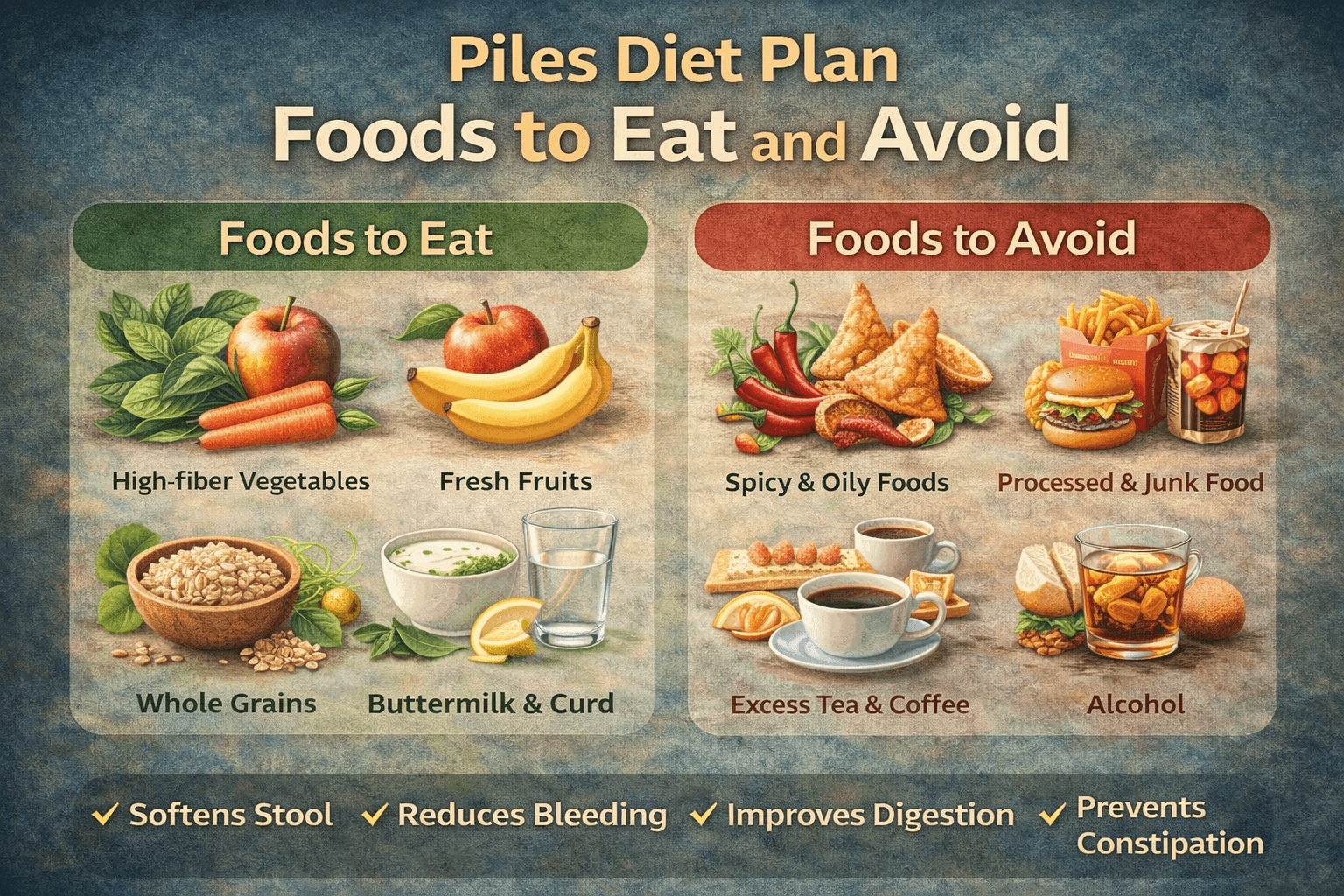
Best Foods to Include in a Piles Diet Plan
Healthy food choices make a visible difference. Therefore, focus on natural and fiber-rich options.
1. High-Fiber Vegetables
Vegetables improve digestion effectively. For example, spinach, carrots, and bottle gourd support bowel movement. Additionally, leafy greens help prevent constipation.
2. Fresh Fruits
Fruits contain natural fiber and water. Papaya, apples, pears, and bananas are excellent choices. As a result, stool becomes softer and easier to pass.
3. Whole Grains
Switching to whole grains is important. Brown rice, oats, and whole wheat improve gut balance. Consequently, digestive pressure decreases.
4. Buttermilk and Curd
Probiotics support healthy bacteria in the gut. Therefore, daily consumption improves digestion naturally.
5. Warm Water
Drinking warm water improves bowel activity. Moreover, it prevents hard stool formation.
Foods to Avoid in a Piles Diet Plan
Certain foods worsen piles symptoms. Hence, avoiding them is necessary.
Spicy and Oily Foods
Spicy food increases irritation. Consequently, burning sensation may increase.
Processed and Junk Food
Packaged food contains low fiber. As a result, constipation becomes common.
Excess Tea and Coffee
Too much caffeine dehydrates the body. Therefore, stool becomes dry and hard.
Alcohol
Alcohol weakens digestion. In addition, it increases inflammation.
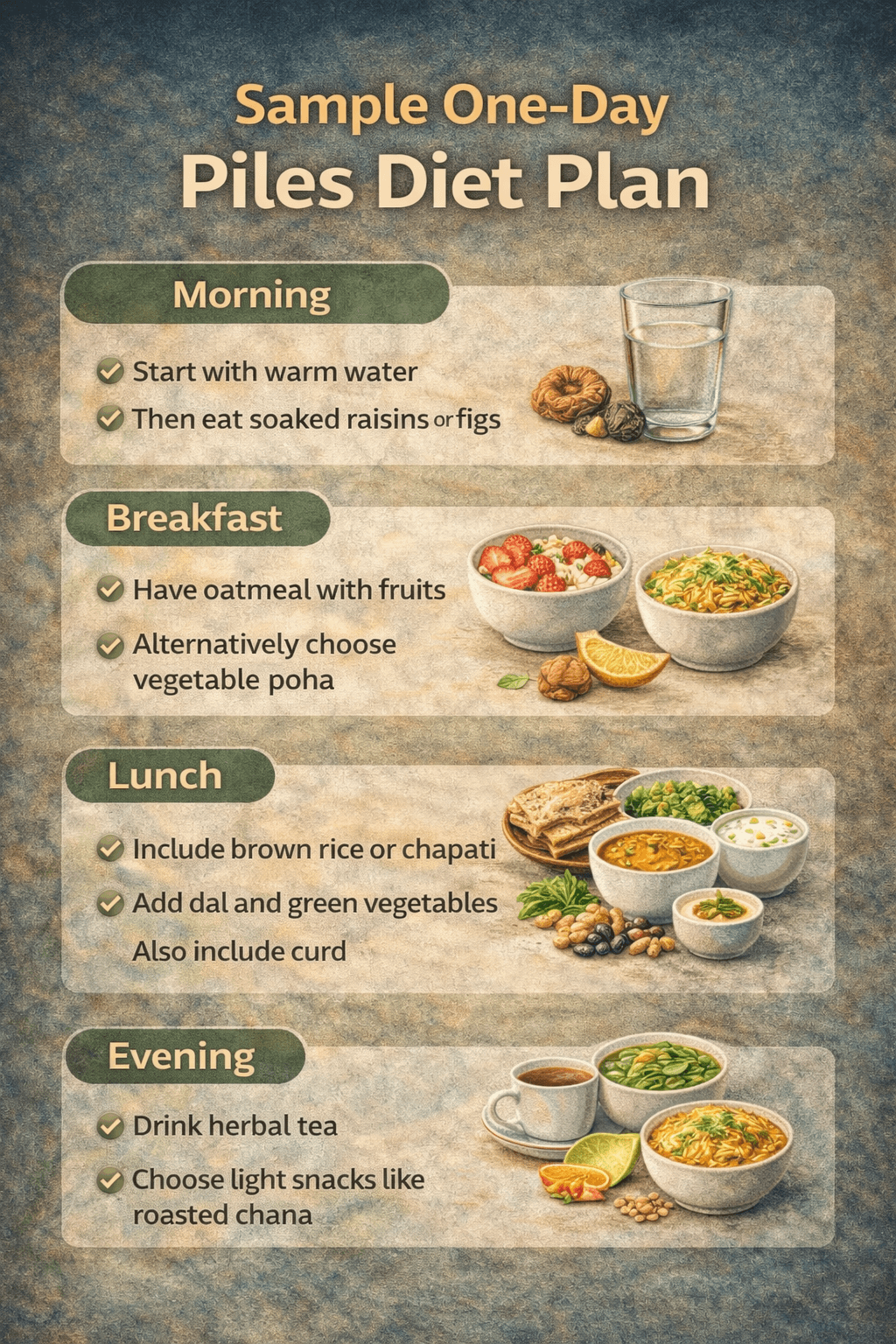
Sample One-Day Piles Diet Plan
Following a structured Piles Diet Plan makes daily choices easier.
Morning
Start with warm water.
Then eat soaked raisins or figs.
Breakfast
Have oatmeal with fruits.
Alternatively, choose vegetable poha.
Lunch
Include brown rice or chapati.
Add dal and green vegetables.
Also include curd.
Evening
Drink herbal tea.
Choose light snacks like roasted chana.
Dinner
Keep dinner light.
Vegetable soup or khichdi works well.
Hydration and Fiber Balance in a Piles Diet Plan
Water intake is equally important. Without proper hydration, fiber cannot work effectively. Therefore, drink 8–10 glasses daily. Moreover, include natural fluids like coconut water.
Balancing fiber gradually is also important. Too much fiber suddenly may cause bloating. Hence, increase intake slowly.
Lifestyle Tips Along With Piles Diet Plan
Diet alone is not enough. However, combining it with simple habits improves results.
-
Walk daily for 20 minutes
-
Avoid long sitting hours
-
Maintain fixed meal timings
-
Practice stress control
-
Do not delay bowel movement
Small changes create long-term comfort.
How Long Should You Follow a Piles Diet Plan?
Consistency is key. While some improvement appears in a few weeks, long-term habits prevent recurrence. Therefore, maintain healthy eating even after symptoms reduce.
A balanced Piles Diet Plan supports overall digestive wellness. Additionally, it protects rectal veins from future strain.
When to Seek Medical Advice
Mild symptoms improve with diet changes. However, consult a doctor if:
-
Bleeding increases
-
Severe pain develops
-
Dizziness occurs
-
Symptoms persist beyond two weeks
Early action prevents complications.
A structured Piles Diet Plan helps reduce pain, bleeding, and constipation naturally. Moreover, proper food choices improve digestive balance. When combined with hydration and exercise, results become stronger.
Therefore, following a balanced diet is one of the safest and most effective ways to manage piles. Small dietary changes today can prevent discomfort tomorrow.