Quick Answer
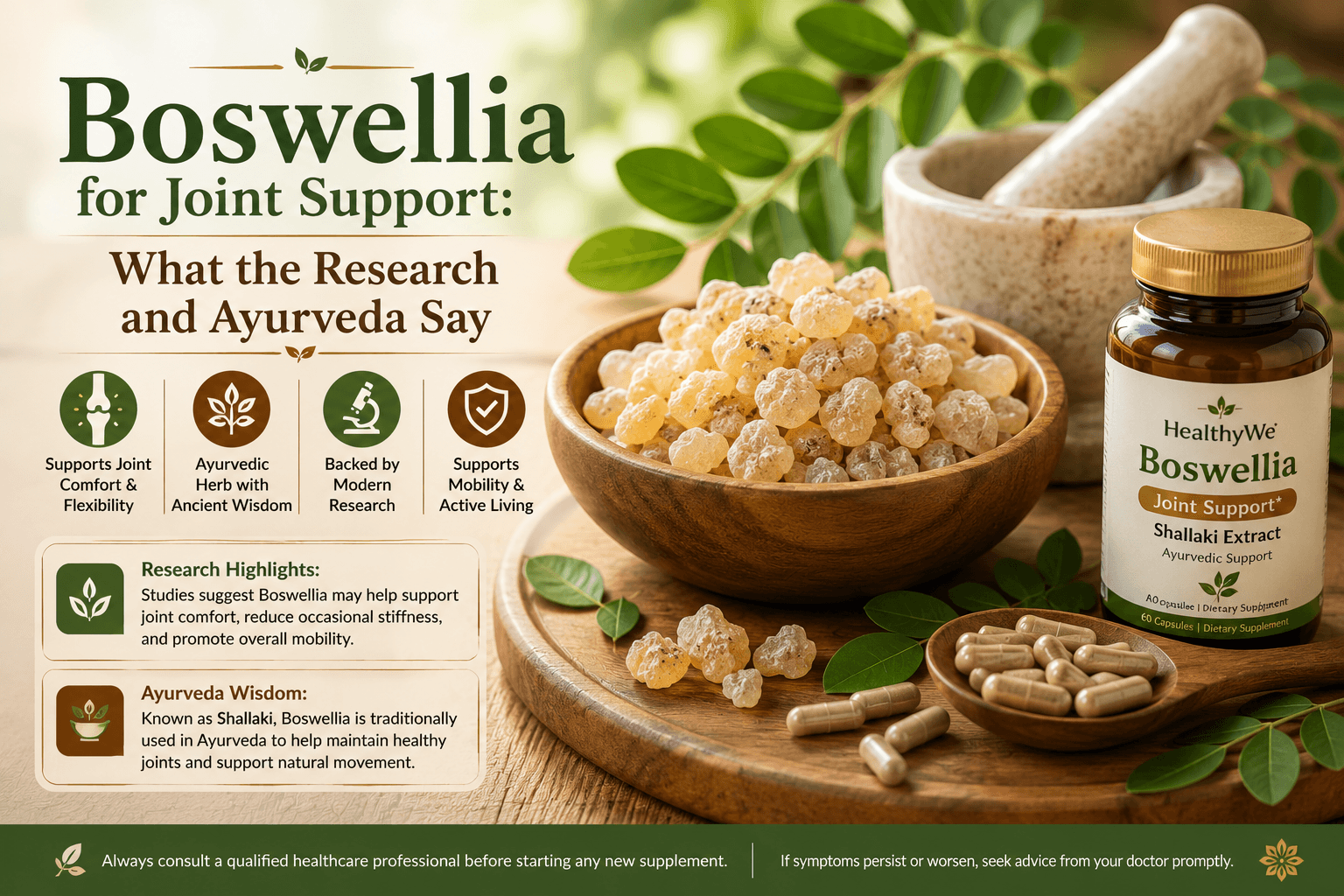
Boswellia for joint support refers to the traditional and increasingly researched use of Boswellia serrata (commonly known as Shallaki or Indian Frankincense) to help support joint comfort, flexibility, and mobility. Ayurveda has used Boswellia for centuries as part of its approach to joint health, and a number of modern clinical studies have also explored its role in supporting comfort in people with joint concerns like osteoarthritis. While the research is encouraging, Boswellia is best understood as a supportive addition to a healthy lifestyle, not a replacement for medical treatment. Always consult your doctor before starting any new supplement, especially if you’re on prescribed medication.
If you’ve been researching natural options for joint discomfort, chances are you’ve come across Boswellia for joint support somewhere along the way. In this article, we’ll look at what Boswellia actually is, what Ayurveda has traditionally said about it, what modern research has found, and how it fits into an overall approach to joint wellness.
What Is Boswellia?
Boswellia serrata is a tree native to India, and its resin — often called Shallaki in Ayurveda or Indian Frankincense in English — has been used in traditional medicine for thousands of years. The resin is extracted, purified, and processed into standardized extracts that are commonly used in modern joint support supplements today.
Boswellia for joint support has become one of the most widely discussed natural ingredients in this space, largely because it bridges traditional Ayurvedic use with a growing body of modern scientific interest.
Common Causes of Joint Discomfort That Lead People to Explore Boswellia
People typically start looking into Boswellia for joint support when they experience ongoing joint concerns linked to factors such as:
- Age-related wear and tear — Natural thinning of joint cartilage over time, often associated with osteoarthritis.
- Sedentary lifestyle — Reduced movement can weaken supporting muscles and stiffen joints.
- Excess body weight — Added pressure on weight-bearing joints like the knees and hips.
- Repetitive strain — Frequent kneeling, squatting, or overuse from daily activities or occupation.
- Seasonal changes — Many people notice increased stiffness during colder months.
- Family history — A genetic tendency toward joint concerns, especially with age.
Understanding these common causes helps explain why Boswellia for joint support has become such a widely searched topic among people looking for natural, non-invasive options alongside their regular care.
Signs of Joint Discomfort Worth Paying Attention To
Before considering any supplement, it helps to recognise the signs that typically prompt people to look into joint support options:
- Stiffness, especially in the morning or after sitting for long periods
- A dull ache that worsens with activity like walking or climbing stairs
- Mild swelling around a joint
- Reduced flexibility or range of motion
- A grinding or clicking sensation while moving the joint
If you experience severe pain, sudden swelling, or symptoms that interfere with daily life, it’s important to consult a doctor for proper diagnosis before exploring any supplement, including Boswellia.
What Does the Research Say About Boswellia for Joint Support?
Over the past two decades, Boswellia serrata extract has become one of the more studied natural ingredients in the joint health space. Several randomized, placebo-controlled clinical studies conducted in India and internationally have explored standardized Boswellia extracts in people with knee osteoarthritis, generally assessing outcomes like pain scores, stiffness, and joint function using recognised medical assessment tools.
Broadly, this body of research has reported that certain standardized Boswellia extracts may help support joint comfort, function, and mobility over study periods ranging from a few days to several months, with a generally favourable safety profile in the populations studied. Some studies have also looked at Boswellia’s traditionally recognised anti-inflammatory properties at a mechanistic level, exploring how its active compounds, known as boswellic acids, interact with inflammatory pathways in the body.
It’s worth noting that research in this area, while promising, is still evolving — study sizes have generally been modest, and results can vary depending on the specific extract and dosage used. As with any supplement, Boswellia for joint support should be viewed as a potential complement to medical care, not a replacement for it. Speaking with your doctor can help you understand whether it may be a suitable addition to your routine.
The Ayurvedic Perspective on Boswellia (Shallaki)
In Ayurveda, Boswellia is known as Shallaki and has traditionally been used to help support Vata balance, the dosha most closely associated with movement, joints, and mobility in the body. Ayurvedic texts have long described Shallaki as a herb traditionally used to help support joint comfort, flexibility, and overall musculoskeletal wellness.
Ayurveda typically uses Shallaki alongside other supportive practices rather than as a standalone remedy, including:
- Abhyanga (warm oil massage) — Traditionally used to help lubricate joints and calm aggravated Vata.
- Warm, nourishing foods — Recommended to support Vata balance, especially in colder months.
- Gentle, joint-friendly movement — Practices like yoga and mindful stretching to maintain flexibility.
- Complementary herbs — Such as Guggul and Ashwagandha, often combined with Shallaki in traditional formulations.
This holistic approach reflects Ayurveda’s broader philosophy — that joint comfort is best supported through a combination of herbs, diet, movement, and daily routine, rather than any single ingredient alone.
How Boswellia Is Typically Used
Boswellia for joint support is commonly available as standardized extract capsules, often measured by their concentration of boswellic acids, the key active compounds believed to be responsible for its traditional benefits. It’s also sometimes included in Ayurvedic herbal blends alongside other joint-supportive ingredients.
Because supplement quality and standardization can vary significantly between brands, it’s a good idea to choose products that clearly mention their extract standardization and are manufactured by reputable companies following good manufacturing practices.
Lifestyle Tips to Complement Boswellia for Joint Support
Boswellia works best as part of a broader approach to joint wellness. Here are some practical habits to consider alongside it:
- Stay consistently active — Low-impact exercises like walking, swimming, or cycling help maintain joint flexibility.
- Strengthen supporting muscles — Simple strength exercises help take pressure off the joints themselves.
- Maintain a healthy body weight — This reduces daily strain on weight-bearing joints.
- Eat an anti-inflammatory-friendly diet — Include turmeric, leafy greens, and healthy fats like nuts and seeds.
- Stay warm in colder months — This may help ease Vata-related stiffness, according to Ayurvedic principles.
- Prioritise good sleep — Rest supports the body’s natural recovery processes, including for joints.
Combining these habits with a herb like Boswellia may help provide more well-rounded support for long-term joint comfort.
Things to Keep in Mind Before Trying Boswellia
While Boswellia is generally well tolerated, a few points are worth keeping in mind:
- Always choose a standardized, good-quality extract from a reputable brand.
- Inform your doctor if you’re on any prescribed medication, especially blood thinners or medication for chronic conditions, before starting Boswellia.
- Pregnant or breastfeeding women should consult a doctor before use.
- Boswellia is a supportive supplement, not a treatment, and should not replace prescribed medical care.
Frequently Asked Questions
1. Is Boswellia effective for joint pain?
Several clinical studies suggest that standardized Boswellia extracts may help support joint comfort and function in people with joint concerns like osteoarthritis, though individual results can vary. It’s best used alongside guidance from your doctor.
2. Is Boswellia the same as Shallaki?
Yes, Shallaki is the traditional Ayurvedic name for Boswellia serrata, and it has been used in Ayurvedic medicine for centuries to help support joint health and mobility.
3. Can Boswellia be taken with other joint supplements?
Boswellia is often combined with other traditional herbs like Guggul or Ashwagandha in Ayurvedic formulations. However, it’s best to consult a doctor or Ayurvedic practitioner before combining supplements, especially if you’re managing an existing health condition.
A Gentle Note Before You Go
Boswellia for joint support brings together centuries of Ayurvedic tradition with a growing body of modern research, making it one of the more well-rounded natural options for people exploring joint wellness. If you’re looking to add gentle, everyday support to your routine, Healthywe’s range of joint support herbal supplements is made using 100% natural, vegetarian ingredients rooted in traditional Ayurvedic wisdom.
As always, herbal supplements are meant to support your overall wellness, not replace medical care. Please consult your doctor or an Ayurvedic practitioner for proper diagnosis, and before making any changes to a prescribed treatment.
Explore our natural wellness range at www.healthywewellness.com/shop.