Quick Answer
The hair fall and nutrition link is real, but it is more specific than most supplement ads suggest. Your hair grows from follicles that sit in your scalp skin, so the same things that keep your skin healthy, including enough iron, protein, zinc, vitamin D, and B vitamins, also support hair. Research shows that low iron stores (low ferritin) are the most common nutritional factor linked to diffuse hair shedding, especially in women, and that zinc and vitamin D deficiency are also associated with hair loss. But supplements mainly help when you are actually low in a nutrient. Reviews find little evidence that extra biotin or other vitamins improve hair in people whose levels are already normal. Hair fall also has many non-nutritional causes, such as stress, thyroid problems, hormones, and genetics. The sensible path is to eat a balanced, protein-rich diet, ask your doctor to check the blood tests that matter, and see a dermatologist if shedding is heavy, sudden, patchy, or lasting more than a few months. This is general wellness information, not medical advice.
Finding more hair on your pillow, in the shower drain, or on your comb can be upsetting, and the internet is full of quick fixes. The reassuring truth is that hair shedding is common, often temporary, and frequently linked to things you can understand and address, including what is on your plate. In this article we will explain why hair and skin are so closely connected, how the hair growth cycle works, which nutrients have real evidence behind them, which popular claims are exaggerated, how to build a hair-friendly Indian diet, when to see a doctor, and what Ayurveda has traditionally taught about hair and scalp care.
Hair Is Part of Your Skin
It helps to start with a simple fact that is easy to overlook: hair is not a separate system from your skin. Each hair grows out of a tiny structure called a follicle, which sits in the skin of your scalp. Follicles are supplied by small blood vessels, surrounded by oil glands, and constantly renewed by dividing cells. In other words, your scalp is skin, and your hair follicles are miniature organs within it.
This is the skin-hair connection. When your skin is well nourished, well hydrated, and free from inflammation, your follicles tend to function better. When your body is short of key nutrients, under stress, or dealing with hormonal changes, you may notice it in both places at once: dull, dry, or flaky skin, brittle nails, and thinning or shedding hair. Many of the nutrients involved are the same, which is why the advice for glowing skin and healthy hair overlaps so much.
Because follicles are among the faster-dividing tissues in the body, they can be sensitive to shortages. When resources are limited, the body prioritises vital organs, and hair, which is not essential for survival, can be one of the first places where a nutritional gap shows up.
The Hair Growth Cycle in Simple Terms
Hair does not grow continuously. Each follicle cycles through three main phases:
- Anagen (growth phase): The active phase, lasting several years, during which the hair keeps growing. Most of your scalp hairs are in this phase at any time.
- Catagen (transition phase): A short phase lasting a few weeks, when growth stops and the follicle shrinks.
- Telogen (resting phase): A resting period of a few months, after which the old hair is shed and a new one begins to grow.
Because follicles are at different stages, some hair is always being shed. Losing a certain number of hairs each day is normal, and a commonly cited range is roughly 50 to 100 strands. You may notice more on days you wash or brush your hair, simply because loosened hairs come out then. The concern begins when shedding is clearly more than usual, goes on for weeks, or leads to visible thinning.
Telogen Effluvium: The Shedding Pattern Linked to Nutrition
The most common nutrition-related pattern is called telogen effluvium. It happens when a larger number of hairs than usual shift early into the resting phase and are then shed. It is typically a diffuse shedding over the whole scalp rather than a bald patch, and it usually begins two to three months after a trigger. Triggers include severe illness or fever, surgery, childbirth, sudden weight loss or crash dieting, major emotional stress, certain medicines, and nutritional deficiencies. The encouraging part is that telogen effluvium is usually temporary once the trigger is addressed, although regrowth takes time because hair grows slowly.
Not All Hair Loss Is About Nutrition
It is important to be honest that nutrition is one piece of a larger puzzle. Common types of hair loss include:
- Telogen effluvium: Diffuse shedding after a trigger, where nutrition and stress often play a role.
- Androgenetic alopecia (pattern hair loss): A genetically influenced, hormone-related thinning, with a receding hairline or crown thinning in men and diffuse thinning along the parting in women. Research suggests micronutrient imbalances may be a modifiable contributing factor, but genetics and hormones are central.
- Alopecia areata: Patchy hair loss linked to the immune system. Studies have found low vitamin D levels common in people with this condition, but it is not caused by diet alone.
- Traction alopecia: Hair loss from tight hairstyles that pull on the follicles.
- Scarring (cicatricial) alopecias: Less common conditions in which follicles are damaged, often with redness, pain, or burning, which need prompt specialist care.
- Scalp conditions: Such as severe dandruff or fungal infections, which can contribute to shedding.
This is why a proper diagnosis matters. Taking a hair supplement when your problem is a thyroid condition or pattern baldness will not address the real cause.
Nutrients With Real Evidence for Hair and Scalp Health
Here is a balanced look at the nutrients most often linked to hair fall, what research says, and where the evidence is weaker than the marketing.
Iron and Ferritin
Iron is the deficiency most often linked with hair shedding, particularly in women. Ferritin, the protein that stores iron in your body, can fall low before you become anaemic on a standard blood count. Reviews report that low ferritin is associated with hair loss in women and that iron deficiency is a recognised trigger for telogen effluvium. In one case-control study of women aged 15 to 45, those with telogen effluvium had much lower average ferritin than women without hair loss. A recent meta-analysis of telogen effluvium also found lower ferritin on average in affected patients than in controls.
However, the picture is not perfectly consistent. Experts still debate which ferritin level matters for hair, and one study of women with chronic telogen effluvium found low ferritin in only about a quarter of them. The takeaway is that checking iron status is sensible in women with diffuse shedding, especially with heavy periods, a vegetarian diet, pregnancy, or fatigue, but low iron is not the answer for everyone.
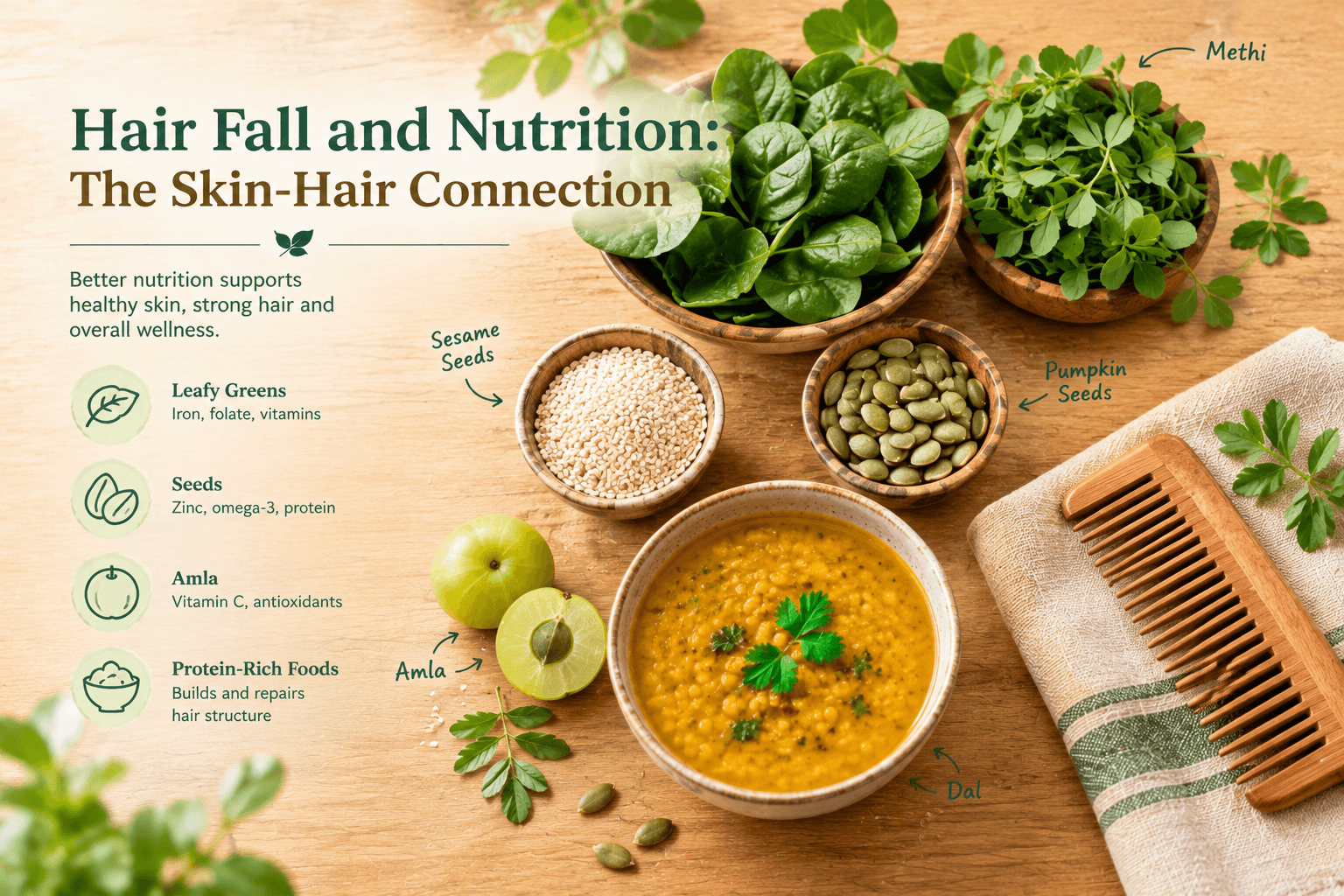
Indian food sources: Green leafy vegetables such as spinach, amaranth, and methi, ragi, bajra, dates, jaggery, pulses such as chana and rajma, sesame seeds, pumpkin seeds, and (for non-vegetarians) eggs and meat. Vitamin C, from lemon, amla, guava, or tomato, helps the body absorb plant iron, so squeeze lemon on your dal and greens.
Caution: Do not start iron tablets on your own. Too much iron can be harmful, and your doctor should confirm that you need it, choose the form, and monitor your levels. Reviews note that replenishing iron stores can take several months.
Protein and Total Calories
Hair is made mostly of a protein called keratin, so it needs a steady supply of amino acids. Severe calorie restriction, crash diets, and very low protein intake can push many follicles into the resting phase, with shedding often appearing two to three months later. Vegetarians and people on restrictive diets are especially worth watching. Aim for a protein source at each meal, such as dal, curd, paneer, sprouts, soy, eggs, or fish, adjusted to your needs. Our article on protein needs for Indian vegetarians covers the numbers in more detail.
Zinc
Zinc is involved in cell division and tissue repair, and severe zinc deficiency is well known to cause hair loss along with skin changes and slow wound healing. Some studies have found lower zinc in people with certain types of hair loss, though findings are not uniform. Zinc supplementation appears to help when deficiency is present, while evidence for supplementing people with normal zinc is much weaker.
Indian food sources: Pumpkin seeds, sesame seeds, chickpeas and other legumes, whole grains, cashews, peanuts, and dairy. Plant foods contain phytates that can reduce absorption, which is one reason soaking, sprouting, and fermenting legumes and grains is helpful.
Caution: High-dose zinc supplements can interfere with copper levels and cause stomach upset, so take them only on medical advice.
Vitamin D
Vitamin D deficiency is very common in India, and a large systematic review found a high prevalence of low vitamin D among people with alopecia areata, female pattern hair loss, male androgenetic alopecia, and telogen effluvium. A more recent meta-analysis found lower vitamin D levels in telogen effluvium patients than in controls. As with other nutrients, the link does not prove that low vitamin D is the cause, and not every study agrees. Still, testing is reasonable, and sensible sun exposure, discussed in our vitamin D article, plus supplementation if your doctor finds you deficient, are the usual steps.
Vitamin B12 and Folate
B12 and folate support the formation of red blood cells and cell division. Low B12 is common in vegetarians because it occurs mainly in animal foods, and some studies of women with chronic telogen effluvium found low B12 in around a third. Dairy and eggs provide some B12, and your doctor can check your level and advise on fortified foods or supplements if needed. Folate comes from leafy greens, legumes, and citrus fruit.
Biotin: Overhyped for Most People
Biotin (vitamin B7) is the most heavily marketed hair vitamin. The honest evidence is that true biotin deficiency does cause hair loss, but it is uncommon in healthy people eating a varied diet, and reviews found no good evidence that biotin supplements improve hair in people with normal biotin levels. Some reports found a slightly higher share of biotin deficiency among people with shedding, but the evidence is thin.
There is also a safety point that many people do not know: high-dose biotin supplements can interfere with some laboratory tests, including certain thyroid and heart-related blood tests, and can give falsely high or low results. If you take biotin, tell your doctor and the lab before any blood test.
Food sources: Eggs, nuts and seeds, legumes, sweet potato, and whole grains.
Vitamin C
Vitamin C supports collagen formation and helps your body absorb plant-based iron. It is available in amla, guava, citrus fruit, tomatoes, and peppers. A balanced diet usually provides enough, and the real value for hair is in the iron absorption link.
Omega-3 and Healthy Fats
Essential fatty acids are part of scalp and skin oils and cell membranes, and very low fat intake or essential fatty acid deficiency is listed among dietary problems linked to hair changes. Good vegetarian sources include flaxseeds, chia seeds, walnuts, and mustard oil. Our vegetarian omega-3 article explains how well plant sources convert to the long-chain forms.
Vitamin A and Selenium: More Is Not Better
Vitamin A is needed for healthy skin and scalp oil production, and selenium is a trace mineral involved in antioxidant systems. But both can cause hair loss when taken in excess. This is another reason to avoid high-dose “hair, skin, and nails” products unless a doctor has advised them.
What the Evidence on Supplements Really Says
Here is the central message from the research. Reviews consistently conclude that deficiencies should be looked for in people with hair loss, and that correcting a documented deficiency can help. But taking supplements without a documented deficiency lacks strong evidence, and the benefit of vitamins and minerals for hair loss in general has been described as modest and in need of further study. Some research suggests that vitamin B, vitamin D, iron, and zinc play important roles in hair growth and that deficiencies are linked to pattern hair loss, but this does not mean that taking more of them will help everyone.
In practical terms, this means “test, then target.” A blood test to check your levels, guided by a doctor, is a far better investment than a shelf of general hair supplements. If you are deficient, correcting it can help. If you are not, extra capsules are unlikely to do much and may carry risks.
Tests a Doctor May Suggest
If you have noticeable hair fall, your doctor or dermatologist may ask about your diet, periods, pregnancy history, illnesses, stress, medicines, and family history, examine your scalp, and may suggest some blood tests. Depending on your situation, these could include:
- A complete blood count and haemoglobin
- Serum ferritin (iron stores)
- Thyroid function tests
- Vitamin D and vitamin B12 levels
- Sometimes zinc or other tests, and hormone tests in women with irregular periods or signs of hormone imbalance
A dermatologist may also look at the scalp closely, perform a gentle hair-pull test, or use a magnifying tool to judge the type of hair loss. Many people find it helpful to take photos of their parting and hairline every month to track changes.
Beyond Nutrition: Other Common Causes of Hair Fall
- Stress: Major physical or emotional stress can trigger telogen effluvium a few months later.
- Thyroid problems: Both underactive and overactive thyroid can cause diffuse shedding.
- Hormonal changes: Pregnancy, childbirth, menopause, and conditions like PCOS can affect hair. Postpartum shedding is very common and usually settles.
- Illness and fever: Including severe infections, with shedding appearing weeks later.
- Medicines: Some medicines can cause hair shedding. Never stop a prescribed medicine on your own, but ask your doctor.
- Crash diets and rapid weight loss: A frequent and often overlooked trigger.
- Hair practices: Tight hairstyles, frequent heat styling, harsh chemical processing, and rough brushing of wet hair.
- Scalp conditions: Dandruff, seborrhoeic dermatitis, and fungal infections.
- Genetics: Pattern hair loss runs in families.
A Hair-Friendly, Skin-Friendly Indian Plate
Food comes first, and the good news is that a traditional Indian diet already contains many of the nutrients discussed above. Aim for variety across the week:
- Protein: Dal, sprouts, curd, paneer, soy, eggs or fish if you eat them, and nuts.
- Iron-rich foods: Leafy greens, ragi, bajra, dates, jaggery in moderation, chana, and sesame, paired with a vitamin C source such as lemon or amla.
- Zinc and healthy fats: Pumpkin and sesame seeds, cashews, peanuts, flaxseed, and walnuts.
- Colourful vegetables and fruit: For vitamin C, vitamin A, and protective plant compounds, including carrots, papaya, guava, and citrus.
- Whole grains and millets: For B vitamins and minerals.
- Fermented foods and dairy: Curd and buttermilk, which also support digestion and nutrient absorption.
- Enough water: For overall skin and scalp comfort.
A Simple Sample Day
- Breakfast: Moong dal chilla or vegetable poha with peanuts, with a glass of milk or curd.
- Mid-morning: A guava or orange and a handful of nuts and seeds.
- Lunch: Dal, roti or millet roti, a leafy green sabzi with lemon, salad, and buttermilk.
- Evening: Roasted chana, sprouts chaat, or a small bowl of fruit.
- Dinner: Paneer or soy curry, khichdi, or vegetable dalia with a side of curd.
This is only an example. Your own needs depend on your age, activity, health, and any medical conditions, and a dietitian can tailor the plan, especially if you have a restrictive diet or are losing weight.
Everyday Scalp and Hair Care That Helps
- Wash gently and regularly. A clean scalp supports healthy follicles. Use a mild shampoo suited to your scalp, and do not scrub hard.
- Be gentle with wet hair. Hair is more fragile when wet, so use a wide-toothed comb and avoid vigorous towel rubbing.
- Avoid tight styles. Tight ponytails, braids, and buns pull on follicles over time.
- Limit heat and harsh chemicals. Frequent straightening, colouring, and bleaching weaken hair.
- Massage the scalp. A gentle oil massage a couple of times a week is a pleasant routine and promotes relaxation, even if evidence that it grows hair is limited.
- Protect your sleep and manage stress. Both influence shedding patterns.
- Do not smoke. Smoking is linked with poorer skin and hair health.
- Be patient. Hair grows slowly, about a centimetre a month on average, so improvements usually take several months to show.
When to See a Dermatologist or Doctor
Please seek medical advice if you notice:
- Sudden or heavy shedding, or noticeable thinning
- Round or patchy bald spots
- Redness, scaling, pain, burning, pus, or scarring on the scalp
- Shedding that continues for more than two to three months
- Hair loss together with fatigue, weight change, heavy or irregular periods, or excess facial hair
- Hair loss in a child or teenager
- Hair loss after starting a new medicine
Early assessment helps, particularly for scarring and autoimmune types of hair loss, where prompt specialist care matters.
The Ayurvedic Perspective on Hair Fall
Ayurveda has long paid attention to hair and scalp health. Hair fall is traditionally called Khalitya, and premature greying is called Palitya. Classical thinking links hair health to the quality of the body’s tissues (Dhatus), particularly the bone tissue (Asthi Dhatu), of which hair is traditionally considered a by-product, and to the nourishment of the first tissue, Rasa, which depends on healthy digestion (Agni). In this view, poor digestion and poor nutrition can weaken the tissues that support hair, which fits well with the modern nutritional picture.
Ayurveda also connects hair fall with Pitta dosha, the principle of heat and metabolism, when excess heat in the body or scalp, caused by stress, anger, very spicy, sour, or fried food, and too much sun, is believed to disturb the follicles. Vata dosha, associated with dryness, can contribute to dry, brittle hair and an irritable, stressed mind.
Traditional Practices
- Shiro Abhyanga (head oil massage): Massaging the scalp with warm coconut, sesame, or herbal oils is a classic practice, traditionally believed to nourish the scalp, cool the head, and relax the mind.
- Amla (Indian gooseberry): Traditionally valued for hair and scalp health and also a rich vitamin C source in the diet.
- Bhringraj: A herb traditionally used in hair oils and known in Ayurveda as a supportive herb for hair.
- Brahmi and Neem: Traditionally used for scalp and mental calm, and for scalp cleanliness.
- Hibiscus and fenugreek (methi): Traditionally used in household hair preparations.
- Cooling, nourishing foods: Such as milk, ghee in moderation, fresh fruit, soaked almonds, and leafy greens, with less excess spice, sour, and fried food.
- Calm routine: Regular sleep, meditation, and pranayama to settle stress, which Ayurveda regards as an important influence on Pitta and Vata.
It is worth being honest that scientific evidence for these traditional hair oils and herbs is limited, and they are best seen as supportive, soothing care rather than proven remedies. Do a patch test before applying a new oil or herbal paste, and stop if you notice itching, redness, or irritation. If you have a scalp condition, ask a dermatologist first.
Common Myths About Hair Fall and Nutrition
- Myth: Biotin supplements will stop hair fall. Biotin helps hair mainly when you are deficient, which is uncommon, and high doses can interfere with lab tests.
- Myth: Shedding 50 to 100 hairs a day means you are going bald. Some daily shedding is part of the normal cycle.
- Myth: Washing your hair causes hair fall. Washing removes hairs that were already loose. Regular washing is good for the scalp.
- Myth: More supplements are always better. Excess vitamin A, selenium, zinc, or iron can be harmful, and some can themselves cause hair loss.
- Myth: Hair fall is always due to a deficiency. Genetics, hormones, stress, illness, medicines, and scalp conditions all matter.
- Myth: Hair oil alone will fix thinning. Oil can be a pleasant, nourishing routine, but it does not address internal causes.
- Myth: Cutting hair makes it grow faster. Trimming removes split ends but does not change how fast hair grows from the follicle.
Frequently Asked Questions
1. Which nutrient deficiency is most linked to hair fall?
Low iron stores, measured as low ferritin, are the deficiency most often linked with diffuse hair shedding, especially in women. Low zinc and low vitamin D are also associated with hair loss. A doctor can check your levels to see whether any of these apply to you.
2. Do biotin supplements really help hair growth?
Biotin deficiency can cause hair loss, but it is uncommon, and reviews have found no good evidence that biotin improves hair in people with normal levels. High-dose biotin can also interfere with some blood tests, so tell your doctor if you take it.
3. How long does it take to see improvement after fixing a deficiency?
Hair grows slowly, so improvements usually take several months. Reviews note that restoring iron stores alone can take around six months, and visible regrowth follows after that, so patience and regular follow-up with your doctor are important.
4. Can stress alone cause hair fall?
Yes. Major physical or emotional stress can push many hairs into the resting phase, with shedding showing up two to three months later. This pattern, called telogen effluvium, is usually temporary once the stress passes and the body recovers.
5. When should I worry about hair fall?
See a dermatologist or doctor if shedding is sudden or heavy, if you have bald patches, scalp pain, redness, or scarring, if it lasts more than a few months, or if it comes with other symptoms such as fatigue, weight changes, or irregular periods.
A Gentle Note Before You Go
The link between hair fall and nutrition is a good reminder that healthy hair is a reflection of overall health, from the skin of your scalp to the food on your plate. A balanced diet, the right tests, gentle hair care, and patience go much further than any quick fix. If you are looking for gentle, everyday support alongside a nourishing diet and a calm routine, Healthywe’s range of skincare herbal supplements is made using 100% natural, vegetarian ingredients rooted in traditional Ayurvedic wisdom.
As always, dietary habits and herbal supplements are meant to support your overall wellness, not replace medical care. Please consult your doctor, a dermatologist, or an Ayurvedic practitioner for proper diagnosis, and before making any changes to a prescribed treatment.
Explore our natural wellness range at www.healthywewellness.com/shop.