Quick Answer
When it comes to sitz baths for piles, the honest, research-based answer is genuinely mixed: sitz baths are widely recommended by doctors for symptomatic comfort, and are believed to work by reducing internal sphincter tone and easing venous congestion, swelling, and inflammation around inflamed haemorrhoids. However, formal systematic reviews of controlled trials have found no strong evidence that sitz baths speed up healing or significantly reduce pain intensity compared to no sitz bath, though they consistently report no meaningful side effects either. In practice, many people find them genuinely soothing, even if the clinical evidence for objective healing benefits remains limited. As always, persistent or severe piles symptoms should be evaluated by a doctor rather than managed with home remedies alone.
If you’ve been told to try a sitz bath for piles discomfort, you’ve probably wondered whether this simple warm-water soak genuinely does anything, or whether it’s just a comforting ritual. In this article, we’ll look honestly at what research actually shows about sitz baths for piles, how to do one properly, and what Ayurveda has traditionally recommended alongside this practice.
What Is a Sitz Bath?
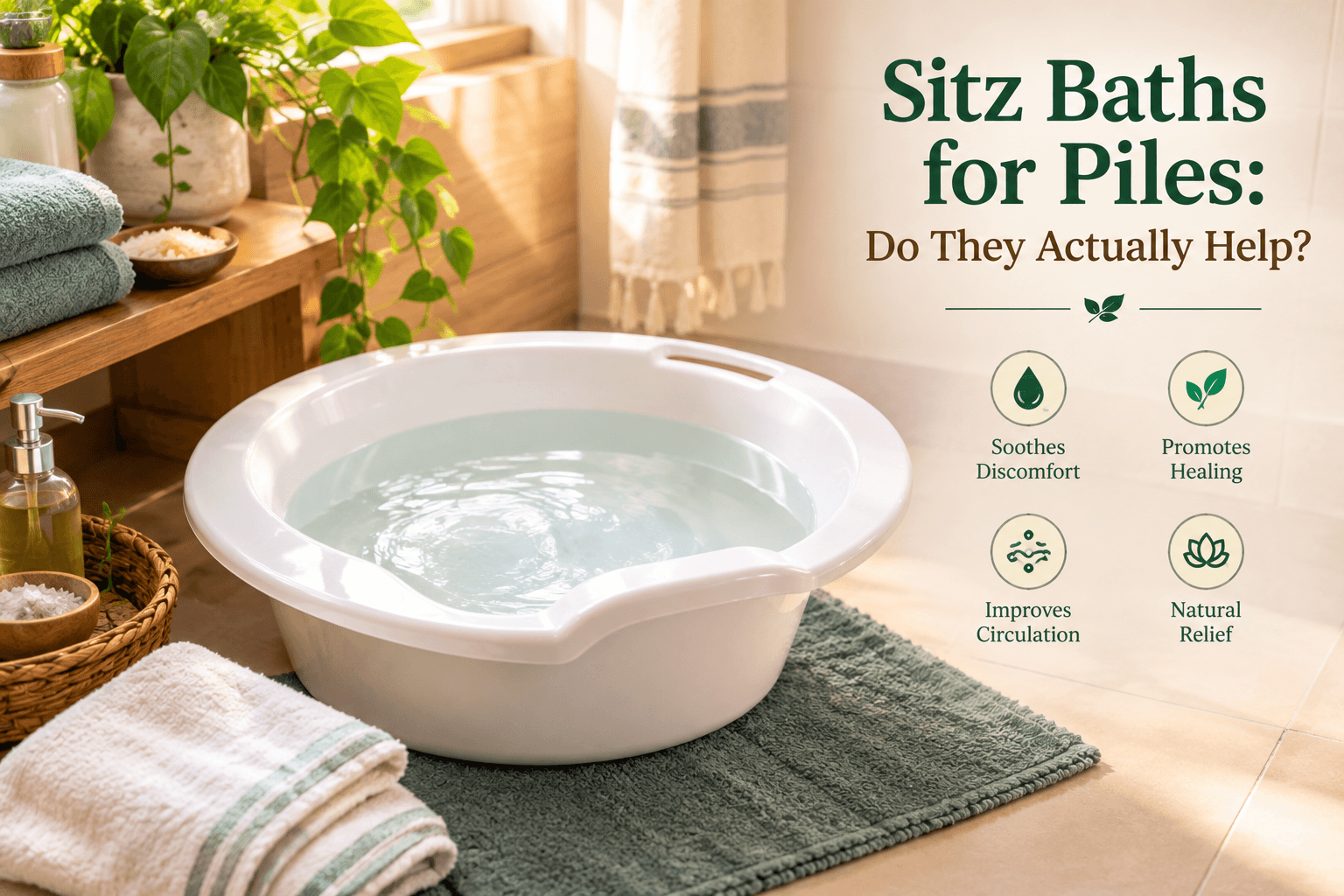
A sitz bath involves sitting in a shallow basin of warm water, deep enough to cover the hips and buttocks, typically for 10-15 minutes at a time. It’s commonly recommended for various anorectal concerns, including piles (haemorrhoids), anal fissures, and post-surgical recovery in this area. The word “sitz” comes from the German word for “sit,” reflecting the simple, seated nature of this practice.
How Sitz Baths Are Believed to Work
The proposed mechanism behind sitz baths for piles involves warm water helping to relax and reduce the tone of the internal anal sphincter, which is believed to help ease venous congestion, swelling, and inflammation around haemorrhoids, providing what’s often described as good symptomatic comfort. This biological rationale is genuinely plausible and widely cited in clinical literature, even though, as we’ll see, the actual controlled research on outcomes is more mixed than this mechanism alone might suggest.
Common Reasons People Use Sitz Baths for Piles
People typically turn to sitz baths for piles-related concerns including:
- Discomfort or pain around swollen haemorrhoids — The most common reason for trying this practice.
- Itching or irritation — Often associated with external piles.
- Post-bowel movement discomfort — Some people use sitz baths specifically after bowel movements for relief.
- General anorectal soothing — Including alongside anal fissures, which often share underlying causes with piles.
What Does the Research Actually Say About Sitz Baths for Piles?
This is genuinely one of those topics where being honest about mixed evidence matters more than repeating popular assumptions.
Systematic Review Findings: More Mixed Than Commonly Assumed
A systematic review of randomised and quasi-randomised controlled trials examining sitz baths for various anorectal disorders, including haemorrhoids and anal fissures, found that sitz bath use had no significant effect on overall pain intensity, postoperative pain, or the speed of fissure or wound healing compared to no sitz bath. Importantly, the same review found no complications associated with sitz bath use, concluding that its use is largely limited to patient satisfaction and comfort rather than objectively demonstrated healing benefits.
More Recent, Broader Review of Anal Fissure Evidence
A more recent systematic review specifically evaluating sitz baths for anal fissures (a condition often confused with, or co-occurring alongside, piles) found conflicting evidence regarding pain relief specifically, but noted that overall, the evidence did support sitz baths for their analgesic, comfort-related properties, with healing rates around 80% reported across several studies when used as part of conservative treatment. This same review noted that when compared directly to surgical treatment for fissures, surgery showed superior healing rates, though sitz baths showed no reported side effects, unlike the surgical comparison.
Water Temperature: Does It Matter?
Interestingly, research comparing cold versus warm sitz baths for acute anal pain from haemorrhoids or fissures found no significant difference in pain relief between the two temperatures, suggesting that the simple act of sitting in water, rather than the specific temperature, may be doing much of the work, at least for immediate comfort.
An Honest Summary
Taken together, sitz baths for piles present an interesting case: the underlying biological mechanism is genuinely plausible, doctors continue to recommend them widely as part of conservative management, and many patients report genuine symptomatic relief — yet controlled trials have struggled to demonstrate statistically significant improvements in pain intensity or healing speed compared to no sitz bath at all. Given that sitz baths carry no reported complications or side effects, most clinicians still consider them a reasonable, low-risk comfort measure, even while acknowledging that the objective evidence for accelerated healing remains genuinely limited.
How to Take a Sitz Bath Properly
If you’d like to try a sitz bath as part of managing piles discomfort, here’s how to do it properly:
- Use warm, not scalding, water — Comfortably warm water is generally recommended, though research suggests temperature may matter less than commonly assumed.
- Soak for 10-15 minutes — Longer isn’t necessarily better; this duration is generally sufficient.
- Do this 2-3 times daily, or after bowel movements — Particularly during periods of active discomfort.
- Keep the area clean — Use plain water, or as advised by your doctor, rather than adding strong soaps or chemicals that could irritate sensitive skin.
- Pat dry gently afterward — Rather than rubbing, which could further irritate the area.
- Use a sitz bath basin or clean bathtub — Purpose-made sitz bath basins that fit over a toilet are widely available and convenient.
Signs You Should See a Doctor Rather Than Relying on Home Remedies
While sitz baths are a low-risk comfort measure, they shouldn’t delay proper medical attention if you experience:
- Heavy or persistent rectal bleeding
- Severe pain that doesn’t ease with basic comfort measures
- A hard, very painful lump (which could indicate a thrombosed haemorrhoid requiring prompt evaluation)
- Signs of infection, such as fever
- Symptoms that persist or worsen despite lifestyle changes
A doctor can properly diagnose the specific cause of your discomfort and recommend an appropriate treatment plan, since sitz baths alone are a supportive comfort measure, not a definitive treatment.
The Ayurvedic Perspective on Sitz Baths and Piles (Arsha)
Interestingly, warm water soaks for anorectal comfort have a long-standing place in traditional Ayurvedic practice as well, often incorporated as part of a broader approach to supporting comfort during Arsha (piles). Ayurveda’s traditional approach typically combines:
- Warm water soaks — Sometimes with added herbs like triphala decoction, traditionally believed to help soothe the anal area.
- Supporting healthy digestion — Since Ayurveda considers weakened Agni (digestive fire) and constipation central to piles, addressing these root causes alongside comfort measures like sitz baths.
- Dietary fibre and hydration — Central to Ayurveda’s traditional approach, aligning closely with modern medical advice for reducing straining.
- Herbs like Triphala — Traditionally used to help support healthy digestion and regularity, complementing topical comfort measures.
This holistic Ayurvedic approach reflects a similar honest reality to the modern research: comfort measures like warm soaks are traditionally valued as part of a broader strategy, rather than a standalone solution, with dietary and lifestyle changes considered equally, if not more, important for addressing the underlying causes of piles.
Frequently Asked Questions
1. Do sitz baths actually cure piles?
No, sitz baths are a comfort measure, not a cure. Research suggests they may provide symptomatic relief for some people, but systematic reviews have not found strong evidence that they speed healing or significantly reduce pain intensity compared to no sitz bath. They should be combined with dietary and lifestyle changes, and persistent symptoms should be evaluated by a doctor.
2. Should I use warm or cold water for a sitz bath?
Research comparing cold and warm sitz baths for acute anal pain found no significant difference in pain relief between the two temperatures, so comfortably warm water is generally recommended for practical comfort.
3. How often should I take a sitz bath for piles?
A common recommendation is 2-3 times daily, particularly after bowel movements, for 10-15 minutes each time, though you should follow your doctor’s specific guidance for your situation.
A Gentle Note Before You Go
Sitz baths for piles are a genuinely low-risk, widely used comfort measure, even though the formal evidence for accelerated healing is more limited than commonly assumed — they’re best used as one part of a broader approach alongside dietary fibre, hydration, and proper medical guidance. If you’re looking for gentle, everyday support alongside these habits, Healthywe’s range of digestive care herbal supplements is made using 100% natural, vegetarian ingredients rooted in traditional Ayurvedic wisdom.
As always, lifestyle changes and herbal supplements are meant to support your overall wellness, not replace medical care. Please consult your doctor or an Ayurvedic practitioner for proper diagnosis, and before making any changes to a prescribed treatment.
Explore our natural wellness range at www.healthywewellness.com/shop.