Quick Answer
When it comes to antioxidants and aging, the science is genuinely well-established: antioxidants help neutralize free radicals, unstable molecules that damage collagen, elastin, and skin cells over time, contributing to visible signs of ageing like wrinkles and uneven tone. Both topical antioxidants (applied to skin) and dietary antioxidants (from food) play a role in supporting the skin’s natural defence system, though they work somewhat differently. That said, antioxidants are one part of a much bigger picture — sun protection, hydration, and overall lifestyle matter just as much. This is general skincare information, not medical advice — for specific skin concerns, please consult a dermatologist.
Antioxidants are practically a buzzword in the skincare world at this point, showing up on nearly every product label from serums to supplements. But what do they actually do, and how much of the hype is backed by real science? In this article, we’ll explore antioxidants and aging honestly — what free radicals actually are, what research shows, and what Ayurveda has traditionally taught about protecting the skin from within.
Understanding Free Radicals and Oxidative Stress
To understand antioxidants and aging, it helps to first understand what antioxidants are actually fighting against. Free radicals are unstable molecules produced naturally by normal cellular processes, but their production increases significantly due to factors like UV exposure, pollution, and stress. These free radicals can damage important skin structures, including collagen and elastin, the proteins responsible for skin’s firmness and elasticity, as well as skin cell DNA.
When free radical production outpaces the skin’s natural ability to neutralize them, a state called oxidative stress occurs. This imbalance is considered one of the key mechanisms driving both natural and premature skin ageing, making it central to understanding antioxidants and aging as a genuinely science-backed topic, not just a marketing term.
Common Causes That Increase Free Radical Damage
Several everyday factors can increase free radical production and oxidative stress in the skin:
- UV exposure — One of the most significant external contributors, as UV radiation directly increases free radical formation in skin cells.
- Air pollution — Environmental pollutants are linked to increased oxidative stress and skin damage over time.
- Smoking — Well established as a significant source of free radical exposure and accelerated skin ageing.
- Chronic stress — Associated with increased oxidative stress markers throughout the body, including the skin.
- Poor diet — Diets low in antioxidant-rich foods provide less support for the body’s natural defence systems.
- Excess alcohol consumption — Linked to increased oxidative stress and can affect skin’s overall appearance.
- Poor sleep — The skin’s natural repair and antioxidant processes are closely tied to adequate rest.
Recognising these causes helps explain why antioxidants and aging are so closely connected — reducing free radical exposure, alongside supporting the body’s antioxidant defences, genuinely matters for long-term skin health.
Signs of Oxidative Stress-Related Skin Ageing
Skin affected by ongoing oxidative stress often shows certain visible signs, including:
- Fine lines and wrinkles, particularly in sun-exposed areas
- Uneven skin tone or dark spots
- Reduced skin elasticity or firmness
- A dull, tired-looking complexion
- Increased skin sensitivity or a compromised skin barrier
If you notice sudden or unusual changes in your skin, or have concerns about specific spots or growths, it’s important to consult a dermatologist for proper evaluation rather than relying on skincare products or supplements alone.
What Does Research Say About Antioxidants and Aging?
This is where the science becomes genuinely interesting, as antioxidants have been studied both as topical treatments and dietary factors in relation to skin ageing.
Topical Antioxidants
Research has consistently shown that topically applied antioxidants, particularly Vitamin C and Vitamin E, offer meaningful protection against free radical damage. One frequently cited double-blind clinical study applied a topical Vitamin C formulation to one side of participants’ faces and a placebo to the other, evaluating wrinkling, pigmentation, and hydration over 12 weeks. The Vitamin C-treated side showed statistically significant improvement in photoaging scores compared to the placebo side, offering solid clinical evidence for topical antioxidant use.
Dietary Antioxidants
Beyond topical application, research increasingly recognises that dietary antioxidants also play a supportive role. Since the skin’s natural antioxidant defence system relies partly on nutrients obtained through diet, some studies suggest that a diet rich in antioxidant compounds may help support the skin’s resilience against oxidative stress, working alongside, rather than instead of, topical protection.
An Important Balance to Understand
While the underlying science of free radicals and oxidative stress is well established, it’s worth being cautious about some skincare marketing claims that overstate antioxidants’ effects, such as claiming dramatic percentage reductions in ageing or promising to reverse most visible signs of ageing. The genuine, research-supported picture is more measured: antioxidants offer meaningful, evidence-based protective support, particularly against UV-related damage, but they work as part of a broader skin health strategy, not a standalone transformation.
This honest, balanced understanding of antioxidants and aging helps set realistic expectations, rather than falling for exaggerated claims that don’t always hold up to closer scientific scrutiny.
Practical Ways to Support Skin With Antioxidants
Here’s how to practically apply the science of antioxidants and aging to your daily routine:
- Use sun protection consistently — Since UV exposure significantly increases free radical production, sunscreen remains one of the most impactful anti-ageing tools, working alongside antioxidants rather than replacing them.
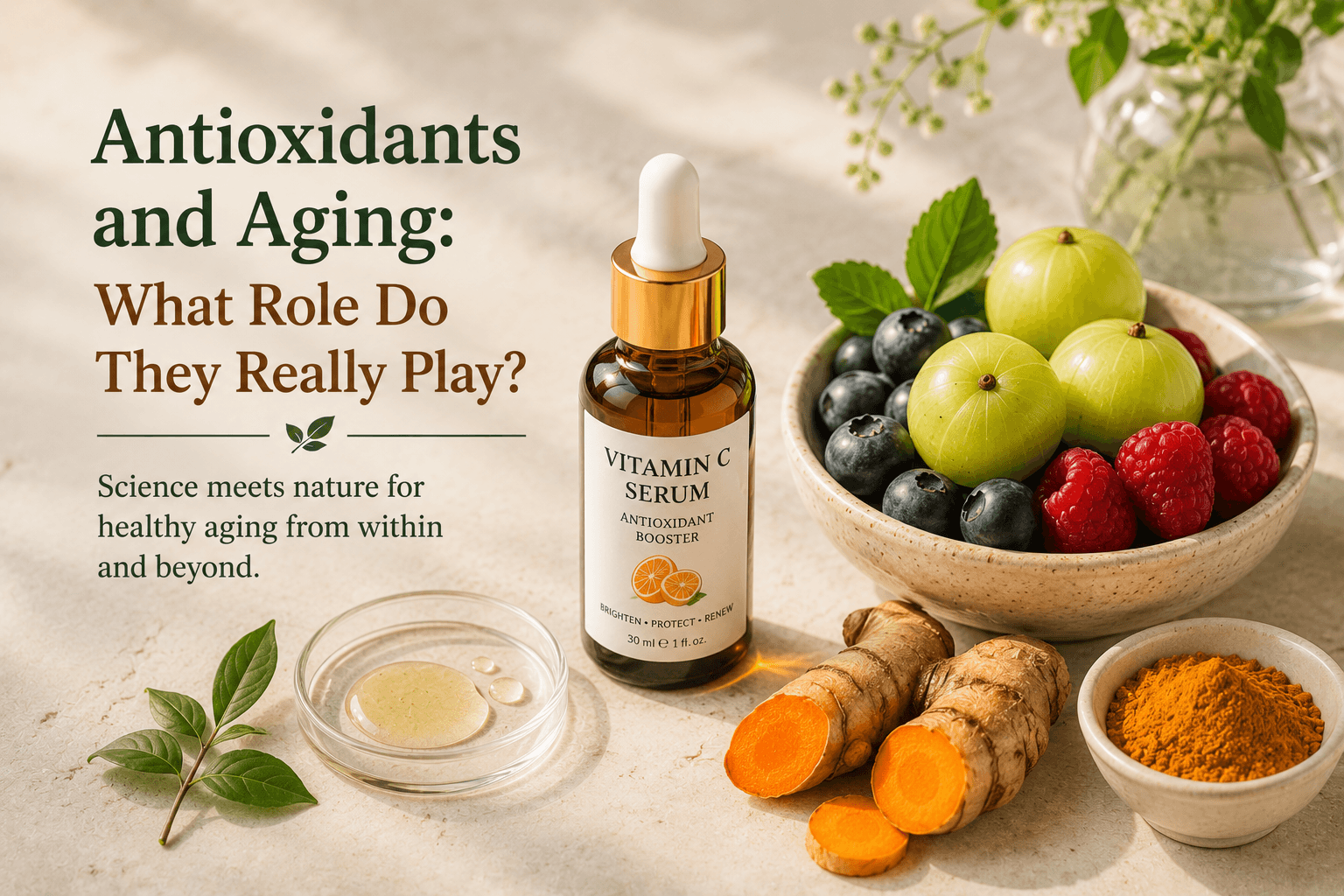
- Include topical antioxidants thoughtfully — Ingredients like Vitamin C serums can offer genuine, research-supported support when used consistently.
- Eat a colourful, antioxidant-rich diet — Berries, leafy greens, amla, and other colourful fruits and vegetables provide dietary antioxidants that support the skin’s natural defences.
- Avoid smoking and limit alcohol — Both significantly increase free radical exposure and oxidative stress.
- Manage stress — Since stress is linked to increased oxidative stress, practices like meditation may offer indirect skin support.
- Prioritise good sleep — Supports the skin’s natural repair and antioxidant processes.
The Ayurvedic Perspective on Antioxidants and Aging
While Ayurveda doesn’t use the modern scientific term “antioxidant,” its traditional understanding of skin health has long emphasised protecting the body from what could be described as similar concepts — supporting “Ojas,” the vital essence linked to overall vitality and radiance, and using naturally antioxidant-rich ingredients long before the term existed in Western science.
Ayurveda’s traditional antioxidant-rich approach includes:
- Amla (Indian Gooseberry) — Traditionally valued in Ayurveda and genuinely rich in Vitamin C, one of the most well-researched dietary antioxidants for skin health.
- Turmeric — Contains curcumin, a compound with recognised antioxidant properties, traditionally used both internally and topically in Ayurvedic skincare.
- Neem — Traditionally valued for its protective properties, believed to support skin health as part of a broader wellness routine.
- Seasonal, whole-food eating — Ayurveda’s emphasis on fresh, colourful, seasonal produce naturally aligns with modern understanding of dietary antioxidant intake.
- Herbal oils rich in natural compounds — Traditional Ayurvedic oils used in Abhyanga (oil massage) often contain naturally antioxidant-rich botanical extracts.
This traditional Ayurvedic emphasis on naturally antioxidant-rich ingredients offers an interesting historical parallel to what modern research has since confirmed about antioxidants and aging — that supporting the skin from within, using nature’s own protective compounds, has genuine, evidence-backed merit.
Setting Realistic Expectations
Antioxidants and aging is a genuinely well-supported area of skincare science, but it’s worth approaching with balanced expectations. Antioxidants offer meaningful, evidence-based protective support, particularly when combined with sun protection and an overall healthy lifestyle. They are not a magic solution that eliminates the need for other foundational skin health practices, but rather one valuable piece of a comprehensive approach to skin ageing.
Frequently Asked Questions
1. Do antioxidants actually reduce visible signs of aging?
Research, including clinical studies on topical Vitamin C, shows antioxidants can offer measurable improvement in signs of photoaging like wrinkling and pigmentation, particularly with consistent use over several weeks.
2. Are dietary antioxidants as effective as skincare products?
Dietary and topical antioxidants work somewhat differently and are generally considered complementary rather than interchangeable — a balanced diet supports the skin’s overall antioxidant defence system, while topical antioxidants offer more targeted, localized protection.
3. What foods are richest in antioxidants for skin health?
Foods like amla, berries, leafy greens, and colourful vegetables are rich in antioxidants like Vitamin C and various polyphenols, traditionally and nutritionally linked to supporting healthy-looking skin.
A Gentle Note Before You Go
Understanding antioxidants and aging through a balanced, evidence-based lens can help you make more informed choices for your skin, both what you apply and what you eat. If you’re looking for gentle, everyday support alongside a balanced diet and skincare routine, Healthywe’s range of skincare herbal supplements is made using 100% natural, vegetarian ingredients rooted in traditional Ayurvedic wisdom.
As always, dietary habits and herbal supplements are meant to support your overall wellness, not replace professional dermatological care. Please consult your doctor or an Ayurvedic practitioner for proper diagnosis, and before making any changes to a prescribed treatment.
Explore our natural wellness range at www.healthywewellness.com/shop.