Quick Answer
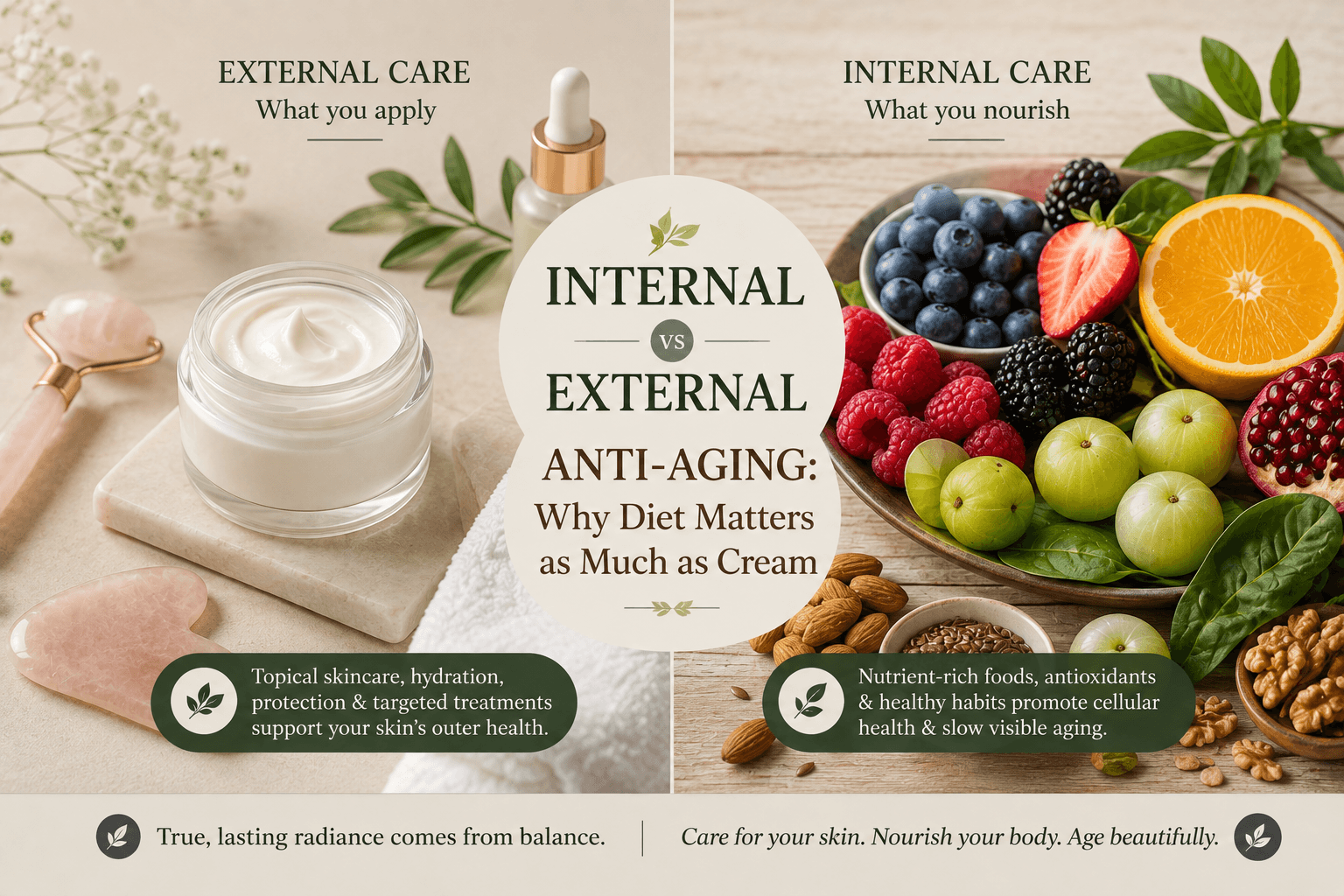
When it comes to internal vs external anti-aging, the honest answer is that both matter, but they work in different ways. External care, like creams and serums, primarily supports the skin’s surface — hydration, texture, and protection from daily damage. Internal care, through diet, hydration, sleep, and overall lifestyle, supports the skin from within, influencing collagen production, cellular repair, and how skin ages over time. Neither approach works as well in isolation, and diet in particular plays a much bigger role in long-term skin health than many people realise. This is general wellness information, not medical advice — for specific skin concerns, please consult a dermatologist or Ayurvedic practitioner.
Walk into any pharmacy or scroll through skincare ads, and you’ll be met with an overwhelming number of creams promising younger-looking skin. But how much of healthy, youthful skin actually comes from what you apply, versus what you eat? In this article, we’ll explore internal vs external anti-aging, why diet matters just as much as your skincare shelf, and what Ayurveda has traditionally taught about ageing gracefully from the inside out.
Understanding How Skin Actually Ages
Skin ageing happens through two broad categories of factors: intrinsic ageing, the natural, genetically programmed process that happens to everyone over time, and extrinsic ageing, caused by external factors like sun exposure, pollution, and lifestyle habits. Both processes involve gradual changes to collagen and elastin, the proteins responsible for skin’s firmness and elasticity, along with changes in cell turnover and hydration retention.
Understanding this distinction is key to understanding internal vs external anti-aging — because while external factors like sun damage are visible and often addressed with topical products, the internal, cellular processes driving much of skin ageing are influenced far more by what’s happening inside your body.
Common Causes That Accelerate Visible Skin Ageing
Several factors, both internal and external, can accelerate how quickly skin shows visible signs of ageing:
- Excess sun exposure — One of the most significant external contributors to premature skin ageing, affecting collagen breakdown over time.
- Poor diet — Diets low in antioxidants, healthy fats, and essential nutrients can affect the skin’s ability to repair and renew itself.
- Dehydration — Insufficient water intake affects skin’s plumpness and overall appearance.
- Chronic stress — Linked to increased cortisol, which can affect collagen production and overall skin resilience.
- Poor sleep quality — Skin’s natural repair processes largely happen during sleep, making rest genuinely important for skin health.
- Smoking and excess alcohol — Both are well-established contributors to premature skin ageing.
- Excess sugar intake — Linked to a process called glycation, which can affect collagen quality over time.
- Environmental pollution — Regular exposure to pollutants can contribute to oxidative stress in the skin.
Notice that many of these factors are internal, dietary, or lifestyle-related, rather than purely external — which is exactly why the internal vs external anti-aging conversation deserves more balanced attention than skincare marketing typically gives it.
Signs That May Indicate Your Skin Needs More Internal Support
While external skincare addresses surface-level concerns, these signs often suggest your skin could benefit from more internal, dietary attention:
- Skin that looks dull or dry despite consistent topical skincare use
- Reduced skin elasticity or a tired-looking complexion
- Fine lines that seem to be developing earlier than expected
- Skin that doesn’t respond well to topical products alone
- Overall lack of “glow” despite a diligent skincare routine
If topical products alone aren’t delivering the results you’re hoping for, it’s often a sign that internal factors, like diet, hydration, and sleep, may need more attention alongside your external routine.
Internal vs External Anti-Aging: What Each Approach Actually Does
Let’s break down what internal vs external anti-aging approaches genuinely offer, so you can understand where each one fits.
What External Skincare Can Do
- Support hydration — Moisturizers and hydrating serums help maintain the skin’s outer moisture barrier.
- Provide antioxidant protection — Topical antioxidants like Vitamin C may help protect skin from some environmental damage.
- Support cell turnover — Certain ingredients can help support the skin’s natural exfoliation process.
- Offer sun protection — Sunscreen remains one of the most genuinely effective external anti-aging tools available.
External skincare is valuable, but it primarily works on the skin’s surface layers and generally cannot address deeper, cellular-level factors driving skin ageing from within.
What Internal (Dietary) Support Can Do
- Support collagen production — Nutrients like Vitamin C, protein, and certain amino acids are essential building blocks for collagen synthesis.
- Provide antioxidants from within — A diet rich in colourful fruits and vegetables supplies antioxidants that help support the skin’s natural defence against oxidative stress.
- Support skin hydration at a cellular level — Adequate water intake and healthy fats support skin’s moisture retention from within.
- Support overall cellular repair — Good sleep and balanced nutrition support the body’s natural regenerative processes, including in the skin.
This is really the core of the internal vs external anti-aging conversation — external skincare supports the surface, while diet and lifestyle influence the deeper, ongoing processes that determine how skin ages over years and decades.
Practical Dietary Tips for Supporting Skin From Within
If you’re looking to strengthen the internal side of your internal vs external anti-aging approach, here are practical dietary habits to consider:
- Include Vitamin C-rich foods — Amla, citrus fruits, and bell peppers support the body’s natural collagen production process.
- Eat healthy fats — Nuts, seeds, and ghee in moderation support skin’s natural moisture barrier from within.
- Prioritise antioxidant-rich foods — Berries, leafy greens, and colourful vegetables help support the skin’s defence against oxidative stress.
- Stay consistently hydrated — Adequate water intake genuinely supports skin’s plumpness and overall appearance.
- Limit excess sugar — Reducing sugar intake may help support healthier collagen quality over time.
- Include protein in your diet — Essential for providing the amino acid building blocks needed for collagen production.
- Support your gut health — Emerging research increasingly links gut health to skin health, making fibre and fermented foods relevant here too.
The Ayurvedic Perspective on Internal vs External Anti-Aging
Ayurveda has always understood internal vs external anti-aging as a false choice — its entire philosophy of skin health, or “Twak,” is built on treating the body holistically, from the inside out. Ayurveda associates healthy, youthful-looking skin with balanced “Rasa Dhatu” (the first of the seven bodily tissues, related to plasma and nourishment) and strong “Ojas,” the vital essence linked to overall vitality and radiance.
Ayurveda’s traditional approach to supporting skin from within includes:
- Eating according to your dosha — Recognising that Vata, Pitta, and Kapha skin types each benefit from different dietary emphases.
- Supporting healthy digestion (Agni) — Ayurveda closely links digestive health to how well the body nourishes and renews the skin.
- Including Rasayana herbs — Traditional rejuvenating herbs believed to support overall vitality, which Ayurveda considers reflected in the skin’s appearance.
- Combining internal and external care — Ayurveda has always paired dietary wisdom with external rituals like Abhyanga (oil massage), reflecting a genuinely integrated approach to internal vs external anti-aging that modern wellness is increasingly rediscovering.
This centuries-old holistic philosophy offers a thoughtful reminder that skin health was never meant to be approached as an either-or choice between creams and diet — Ayurveda has understood the internal vs external anti-aging balance for a very long time.
Building a Balanced Anti-Aging Approach
Rather than choosing between internal and external anti-aging strategies, the most effective approach combines both. Use sun protection and gentle, supportive skincare externally, while nourishing your skin from within through a balanced diet, adequate hydration, good sleep, and stress management. Neither approach alone tells the whole story — genuine, long-term skin health comes from addressing both sides of the internal vs external anti-aging equation together.
Frequently Asked Questions
1. Which matters more for anti-aging, diet or skincare products?
Both matter, but they work differently — skincare products primarily support the skin’s surface, while diet influences deeper, cellular processes like collagen production. Combining both generally offers more comprehensive support than relying on either alone.
2. Can diet alone reduce visible signs of aging?
Diet plays a significant role in supporting skin health from within, but it works best combined with good sun protection and a supportive external skincare routine, rather than as a standalone solution.
3. What foods support youthful-looking skin?
Foods rich in Vitamin C, antioxidants, healthy fats, and protein — such as amla, berries, nuts, and leafy greens — are traditionally and nutritionally linked to supporting healthy, radiant-looking skin from within.
A Gentle Note Before You Go
Understanding internal vs external anti-aging reminds us that genuinely healthy, radiant skin comes from nourishing the body both inside and out, rather than relying on any single approach. If you’re looking for gentle, everyday support alongside a balanced diet and skincare routine, Healthywe’s range of skincare herbal supplements is made using 100% natural, vegetarian ingredients rooted in traditional Ayurvedic wisdom.
As always, dietary habits and herbal supplements are meant to support your overall wellness, not replace professional dermatological care. Please consult your doctor or an Ayurvedic practitioner for proper diagnosis, and before making any changes to a prescribed treatment.
Explore our natural wellness range at www.healthywewellness.com/shop.