Quick Answer
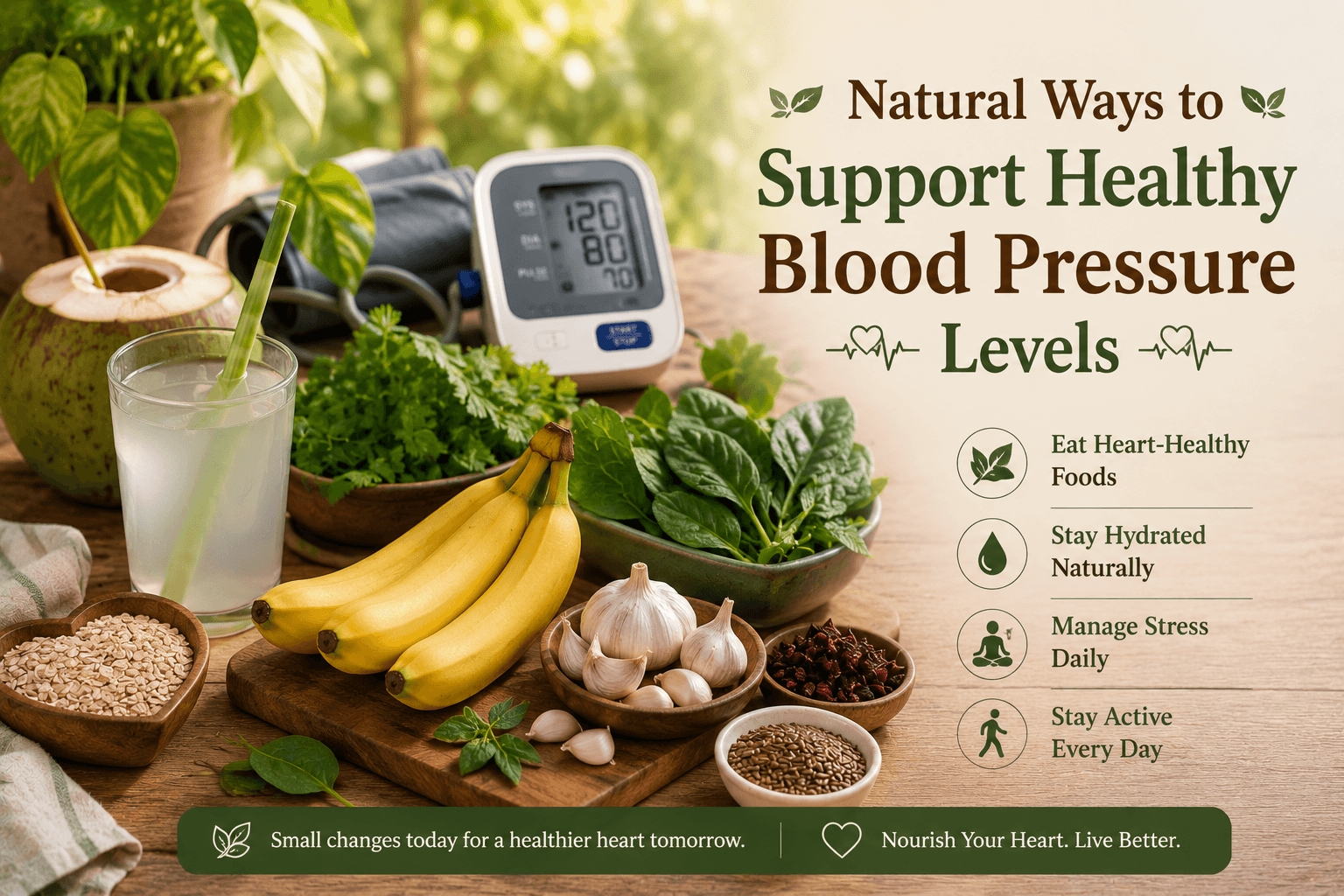
Some of the most effective natural ways to support healthy blood pressure levels include reducing salt intake, staying physically active, managing stress, maintaining a healthy body weight, and including potassium-rich foods like bananas and leafy greens in your diet. Ayurveda also offers traditional practices, including specific herbs and lifestyle routines, believed to support healthy cardiovascular balance. These approaches work best as supportive daily habits alongside medical guidance — they are not a substitute for prescribed treatment. If you have high blood pressure or are on medication for it, please consult your doctor before making any changes to your treatment plan.
Blood pressure is one of those health markers that quietly affects so much of our overall wellbeing, yet it’s easy to overlook until a routine check-up brings it to our attention. In this article, we’ll explore natural ways to support healthy blood pressure levels, from simple lifestyle habits to what Ayurveda has traditionally taught about heart and circulatory health.
Understanding Blood Pressure and Why It Matters
Blood pressure refers to the force of blood pushing against the walls of your arteries as your heart pumps it around your body. When blood pressure remains elevated over time, it can place extra strain on the heart and blood vessels, which is why maintaining it within a healthy range is considered so important for long-term wellness.
Many factors influence blood pressure, and the encouraging news is that several of them are within your control. This is exactly where natural ways to support healthy blood pressure levels become so relevant — everyday habits can genuinely make a meaningful difference alongside any medical guidance you may be following.
Common Factors That May Affect Blood Pressure Levels
Understanding what influences blood pressure can help you identify areas where small changes might help. Common contributing factors include:
- High salt (sodium) intake — Excess salt is one of the most well-established dietary factors linked to elevated blood pressure.
- Excess body weight — Carrying extra weight, particularly around the abdomen, is associated with higher blood pressure levels.
- Sedentary lifestyle — Lack of regular physical activity is linked to less efficient cardiovascular function over time.
- Chronic stress — Ongoing stress can contribute to temporary and, over time, sustained increases in blood pressure.
- Poor sleep quality — Inadequate or disrupted sleep is associated with higher blood pressure readings.
- Excess alcohol consumption — Regular, heavy alcohol intake is linked to elevated blood pressure.
- Family history — Genetics can play a role in an individual’s likelihood of developing high blood pressure.
- Smoking — Tobacco use is well established as a factor that negatively affects cardiovascular health, including blood pressure.
Recognising these factors is the first step toward exploring natural ways to support healthy blood pressure levels that are relevant to your specific lifestyle.
Signs That May Be Worth Monitoring
High blood pressure is often called a “silent” concern because it frequently doesn’t cause obvious symptoms, which is why regular monitoring is so important. That said, some people may notice:
- Occasional headaches, particularly at the back of the head
- Dizziness or lightheadedness
- Fatigue or low energy
- Shortness of breath during routine activity
- Blurred vision on occasion
These signs are not exclusive to blood pressure concerns and can result from many other causes, so it’s important to have your blood pressure checked regularly by a healthcare professional rather than relying on symptoms alone. If you experience severe headache, chest pain, or difficulty breathing, seek medical attention promptly.
Natural Ways to Support Healthy Blood Pressure Levels
Here’s a practical breakdown of natural ways to support healthy blood pressure levels that you can incorporate into your daily routine.
1. Reduce Salt Intake
Since excess sodium is closely linked to blood pressure, reducing salt in cooking, avoiding excessive use of packaged and processed foods, and being mindful of hidden salt in snacks can meaningfully support healthy levels over time.
2. Stay Physically Active
Regular physical activity, such as brisk walking, swimming, or cycling, supports overall cardiovascular function. Even 30 minutes of moderate activity most days of the week is generally recommended as part of a heart-healthy routine.
3. Maintain a Healthy Body Weight
Since excess weight is associated with higher blood pressure, gradual, sustainable weight management through diet and activity may help support healthier levels over time.
4. Include Potassium-Rich Foods
Foods like bananas, spinach, sweet potatoes, and coconut water are rich in potassium, which is believed to help balance the effects of sodium in the body and support healthy blood pressure.
5. Manage Stress Consistently
Since stress can temporarily and, over time, more persistently affect blood pressure, incorporating stress management practices like deep breathing, meditation, or yoga into your daily routine may offer meaningful support.
6. Prioritise Good Sleep
Aiming for 7-8 hours of quality sleep each night supports overall cardiovascular health, as poor sleep has been associated with higher blood pressure levels.
7. Limit Alcohol and Avoid Smoking
Reducing alcohol intake and avoiding smoking are both well-established ways to support overall cardiovascular and blood pressure health.
8. Stay Consistently Hydrated
Adequate water intake supports overall circulatory function and general wellbeing, complementing other healthy habits.
These natural ways to support healthy blood pressure levels work best when practiced consistently together, rather than relying on any single change in isolation.
The Ayurvedic Perspective on Heart and Blood Pressure Health
Ayurveda has traditionally placed strong emphasis on “Hridaya,” or heart health, viewing it as central to overall vitality and wellbeing. According to Ayurvedic principles, blood pressure imbalances are often associated with aggravated Vata or Pitta dosha, depending on individual constitution and specific symptoms experienced.
Ayurveda’s traditional approach to supporting healthy blood pressure typically includes:
- Herbs like Arjuna — Traditionally used in Ayurveda for centuries to help support healthy heart function and circulatory balance.
- Ashwagandha — Traditionally used to help the body adapt to stress, which may indirectly support balanced blood pressure levels.
- Garlic (Lehsun) — A common kitchen ingredient traditionally believed to help support healthy circulation when included regularly in cooking.
- Warm, freshly cooked meals — Ayurveda generally favours these over cold, processed, or overly salty foods for overall digestive and cardiovascular balance.
- Pranayama and meditation — Traditional breathing practices believed to help calm the nervous system and support overall balance.
- Consistent daily routine (Dinacharya) — A steady, calm daily rhythm is believed to support both mental and physical balance, including cardiovascular health.
This holistic Ayurvedic approach — combining herbs, diet, and lifestyle — offers a complementary perspective alongside modern medical care, though it should always be used in consultation with your doctor, especially if you’re currently on blood pressure medication.
Important Safety Considerations
Blood pressure is a health marker that requires careful, professional management, especially if you’ve already been diagnosed with high or low blood pressure. Keep these points in mind:
- Never stop or adjust prescribed blood pressure medication without consulting your doctor first, even if you’re trying natural approaches alongside it.
- Regular blood pressure monitoring, ideally through a healthcare professional, is important for understanding your specific levels and needs.
- Some natural remedies and herbs can interact with blood pressure medications, so always inform your doctor about any supplements you’re considering.
- If you experience symptoms like severe headache, chest pain, or difficulty breathing, seek medical attention immediately rather than relying on natural remedies alone.
Building a Sustainable Heart-Healthy Routine
Supporting healthy blood pressure levels naturally is really about consistency rather than perfection. Start with one or two changes — perhaps reducing salt in your cooking or adding a daily walk — and build from there. Over time, these small, sustainable habits, combined with regular medical check-ups, can meaningfully support your overall cardiovascular wellness.
Frequently Asked Questions
1. What foods naturally help support healthy blood pressure?
Potassium-rich foods like bananas, leafy greens, and coconut water, along with reducing salt intake, are commonly recommended to help support healthy blood pressure levels as part of a balanced diet.
2. Can stress really affect blood pressure?
Yes, stress can cause temporary increases in blood pressure, and chronic stress may contribute to more sustained elevation over time. Stress management practices like deep breathing and meditation may help support overall balance.
3. Are Ayurvedic herbs safe to take with blood pressure medication?
Some herbs can interact with blood pressure medications, so it’s essential to consult your doctor before combining any Ayurvedic herbs or supplements with prescribed treatment.
A Gentle Note Before You Go
Exploring natural ways to support healthy blood pressure levels can be a meaningful part of your overall wellness routine, especially when combined with regular medical care. If you’re looking for gentle, everyday support, Healthywe’s range of heart care herbal supplements is made using 100% natural, vegetarian ingredients rooted in traditional Ayurvedic wisdom.
As always, lifestyle changes and herbal supplements are meant to support your overall wellness, not replace medical care. Please consult your doctor or an Ayurvedic practitioner for proper diagnosis, and before making any changes to a prescribed treatment.
Explore our natural wellness range at www.healthywewellness.com/shop.