Quick Answer
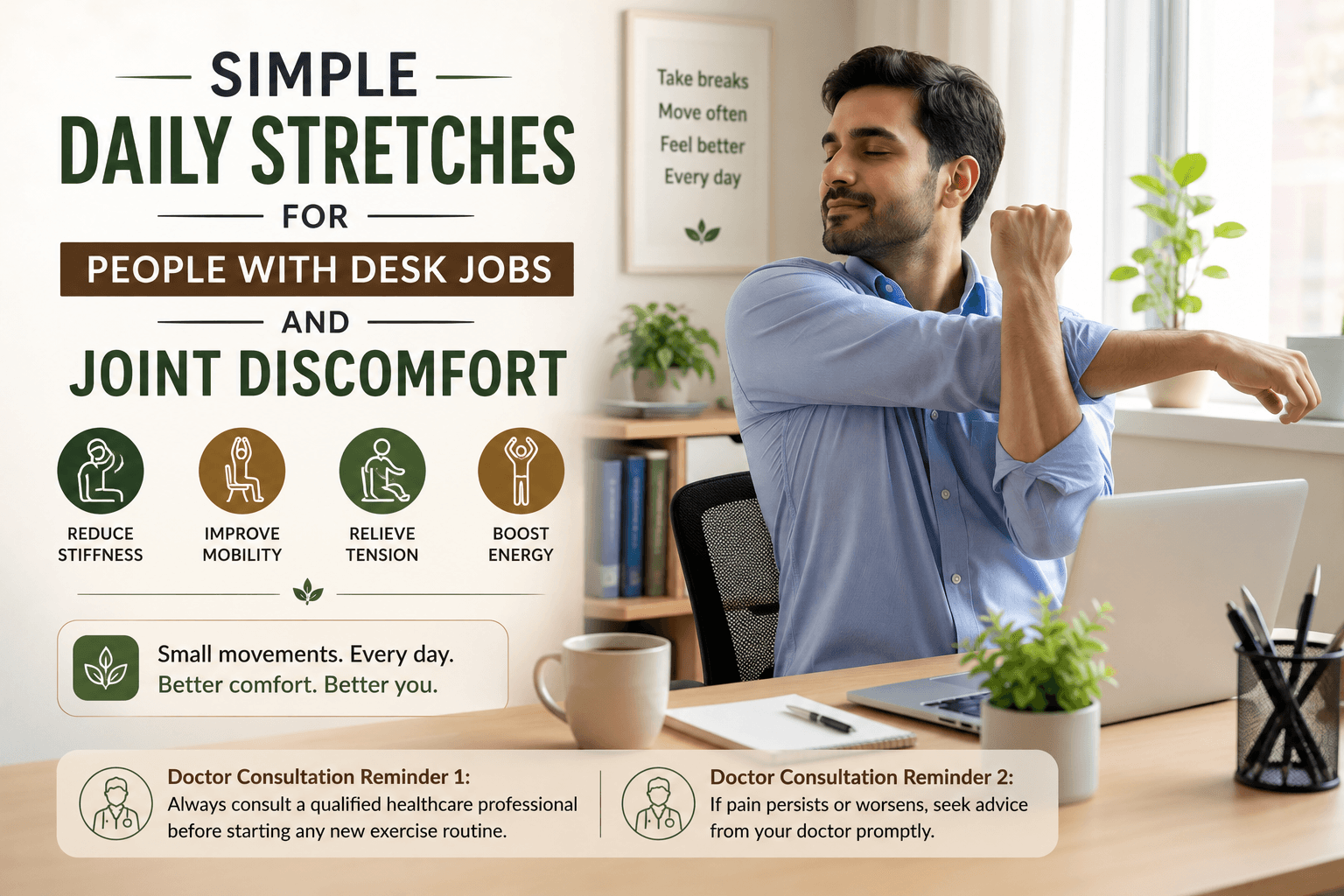
Daily stretches for desk jobs and joint discomfort that focus on the neck, shoulders, wrists, lower back, hips, and knees can help ease stiffness caused by long hours of sitting. Simple stretches like neck tilts, shoulder rolls, seated spinal twists, wrist stretches, and hip flexor stretches, done consistently through the day, may help promote better joint mobility and reduce the discomfort that builds up from a desk-bound routine. These stretches are a helpful daily habit, not a medical treatment — if joint discomfort is severe or persistent, please consult a doctor for proper diagnosis.
If you spend most of your day at a desk, you already know that stiff neck, tight shoulders, and achy lower back feeling by evening. In this article, we’ll walk through simple daily stretches for desk jobs and joint discomfort that you can do right at your workstation, along with what Ayurveda has to say about keeping your joints comfortable despite a sedentary routine.
Why Desk Jobs Are Tough on Your Joints
Sitting for long hours might not feel like “hard work,” but it places a surprising amount of strain on your joints and muscles. When you sit for extended periods, especially with poor posture, certain muscles stay contracted while others weaken from disuse. This imbalance is one of the biggest reasons people with desk jobs experience joint discomfort, even without any injury or intense physical activity.
This is exactly why daily stretches for desk jobs and joint discomfort have become so important for office-goers and remote workers alike — they help counteract the effects of prolonged sitting in just a few minutes a day.
Common Causes of Joint Discomfort in Desk Workers
Understanding what’s actually causing the stiffness can help you address it more effectively. Common contributors include:
- Prolonged sitting — Reduces blood flow to joints and causes muscles to stiffen over time.
- Poor posture — Slouching or hunching over a screen places uneven pressure on the neck, shoulders, and spine.
- Repetitive strain — Constant typing and mouse use can strain the wrists and fingers.
- Weak core and back muscles — A sedentary routine often weakens the muscles that support the spine and hips.
- Improper desk setup — A chair, desk, or monitor at the wrong height can worsen strain on the neck and shoulders.
- Lack of movement breaks — Staying in one position for hours without moving reduces joint lubrication and flexibility.
Recognising these causes makes it easier to understand why daily stretches for desk jobs and joint discomfort work so well — they directly target the areas most affected by prolonged sitting.
Common Signs of Desk-Related Joint Discomfort
Many desk workers experience these signs without realising they’re connected to their daily routine:
- Stiff neck or shoulders, especially by the afternoon or evening
- Lower back ache after sitting for long periods
- Tightness or discomfort in the hips
- Wrist or finger stiffness after long typing sessions
- A general feeling of “stiffness” when standing up after sitting
- Reduced flexibility compared to more active days
If these signs are mild and improve with movement, simple stretches can often help. However, if discomfort is severe, persistent, or accompanied by swelling or numbness, it’s important to consult a doctor for proper diagnosis.
Simple Daily Stretches for Desk Jobs and Joint Discomfort
Here’s a practical set of daily stretches for desk jobs and joint discomfort that you can do right at your desk, most requiring no equipment and just a few minutes each.
1. Neck Tilts and Rotations
Gently tilt your head toward one shoulder, hold for 15-20 seconds, then switch sides. Follow this with slow, controlled neck rotations. This helps release tension that builds up from looking at a screen for long periods.
2. Shoulder Rolls
Roll your shoulders forward in slow circles for 10 repetitions, then reverse direction. This simple movement helps loosen tight shoulder muscles and may help promote better posture throughout the day.
3. Seated Spinal Twist
While sitting, place one hand on the back of your chair and gently twist your torso toward that side, holding for 15-20 seconds before switching. This stretch helps ease stiffness in the lower and mid back.
4. Wrist and Finger Stretches
Extend one arm forward, palm facing up, and gently pull your fingers back with your other hand. Hold for 15 seconds, then switch. This helps relieve tension built up from typing and mouse use.
5. Seated Hip Flexor Stretch
While seated at the edge of your chair, extend one leg slightly behind you and gently lean forward until you feel a stretch in the front of your hip. Hold for 15-20 seconds on each side.
6. Standing Forward Fold
Stand up, feet hip-width apart, and slowly bend forward from your hips, letting your arms hang toward the floor. This helps stretch the lower back and hamstrings, both of which get tight from prolonged sitting.
7. Ankle and Knee Rotations
While seated, lift one foot slightly and rotate your ankle in circles, then gently bend and straighten your knee a few times. This simple movement helps maintain flexibility in the lower joints, which often get neglected during desk work.
8. Chest Opener Stretch
Clasp your hands behind your back and gently lift your chest while squeezing your shoulder blades together. This counteracts the forward-hunched posture common in desk jobs and may help promote better upper back comfort.
Doing even 3-4 of these daily stretches for desk jobs and joint discomfort during short breaks throughout your workday can make a noticeable difference over time.
Simple Lifestyle Tips for Desk-Bound Days
Along with stretching, small adjustments to your daily routine can further support joint comfort:
- Set a movement reminder — Stand up and move for a few minutes every 45-60 minutes.
- Check your desk ergonomics — Ensure your chair, desk, and monitor height support good posture.
- Take walking breaks — Even a short walk during lunch can help ease overall stiffness.
- Practice good posture awareness — Periodically check in with your posture throughout the day.
- Stay hydrated — Water supports joint lubrication and overall comfort.
- Strengthen your core — A strong core supports your spine and reduces strain from prolonged sitting.
- Use a footrest or cushion if needed — Small ergonomic adjustments can meaningfully reduce strain over a workday.
The Ayurvedic Perspective on Sedentary Lifestyles and Joint Comfort
Ayurveda has always emphasised movement and routine as essential to maintaining balance in the body, particularly for joint health. A sedentary lifestyle, common among desk workers today, is traditionally associated with an imbalance in Vata dosha, which governs movement and mobility. When the body remains still for long periods, Vata is believed to become erratic, which may contribute to stiffness, discomfort, and reduced flexibility in the joints.
Ayurveda traditionally recommends the following practices to help counteract the effects of prolonged sitting:
- Regular movement breaks — Even brief periods of movement are believed to help balance Vata and support joint comfort.
- Gentle yoga and stretching — Practices like cat-cow pose, seated twists, and gentle sun salutations are traditionally encouraged to maintain flexibility.
- Warm oil massage (Abhyanga) — Especially helpful for people who sit for long hours, as it’s traditionally used to help lubricate joints and ease stiffness.
- Mindful daily routine (Dinacharya) — Structuring your day with regular movement, meals, and rest is believed to support overall joint and bodily balance.
- Herbs like Shallaki and Guggul — Traditionally used in Ayurveda to help support joint comfort and mobility, especially for people with sedentary routines.
This Ayurvedic view reminds us that joint discomfort from desk jobs isn’t just a physical issue — it’s connected to daily rhythm and movement patterns, which is exactly why simple, consistent stretches can make such a meaningful difference.
Building a Sustainable Stretching Routine
You don’t need to set aside a huge chunk of time for this. Try linking stretches to things you already do — a neck stretch before checking your phone, a shoulder roll before a meeting, or a standing forward fold before your lunch break. Over time, these small, consistent moments of movement can add up to meaningful support for your joints, even on the busiest workdays.
Frequently Asked Questions
1. How often should I stretch if I have a desk job?
Ideally, aim for short stretch breaks every 45-60 minutes throughout your workday, along with a slightly longer stretching routine in the morning or evening for more comprehensive support.
2. Can stretching alone fix joint pain from sitting all day?
Stretching can help ease stiffness and support flexibility, but it works best when combined with good posture, regular movement breaks, and overall lifestyle habits. If joint pain is persistent or severe, please consult a doctor for proper diagnosis.
3. What is the best stretch for lower back pain from sitting?
Seated spinal twists and standing forward folds are commonly recommended for easing lower back stiffness caused by prolonged sitting, as they help release tension built up in the back and hips.
A Gentle Note Before You Go
Making daily stretches for desk jobs and joint discomfort a small part of your routine can go a long way in keeping you comfortable and mobile, even on the busiest work days. If you’re looking for a little extra everyday support, Healthywe’s range of joint support herbal supplements is made using 100% natural, vegetarian ingredients rooted in traditional Ayurvedic wisdom.
As always, stretches and herbal supplements are meant to support your overall wellness, not replace medical care. Please consult your doctor or an Ayurvedic practitioner for proper diagnosis, and before making any changes to a prescribed treatment.
Explore our natural wellness range at www.healthywewellness.com/shop.