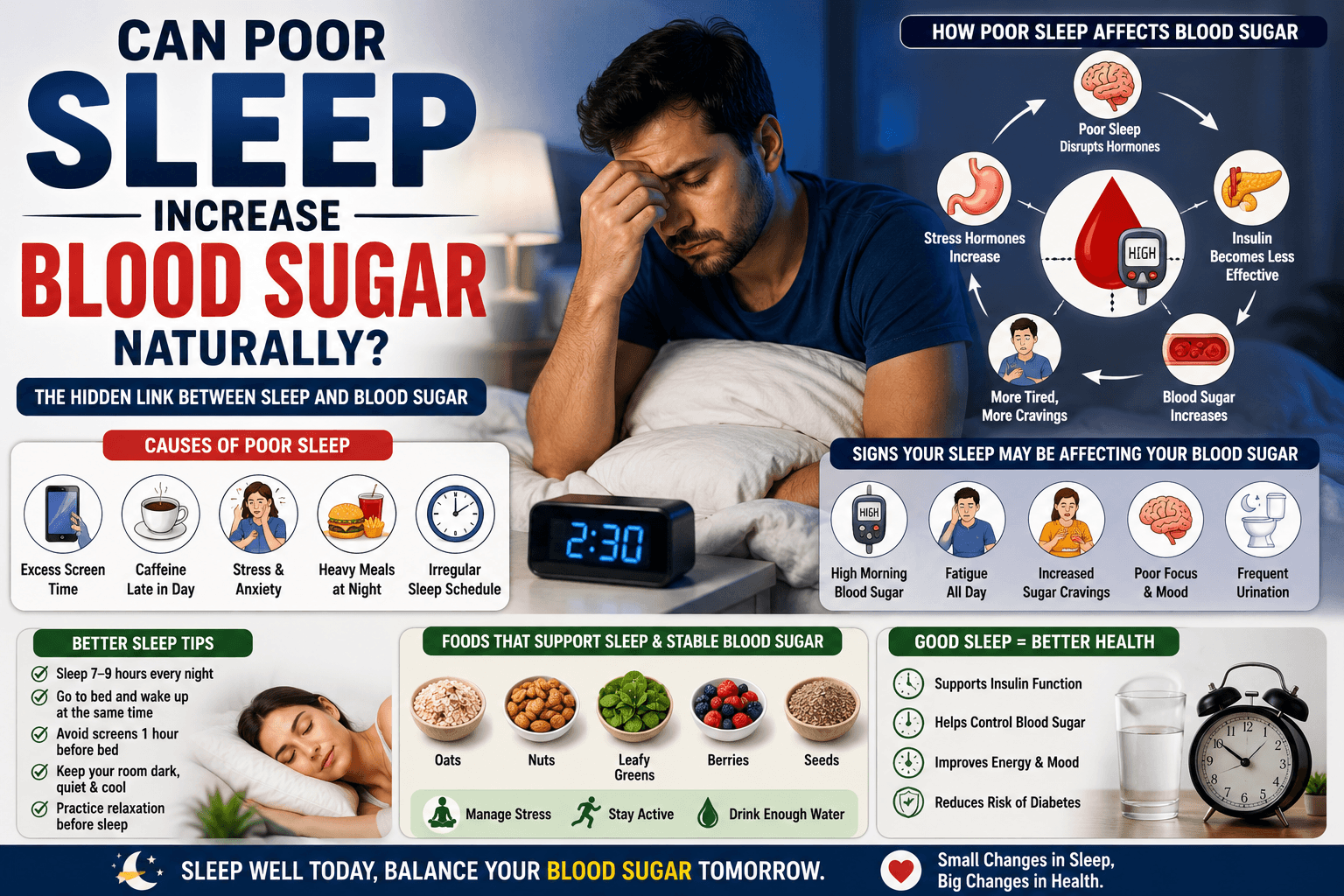
Can Poor Sleep Increase Blood Sugar Naturally?
Quick Answer
Yes, poor sleep may affect Sleep & Sugar by changing hormones that help control blood sugar. Sleeping too little or having poor-quality sleep may reduce the body’s ability to use insulin properly. Therefore, getting enough quality sleep, eating a balanced diet, and staying active may help support healthy blood sugar levels.
Introduction
Most people know that healthy food and exercise help control blood sugar.
However, many people forget about sleep.
Sleep gives your body time to recover and balance hormones.
When you do not sleep well, your body may struggle to control blood sugar properly.
As a result, you may feel tired, hungry, and less energetic the next day.
Therefore, good sleep is an important part of a healthy lifestyle.
What is Sleep & Sugar?
Sleep & Sugar refers to the connection between sleep quality and blood sugar control.
While you sleep, your body repairs itself.
It also balances hormones that affect insulin and glucose.
When sleep is poor, these processes may not work as well.
Consequently, blood sugar levels may become harder to manage.
Causes of Poor Sleep Affecting Blood Sugar
Several habits and conditions may disturb sleep and influence Sleep & Sugar.
1. Sleeping Less Than Seven Hours
Short sleep may affect hormones that control blood sugar.
Therefore, regular sleep is important.
2. Stress
Stress increases cortisol, a hormone that may affect glucose levels.
As a result, blood sugar may rise temporarily.
3. Irregular Sleep Schedule
Sleeping and waking at different times every day may affect your body’s natural clock.
Consequently, hormone balance may change.
4. Too Much Screen Time
Phones, tablets, and televisions emit blue light.
This may delay sleep and reduce sleep quality.
5. Eating Heavy Meals Late at Night
Large meals close to bedtime may disturb sleep.
Therefore, lighter evening meals are often a better choice.
6. Lack of Physical Activity
Regular exercise supports better sleep and overall health.
However, inactivity may reduce sleep quality.
Signs and Symptoms
Poor sleep and blood sugar changes may cause:
- Morning tiredness
- Increased hunger
- Frequent thirst
- Difficulty concentrating
- Mood changes
- Daytime sleepiness
- Low energy
- Increased cravings for sugary foods
Persistent symptoms should be evaluated by a healthcare professional.
Risk Factors
The risk may be higher if you:
- Sleep less than seven hours
- Work night shifts
- Have chronic stress
- Are overweight
- Live a sedentary lifestyle
- Eat unhealthy foods regularly
- Have a family history of diabetes
How It Affects Daily Life
Poor sleep can affect more than blood sugar.
It may also:
- Reduce concentration
- Lower productivity
- Increase cravings
- Reduce physical performance
- Affect mood
- Increase daytime fatigue
Consequently, daily activities may become more difficult.
Benefits of Early Management
Improving sleep habits may help support:
- Better energy
- Improved concentration
- Healthy blood sugar control
- Better mood
- Healthier food choices
- Overall wellness
Therefore, healthy sleep deserves as much attention as diet and exercise.
Natural Ways to Support Better Health
Follow a Regular Sleep Schedule
Go to bed and wake up at the same time every day.
This helps regulate your body’s internal clock.
Exercise Regularly
Daily physical activity supports better sleep quality.
However, avoid intense workouts close to bedtime.
Reduce Screen Time Before Bed
Turn off electronic devices at least one hour before sleeping.
As a result, your body can prepare for rest.
Create a Comfortable Sleep Environment
Keep your bedroom quiet, cool, and dark.
Consequently, sleep quality often improves.
Manage Stress
Try deep breathing, meditation, or gentle yoga.
These habits may help your mind relax before bed.
Diet Tips
Eat More
✅ Whole grains ✅ Oats ✅ Green vegetables ✅ Lentils ✅ Beans ✅ Nuts ✅ Seeds ✅ Fresh fruits
Drink
✅ Water ✅ Herbal tea (caffeine-free)
Limit
❌ Sugary drinks ❌ Excess caffeine at night ❌ Heavy late-night meals ❌ Highly processed foods
Lifestyle Tips
Healthy routines support both sleep and blood sugar.
- Sleep 7–9 hours every night.
- Stay physically active.
- Eat balanced meals.
- Reduce stress.
- Drink enough water.
- Avoid smoking.
- Limit alcohol.
Common Mistakes to Avoid
Avoid these habits:
❌ Staying awake late every night
❌ Using your phone in bed
❌ Drinking coffee late in the evening
❌ Eating heavy meals before sleep
❌ Ignoring stress
❌ Skipping exercise
When Should You Seek Professional Advice?
Consult a healthcare professional if:
- Sleep problems last for several weeks.
- You snore loudly or stop breathing during sleep.
- Blood sugar remains high despite healthy habits.
- You feel tired every day.
- You experience frequent nighttime urination or excessive thirst.
Early evaluation can help identify sleep disorders or blood sugar problems.
How Poor Water Intake Can Affect Piles
Frequently Asked Questions
Can poor sleep increase blood sugar naturally?
Yes. Poor sleep may affect hormones and insulin sensitivity, making blood sugar harder to regulate.
How many hours of sleep support healthy blood sugar?
Most adults benefit from 7–9 hours of quality sleep each night.
Does stress affect sleep and blood sugar?
Yes. Stress may reduce sleep quality and temporarily increase blood sugar levels.
Can exercise improve sleep?
Yes. Regular physical activity often supports better sleep quality and overall health.
Should people with diabetes focus on sleep?
Yes. Healthy sleep is an important part of overall diabetes management, along with diet, exercise, and medical care.
Final Thoughts
The connection between Sleep & Sugar is stronger than many people realize.
Healthy sleep supports hormone balance, insulin function, and overall well-being.
Although one poor night’s sleep is unlikely to cause lasting problems, ongoing sleep deprivation may affect blood sugar management over time.
For the best results, combine quality sleep with healthy eating, regular exercise, stress management, and routine medical check-ups.
If sleep problems or blood sugar concerns continue, consult a qualified healthcare professional.