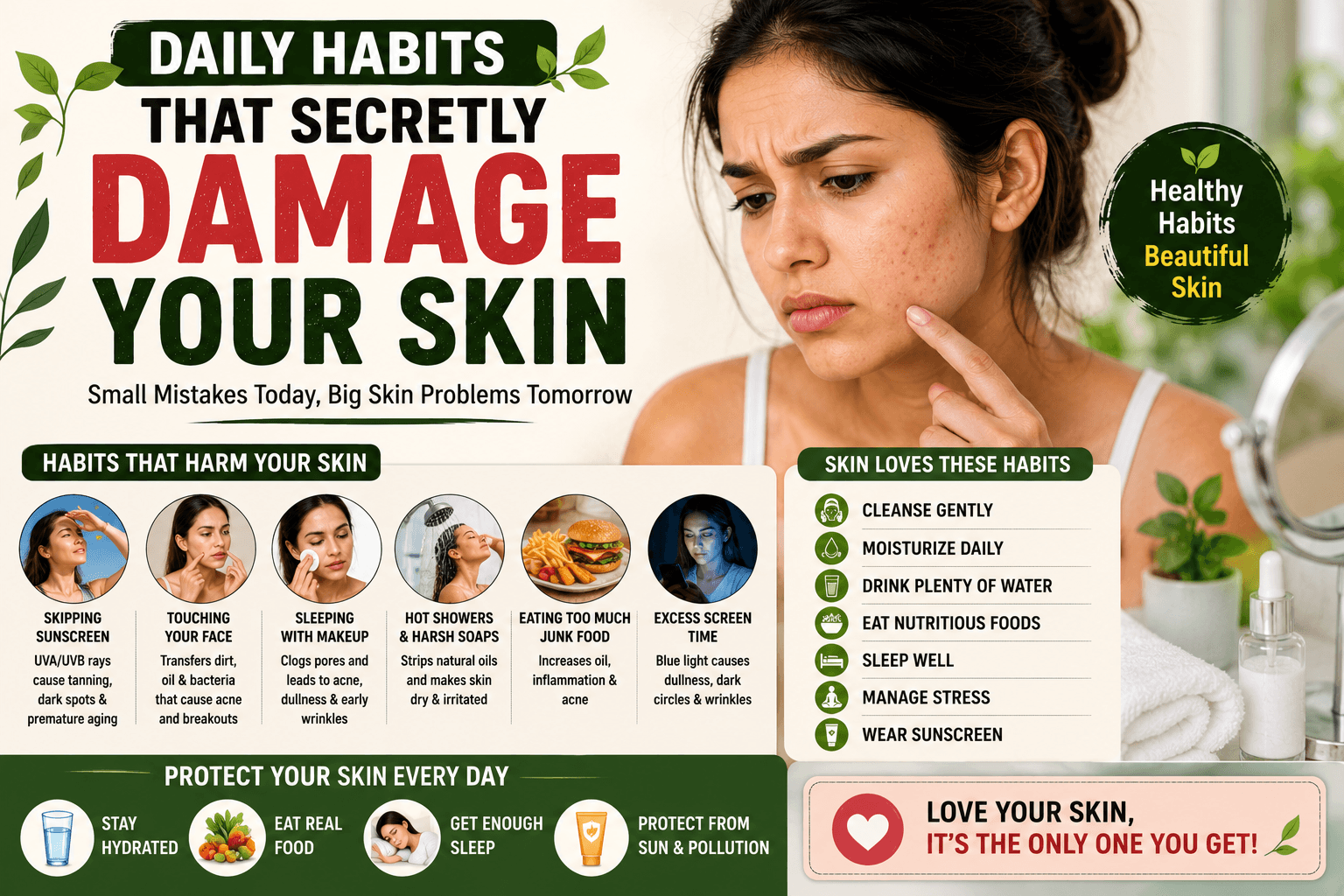
Daily Habits That Secretly Damage Your Skin
Quick Answer
Skin damage is often caused by everyday habits rather than major health problems. Skipping sunscreen, touching your face often, poor sleep, dehydration, unhealthy food, and stress can slowly affect your skin. Therefore, healthy daily habits can help keep your skin clear, smooth, and healthy.
Introduction
Most people want healthy and glowing skin.
However, many daily habits quietly harm the skin without us noticing.
These habits may not cause problems overnight.
Instead, they slowly affect your skin over time.
As a result, your skin may become dry, dull, or irritated.
Fortunately, small lifestyle changes can make a big difference.
Therefore, learning about skin damage can help you protect your skin every day.
What is Skin Damage?
Skin damage happens when the skin loses its natural strength, moisture, or protective barrier.
Healthy skin protects your body from germs, sunlight, pollution, and dryness.
However, poor daily habits can weaken this protection.
Consequently, the skin may become rough, sensitive, or unhealthy.
Causes of Skin Damage
Many everyday habits can contribute to skin damage.
1. Skipping Sunscreen
Sunlight contains ultraviolet (UV) rays.
These rays may damage the skin, even on cloudy days.
Therefore, wearing sunscreen daily is important.
2. Not Drinking Enough Water
Water helps keep skin hydrated.
Without enough fluids, skin may become dry and dull.
3. Sleeping Too Little
The body repairs skin while you sleep.
Poor sleep may affect this natural process.
As a result, your skin may look tired.
4. Touching Your Face Frequently
Hands carry dirt and bacteria.
Touching your face often may increase skin irritation and breakouts.
5. Using Very Hot Water
Hot water removes natural skin oils.
Consequently, your skin may become dry and itchy.
6. Eating Too Much Junk Food
Highly processed foods may not provide the nutrients your skin needs.
Therefore, a balanced diet is important.
7. Smoking
Smoking reduces blood flow to the skin.
Over time, it may speed up visible signs of skin aging.
8. High Stress
Stress may affect hormones that influence skin health.
As a result, some people notice more skin problems during stressful periods.
9. Not Removing Makeup
Sleeping with makeup may block pores.
Consequently, skin irritation and breakouts may become more common.
10. Ignoring Pollution
Dust and pollution settle on the skin every day.
Therefore, gentle cleansing helps remove impurities.
Signs and Symptoms
Common signs of skin damage include:
- Dry skin
- Dull appearance
- Rough texture
- Acne or breakouts
- Redness
- Itching
- Fine lines
- Uneven skin tone
- Increased sensitivity
Risk Factors
Some people have a higher chance of developing skin damage.
Risk factors include:
- Excessive sun exposure
- Smoking
- Poor diet
- Dehydration
- Lack of sleep
- High stress
- Pollution exposure
- Aging
Therefore, healthy habits become even more important.
How It Affects Daily Life
Skin damage may affect more than appearance.
It can also:
- Lower self-confidence
- Make makeup harder to apply
- Increase skin sensitivity
- Cause discomfort
- Affect social confidence
Therefore, healthy skin supports overall well-being.
Benefits of Early Management
Taking care of your skin early may help:
- Maintain healthy skin
- Improve hydration
- Reduce irritation
- Support natural skin repair
- Improve skin texture
- Maintain a healthy glow
Natural Ways to Support Better Health
Drink Enough Water
Water supports healthy skin hydration.
Therefore, drink fluids regularly throughout the day.
Use Sunscreen Every Day
Choose a broad-spectrum sunscreen before going outdoors.
Even short sun exposure can affect the skin.
Cleanse Gently
Wash your face with a mild cleanser.
Avoid harsh scrubbing.
Moisturize Daily
A moisturizer helps lock in water.
Consequently, skin stays softer and smoother.
Sleep Well
Aim for 7–8 hours of quality sleep each night.
Good sleep supports natural skin repair.
Manage Stress
Meditation, exercise, and hobbies may help reduce stress.
As a result, overall skin health may improve.
Diet Tips
Eat foods that support healthy skin.
Include More:
✅ Fresh fruits ✅ Green vegetables ✅ Nuts ✅ Seeds ✅ Whole grains ✅ Lentils ✅ Yogurt
Drink:
✅ Water ✅ Coconut water
Limit:
❌ Sugary drinks ❌ Fried foods ❌ Highly processed snacks ❌ Excess sugar
Lifestyle Tips
Healthy habits protect your skin.
- Wear sunscreen daily.
- Stay hydrated.
- Sleep well.
- Exercise regularly.
- Wash your face gently.
- Avoid smoking.
- Manage stress.
Consequently, your skin may remain healthier for longer.
Common Mistakes to Avoid
Avoid these habits:
❌ Sleeping with makeup
❌ Using hot water daily
❌ Picking pimples
❌ Skipping sunscreen
❌ Smoking
❌ Ignoring hydration
❌ Using harsh skin products too often
When Should You Seek Professional Advice?
Consult a dermatologist if:
- Skin irritation lasts for several weeks
- Severe acne develops
- New moles change in size or color
- Rashes continue
- Skin becomes painful or infected
- Home care does not improve symptoms
Professional evaluation can help identify the underlying cause and recommend suitable treatment.
Why Hair Gets Dry and Frizzy in Weather Changes
Frequently Asked Questions
What daily habits damage your skin?
Skipping sunscreen, poor sleep, dehydration, smoking, stress, touching your face often, and unhealthy eating may slowly damage your skin.
Can stress affect skin health?
Yes. Stress may affect hormones that influence acne, skin sensitivity, and overall skin appearance.
Is drinking water good for the skin?
Yes. Proper hydration supports healthy-looking skin and helps maintain the skin’s natural moisture balance.
Why should I wear sunscreen every day?
Daily sunscreen helps protect the skin from harmful UV rays that can cause premature aging and skin damage.
When should I visit a dermatologist?
Seek professional advice if skin problems persist, become painful, worsen, or do not improve with proper skin care.
Final Thoughts
Skin damage often develops slowly because of everyday habits.
Fortunately, simple lifestyle changes can help protect your skin.
Drink enough water, sleep well, use sunscreen daily, eat nutritious foods, and manage stress.
Most importantly, be consistent with your skin care routine.
If skin problems continue despite good care, consult a qualified dermatologist for personalized advice.