What Is Internal vs External Piles?
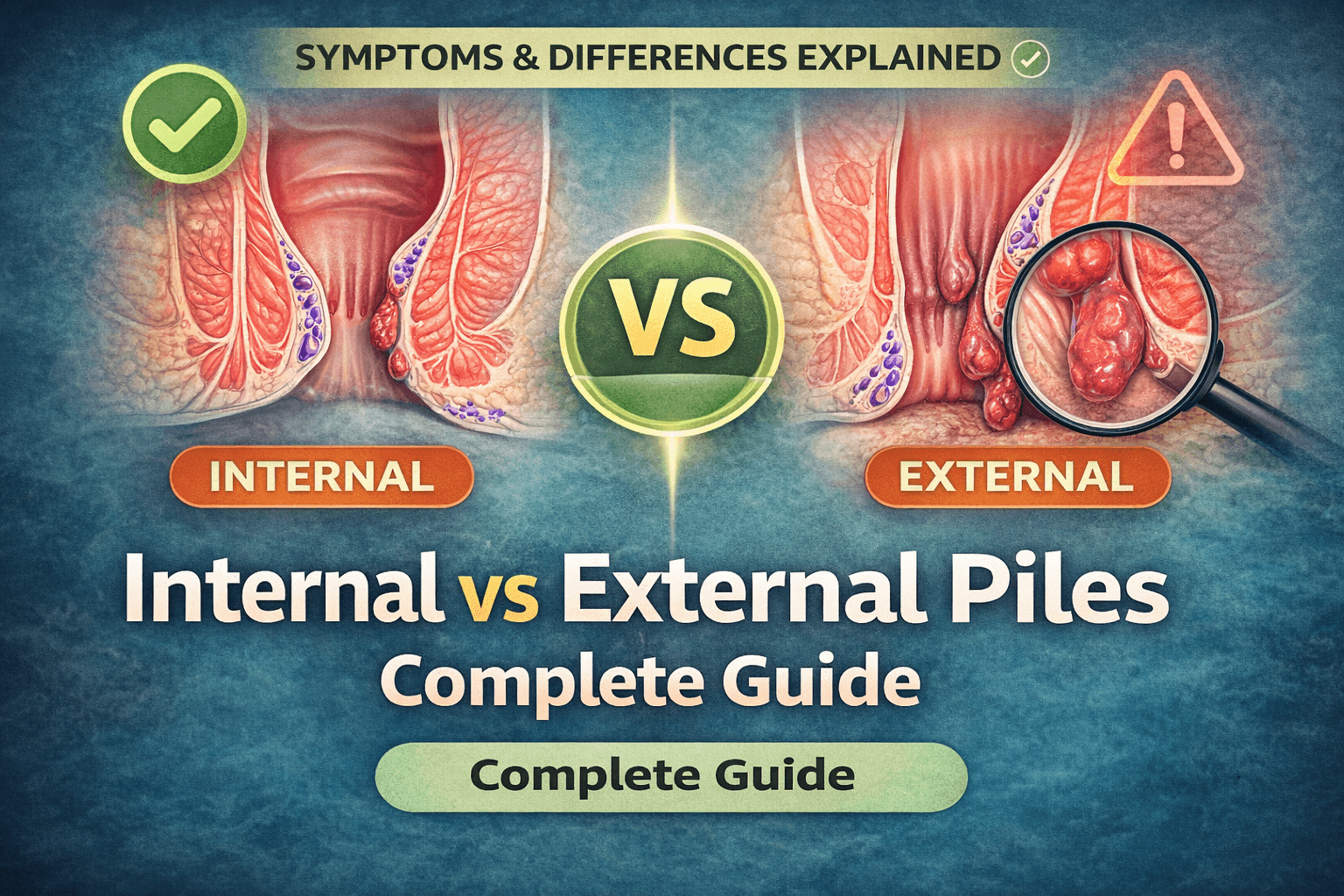
Internal vs External Piles is one of the most searched topics among people suffering from hemorrhoids. Many patients feel confused about the difference between internal and external piles, especially when symptoms appear similar. Understanding Internal vs External Piles helps in identifying the correct symptoms, choosing proper care, and preventing complications.
What Are Piles?
Piles, also known as hemorrhoids, occur when blood vessels in the rectal or anal region become swollen or inflamed. This swelling usually happens due to excessive pressure during bowel movement or poor digestive health.
Piles can develop gradually and often begin with mild symptoms. If left untreated, they may lead to discomfort, bleeding, or pain during daily activities.
What Are Internal Piles?
Internal piles develop inside the rectum. Since they form in an area where nerve endings are limited, they usually do not cause severe pain during early stages.
Internal piles are often difficult to detect because they remain hidden inside the body. Many patients only notice them when bleeding occurs during bowel movement.
Common Symptoms of Internal Piles
-
Painless bleeding during stool passing
-
Feeling of incomplete bowel movement
-
Mild discomfort inside rectal area
-
Occasional mucus discharge
-
Prolapse (piles slipping outside during severe stage)
Internal piles can become more noticeable if they enlarge or move outside the anal opening.
What Are External Piles?
External piles develop around the outer area of the anus. Unlike internal piles, this area contains sensitive nerve endings. Therefore, external piles often cause noticeable pain and discomfort.
External piles are usually easier to identify because they appear as lumps or swelling around the anal region.
Common Symptoms of External Piles
-
Pain while sitting or walking
-
Swelling or hard lump near anus
-
Itching or irritation around anal area
-
Burning sensation during bowel movement
-
Blood clot formation in severe cases
External piles can cause more discomfort in daily activities compared to internal piles.
Key Differences Between Internal and External Piles
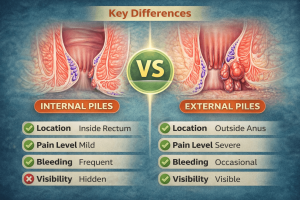
Understanding the difference between both types helps patients identify symptoms early and choose proper treatment.
Location
Internal piles form inside the rectum, whereas external piles appear outside the anus.
Pain Level
Internal piles usually cause minimal pain. On the other hand, external piles can cause severe pain due to nerve sensitivity.
Bleeding Symptoms
Bleeding is more common in internal piles. External piles may bleed occasionally but usually cause swelling and irritation.
Visibility
Internal piles are not visible in early stages. External piles are usually visible as lumps or swelling.
Daily Discomfort
External piles create more difficulty in sitting, walking, or performing daily activities.
Why Do Internal and External Piles Develop?
Both types of piles usually develop due to increased pressure on rectal veins. However, several lifestyle factors increase this pressure.
Chronic Constipation
Straining during bowel movement is one of the biggest causes of piles development.
Poor Dietary Habits
Low fiber diet and junk food reduce digestive strength and increase stool hardness.
Prolonged Sitting
Long sitting hours reduce blood circulation in rectal veins and increase swelling risk.
Pregnancy
Increased pelvic pressure during pregnancy raises piles risk in women.
Obesity
Excess body weight increases pressure on anal blood vessels.
How Lifestyle Influences Both Types of Piles
Modern lifestyle habits are one of the biggest reasons piles cases are increasing. Irregular meal timing, stress, low physical activity, and poor sleep disturb digestive balance. Over time, this leads to constipation and piles development.
Maintaining healthy lifestyle habits helps prevent both internal and external piles.
Treatment Options for Internal vs External Piles
Natural healing methods focus on improving digestive health and reducing inflammation. Ayurveda supports piles recovery by addressing root causes instead of temporary symptom control.
Improving Digestive Strength
Herbal ingredients help regulate bowel movement and prevent constipation.
Reducing Inflammation
Natural formulations help soothe irritated tissues and reduce swelling.
Supporting Tissue Healing
Ayurvedic herbs support recovery of swollen veins and improve blood circulation.
Wellness approaches followed by companies like Healthywe Life Sciences Pvt Ltd focus on combining traditional Ayurvedic knowledge with modern research to promote safe piles care.
Prevention Tips for Internal vs External Piles
Preventive lifestyle habits reduce piles risk significantly.
-
Drink adequate water daily
-
Maintain regular bowel routine
-
Avoid straining during stool passing
-
Exercise regularly
-
Take breaks during long sitting hours
-
Practice stress management techniques
When Should You Seek Professional Help?
Patients should consult healthcare professionals if symptoms become severe or persistent. Warning signs include:
-
Frequent bleeding
-
Increasing pain
-
Large swelling or lumps
-
Difficulty passing stool
-
Symptoms lasting several weeks
Early consultation helps prevent complications and advanced treatment procedures.
Internal and external piles are different conditions, but both can affect daily comfort and quality of life. Internal piles often cause bleeding without pain, while external piles usually cause visible swelling and discomfort.
Understanding symptoms, maintaining healthy lifestyle habits, and focusing on digestive health helps prevent piles effectively. Natural wellness solutions combined with early awareness provide long-term support and comfort.