Quick Answer
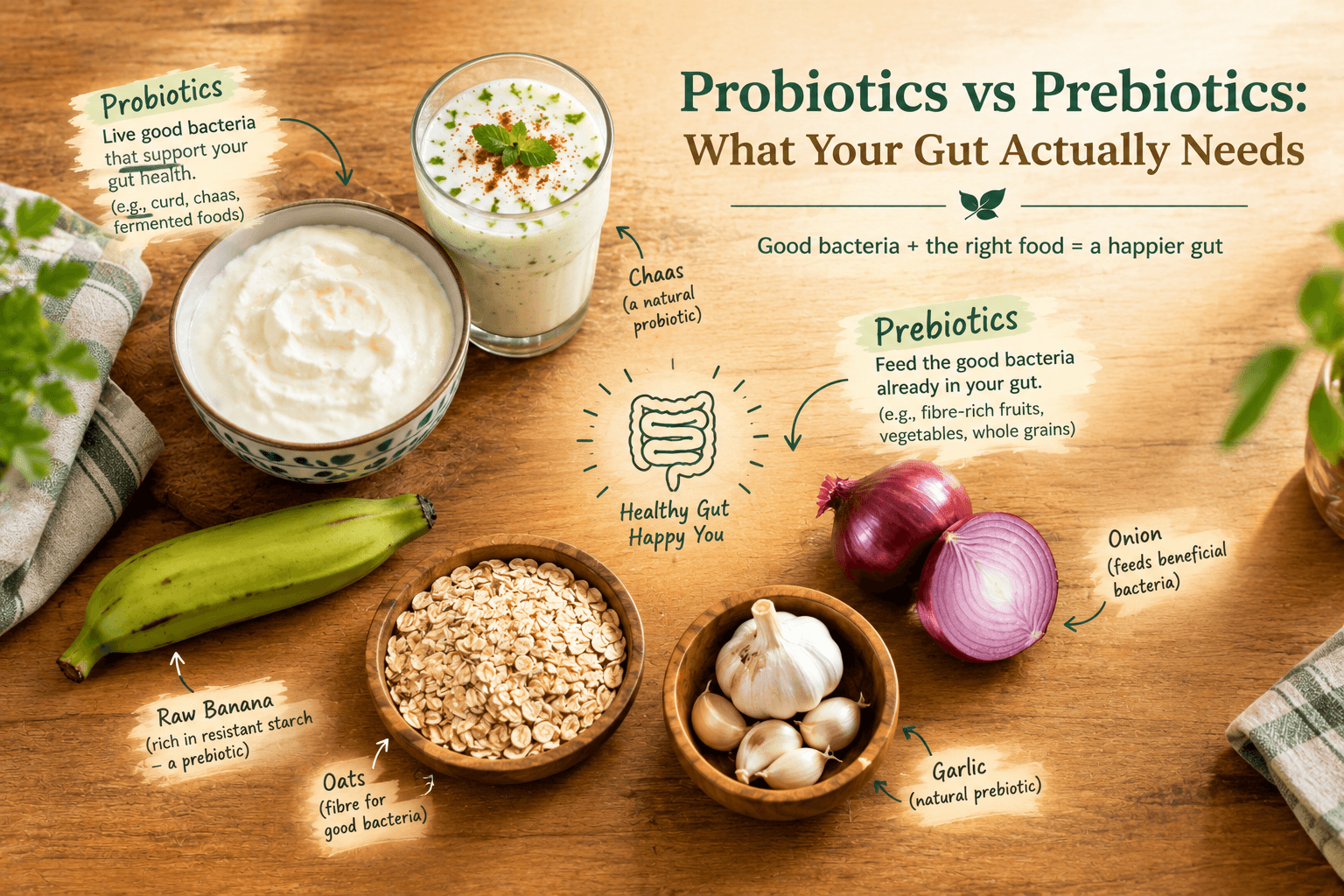
The difference between probiotics vs prebiotics is simple to state: probiotics are live, beneficial microorganisms (the “seeds”), while prebiotics are specific food substances that those beneficial microbes already living in your gut feed on (the “fertiliser”). Neither is automatically better. Probiotics have the stronger evidence for specific, strain-matched uses, including a modest reduction in the length or frequency of common respiratory infections in some trials. Prebiotics, found in everyday foods like onion, garlic, bananas, oats, and legumes, support the good bacteria you already have and are a natural part of a fibre-rich Indian diet. For most healthy people, food comes first: a varied diet with curd or buttermilk, plenty of plant fibre, and good sleep and stress habits does more for the gut than any single supplement. This is general wellness information, not medical advice, so please consult your doctor before starting any supplement, especially if you have a medical condition or a weakened immune system.
Walk down the supplement aisle or scroll through any wellness feed and you will see “probiotic,” “prebiotic,” and increasingly “synbiotic” and “postbiotic” splashed across labels, often with promises about immunity and digestion. It is easy to feel that you must be doing something wrong if your gut is not on a daily capsule. The truth is more reassuring, and a little more nuanced. In this article, we will walk through probiotics vs prebiotics in detail: what each one actually is, what scientists really mean by the words, what the research says about gut health and immunity, which familiar Indian foods already do much of the work, and what Ayurveda has taught for centuries about digestion and the gut. We will also be honest about what is still uncertain, because that is where most marketing goes quiet.
Why Everyone Is Confused About Probiotics and Prebiotics
Part of the confusion is simply that the words look and sound alike. Both start with “pro” and “pre,” both end in “biotics,” and both are marketed for the same area of the body. Another part of the confusion is that the terms are used loosely. A yoghurt label may say “contains probiotics” when it merely contains live cultures that make yoghurt. A fibre powder may say “prebiotic” when it is just fibre. A capsule may list a dozen bacteria without saying which exact strains they are or how many are alive at the end of shelf life.
To bring order to this, an international group of scientists called the International Scientific Association for Probiotics and Prebiotics (ISAPP) has published agreed-upon definitions for the whole “biotics” family. These definitions are the best common ground we have, and they are quite strict. They are a good starting point because they help you see through vague labelling. Let us go through them one by one.
What Is a Probiotic?
By the consensus definition, a probiotic is a live microorganism that, when taken in adequate amounts, gives a health benefit to the person taking it. Three parts of that sentence matter a great deal.
- Live. A probiotic must be alive when you take it. Heat, long storage, and stomach acid can all reduce the number of living organisms, which is why survival through shelf life matters.
- Adequate amounts. A benefit seen at one dose in a trial does not automatically carry over to a lower dose in a different product.
- A demonstrated health benefit. It is not enough for a microbe to be “friendly” or to live in the gut. There needs to be evidence, ideally from human trials, that it does something useful.
Strains Matter More Than Names
One of the most important ideas in probiotic science is that benefits are strain-specific. Bacteria are named in three parts: genus, species, and strain, for example Lactobacillus rhamnosus GG. The first two parts are like a family and first name, and the strain code is like a particular person’s identity. Two strains of the same species can behave quite differently, so a result for one strain cannot simply be assumed for another.
This is why a label that says only “Lactobacillus” or “contains 10 billion CFU” tells you very little. The useful questions are: which exact strains, how many live organisms per dose by the end of shelf life, and what human trials support that specific strain for the benefit being claimed. Recent large reviews of respiratory infections in children make this point repeatedly, finding that different strain groups had different effects on different kinds of infections, which is the reason researchers keep calling for tailored rather than generic probiotic choices.
Where Probiotics Come From
Probiotics are available as capsules, powders, drops, and in some foods and drinks. Commonly studied groups include Lactobacillus (now reclassified into several newer genus names in the scientific literature, though many products still use the older name), Bifidobacterium, and the beneficial yeast Saccharomyces boulardii. You will also see multi-strain products, which combine several strains in one formula. Whether a multi-strain product is better than a single well-studied strain depends on the health goal, and the evidence is mixed.
What Is a Prebiotic?
A prebiotic is defined as a substrate that is selectively used by microorganisms in your body to give a health benefit. In plain language, it is a food ingredient that your own beneficial gut microbes can eat and that helps them thrive, while you yourself cannot digest it.
The word “selectively” is doing important work. Plenty of fibres are fermented by many kinds of gut microbes, but a true prebiotic is one that preferentially feeds specific beneficial groups. The consensus definition also makes clear that prebiotics are not the same thing as dietary fibre in general. All prebiotics are fermentable carbohydrates or similar compounds, but not all fibre qualifies as prebiotic, and the benefit must be shown, not assumed.
The Main Prebiotic Types
- Inulin and fructo-oligosaccharides (FOS). Found naturally in onions, garlic, bananas, chicory root, and some other vegetables. Systematic reviews of human studies suggest inulin-type fructans can increase populations of Bifidobacterium, Lactobacillus, and Faecalibacterium prausnitzii, a bacterium associated with a healthy gut.
- Galacto-oligosaccharides (GOS). Naturally present in milk and in some legumes, and also made commercially. GOS is among the best studied prebiotics for supporting Bifidobacterium.
- Resistant starch. Starch that escapes digestion in the small intestine, found in cooked-and-cooled rice or potato, slightly under-ripe bananas, and some whole grains and legumes.
- Other fermentable fibres and plant compounds. Including those in oats, barley, and legumes. Some plant polyphenols are also being studied as possible prebiotics, though that is an emerging area.
What Happens When Gut Microbes Feed on Prebiotics
When beneficial gut microbes ferment prebiotic fibre in the large intestine, they produce short-chain fatty acids, mainly acetate, propionate, and butyrate. These molecules are of great interest to researchers. Butyrate in particular is an important energy source for the cells lining the colon, and short-chain fatty acids more broadly are linked in laboratory and clinical research to a stronger gut barrier, a calmer inflammatory response, and communication with the immune system. This is one of the biological bridges between plant fibre in your meal and immune balance in your body, and it is a major reason that “feed your good bacteria” is more than a slogan.
What Is a Synbiotic?
A synbiotic combines live microorganisms with a substrate that host microorganisms can use, together giving a health benefit. People often assume this simply means “probiotic plus prebiotic in one product,” and that is partly right. The expert panel actually described two kinds:
- Complementary synbiotics. A probiotic and a prebiotic, each of which independently meets the evidence requirements for its own category, put together so their benefits add up.
- Synergistic synbiotics. A live microbe paired with a substrate specifically chosen so that the microbe selectively uses it, and the combination is designed to work cooperatively.
The idea is attractive: give the helpful microbe its preferred food at the same time. In practice, the supporting evidence varies a lot from product to product. A traditional example that appears in everyday life is eating curd (live cultures) along with a high-fibre meal, even if nobody has formally studied that exact pairing as a synbiotic.
What Is a Postbiotic?
This is the newest member of the family. A postbiotic is defined as a preparation of inanimate microorganisms and, or, their components that gives a health benefit. In other words, the microbes are deliberately inactivated (not alive), but the cells or their structural parts are retained and still do something useful.
Two points are worth knowing. First, a postbiotic is not simply the leftover “waste” from fermentation. The consensus panel specified that isolated metabolites, culture filtrates, and vaccines are not postbiotics. Second, because they are not alive, postbiotics may be more stable on the shelf, which interests manufacturers. Evidence for specific postbiotic products is still early, so for most people this is a term to recognise rather than something to shop for.
Fermented Foods Are Not the Same as Probiotics
This is one of the most useful distinctions for an Indian reader, because so much of our traditional diet is fermented. The consensus position is that fermented foods are foods made through desired microbial growth and enzyme action on food components, and they are not automatically probiotics. A food can be rich in live microbes and still not be “a probiotic” in the strict sense, because probiotic status requires specific, characterised strains with evidence of a benefit at a defined dose.
That does not mean fermented foods are unimportant. They can still deliver live microbes, beneficial compounds produced during fermentation, and improved digestibility, and they have been part of healthy eating patterns for generations. It simply means you should not assume that every fermented food delivers a measured probiotic dose, and you should not expect a spoonful of any particular pickle to behave like a clinical product.
Another practical point: many Indian fermented foods are cooked after fermenting. Idli, dosa, dhokla, and similar foods are steamed or fried, which generally kills the live microbes. These foods remain nutritious and gentle on digestion, but they are better thought of as fermented foods than as sources of live cultures. Curd, buttermilk, and kanji, eaten without heating, are the more straightforward live-culture options, subject to how they were made and stored.
Probiotics vs Prebiotics: The Key Differences at a Glance
- What they are. Probiotics are live microorganisms. Prebiotics are non-living substances, mostly specific fibres or carbohydrates, that feed beneficial microbes.
- What they do. Probiotics add beneficial organisms (temporarily, in most people). Prebiotics support the beneficial organisms you already have.
- Where they come from. Probiotics come from specific strains in supplements and some foods. Prebiotics come from plant foods such as onion, garlic, banana, oats, and legumes, and from supplements.
- Stability. Probiotics can be sensitive to heat, time, and stomach acid. Prebiotics are generally more stable.
- How specific the evidence is. Probiotic benefits are tied to particular strains, doses, and uses. Prebiotic evidence is strongest for supporting Bifidobacterium and short-chain fatty acid production, and weaker for specific health outcomes.
- Typical side effects. Probiotics: usually mild, some people notice gas at first. Prebiotics: gas and bloating are more common, especially if you increase quickly.
How the Gut Connects to Immunity
To understand why anyone links probiotics vs prebiotics to immunity at all, it helps to know how closely the gut and the immune system work together. A large share of the body’s immune cells sit in and around the digestive tract, in tissue known as gut-associated lymphoid tissue. This arrangement makes sense: your gut is a long tube that meets the outside world with every meal, so it needs a sophisticated defence and communication system.
The trillions of microbes living in the intestine, collectively called the gut microbiota, are in constant conversation with that immune tissue. Research suggests they help train immune cells, influence how strongly the body reacts to harmless substances, support the protective gut lining, and produce compounds such as short-chain fatty acids that act as signals. When this microbial community is diverse and well fed, the system tends to stay balanced. When it is disturbed by a poor diet, repeated antibiotic courses, chronic stress, or illness, the balance can shift.
The Gut Barrier
The cells lining your intestine form a barrier that decides what passes into the bloodstream. A systematic review of studies on prebiotic foods, probiotics, and synbiotics suggested that these approaches may help support the gut barrier, partly by reducing levels of zonulin, a protein linked to barrier looseness, and by moderating inflammation. The evidence is encouraging but still developing, and results across studies are not uniform, so this is best viewed as a promising area rather than a settled one.
Why This Does Not Mean “Boosting” Immunity
It is worth pausing on a word. Immunity is not a single dial you turn up. A healthy immune system is balanced, responding firmly to real threats and staying calm otherwise. The honest framing of probiotics, prebiotics, and gut health is that they may help support a well-regulated immune system, not that they supercharge it. This is also more accurate than the common marketing language.
What Does the Research Say About Probiotics and Immunity?
This is where an honest, balanced look matters most. Probiotic research is large and growing, but it varies in quality, and the results depend heavily on the strain, dose, and population studied.
Respiratory Infections in Adults
A major 2025 network meta-analysis published in eClinicalMedicine looked for ways to prevent respiratory tract infections in adults. It combined 107 randomised trials involving more than 100,000 adults and compared several supplement types. Among the probiotics, Bifidobacterium animalis and multi-strain probiotic formulas were associated with a lower risk of respiratory infections, with reductions in the region of roughly 20 percent and 10 percent respectively compared with placebo. Multi-strain products also appeared to be linked with shorter and less severe symptoms. In adults aged 65 and over, only multi-strain probiotics showed a statistically significant benefit in that analysis.
These are encouraging findings, but they should be read in context. They describe average effects across many trials, they are not a promise for any one person, and the certainty of evidence for different comparisons varied. Probiotics were one of several categories examined, and results for other approaches differed.
Shorter Illness Rather Than Prevention
An earlier systematic review of good-quality trials found that Lactobacillus and Bifidobacterium probiotics were associated with illness episodes that were shorter by roughly half a day to a day compared with placebo, in otherwise healthy children and adults. Another analysis found that Lactobacillus rhamnosus GG modestly shortened the duration of respiratory infections. A modest benefit like this is real but small, which is a more honest summary than the dramatic claims on some packaging.
Evidence Quality Is Mixed
A systematic review focused on preventing upper respiratory infections in adults concluded that the evidence suggesting probiotics may help is of low quality. Another review looking at probiotics, prebiotics, and synbiotics for preventing gastrointestinal infections in non-elderly adults noted that results should be interpreted cautiously because there were few studies, a high risk of bias, and unexplained variation that may reflect differences between strains. In short, a signal exists, but the quality of the underlying trials limits how firmly anyone can speak.
Children and Strain-Specific Effects
A recent network meta-analysis in healthy children with respiratory infections found strain-specific patterns. For instance, Bifidobacterium-based products were linked with a shorter cough in lower respiratory infections, while Lactobacillus-based products were linked with shorter illness duration in both upper and lower respiratory infections. The authors emphasised that this variation points to a need for tailored selection rather than a one-size-fits-all approach. For parents, the practical message is to speak with a paediatrician before giving any probiotic to a child, rather than choosing one from a shelf.
A Fair Summary on Probiotics
Putting it together, probiotics appear to offer a modest benefit for some people in some situations, particularly in shortening or slightly reducing the frequency of respiratory infections, with the strongest signals coming from specific strains and multi-strain formulas. They are not a replacement for sleep, nutrition, vaccination, or medical care, and a random probiotic may do very little. The key phrase is “specific strain for a specific purpose.”
What Does the Research Say About Prebiotics?
Prebiotic research is in some ways more straightforward and in other ways more limited.
What Is Well Established
Human studies on inulin-type fructans consistently show that they can increase beneficial groups such as Bifidobacterium. In one study referenced in a review, people with obesity who took 16 grams a day of native inulin for three months showed a substantial rise in Bifidobacterium compared with a control. Reviews also note that the “bifidogenic” effect of short-chain FOS depends on dose, with noticeable increases seen at intakes from roughly 2.5 to 10 grams a day. Fermentation of these fibres also raises short-chain fatty acid production, which supports the gut environment.
What Is Less Certain
Here is a point that marketing rarely mentions. The European Food Safety Authority has declined most health claims for prebiotics such as FOS, GOS, and inulin beyond their effect on regularity, because the available evidence did not convincingly link microbiota changes to a measurable health benefit in people. This does not mean prebiotics are useless, but it shows that “it changes bacteria counts” and “it improves your health outcomes” are two different statements, and the second needs more proof.
Prebiotics and the Gut Barrier
Some trials suggest prebiotic foods may help support gut barrier markers. For example, a study in healthy young people found that inulin-enriched pasta lowered serum zonulin compared with ordinary pasta, though results on related hormone markers were mixed across studies. As with probiotics, this is promising but not definitive.
The Everyday Takeaway
For most people, the simple and sensible conclusion is that eating a wide range of plant fibres is a safe, inexpensive way to feed beneficial gut microbes. You do not need an expensive powder to do that. A diet built on whole grains, legumes, vegetables, fruit, and nuts naturally supplies a mix of fermentable fibres, along with vitamins, minerals, and protective plant compounds that supplements do not replicate.
What About Synbiotics?
Because a synbiotic pairs a live microbe with a food for it, researchers have been keen to test whether the combination does more than either part alone. The network meta-analysis of respiratory infections included synbiotics among its categories, and the broader literature reports mixed but sometimes positive findings. The definition itself, as clarified by the experts, does not require that each component meets the full evidence standard separately, which is part of why the label can be applied loosely. As always, the question to ask is which specific combination has been tested, for which outcome, at what dose.
The Honest Limitations of Probiotic and Prebiotic Science
A few reasons for caution are worth stating plainly, because they affect how you should read any headline or product label.
- Strain specificity. A benefit seen for one strain does not transfer to others. Many products do not name their strains at all.
- Dose and survival. The number of live organisms at the time you take the product, not at the time of manufacture, is what counts.
- Individual differences. Each person’s gut microbiota is unique, shaped by diet, genetics, age, medicines, and environment. Two people can respond very differently to the same product.
- Temporary presence. In most people, probiotic organisms do not permanently colonise the gut. They tend to pass through, which is one reason benefits may fade after stopping.
- Study quality. Many trials are small, short, or funded by manufacturers, and meta-analyses repeatedly flag a risk of bias and wide variation between studies.
- Industry funding. Even the scientific associations in this field receive support from companies selling these products, although they describe themselves as independently guided. It is a reminder to read claims thoughtfully.
None of this means you should ignore the gut. It means you should hold health claims lightly, favour food-based habits, and treat supplements as optional extras chosen with care and, ideally, medical guidance.
Everyday Indian Foods That Supply Probiotic-Type Microbes
Indian kitchens have long made foods that rely on beneficial microbes. Remember that these are fermented foods and not guaranteed, measured probiotic products, but they are a sensible, enjoyable part of a gut-friendly diet.
- Curd (dahi). Homemade or good-quality curd made with live cultures is the most familiar choice. Eat it unheated, since high heat destroys the live organisms.
- Buttermilk (chaas or takra). Light, hydrating, and easy to digest, especially in warm weather. A pinch of roasted cumin and a little rock salt is a traditional addition.
- Kanji. A traditional fermented carrot or beetroot drink made in North India in winter, usually with mustard seeds.
- Traditionally fermented rice water and similar regional drinks. Such as pazhaya sadam (fermented rice) in South India, which many families have eaten for generations.
- Idli, dosa, and dhokla batter. The fermentation makes these foods lighter and often easier to digest, although cooking generally removes live microbes from the finished dish.
- Naturally fermented pickles. Some regional pickles are fermented, but many modern pickles are made with vinegar and heavy oil and salt, so they are not a reliable source of live cultures and are best taken in small amounts.
If you are lactose intolerant or avoid dairy, you may find that fermented dairy such as curd or buttermilk is better tolerated than plain milk, because fermentation reduces lactose. This varies from person to person, so go by how you feel.
Everyday Indian Foods That Act as Prebiotics
Prebiotic foods are already woven into everyday Indian cooking, often without anyone planning it.
- Onion and garlic. Natural sources of inulin and fructo-oligosaccharides, used in nearly every tadka and masala base.
- Bananas, especially slightly under-ripe ones. A source of fermentable fibre and resistant starch. Raw banana (kaccha kela) in sabzi is a traditional way to eat it.
- Whole grains such as oats, barley, whole wheat, and millets. Bring a range of fermentable fibres, and millets such as ragi and bajra are also nutrient-dense.
- Legumes and pulses. Dal, rajma, chana, and moong supply fibre and galacto-oligosaccharide-type compounds. Soaking and cooking well make them more comfortable to digest.
- Cooked and cooled rice or potatoes. Cooling cooked starches increases resistant starch, so leftover rice in a curd rice preparation is a quiet example.
- Vegetables and fruit. Including leafy greens, carrots, apples, and guava, which supply a variety of fibres and plant compounds.
- Nuts and seeds. Almonds, flaxseeds, and others add fibre and healthy fats.
A useful guide is variety. Researchers increasingly link a diverse mix of plant foods to a more diverse gut microbial community, so aiming for many different plant foods across the week is more helpful than relying on a single “superfood.”
Putting It Together: A Gut-Friendly Day of Eating
Here is how a simple, realistic day might look. It is an illustration, not a prescription, and portions should suit your appetite and health needs.
- Morning. Warm water on waking, then oats or a vegetable poha with peanuts, and a small bowl of curd.
- Mid-morning. A seasonal fruit such as a banana or guava, with a handful of nuts.
- Lunch. Dal, a whole-grain roti or millet-based dish, a vegetable sabzi made with onion and garlic, a fresh salad, and a glass of buttermilk.
- Evening. Roasted chana or sprouts chaat.
- Dinner. A lighter meal such as vegetable khichdi with a little ghee, eaten earlier in the evening.
Notice that this day contains prebiotic fibre at several meals and fermented dairy at two, without anything exotic or expensive. That is the heart of the gut-health message: consistency in everyday food matters more than any single product.
If You Want to Try a Probiotic Supplement
Some people choose a probiotic supplement, for example after a medical suggestion or a course of antibiotics. If that is you, a few questions will help you choose more wisely.
- Does the label name the exact strain? Genus, species, and strain (such as Lactobacillus rhamnosus GG), not just “Lactobacillus.”
- Does it say how many live organisms are present until the expiry date? Not just at manufacture.
- Is there human research on that specific strain for the benefit you want? A reputable manufacturer should be able to point you to it.
- Is the storage requirement realistic? Some products need refrigeration to stay viable, and this matters in hot Indian summers.
- Is it from a transparent, quality-tested brand? Labelling and quality vary widely in this category.
- Have you spoken to your doctor? Especially if you take other medicines or have a health condition.
Give any product a fair trial period, and stop if it does not suit you. If you do not notice any benefit, do not assume you are doing something wrong, since these effects are modest and vary between individuals.
Who Should Take Extra Care?
For most healthy people, probiotic foods and prebiotic fibre are considered safe. But some situations call for medical guidance first.
- People with weakened immune systems. Including those on chemotherapy, long-term steroids or immunosuppressants, or with serious illness. Rare cases of infection from probiotic organisms have been reported in severely ill or immunocompromised people.
- People with central venous lines, recent major surgery, or in intensive care. These situations call for individual decisions by the treating team.
- Premature infants and very young babies. Never give probiotics to a newborn or infant without a paediatrician’s advice.
- People with a history of serious gut conditions or short bowel syndrome. Their response can be unpredictable.
- Pregnant or breastfeeding women. Probiotic foods are generally part of a normal diet, but check with your doctor before adding supplements.
- People with irritable bowel symptoms or FODMAP sensitivity. Some prebiotic fibres, including onion, garlic, and certain legumes, are highly fermentable and can worsen bloating in sensitive people. A gradual approach and professional guidance can help.
Starting Gently: Managing Gas and Bloating
Whether you add curd, more fibre, or a supplement, mild gas or bloating in the first days or weeks is common, because your gut microbes are adjusting. A few habits can make it more comfortable.
- Increase fibre slowly over two to three weeks rather than all at once.
- Drink enough water, since fibre needs fluid to work well.
- Soak and cook dals and beans thoroughly, and add digestive spices such as cumin, ajwain, ginger, or hing.
- Chew food well and eat without rushing.
- Add one new thing at a time so you can tell what helps and what does not.
If you have persistent pain, vomiting, blood in the stool, unexplained weight loss, or symptoms that keep worsening, please see a doctor rather than trying more products.
Signs Your Gut May Need Some Attention
Everyone’s digestion has off days, but patterns are worth noticing:
- Frequent bloating or gas after most meals
- Irregular bowel habits, either constipation or loose stools, lasting weeks
- Recurring digestive discomfort after antibiotics
- Getting sick more often than usual or recovering slowly
- Fatigue that does not improve with rest
These can have many causes, including diet, stress, infections, food intolerances, and medical conditions. A doctor can help identify the cause, and that is a better starting point than guessing with supplements.
A Closer Look at Short-Chain Fatty Acids
If there is one idea that ties prebiotic fibre to whole-body wellbeing, it is the short-chain fatty acid story, and it deserves a slower look. When fermentable fibre reaches the large intestine, certain bacteria break it down and release acetate, propionate, and butyrate. Each plays a slightly different role.
- Butyrate. The preferred fuel for the cells lining the colon. Researchers study it for its links to a healthy gut lining and calm inflammatory signalling.
- Propionate. Mostly taken up by the liver, where it is studied in relation to metabolism and appetite signalling.
- Acetate. The most abundant of the three, entering the bloodstream and used by tissues around the body. Some Bifidobacterium species are also reported to help hold back harmful gut bacteria through acetate production.
These molecules also act as messengers. They can influence how immune cells in the gut behave and may help keep the response proportionate. This is a major reason that researchers talk about fibre as a partner of immune balance. It is also why the quality of your fibre intake over months matters more than a few days of enthusiastic eating.
It is worth keeping perspective. Most of what we know about short-chain fatty acids comes from laboratory studies, animal research, and observational work in people, and human trials showing that raising these molecules improves specific health outcomes are still limited. The mechanism is well supported, while the exact practical payoff in everyday life is still being mapped.
Antibiotics and the Gut: What to Know
Antibiotics are lifesaving medicines, and they should be taken exactly as your doctor prescribes. Because they act on bacteria, they can also affect the beneficial bacteria in the gut, which is why some people develop loose stools or digestive upset during a course. Research on whether specific probiotic strains can reduce that upset exists, and results depend on the strain and the situation.
A few practical points are worth keeping in mind:
- Never stop or shorten an antibiotic course on your own to protect your gut. Finish the course as prescribed unless your doctor tells you otherwise.
- Ask your doctor whether a probiotic makes sense for you, and if so, which strain and when to take it relative to the antibiotic dose. Timing questions are best answered by your doctor or pharmacist.
- Support your gut with food after a course. Curd, buttermilk, vegetables, legumes, and whole grains, eaten regularly, help rebuild a varied gut environment over time.
- Avoid asking for antibiotics for illnesses that do not need them. Colds and most coughs are viral. Reducing unnecessary antibiotic use is one of the kindest things you can do for your gut and for public health.
Gut Health Is About More Than Probiotics and Prebiotics
It is tempting to treat probiotics vs prebiotics as the whole story, but several everyday factors influence your gut microbiota just as much, and often more.
Dietary Variety
Eating many different plants across the week is repeatedly linked with a more diverse gut microbial community. Think colours, textures, and plant families: leafy greens, roots, legumes, grains, millets, nuts, seeds, fruits, herbs, and spices. Indian cuisine, with its range of dals, vegetables, and spices, is well placed for this.
Ultra-Processed Foods and Excess Sugar
Diets high in highly processed foods and added sugar tend to be low in fermentable fibre and may favour a less diverse microbiota. Cutting back is a practical gut-friendly step that costs nothing.
Sleep
Irregular sleep and short sleep are associated with changes in gut microbial patterns and with higher stress hormone levels. A regular sleep schedule supports both your gut and your immune system.
Stress
The gut and brain communicate constantly through nerves, hormones, and immune signals. Ongoing stress can change gut movement, increase sensitivity, and alter the microbial environment. Breathing practices, walks, meditation, and genuine rest are all part of a gut-friendly plan.
Physical Activity
Regular movement is associated with greater gut microbial diversity and better regularity. You do not need intense workouts. Walking after meals is simple and supports digestion.
Hydration
Fibre works best with enough fluid. Adequate water, along with buttermilk and soups, helps keep stools soft and the gut comfortable.
Limiting Unnecessary Medicines
Some medicines affect the gut. Do not stop prescribed medicines, but do ask your doctor about whether a given medicine is still needed, and avoid casually using painkillers, antacids, or laxatives for long periods without advice.
Probiotics and Prebiotics Across Life Stages
Babies and Young Children
The gut microbiota is being established in early life, influenced by birth, feeding, and environment. Breast milk naturally contains prebiotic-type oligosaccharides that feed beneficial bacteria. Parents should seek a paediatrician’s advice before giving any probiotic or prebiotic supplement to an infant, and should not give honey or adult supplements to babies.
Older Children and Teenagers
Food-first habits matter most: curd, fruit, vegetables, legumes, and whole grains, with limits on sugary drinks and packaged snacks. As large reviews show, probiotic effects in children are strain-specific, so a doctor should guide any supplement choice.
Adults
For most adults, the foundation is a varied, fibre-rich diet with regular fermented dairy if it suits them. Supplements are optional and best chosen deliberately.
Pregnancy and Breastfeeding
Fermented foods such as curd and buttermilk are commonly part of a normal diet in pregnancy, and fibre helps with the constipation that is common at this stage. Because pregnancy is a sensitive time, please speak to your doctor before starting a probiotic or prebiotic supplement, and avoid unpasteurised products.
Older Adults
Digestion and immunity both change with age, and appetite can fall, making food variety harder. In the large respiratory infection analysis mentioned earlier, multi-strain probiotics were the one probiotic approach showing a significant benefit in adults aged 65 and older, but this is an average finding and not individual advice. Older adults, especially those with other illnesses or on several medicines, should discuss supplements with their doctor first.
How to Read a Probiotic Label: A Worked Example
Labels can be confusing, so here is how to approach one. Imagine a capsule label that reads “Probiotic blend, 10 billion CFU, with Lactobacillus and Bifidobacterium.” That tells you very little. A more informative label would give the full strain names, the CFU count guaranteed through the expiry date, the recommended daily dose, storage instructions, and any prebiotic ingredient added. If you see “proprietary blend” without strain names, you cannot check the evidence for it.
Also notice the claims. Wording that suggests a product cures, eliminates, or reverses a disease is not appropriate for a food supplement and should make you wary. Reasonable labelling talks about supporting digestive balance or gut comfort in general terms and points you to consult a doctor for medical concerns.
Questions Worth Asking Your Doctor
- Given my health history and medicines, is a probiotic or prebiotic supplement appropriate for me?
- If so, which specific strains or ingredients have evidence for what I am trying to support?
- Should I avoid any of these products because of a condition I have?
- How long should I try it before deciding if it is helping?
- Are my digestive symptoms something that needs testing rather than a supplement?
- Do my diet and routine need changes first?
Gut-Friendly Indian Meal Ideas
Here are some simple ideas that combine fermented foods and prebiotic fibre in the way many Indian families already eat.
- Curd rice with cooled rice, grated cucumber, and curry leaves. Cooled rice provides resistant starch, and curd provides live cultures. A very traditional pairing.
- Vegetable dalia or oats upma. A fibre-rich breakfast with onion and mixed vegetables, served with a small bowl of curd.
- Moong dal khichdi with ghee and a side of buttermilk. Gentle, warm, and easy to digest, often eaten when the stomach needs rest.
- Raw banana tikki or sabzi. Uses raw banana as a source of resistant starch and fibre.
- Sprouted moong salad with onion, tomato, lemon, and roasted cumin. Raw or lightly cooked sprouts add fibre and a range of plant compounds.
- Ragi or bajra roti with a vegetable curry and raita. Millet grains add fibre and variety, and raita adds fermented dairy.
- Chaas with roasted cumin, mint, and a pinch of rock salt. A refreshing, light drink for lunch.
None of these require special equipment or expensive ingredients, which is part of the beauty of food-first gut care.
Common Myths About Probiotics and Prebiotics
- Myth: Any yoghurt is a probiotic. Yoghurt and curd contain live cultures that ferment milk, but a food is only a probiotic in the strict sense when specific strains with proven benefit are present at an adequate dose.
- Myth: More billions of bacteria means a better probiotic. The strain and the evidence matter far more than the colony count.
- Myth: Probiotics permanently repopulate your gut. In most people, they act while you are taking them and tend to pass through afterwards.
- Myth: All fibre is prebiotic. Prebiotics are a specific category, selectively used by beneficial microbes with demonstrated benefit, though most fibre-rich foods are good for you anyway.
- Myth: A probiotic will fix a poor diet. Supplements cannot replace a varied, plant-rich diet, adequate sleep, movement, and stress management.
- Myth: You must take a probiotic after every antibiotic course. This is a question for your doctor. Evidence for specific strains in specific situations exists, but it is not a universal rule.
- Myth: Prebiotics and probiotics are interchangeable. They do different jobs and work best as part of a food-first pattern.
The Ayurvedic Perspective on Gut Health and Immunity
Ayurveda was never short on interest in the gut, although it uses a different vocabulary. At the centre of its understanding is Agni, the digestive fire, which governs how well food is transformed into nourishment. When Agni is strong and balanced, food is digested well and builds healthy tissues and Ojas, the subtle essence linked to vitality and resistance. When Agni is weak, incompletely digested material, known as Ama, is believed to accumulate, which Ayurveda associates with heaviness, sluggish digestion, and lowered resilience.
Many traditional Ayurvedic practices overlap neatly with what modern gut science now discusses:
- Takra (buttermilk). Classical Ayurvedic texts praise buttermilk as a light, digestion-friendly preparation, traditionally used to support digestive comfort. It sits comfortably alongside modern interest in fermented dairy.
- Freshly cooked, warm meals. Considered easier to digest and gentler on Agni than cold, stale, or heavily processed food.
- Digestive spices. Cumin, coriander, fennel, ginger, ajwain, and hing are traditionally used to support digestion and ease heaviness after meals.
- Triphala. A classical herbal combination traditionally used to support regularity and digestive health. Ayurvedic practitioners use it as part of a broader routine.
- Regular mealtimes and mindful eating. Eating at consistent times and without distraction is traditionally believed to keep Agni steady.
- Seasonal and constitution-based eating (Ritucharya and Prakriti). Ayurveda would not recommend the same food pattern for everyone, which echoes the modern finding that gut responses are highly individual.
Traditional Guidance on Curd
Ayurveda treats curd with some care. Traditional advice generally suggests avoiding curd at night, not heating it, and preferring buttermilk over thick curd for many people, especially those prone to heaviness, congestion, or Kapha-type imbalance. Traditionally, curd is also taken with supportive companions such as a little cumin or black pepper rather than sugar. These are traditional recommendations and individual needs vary, so an Ayurvedic practitioner can help tailor them to you, particularly if you have a cold, cough, or digestive sensitivity.
Where the Two Views Meet
The most striking overlap is philosophical. Modern research keeps returning to the idea that gut health depends on the whole pattern of how you live: diverse plant foods, regular routines, good sleep, and calm stress levels. Ayurveda has said something very similar for a long time, treating digestion, daily routine (Dinacharya), and mental state as one connected system. If you are choosing between a capsule and a consistent routine of warm food, buttermilk, fibre, and regular habits, both traditions would point you to the second.
Building a Sustainable Gut-Friendly Routine
If all of this feels like a lot, it can be reduced to a few repeatable habits. Aim for a wide variety of plant foods across the week. Include a portion of fermented dairy such as curd or buttermilk most days, if it suits you. Add legumes, whole grains, onion, and garlic to regular meals. Keep your meals reasonably regular, sleep well, move daily, and manage stress. Treat any probiotic supplement as an optional extra, chosen deliberately and with medical advice where relevant, not as an obligation. Small, steady habits tend to beat dramatic overhauls for the gut, just as they do for most areas of health.
Frequently Asked Questions
1. What is the main difference between probiotics and prebiotics?
Probiotics are live beneficial microorganisms, while prebiotics are food substances, mostly specific fibres, that beneficial gut microbes use as fuel. Probiotics add microbes, and prebiotics support the ones you already have. Both are discussed in relation to gut health, and food sources of each are part of a balanced diet.
2. Do probiotics really help with immunity?
Some trials and large reviews suggest certain probiotic strains and multi-strain products may modestly lower the risk or shorten the length of respiratory infections, but results vary by strain, dose, and population, and the quality of evidence is mixed. They may help support a balanced immune response, but they are not a replacement for good nutrition, sleep, vaccination, or medical care.
3. Can I get enough probiotics and prebiotics from food alone?
For most healthy people, yes, in the sense of supporting a healthy gut. Curd, buttermilk, and other fermented foods provide live microbes, and onion, garlic, bananas, oats, whole grains, and legumes provide fermentable fibre. Supplements provide specific strains or doses that foods may not, and are a personal choice best discussed with your doctor.
4. Is it safe to take probiotics and prebiotics together?
For most healthy adults, combining probiotic foods with prebiotic fibre is generally considered safe and is common in everyday eating. If you have a weakened immune system, a serious illness, or a sensitive digestive condition, check with your doctor first, and introduce new fibre gradually to limit gas and bloating.
5. How long does it take to notice any difference?
This varies. Some people notice changes in digestion within a couple of weeks of dietary changes, while subtler benefits take longer, and some people notice little. Giving a new routine a few weeks of consistency is reasonable, and persistent symptoms should be assessed by a doctor.
A Gentle Note Before You Go
Understanding probiotics vs prebiotics is really about seeing your gut as a living garden: some days you plant new seeds, but most days you simply feed and care for what is already growing. If you are looking for gentle, everyday support alongside a gut-friendly diet and routine, Healthywe’s range of immunity support herbal supplements is made using 100% natural, vegetarian ingredients rooted in traditional Ayurvedic wisdom.
As always, dietary habits and herbal supplements are meant to support your overall wellness, not replace medical care. Please consult your doctor or an Ayurvedic practitioner for proper diagnosis, and before making any changes to a prescribed treatment.
Explore our natural wellness range at www.healthywewellness.com/shop.