Quick Answer
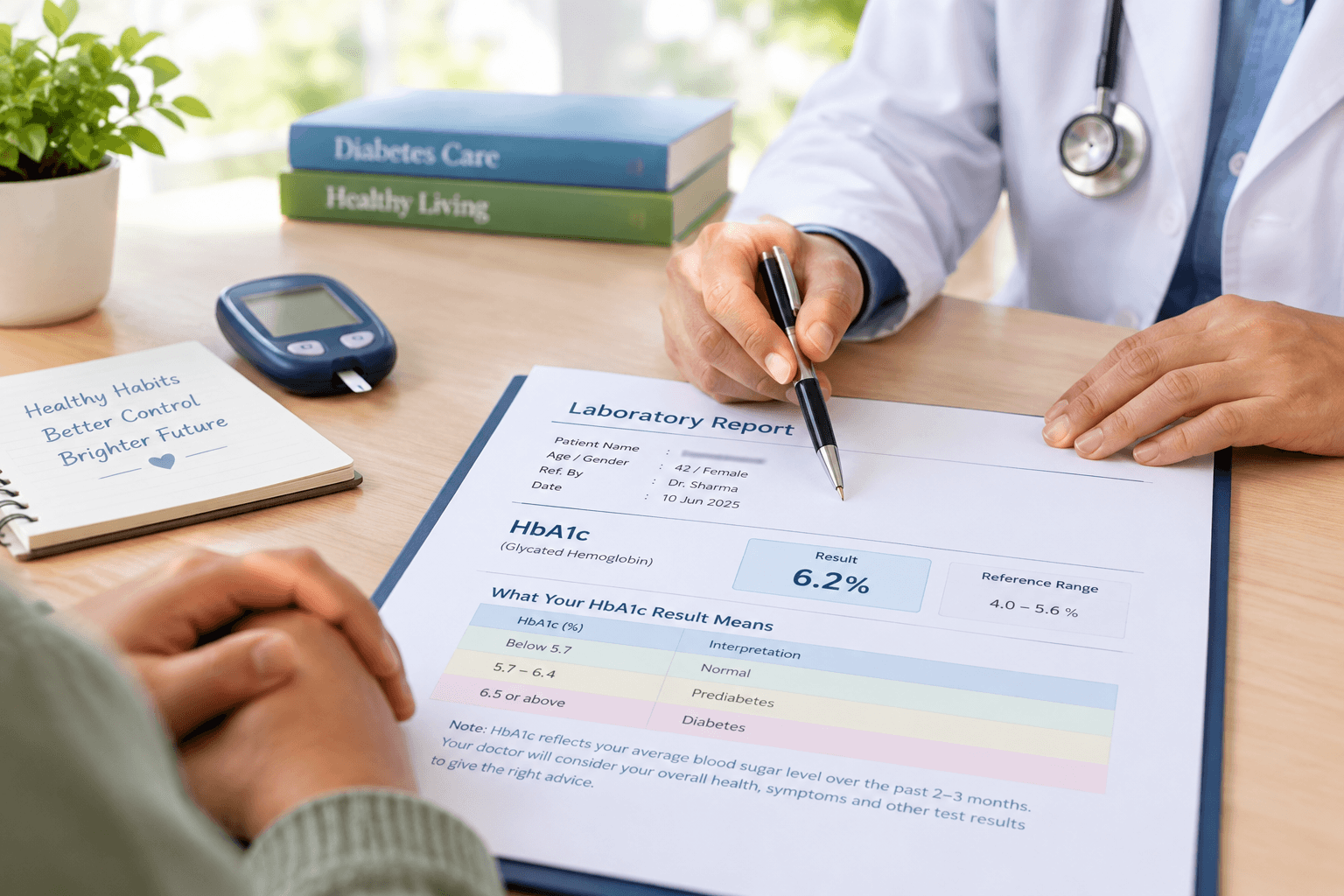
HbA1c, also called glycated haemoglobin, is a blood test that reflects your average blood sugar level over the past 2-3 months, rather than a single moment in time like a regular glucose test. According to the American Diabetes Association’s 2024-2025 guidelines, an HbA1c of 6.5% (48 mmol/mol) or higher indicates diabetes, 5.7%-6.4% indicates prediabetes, and below 5.7% is considered normal, though diagnosis generally requires confirmation with a second abnormal test. While HbA1c is genuinely one of the most valuable tools in diabetes care, it does have real, well-documented limitations — certain conditions affecting red blood cells, including anaemia, kidney disease, and haemoglobin variants, can make results falsely high or falsely low. Understanding what your HbA1c number actually represents, and its limitations, can help you have a more informed conversation with your doctor. This is general educational information, not medical advice — please consult your doctor to interpret your specific results.
If you’ve recently had blood work done and are staring at an HbA1c percentage with no real idea what it means, you’re genuinely not alone — this is one of the most commonly ordered yet least explained numbers in a routine health check-up. In this article, we’ll explain HbA1c in real depth: what it actually measures, how to interpret your specific results, where this test can be misleading, and what Ayurveda has traditionally taught about blood sugar balance.
What Is HbA1c, Really?
HbA1c stands for glycated haemoglobin (sometimes written as glycosylated haemoglobin or glycohemoglobin). To understand what it measures, it helps to understand a bit about haemoglobin itself. Haemoglobin is the protein in your red blood cells responsible for carrying oxygen throughout your body. When glucose (sugar) circulates in your bloodstream, some of it naturally attaches to haemoglobin molecules in a process called glycation. The more glucose that’s been circulating in your blood, and the longer it’s been there, the more haemoglobin becomes glycated.
Since red blood cells have an average lifespan of around 120 days, measuring the percentage of your haemoglobin that’s glycated gives doctors a genuinely useful window into your average blood sugar levels over roughly the preceding 2-3 months, rather than a single-moment snapshot like a standard fasting blood sugar test provides. This is really the central, defining feature of HbA1c as a test — it’s measuring an accumulated, longer-term pattern, not a point-in-time reading.
Why HbA1c Is Different From a Regular Blood Sugar Test
This is a genuinely important distinction many people don’t fully understand. A standard fasting blood glucose test tells you your blood sugar level at that specific moment, which can be influenced by what you ate recently, stress, illness, or even how well you slept the night before. HbA1c, by contrast, reflects a cumulative average over months, making it considerably less susceptible to these day-to-day fluctuations.
This is part of why HbA1c has become such a central tool in diabetes diagnosis and management: it offers a more stable, representative picture of your overall glucose control, rather than being thrown off by what you happened to eat the night before a blood test. It also offers genuine practical convenience — unlike a fasting glucose test, HbA1c doesn’t require you to fast beforehand, and unlike an oral glucose tolerance test (OGTT), it doesn’t require drinking a glucose solution and waiting around for multiple blood draws.
How to Read Your HbA1c Results: The Current Diagnostic Ranges
According to the American Diabetes Association’s current guidelines, which remain consistent through 2024 and 2025, HbA1c results are interpreted as follows:
- Normal: Below 5.7% (below 39 mmol/mol)
- Prediabetes: 5.7% to 6.4% (39-46 mmol/mol)
- Diabetes: 6.5% (48 mmol/mol) or higher
It’s worth understanding that you’ll sometimes see HbA1c reported in two different units: as a percentage (the more familiar format in India and the US) or in mmol/mol (common in the UK and some international labs). Both represent the same underlying measurement, just expressed differently, so don’t be alarmed if your report uses a different unit than you expected — your doctor or lab can always help you convert between them if needed.
Importantly, current guidelines specify that diagnosis of diabetes generally requires confirmation through a second abnormal test result, whether that’s a repeat HbA1c or another test like fasting plasma glucose, unless a person has unambiguous hyperglycemia symptoms alongside a clearly elevated random blood glucose reading. This reflects good clinical practice: a single number, even an important one like HbA1c, generally isn’t used in isolation to make a diagnosis with such significant implications.
Why HbA1c Testing Matters So Much in Diabetes Care
Since the American Diabetes Association formally endorsed HbA1c as a diagnostic tool for diabetes in 2010, it has become central to both diagnosing diabetes and monitoring how well existing diabetes management is working. Current 2024 guidelines affirm HbA1c’s pivotal role for both diagnosis and screening, placing it at the centre of standard diabetes care protocols.
For people already diagnosed with diabetes, HbA1c serves a genuinely different, ongoing purpose: tracking how well treatment, whether through diet, lifestyle changes, or medication, is working over time. Since it reflects months of glucose exposure rather than a single day, it offers a meaningful way to assess whether management strategies are genuinely working, rather than reacting to single, potentially unrepresentative readings.
How Often Should You Get HbA1c Tested?
Testing frequency genuinely depends on your individual situation:
- For screening in people without diabetes — Current guidance generally suggests screening beginning around age 35, or earlier with risk factors like excess weight, family history, or other relevant health conditions, with repeat screening typically every 3 years if results are normal.
- For people with prediabetes — More frequent monitoring, often annually, is generally recommended to track any changes and guide lifestyle intervention efforts.
- For people with diagnosed diabetes — Guidelines commonly recommend testing at minimum every 3 months when adjusting treatment or not yet at target levels, and roughly every 6 months once glycemic control is stable and at goal.
Your doctor will determine the appropriate testing schedule based on your specific diagnosis, risk factors, and how well your current management plan is working, rather than a one-size-fits-all timeline.
Understanding “Estimated Average Glucose” (eAG)
Many lab reports now include a conversion called “estimated average glucose” (eAG) alongside your HbA1c percentage, translating your HbA1c into a number that looks more like a familiar daily blood sugar reading (in mg/dL or mmol/L). This conversion can make your HbA1c result feel more intuitive, since it essentially tells you, “based on this percentage, your average blood sugar over the past few months has been roughly this number,” helping bridge the gap between the somewhat abstract percentage and the day-to-day glucose numbers you might be more used to seeing on a glucometer.
What Your Specific HbA1c Number Doesn’t Tell You
This is genuinely important to understand: because HbA1c reflects an average, it cannot tell you about glucose variability, meaning how much your blood sugar swings up and down throughout the day. Two people could have an identical HbA1c of, say, 7%, while one person has fairly stable glucose levels throughout the day, and the other experiences significant highs and lows that happen to average out to the same number. This is one reason some doctors recommend complementing HbA1c with additional tools, like home glucose monitoring or continuous glucose monitoring (CGM), particularly for people whose management would benefit from understanding these day-to-day patterns, not just the long-term average.
The Genuinely Important Limitations of HbA1c
This is a part of the HbA1c conversation that doesn’t always get enough attention, but it’s genuinely important for understanding your results accurately. Because HbA1c relies on the relationship between glucose and your red blood cells, anything that affects red blood cell lifespan, turnover, or structure can make your HbA1c result misleading, in either direction, without your actual average blood sugar having changed at all.
Conditions That Can Falsely Lower HbA1c
- Haemolytic anaemia — Any condition causing red blood cells to break down and be replaced more quickly reduces the time cells are exposed to circulating glucose, producing a falsely low HbA1c that doesn’t reflect true glycemic control.
- Recent significant blood loss — Similarly reduces the average age of circulating red blood cells, falsely lowering results.
- Chronic kidney disease — Can shorten red blood cell lifespan through several mechanisms, often producing falsely low readings, though research notes the direction of this effect can sometimes vary depending on the specific clinical context.
- Pregnancy — Alters red blood cell turnover in ways that lower usual HbA1c levels even in women without diabetes, which is specifically why major guidelines don’t recommend relying on HbA1c as a diagnostic tool in the first year postpartum, given fluctuations from fluctuating iron status and blood loss during delivery.
- Certain medications and nutrients — Vitamin C and E supplementation has been reported to artificially lower HbA1c results in some research, possibly by interfering with the glycation process itself.
Conditions That Can Falsely Elevate HbA1c
- Iron deficiency anaemia — Rather than shortening red blood cell lifespan, iron deficiency tends to prolong it, exposing cells to circulating glucose for longer and producing falsely elevated HbA1c readings that don’t reflect genuinely higher blood sugar.
- Vitamin B12 or folate deficiency — Can similarly affect red blood cell turnover in ways that falsely raise results.
- Splenectomy (spleen removal) — Since the spleen plays a role in clearing older red blood cells, its removal can extend average red blood cell lifespan, falsely elevating HbA1c.
Haemoglobin Variants: A Particularly Important Limitation
Haemoglobinopathies, genetic conditions affecting the structure of haemoglobin itself, such as sickle cell trait or disease, and thalassaemia, represent a genuinely significant limitation of HbA1c testing. These conditions can cause variant haemoglobin molecules to interfere with laboratory testing methods, producing falsely elevated or falsely lowered results depending on the specific variant and testing method used. Research has specifically documented that sickle cell trait can underestimate true HbA1c levels, which carries genuinely concerning real-world implications: potentially delayed diagnosis of diabetes, a false sense of reassurance for people who actually have elevated blood sugar, and increased risk of diabetes-related complications going unrecognised. This is a particularly important limitation to be aware of if you have a known haemoglobin variant or anaemia of any kind, and it’s worth specifically mentioning this to your doctor when discussing your HbA1c results.
When Your Doctor Might Recommend Alternative Tests
Given these genuine limitations, doctors sometimes turn to alternative markers when HbA1c is considered unreliable for a specific person’s situation, including fructosamine (which reflects a shorter, 2-3 week window of average glucose) or glycated albumin, continuous glucose monitoring, or simply relying more heavily on direct fasting glucose and oral glucose tolerance testing. If you have a condition known to affect HbA1c accuracy, your doctor may already be factoring this into how they interpret your results, or may recommend a complementary testing approach.
HbA1c Compared to Other Diabetes Tests
HbA1c is one of several tests used in diabetes diagnosis and monitoring, and understanding how it compares to the others can help you make sense of why your doctor might order one test over another, or sometimes several together.
Fasting Plasma Glucose (FPG)
This test measures your blood sugar after at least 8 hours without food, typically first thing in the morning. A fasting glucose of 126 mg/dL (7.0 mmol/L) or higher indicates diabetes. FPG offers a genuinely useful, direct snapshot of your blood sugar at a specific moment, but because it’s a single-point measurement, it can be influenced by factors like stress, poor sleep the night before, or minor illness, in ways that HbA1c’s longer-term average naturally smooths out.
Oral Glucose Tolerance Test (OGTT)
This test involves drinking a standardized glucose solution, then having blood sugar measured at intervals, typically two hours later. A 2-hour reading of 200 mg/dL (11.1 mmol/L) or higher indicates diabetes. OGTT is considered particularly valuable for detecting gestational diabetes and is generally the preferred diagnostic approach during pregnancy specifically, given HbA1c’s reduced reliability in that context, discussed further below. It’s also sometimes used when HbA1c and fasting glucose results don’t clearly align, offering an additional data point.
Random Plasma Glucose
A blood sugar test taken at any time, regardless of when you last ate. A reading of 200 mg/dL (11.1 mmol/L) or higher, combined with classic symptoms of hyperglycemia like excessive thirst or frequent urination, can support a diabetes diagnosis. This test is typically used in more acute or symptomatic situations, rather than routine screening.
Continuous Glucose Monitoring (CGM)
A newer technology that tracks glucose levels continuously throughout the day and night via a small sensor, rather than relying on periodic blood draws. CGM offers something HbA1c genuinely cannot: detailed insight into glucose variability, patterns around specific meals, and time spent in healthy versus high or low glucose ranges throughout the day. Increasingly, doctors use CGM-derived metrics like “time in range” alongside HbA1c, particularly for people whose management would benefit from understanding these more granular, day-to-day patterns, or in situations where HbA1c accuracy is genuinely in question due to the limitations discussed earlier.
Why Doctors Sometimes Use More Than One Test
Given that each test offers a genuinely different window into blood sugar, whether a single moment, an average over months, or continuous day-to-day patterns, doctors sometimes combine tests, particularly when results from one test seem inconsistent with a person’s symptoms, risk factors, or other test results. This isn’t a sign that something has gone wrong with testing; it reflects thoughtful, careful diagnostic practice given the genuine, documented limitations each individual test carries.
HbA1c Considerations Across Different Life Stages and Populations
HbA1c targets and interpretation aren’t entirely one-size-fits-all across every population, and current guidelines reflect this nuance.
Children and Adolescents
Current guidelines recommend a notably tighter HbA1c goal, generally below 6.5%, for children and adolescents with type 2 diabetes, reflecting the importance of establishing strong glycemic control early in life to help prevent long-term complications over a longer remaining lifespan.
Older Adults
For older adults, particularly those with other health conditions or at elevated risk of low blood sugar episodes, guidelines generally recommend a more individualised, sometimes somewhat higher target range, often around 7-7.5%, to appropriately balance the benefits of tight control against the genuine risks of hypoglycemia in this population. This reflects good clinical judgment rather than lower standards — the right target genuinely depends on an individual’s overall health picture, remaining life expectancy, and risk tolerance for different types of complications.
Ethnic and Genetic Variation
Research has found that the relationship between HbA1c and average blood glucose can vary somewhat between different ethnic populations, related in part to genetic variation in red blood cell characteristics. This is an active, evolving area of research, and it reinforces why haemoglobin variants and population-specific factors are genuinely worth discussing with your doctor, rather than assuming every population responds identically on this particular test.
People Already on Diabetes Medication
Research notes that certain oral diabetes medications, including metformin and sulfonylureas, may somewhat alter the typical relationship between blood glucose and HbA1c, though the clinical significance of this remains an area of ongoing study. This is simply worth knowing as general context rather than a reason for concern — your doctor factors in your specific medications when interpreting your results over time.
Point-of-Care Testing vs Laboratory Testing
You may encounter HbA1c testing in two different settings: a formal laboratory test, or a point-of-care device that can provide a result within minutes during a clinic visit. Current guidelines specifically address point-of-care HbA1c devices, generally recommending that for formal diagnosis and screening purposes, results should ideally be confirmed through methods certified by the National Glycohemoglobin Standardization Program (NGSP) to ensure accuracy and consistency. Point-of-care testing offers genuine convenience, particularly for monitoring already-diagnosed diabetes, but it’s worth knowing that formal diagnostic decisions typically rely on properly standardized laboratory methods specifically.
Common Signs That May Prompt an HbA1c Test
Doctors often order HbA1c testing in response to:
- Routine health screening, particularly after age 35 or with risk factors
- Symptoms like increased thirst, frequent urination, or unexplained fatigue
- Family history of diabetes
- Excess body weight, particularly around the abdomen
- A history of gestational diabetes
- Monitoring for people already diagnosed with diabetes or prediabetes
What Influences Your HbA1c Beyond Day-to-Day Diet
Since HbA1c reflects months of glucose exposure, it’s genuinely shaped by the cumulative pattern of many factors working together, not just what you eat:
- Overall dietary pattern over months — Consistent habits matter more than any single meal or day.
- Physical activity levels — Regular movement improves insulin sensitivity, influencing glucose levels over time.
- Body weight and composition — Particularly abdominal fat, which is linked to insulin resistance.
- Sleep quality — Poor sleep is associated with reduced insulin sensitivity.
- Stress levels — Chronic stress can elevate blood sugar through hormonal pathways.
- Medications — Both diabetes medications and certain other medications (like some steroids) can influence glucose levels and, by extension, HbA1c over time.
- Genetics and family history — Play a meaningful role in individual blood sugar regulation, independent of lifestyle factors alone.
A Closer Look at How Daily Habits Translate Into Your HbA1c Over Time
Since HbA1c reflects a genuinely cumulative pattern, it can be helpful to understand how specific, sustained habits translate into the number you eventually see on a lab report.
Why Consistency Matters More Than Any Single “Good” or “Bad” Day
Because red blood cells are glycated gradually over their roughly 120-day lifespan, a single indulgent meal, or conversely, one exceptionally disciplined day, has only a very small individual effect on your eventual HbA1c result. What genuinely moves the number is the sustained pattern across weeks and months. This is actually a reassuring way to think about the test: it’s measuring your overall trajectory and typical habits, not judging you for any single choice.
The Role of Post-Meal Glucose Spikes
While HbA1c doesn’t directly show you individual glucose spikes, research suggests that both fasting glucose levels and the size and frequency of post-meal glucose spikes contribute to your overall HbA1c over time. This is part of why dietary strategies that specifically target smoothing out post-meal spikes, such as eating vegetables before carbohydrates, choosing lower-glycemic foods, and avoiding very large, refined-carbohydrate-heavy meals, can meaningfully influence your eventual HbA1c, even if you’re already managing your fasting glucose reasonably well.
Why Weight Changes Can Take Time to Show Up in HbA1c
Given the 2-3 month averaging window, meaningful lifestyle changes, including weight loss or new exercise habits, generally need a similar amount of time before their full effect shows up clearly in a repeat HbA1c test. This is worth understanding so you don’t feel discouraged if an early retest, say at 6-8 weeks, doesn’t yet show the full benefit of changes you’ve genuinely been sticking to — the test is, by its nature, a bit of a lagging indicator.
Sleep’s Underappreciated Role
Research consistently links poor sleep quality and insufficient sleep duration to reduced insulin sensitivity, meaning your body becomes less efficient at managing blood sugar after meals. Since this effect compounds over repeated nights of poor sleep, chronic sleep difficulties can genuinely contribute to a higher HbA1c over time, even when diet and exercise habits haven’t changed, making sleep a genuinely underappreciated lever in the overall picture.
Practical Steps If Your HbA1c Is in the Prediabetes or Diabetes Range
If your results come back indicating prediabetes or diabetes, here’s a grounded, practical starting point, always to be discussed and individualised with your doctor:
- Don’t panic, but do take it seriously — Particularly prediabetes represents a genuine window where lifestyle changes can meaningfully reduce progression risk to full diabetes.
- Ask your doctor about a confirmatory test — Since diagnosis generally requires a second abnormal result, understand what your doctor’s specific plan is.
- Discuss whether any of the limitation factors above apply to you — If you have anaemia, kidney disease, or a known haemoglobin variant, this is genuinely worth raising.
- Ask about a monitoring and follow-up plan — Including how often you’ll be retested and what lifestyle or medical interventions are recommended for your specific situation.
- Focus on sustainable, gradual lifestyle changes — Diet, movement, sleep, and stress management all genuinely influence HbA1c over subsequent testing periods.
HbA1c and Pregnancy: A Special Case
It’s worth understanding that HbA1c behaves differently during and immediately after pregnancy. Research has found that the ADA does not recommend using HbA1c as a diagnostic tool before one year postpartum, due to fluctuations from factors like blood loss during delivery and changes in iron status, both of which can affect red blood cell turnover and therefore HbA1c accuracy during this specific window. For diagnosing gestational diabetes during pregnancy itself, the oral glucose tolerance test remains the preferred, more reliable approach, rather than HbA1c, reflecting these same underlying accuracy concerns.
The Ayurvedic Perspective on Blood Sugar and Metabolic Balance
While Ayurveda obviously doesn’t reference HbA1c specifically, as a modern laboratory measurement, its traditional understanding of blood sugar imbalance offers a genuinely complementary, holistic lens. Ayurveda traditionally associates blood sugar imbalance, broadly understood as “Prameha,” with aggravated Kapha dosha and weakened Agni (digestive fire), affecting the body’s ability to properly metabolise and process food.
Ayurveda’s traditional approach to supporting healthy blood sugar balance, relevant to anyone mindful of their HbA1c trajectory, includes:
- Dietary emphasis on whole, fibre-rich foods — Whole grains, millets, and vegetables, aligning closely with modern nutritional guidance for supporting healthier average glucose levels over time.
- Regular, consistent eating patterns — Rather than erratic eating, reflecting Ayurveda’s broader emphasis on routine (Dinacharya) and its role in supporting metabolic balance.
- Herbs traditionally used to support healthy blood sugar — Including Karela, Methi, Gudmar, and Jamun, traditionally believed to aid in maintaining balanced glucose metabolism as part of an overall lifestyle approach.
- Regular physical activity — Consistently emphasised in Ayurvedic texts as essential for maintaining balanced Kapha and healthy metabolism, aligning directly with modern research on exercise and insulin sensitivity.
- Stress management practices — Given the established connection between chronic stress and blood sugar regulation, Ayurveda’s emphasis on practices like pranayama and meditation offers a genuinely relevant complementary approach.
This Ayurvedic framework, emphasising consistent, sustainable daily habits over time, aligns naturally with what HbA1c itself is measuring — not a single day’s choices, but the accumulated pattern of months of living, which is exactly the kind of gradual, consistent change Ayurveda has always emphasised over dramatic, short-term intervention.
Common Myths About HbA1c
- Myth: HbA1c tells you your exact blood sugar right now. In reality, it reflects an average over roughly 2-3 months, not a current, single-moment reading.
- Myth: A single HbA1c test is always definitive. In reality, current diagnostic guidelines generally call for confirmation with a second abnormal test, and certain health conditions can make individual results misleading.
- Myth: HbA1c is always accurate for everyone. In reality, conditions affecting red blood cells, including various forms of anaemia, kidney disease, and haemoglobin variants, can produce genuinely misleading results in either direction.
- Myth: If your HbA1c is normal, you have nothing to worry about regarding blood sugar. While reassuring, it’s still worth maintaining healthy lifestyle habits, particularly if you have risk factors like family history, since HbA1c reflects the past few months, not a guarantee about the future.
Questions Worth Asking Your Doctor About Your HbA1c Results
- What does my specific HbA1c number mean for my individual health picture?
- Do any of the known limitation factors (anaemia, kidney function, haemoglobin variants) apply to me?
- How often should I be retested, and why that specific interval?
- What lifestyle changes would genuinely make the most difference for my specific results?
- Should I be using any additional monitoring tools, like home glucose testing, alongside HbA1c?
Frequently Asked Questions
1. What is a normal HbA1c level?
According to current ADA guidelines, a normal HbA1c is below 5.7% (below 39 mmol/mol). Levels between 5.7% and 6.4% indicate prediabetes, and 6.5% or higher indicates diabetes, generally requiring confirmation with a second test.
2. How is HbA1c different from a regular blood sugar test?
A regular blood glucose test measures your blood sugar at a single moment, which can be influenced by recent food, stress, or illness. HbA1c reflects your average blood sugar over the past 2-3 months, offering a more stable, longer-term picture.
3. Can HbA1c results be wrong or misleading?
Yes, genuinely. Conditions that affect red blood cell lifespan or structure, including various anaemias, chronic kidney disease, haemoglobin variants like sickle cell trait, and pregnancy, can produce falsely high or falsely low HbA1c results that don’t accurately reflect true average blood sugar.
A Gentle Note Before You Go
Understanding what your HbA1c actually measures, and its genuine limitations, can help you approach your test results with more clarity and have a more informed, confident conversation with your doctor. If you’re looking for gentle, everyday support alongside your doctor’s guidance, Healthywe’s range of blood sugar support herbal supplements is made using 100% natural, vegetarian ingredients rooted in traditional Ayurvedic wisdom.
As always, lifestyle changes and herbal supplements are meant to support your overall wellness, not replace medical care. Please consult your doctor or an Ayurvedic practitioner for proper diagnosis and interpretation of your test results, and before making any changes to a prescribed treatment.
Explore our natural wellness range at www.healthywewellness.com/shop.