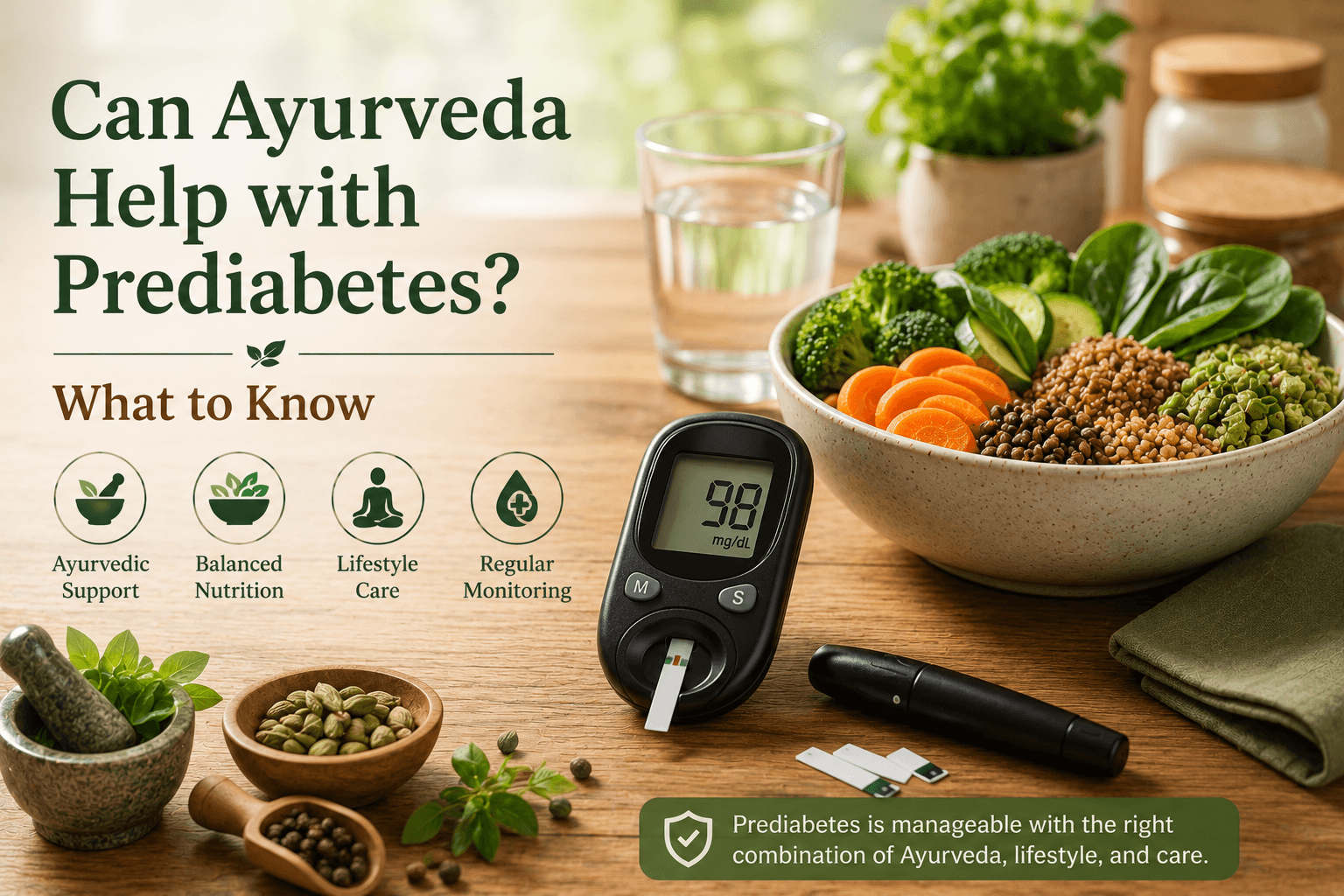
Quick Answer
When it comes to Ayurveda and prediabetes, the honest answer is that Ayurveda can offer meaningful, complementary support — through diet, lifestyle, and traditional herbs believed to aid in maintaining healthy blood sugar levels — but it should never replace the medical monitoring and guidance prediabetes genuinely requires. Prediabetes is a stage where blood sugar levels are higher than normal but not yet in the diabetic range, and it’s considered a genuinely important window for lifestyle intervention. Ayurvedic practices like mindful eating, herbs like Karela and Methi, and consistent daily routine may help support this effort, but regular blood sugar monitoring and medical guidance remain essential. Please consult your doctor for diagnosis and a monitoring plan before relying on any lifestyle approach alone.
Getting a “prediabetes” result on a routine blood test can feel confusing — it’s not diabetes, but it’s clearly a signal your body is asking for attention. In this article, we’ll explore Ayurveda and prediabetes together, what this stage actually means, what commonly leads to it, and how Ayurvedic wisdom might genuinely complement the medical guidance you should already be following.
What Exactly Is Prediabetes?
Prediabetes is a condition where blood sugar levels are higher than normal but not yet high enough to be classified as type 2 diabetes. It’s typically identified through blood tests like fasting blood glucose, HbA1c, or an oral glucose tolerance test, and your doctor is the only one who can confirm this diagnosis and interpret your specific results accurately.
What makes prediabetes particularly significant is that it represents a genuine opportunity — research consistently shows that lifestyle changes during this stage can meaningfully reduce the likelihood of progression to full type 2 diabetes. This is exactly why exploring Ayurveda and prediabetes together makes sense for many people looking for comprehensive, sustainable support during this window.
Common Causes and Risk Factors for Prediabetes
Understanding what commonly contributes to prediabetes can help you identify areas where lifestyle changes might genuinely help:
- Excess body weight — Particularly around the abdomen, one of the most significant risk factors for prediabetes.
- Sedentary lifestyle — Lack of regular physical activity is strongly linked to insulin resistance, a key factor in prediabetes.
- Diet high in refined carbohydrates and sugar — Contributes to repeated blood sugar spikes over time.
- Family history — A genetic predisposition significantly increases prediabetes risk.
- Age — Risk increases with age, particularly after 45.
- Poor sleep quality — Associated with reduced insulin sensitivity over time.
- Chronic stress — Elevated stress hormones can contribute to insulin resistance.
- Polycystic ovary syndrome (PCOS) — Associated with increased insulin resistance in women.
Recognising these risk factors is an important step in understanding both conventional and Ayurvedic approaches to Ayurveda and prediabetes, since many of these factors are genuinely within your control to address.
Signs That May Indicate Prediabetes
Prediabetes often has no obvious symptoms, which is exactly why it’s frequently discovered only through routine blood tests. That said, some people notice subtle signs, including:
- Increased thirst or hunger
- Fatigue or low energy
- Darkened patches of skin, particularly around the neck or armpits (acanthosis nigricans)
- Slow healing of minor cuts
- Difficulty concentrating
Because prediabetes so often shows no clear symptoms, regular health check-ups, particularly if you have risk factors, remain the most reliable way to catch it early. If you notice these signs, or have risk factors like family history or excess weight, it’s important to consult a doctor for proper testing rather than waiting for symptoms to become obvious.
What Ayurveda Offers for Supporting Prediabetes Management
Here’s how Ayurveda and prediabetes genuinely intersect — through traditional herbs, dietary wisdom, and lifestyle practices that may complement the medical monitoring prediabetes requires.
1. Traditional Herbs Believed to Support Healthy Blood Sugar
Several herbs are traditionally used in Ayurveda to help support healthy blood sugar levels, including Karela (bitter gourd), Methi (fenugreek), Gudmar (Gymnema sylvestre), and Jamun. These are traditionally believed to aid in maintaining balanced glucose metabolism, though they should be discussed with your doctor before use, particularly to understand any interactions with monitoring or future treatment.
2. Dietary Wisdom Aligned With Modern Nutrition
Ayurveda’s traditional emphasis on whole grains, fibre-rich vegetables, and mindful portions aligns closely with modern nutritional guidance for prediabetes, which typically recommends reducing refined carbohydrates and increasing fibre intake to support healthier blood sugar responses.
3. Emphasis on Regular Movement
Ayurveda has always emphasised regular physical activity as part of a balanced lifestyle, which aligns directly with modern research showing that consistent movement genuinely improves insulin sensitivity, one of the most important factors in prediabetes management.
4. Mindful Eating Practices
Ayurveda’s traditional emphasis on eating slowly, without distraction, and until comfortably satisfied rather than completely full supports better portion awareness, which can meaningfully help with the dietary changes prediabetes management often requires.
5. Consistent Daily Routine (Dinacharya)
Regular mealtimes, sleep, and activity patterns, central to Ayurveda’s Dinacharya concept, support the kind of consistency that research shows genuinely helps with blood sugar management over time.
Why Medical Monitoring Remains Essential
It’s worth being genuinely clear here: prediabetes is a medically significant stage that requires proper monitoring, typically through regular blood tests as guided by your doctor. While Ayurvedic practices may offer meaningful complementary support for lifestyle changes, they cannot replace this monitoring, and no herb or dietary approach should be used as a substitute for medical guidance during this important window. Ayurveda works best here as a support system alongside your doctor’s care, not as an alternative to it.
Practical Lifestyle Tips for Prediabetes
Here are practical, evidence-supported lifestyle changes that align with both modern medical guidance and Ayurvedic wisdom:
- Aim for regular physical activity — Even 30 minutes of moderate activity most days can meaningfully improve insulin sensitivity.
- Focus on fibre-rich, whole foods — Whole grains, vegetables, and legumes support more balanced blood sugar responses.
- Reduce refined carbohydrates and added sugar — Helps reduce the frequency and intensity of blood sugar spikes.
- Maintain a healthy body weight — Even modest weight reduction has been shown to meaningfully reduce prediabetes progression risk.
- Prioritise good sleep — Supports healthy insulin sensitivity.
- Manage stress — Chronic stress can worsen insulin resistance over time.
- Attend regular check-ups — Essential for monitoring progress and catching any changes early.
The Ayurvedic Perspective on Prediabetes
While prediabetes as a specific medical category isn’t found in classical Ayurvedic texts, Ayurveda’s broader understanding of blood sugar imbalance, traditionally linked to aggravated Kapha dosha and weakened Agni (digestive fire), offers relevant guidance for this stage. Ayurveda’s approach emphasises catching imbalance early through mindful daily habits — a philosophy that aligns closely with modern medicine’s emphasis on prediabetes as a critical window for intervention.
Ayurveda’s traditional approach typically combines:
- Diet (Ahara) — Favouring light, fibre-rich, freshly cooked foods over heavy, processed options.
- Lifestyle (Vihara) — Regular movement, consistent routine, and adequate rest.
- Herbs — Traditional herbs believed to support balanced glucose metabolism, always used alongside, not instead of, medical guidance.
This holistic, early-intervention philosophy makes Ayurveda and prediabetes a genuinely relevant combination for many people navigating this stage, provided it’s approached as a complement to proper medical care.
Frequently Asked Questions
1. Can Ayurveda reverse prediabetes on its own?
Ayurvedic practices may support healthy lifestyle changes during prediabetes, but they should always be used alongside proper medical monitoring and guidance, not as a standalone approach. Please consult your doctor for a monitoring and management plan.
2. What Ayurvedic herbs are traditionally used to support blood sugar in prediabetes?
Herbs like Karela, Methi, Gudmar, and Jamun are traditionally used in Ayurveda to help support healthy blood sugar levels, though they should be discussed with your doctor before use, especially during prediabetes monitoring.
3. How often should I get tested if I have prediabetes?
Testing frequency depends on individual risk factors and should be determined by your doctor, but regular monitoring, often annually or as advised, is generally recommended to track changes and guide next steps.
A Gentle Note Before You Go
Exploring Ayurveda and prediabetes together can offer meaningful, holistic support for the lifestyle changes this important stage calls for. If you’re looking for gentle, everyday support alongside your doctor’s monitoring and guidance, Healthywe’s range of blood sugar support herbal supplements is made using 100% natural, vegetarian ingredients rooted in traditional Ayurvedic wisdom.
As always, lifestyle changes and herbal supplements are meant to support your overall wellness, not replace medical care. Please consult your doctor or an Ayurvedic practitioner for proper diagnosis, and before making any changes to a prescribed treatment.
Explore our natural wellness range at www.healthywewellness.com/shop.