Quick Answer
When it comes to liver detox myths, the truth is that your liver already detoxifies your body naturally and continuously — it doesn’t need juice cleanses, extreme fasting, or expensive “detox” kits to do its job. What Ayurveda actually recommends is quite different from popular detox trends: it focuses on supporting the liver’s natural function through balanced digestion (Agni), wholesome food choices, and traditional herbs like Bhumi Amla and Kutki, rather than aggressive cleansing. This is general wellness information, not medical advice — if you have concerns about your liver health, please consult your doctor for proper diagnosis.
Scroll through social media for a few minutes and you’ll likely come across another “liver detox” trend promising to flush out toxins in just a few days. But how much of this is genuinely helpful, and how much is just marketing? In this article, we’ll bust common liver detox myths and explore what Ayurveda actually recommends for supporting healthy liver function.
Understanding Your Liver’s Natural Role
Before addressing liver detox myths, it helps to understand what your liver actually does. Your liver is one of the hardest-working organs in your body, continuously filtering blood, breaking down toxins, metabolising nutrients, and producing essential proteins and bile for digestion. It performs hundreds of functions around the clock, largely without you noticing.
This is exactly why so many liver detox myths exist in the first place — because the liver’s natural detoxification process happens quietly and continuously, it’s easy for marketing to claim that a specific product or extreme diet is somehow “supercharging” or “resetting” this process, when in reality, a healthy liver is already doing this work every single day.
Common Liver Detox Myths, Debunked
Let’s address some of the most widespread liver detox myths one by one:
Myth 1: You Need a Special “Detox” Product to Cleanse Your Liver
In reality, your liver doesn’t require external products to perform its natural detoxification functions. A healthy liver, supported by a balanced diet and lifestyle, is generally capable of managing this process on its own without specialized “detox” formulas.
Myth 2: Juice Cleanses Flush Out Toxins
Extended juice cleanses, especially those lasting several days, can actually place additional strain on your digestive system due to their high sugar content and lack of fibre and protein, rather than genuinely supporting liver function.
Myth 3: Extreme Fasting “Resets” Your Liver
While moderate, well-planned fasting practices have their place in various traditions, extreme or prolonged fasting isn’t necessary for liver function and can potentially create additional stress on the body if not done appropriately and under guidance.
Myth 4: Detox Teas Melt Away Toxins Quickly
Many detox teas rely on laxative or diuretic ingredients, which may cause temporary water weight loss or increased bowel movements, but this isn’t the same as genuinely supporting liver detoxification function.
Myth 5: You Can “Undo” Unhealthy Habits With a Quick Detox
Perhaps the most misleading of all liver detox myths is the idea that a short-term cleanse can offset months or years of unhealthy habits. Liver health is built through consistent, long-term lifestyle choices, not quick fixes.
Understanding these liver detox myths is important because believing them can sometimes lead people toward extreme, potentially unhelpful practices, when what genuinely benefits liver health is far simpler and more sustainable.
Common Causes of Liver Strain
Rather than focusing on detox myths, it’s more useful to understand what can genuinely place strain on your liver over time:
- Excess alcohol consumption — One of the most well-established factors affecting liver health.
- High intake of processed and fried foods — Can contribute to fat accumulation in the liver over time.
- Excess sugar intake — Associated with fatty liver concerns, particularly with regular, high consumption.
- Sedentary lifestyle — Lack of physical activity is linked to various metabolic concerns that can affect liver health.
- Certain medications — Some medications, particularly when taken excessively or without medical guidance, can place strain on the liver.
- Obesity — Associated with increased risk of fatty liver concerns.
Understanding these genuine risk factors is far more useful than chasing liver detox myths, as it points toward meaningful, evidence-informed lifestyle changes.
Signs That May Indicate Your Liver Needs Attention
While the liver often doesn’t show obvious symptoms until concerns are more advanced, some signs worth being aware of include:
- Persistent fatigue
- Loss of appetite
- Digestive discomfort, particularly after fatty meals
- Yellowing of the skin or eyes (jaundice)
- Abdominal discomfort, particularly in the upper right area
- Unexplained weight changes
If you notice any of these signs, especially jaundice or persistent abdominal discomfort, it’s essential to consult a doctor promptly for proper diagnosis, rather than attempting to address it through detox trends.
What Ayurveda Actually Recommends for Liver Support
Now that we’ve addressed common liver detox myths, let’s look at what Ayurveda has genuinely taught for centuries about supporting healthy liver function — an approach that’s quite different from modern detox marketing.
1. Supporting Agni (Digestive Fire), Not Aggressive Cleansing
Rather than extreme cleanses, Ayurveda emphasises maintaining balanced Agni through regular, appropriately portioned meals, mindful eating, and avoiding overly heavy or processed foods, since Ayurveda considers the liver closely connected to overall digestive function.
2. Eating Bitter and Astringent Tastes
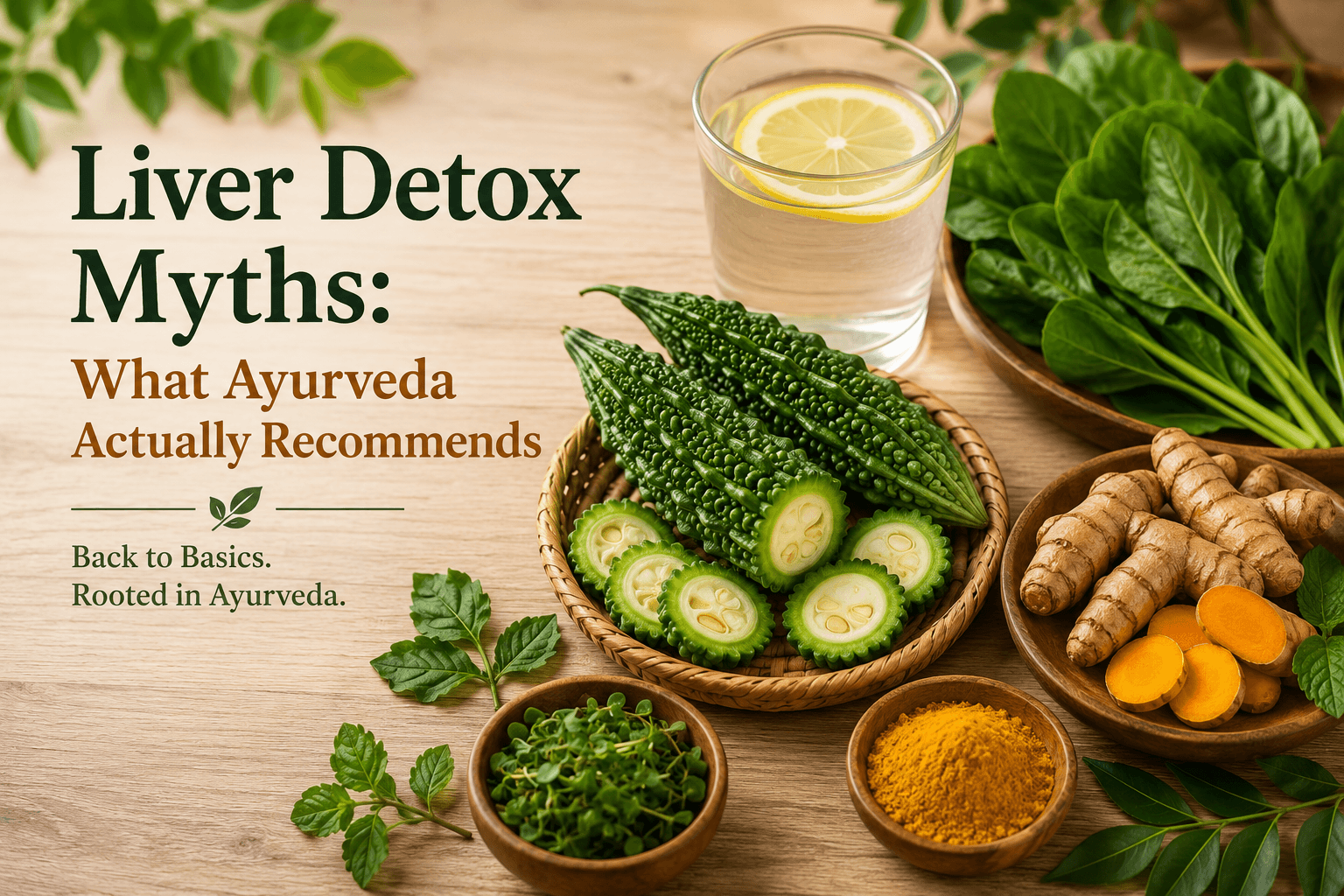
Ayurveda traditionally recommends including bitter and astringent foods, such as bitter gourd, neem, and leafy greens, as part of a regular diet, believing these tastes support the liver’s natural function in a gentle, sustainable way.
3. Traditional Liver-Supportive Herbs
Ayurveda has long used specific herbs traditionally believed to support healthy liver function, including:
- Bhumi Amla — Traditionally used in Ayurveda to help support healthy liver function.
- Kutki — A traditional Ayurvedic herb used to help support liver and digestive health.
- Kalmegh — Traditionally believed to support the liver’s natural functions.
- Turmeric — Widely used in Ayurveda for its traditional role in supporting overall digestive and liver wellness.
4. Avoiding Excess, Not Extreme Restriction
Rather than extreme fasting or restrictive detox diets, Ayurveda emphasises moderation — eating in reasonable quantities, avoiding excessive oily or processed foods, and limiting alcohol, as sustainable, gentle habits.
5. Warm Water and Herbal Infusions
Ayurveda traditionally recommends warm water throughout the day, sometimes infused with herbs like coriander or fennel, believed to gently support digestion and overall internal balance without the harsh effects associated with some modern detox trends.
6. Seasonal Eating (Ritucharya)
Ayurveda’s concept of eating according to the season is also traditionally believed to support liver health, favouring lighter, more easily digestible foods during warmer months and heartier, nourishing foods in colder months.
This genuinely Ayurvedic approach stands in real contrast to many popular liver detox myths — it’s gradual, sustainable, and rooted in supporting the body’s own natural processes rather than forcing dramatic, short-term change.
Practical Lifestyle Tips for Everyday Liver Support
Beyond specific Ayurvedic recommendations, these general lifestyle habits genuinely support liver health:
- Limit alcohol consumption — One of the most impactful changes for supporting long-term liver health.
- Maintain a healthy body weight — Reduces the risk of fatty liver concerns.
- Stay physically active — Regular movement supports overall metabolic and liver health.
- Eat a balanced, whole-food diet — Rich in vegetables, fruits, and whole grains, and lower in processed foods and added sugar.
- Stay hydrated — Adequate water intake supports overall bodily functions, including digestion.
- Get regular health check-ups — Liver function tests can help catch concerns early, well before symptoms appear.
Why Debunking Liver Detox Myths Matters
Believing in liver detox myths isn’t just about wasted money — in some cases, extreme detox practices can genuinely place unnecessary stress on the body. Understanding what actually supports liver health empowers you to make informed, sustainable choices rather than chasing quick fixes that don’t have meaningful, lasting benefits.
Frequently Asked Questions
1. Do I need a liver detox if I eat healthy?
If you generally maintain a balanced diet, limit alcohol, and stay active, your liver is likely already performing its natural detoxification functions well. Special detox products generally aren’t necessary for a healthy liver.
2. What does Ayurveda recommend instead of detox diets?
Ayurveda recommends supporting Agni (digestive fire) through balanced meals, bitter and astringent foods, traditional herbs like Bhumi Amla and Kutki, and moderation, rather than extreme cleanses or restrictive detox diets.
3. How can I tell if my liver actually needs medical attention?
Signs like persistent fatigue, jaundice, abdominal discomfort, or unexplained weight changes warrant a doctor’s evaluation. Liver function tests are the most reliable way to assess liver health, rather than relying on detox trends or self-diagnosis.
A Gentle Note Before You Go
Understanding the truth behind common liver detox myths can help you focus on what genuinely supports your liver — consistent, sustainable habits rather than extreme, short-term trends. If you’re looking for gentle, everyday support alongside a balanced lifestyle, Healthywe’s range of liver care herbal supplements is made using 100% natural, vegetarian ingredients rooted in traditional Ayurvedic wisdom.
As always, lifestyle changes and herbal supplements are meant to support your overall wellness, not replace medical care. Please consult your doctor or an Ayurvedic practitioner for proper diagnosis, and before making any changes to a prescribed treatment.
Explore our natural wellness range at www.healthywewellness.com/shop.